Direct answer
To identify an older DEATH NYC print, build a file for the exact sheet rather than relying on a familiar image, a resale title, or a certificate alone. Photograph the full front and reverse if safely accessible, margins, visible marks, dimensions, condition features, frame labels, and every document that accompanies it. Transcribe—not interpret—any signature, date, edition-style notation, stamp, or label. Then search for contemporaneous or primary material that matches the specific image, format, dimensions, and marks; preserve screenshots and note the source and date. Separate what you observed, what a document states, what a source supports, and what remains unconfirmed. An older work may never yield a complete release history. A clear research archive is still valuable because it makes your description inspectable without inventing an official status, edition size, provenance, process, or value.
Table of contents
- Identification is an evidence file, not a title guess
- Start by isolating the exact physical sheet
- Create a four-layer evidence log
- Search for a release without treating web repetition as proof
- Compare similar works without merging them
- Track documents, acquisition history, and gaps
- Resolve—or transparently retain—discrepancies
- Describe an older work safely when buying, selling, or insuring
- Practical research-archive checklist
Identification is an evidence file, not a title guess
Older prints often circulate with incomplete descriptions. A seller may remember a theme but not a title. A frame label may supply a date but no image. A prior listing may use a title that was copied from another listing. A document may name a related work but not the exact sheet. The research challenge is not solved by choosing the most plausible answer from search results. It is solved by keeping a trail that lets another person see why you reached a particular description and where the trail stops.
That distinction is important for DEATH NYC because the visual language of a work can invite shorthand. A familiar figure, logo-like motif, famous-art reference, or fashion-associated cue may help a reader recognize a subject, but it does not identify the exact release. Similar imagery can appear in different formats, dimensions, colorways, or listings. Two works can look close on a phone screen yet have different margins, handwritten notes, frame history, documents, and condition.
The goal of an archive is therefore not to force a complete answer. It is to preserve the best evidence for the exact work, distinguish it from assumptions, and make later correction possible. A well-kept unresolved record is safer and more useful than a polished but unsupported title.
Overlap check and distinct intent
This draft is a research-method guide for older or incompletely described works. It does not duplicate DEATH NYC Prints: Official Releases and Secondary-Market Checks (/blogs/editorial/death-nyc-official-releases-secondary-market), which is a buying checklist for a current release or resale candidate, nor How to Read a Death NYC Certificate of Authenticity (/blogs/editorial/death-nyc-coa-guide), which is focused on interpreting a document. It also does not decide what “AP” means on a sheet; Draft D02 handles notation terminology.
The closest existing pages checked were:
-
/blogs/editorial/death-nyc-official-releases-secondary-market— matching the exact work, condition, documentation, and terms when buying. -
/blogs/editorial/death-nyc-prints-artist-profile-edition-guide— broad artist and collector context. -
/blogs/editorial/death-nyc-coa-guide— document-reading guidance. -
/blogs/editorial/death-nyc-authentication-checklist— item-evidence questions before a purchase. -
/blogs/editorial/death-nyc-condition-guide— visible-condition review.
The distinct job here is to preserve an older object’s evidence trail over time, including sources that are incomplete, conflicting, or unavailable.
1. Start by isolating the exact physical sheet
Before you search, identify the item in your possession. Give it a temporary internal reference such as DNYC-ARCHIVE-2026-08-01. The code is only an organizational label. It is not a registry number, a catalogue raisonné entry, or an authentication device. Use it to keep files from several similar works from getting mixed together.
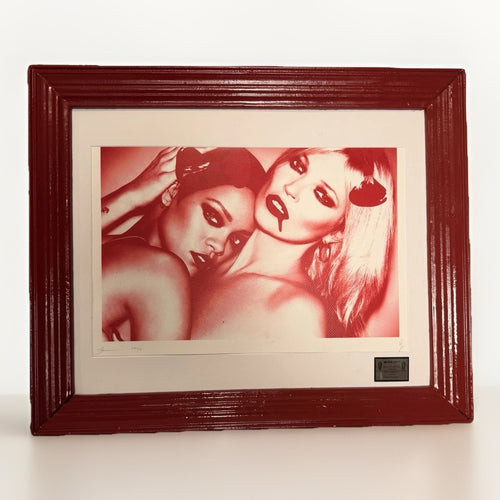
Photograph the entire front straight-on in diffuse light. If the reverse can be accessed safely, photograph it as well. Add all four corners, each visible edge, every margin, any signature-like or edition-style notation, labels, stamps, frame backing, and documents. If the work is framed, state whether the sheet is fully visible or whether glazing, a mat, or backing prevents inspection. Do not unframe an item simply to improve research images if that risks physical damage.
Record measurements in a consistent way. Write the full sheet size first, then image area, then framed dimensions when applicable. If only one dimension can be seen, say so. Use approximate language when the sheet is inaccessible: “visible image area approximately [x], full sheet not observed.” Never substitute a measurement from a similar online listing for the work in hand.
Then make a text transcription of every mark. Preserve spacing, punctuation, slashes, dates, and unclear characters. “Lower-right margin: handwritten mark appears to read AP” is better than “artist proof.” “Reverse label says [exact wording]” is better than “official label.” If a mark is obscured, write “partially obscured by mat; not fully transcribed.” A clean transcription is the foundation of later research because it keeps the archive from turning uncertain marks into facts.
Finally, record the condition as observed today. Note crease, waviness, discoloration, edge wear, tears, mounting evidence, frame shadow, odor, staining, or visible repair. Condition does not identify a release, but it can tell you whether two listings may depict the same object and it is important in any later sale or insurance record.
2. Create a four-layer evidence log
Put every claim into one of four layers. This simple structure prevents a document, seller statement, and visual feature from being treated as equal proof.
Layer 1: observed on the object. These are facts you can photograph or measure: visible image, paper color in ordinary light, dimensions, margin notation, a frame label, a stamp, damage, and what is physically included. Use neutral language. An observation does not establish a release history.
Layer 2: documents that accompany the object. These might include receipts, invoices, order confirmations, certificates, emails, gallery labels, packing slips, prior appraisals, or old listing printouts. Record whether each is original or a copy if known, who issued it if known, whether it refers to the exact work, and what it actually says. A document can be informative even when incomplete. Its usefulness comes from clear correspondence, not from its reassuring appearance.
Layer 3: externally captured sources. This includes contemporaneous release pages, official social announcements, reliable catalogues, auction records, dealer listings, archived web pages, and marketplace listings. Save URL, capture date, source type, and screenshot. A source becomes more useful when it is dated, identifiable, and demonstrably connected to the exact work. An online title with no matching image or dimensions is a lead, not confirmation.
Layer 4: conclusions and unconfirmed questions. Write these separately: “possible title,” “possible year,” “relationship to numbered run not confirmed,” “source may show a related image,” or “acquisition history begins with current seller.” This category is where uncertainty belongs. Do not hide it in a sales paragraph.
Use the same labels in every version of the record. Anyone who opens the file should be able to distinguish a photograph of a mark from a statement about what the mark means. That makes the archive durable when you revisit it months later or transfer it with the work.
3. Search for a release without treating web repetition as proof
Search begins with the exact evidence you transcribed: a visible title or text fragment, image description, dimensions, date, margin notation, paper details, and seller or location information where appropriate. Start broad enough to discover variant descriptions, then narrow the search by adding features that are visible on the exact work. Save every promising page before it disappears or changes.
Evaluate sources by their relationship to the work. A source that is contemporaneous and displays a matching image, dimensions, and release detail may be more useful than a later listing that repeats a generic title. A seller’s own earlier order confirmation may be relevant to acquisition but may not describe process or total quantity. A resale listing with a close photograph may help you compare margins but should not be treated as independent proof of the description it uses.
Do not treat a search engine snippet as a record. Snippets can be truncated, generated from old page content, or associated with a different result. Open the page if it still exists, capture its visible content, and record the date. If the page no longer exists, a web archive may preserve a version, but archived pages can be incomplete and should be labelled as archived rather than current.
Likewise, do not count multiple copies of a description as multiple confirmations. Marketplace sellers often reuse language, images, and price claims. One original description can spread across platforms and appear to create a consensus. Trace image duplicates and wording similarities where possible. When you cannot identify the source, label the claim “repeated resale language; origin not established.”
The companion article DEATH NYC Prints: Official Releases and Secondary-Market Checks is helpful once you are evaluating a specific sale offer. The archive workflow here comes earlier: it builds the record that makes an exact-match comparison possible.
4. Compare similar works without merging them
Place candidate matches side by side. Use a table or a contact sheet. Compare full image composition, not just the central subject. Then compare dimensions, image area, margin proportions, visible handwritten marks, signatures, dates, labels, paper tone, framing evidence, condition features, and documents. A similar image is not automatically the same release; a shared title is not automatically the same sheet.
Pay particular attention to margins. The location and character of a notation, the spacing around the image, and a distinctive crease or spot can help you distinguish a specific sheet from a similar example. These features are evidence for comparison, not evidence of authenticity. They can reveal that a photograph is of the same work moving through the market, but they cannot prove a work’s production or history.
Build a comparison sheet with columns for candidate source, date, image match, dimensions, notation, documentation, condition, price type, and confidence level. Use language such as “strong visual match,” “same subject but different visible margin,” “possible match; full sheet not shown,” or “not comparable because only title overlaps.” This lets you keep useful leads without forcing a single answer.
If a source uses an edition-style notation such as AP, do not assume it applies to your sheet. Transcribe the notation visible on each item separately. For a deeper way to handle that specific issue, use the related draft What Does AP Mean on a DEATH NYC Print?. It explains why a familiar abbreviation should not turn into an unverified edition claim.
5. Track documents, acquisition history, and gaps
Write a short chronological acquisition note. Begin only where your first reliable record begins. For example: “Current owner reports purchase from [seller type] in [month/year]; the lot includes [document]; no earlier source is held.” If you have a receipt or email, save a copy and redact personal data before sharing it. Do not write a complete provenance statement when the chain has gaps.
When a paper document accompanies the print, ask whether its description aligns with the physical sheet. Does it name the image? Does it list dimensions? Does it mention a date, notation, or process? Is it an original document or a copy? Are there mismatches? Record the answers without rewriting the document’s claims as your own conclusions.
For help reading a document field by field, link readers to Gauntlet’s How to Read a Death NYC Certificate of Authenticity. That guide is a companion, not a shortcut: a certificate should be compared with the exact sheet and other evidence.
Missing records are not a moral failure. They are a research limit. State “no purchase record supplied,” “document does not identify dimensions,” “reverse unavailable for review,” or “acquisition history before [date] not independently confirmed.” A future owner may be able to add evidence. An invented bridge in the chain makes the archive worse, not better.
6. Resolve—or transparently retain—discrepancies
A discrepancy is not always a dead end. It can reveal that you are comparing different formats, different sheets, a transcription error, a cataloguing simplification, a later frame change, or an unrelated document. Record the discrepancy exactly before trying to explain it.
Examples include:
- A document says one sheet size, while the work is only visible through a mat.
- A resale title names a subject, while the work’s visible wording differs.
- An apparent date is difficult to read or differs from a later listing.
- A prior image shows a different notation or a margin that is not visible in your photo.
- A certificate refers to an image but does not specify the physical format.
Give each discrepancy a status: resolved by evidence, plausible but unproven explanation, or unresolved. An unresolved discrepancy should be disclosed if it is material to a listing, acquisition, insurance schedule, or family record. Do not silently select the version that makes the work appear more scarce or valuable.
This is also the point to pause when a claim becomes consequential. If your decision depends on authenticity, production process, an edition relationship, legal rights, valuation, tax, or insurance, seek advice from an appropriate qualified professional. This article organizes research; it does not provide a definitive opinion on those matters.
7. Describe an older work safely when buying, selling, or insuring
The most useful identification statement starts with the object, then names the support, then states the limits. For example:
“Contemporary print on paper showing [neutral visual description], approximately [dimensions]. The lower margin bears the pictured notation. The lot includes the pictured [document type]. The current record supports [specific sourced description]; total release quantity, production method, and pre-[date] ownership history are not confirmed by the materials retained.”
This is not weak language. It protects the reader from mistaking a research lead for a settled catalogue entry. It also preserves the right to update the record if a credible primary source is found later.
Do not add a title, date, edition size, official designation, artist attribution, value, or rarity claim merely because it performs well in a marketplace title. If you use a descriptive title for navigation, identify it as a descriptive reference rather than a confirmed release title. Keep source-specific language in the body: “described as [term] by [source], captured [date].”
If the object is being insured, check the insurer’s current inventory and evidence requirements. An insurer may need photographs, acquisition records, or an appraisal depending on the policy. This archive can make that conversation clearer, but it is not itself an appraisal or proof of coverage.
The same method is useful in other collectible categories. The related draft BE@RBRICK Release Identification: How to Match a Figure, Box Label and Catalog Record applies exact-object matching to a different format. The cross-category lesson is the same: a familiar image or name is only a starting point; the physical object and its evidence must match.
8. Maintain the archive over time
An archive becomes more valuable when it records additions rather than overwriting earlier uncertainty. Add a dated entry when you locate a new source, receive a document, reframe a work, have it examined, or observe a condition change. Save a fresh full-sheet photo after material changes. Preserve the previous record rather than replacing it.
Use a simple folder structure:
01-object-photos02-documents03-source-captures04-acquisition-and-messages05-comparisons06-condition-and-conservation07-summary-and-open-questions
In the summary file, write one paragraph each for observed facts, supported description, and open questions. Make the words “not confirmed” visible. That phrase can save a future owner from unknowingly repeating a claim that has no source.
Practical research-archive checklist
| Research layer | What to capture | Why it helps | What it does not prove alone |
|---|---|---|---|
| Exact object | Full front/reverse, margins, measurements, frame state, condition | Keeps research tied to the physical sheet | Release history, official status, or process |
| Marks | Exact transcription and close/context photos | Preserves what the sheet appears to say | Meaning of an AP, signature, date, or number |
| Documents | Original/copy status, issuer if known, exact text, correspondence to sheet | Shows what accompanies the lot | Complete provenance or universal authentication |
| Sources | URL, screenshot, date, source type, matching features | Makes leads traceable and comparable | Truth of a copied or unconnected listing |
| Comparisons | Image, margins, dimensions, condition, notation, transaction type | Prevents similar works from being merged | An edition census or price conclusion |
| Timeline | Acquisition events and gaps stated plainly | Shows where knowledge begins and ends | Ownership history before the first record |
| Summary | Observed, supported, and unconfirmed statements | Produces a transparent description | Final expert opinion |
Related guides
- Existing canonical checked: DEATH NYC Prints: Official Releases and Secondary-Market Checks —
{{URL: /blogs/editorial/death-nyc-official-releases-secondary-market}} - Existing canonical checked: How to Read a Death NYC Certificate of Authenticity —
{{URL: /blogs/editorial/death-nyc-coa-guide}} - Existing canonical checked: Death NYC Authentication: A Practical Checklist Before You Buy —
{{URL: /blogs/editorial/death-nyc-authentication-checklist}} - Draft B01: BE@RBRICK Release Identification: How to Match a Figure, Box Label and Catalog Record —
https://gauntlet.gallery/blogs/editorial/bearbrick-release-identification-box-label - Draft D02: What Does AP Mean on a DEATH NYC Print? —
https://gauntlet.gallery/blogs/editorial/death-nyc-artist-proof-numbered-edition
FAQs
Can I identify a print just from a photo of the image?
Usually not with confidence. Full-sheet images, margins, dimensions, marks, documents, and condition details help distinguish a familiar image from the exact work.
Does a certificate provide a complete release history?
Not automatically. Read what it identifies, compare it with the physical sheet, and state what it does not establish.
What if no exact release page survives online?
Keep the object record, capture credible related sources, and describe the limit. A missing online page is not permission to invent a release title or edition structure.
Can repeated marketplace listings confirm a title or edition size?
They can be useful leads, but repeated language or images may trace back to one unverified source. Preserve and evaluate them rather than treating repetition as independent confirmation.
Should I assign a value once I identify the work?
Identification and valuation are different exercises. This guide does not provide an appraisal; compare truly comparable completed transactions or seek an appropriate qualified opinion if needed.
Source notes and limitations
This is a recordkeeping and research-method guide, not an authentication, appraisal, conservation report, legal opinion, tax opinion, insurance determination, or catalogue raisonné. It was cross-referenced against Gauntlet Gallery’s editorial index dated August 6, 2026 and the canonical pages named above. Online records can disappear, be altered, or repeat unsourced claims; archived material may be incomplete. Item-specific release practices, edition terminology, production process, ownership history, and documentation must be evaluated for the exact work. No certificate, signature, notation, frame label, search result, or copied listing alone universally proves authenticity, official status, provenance, rarity, completeness, or value.