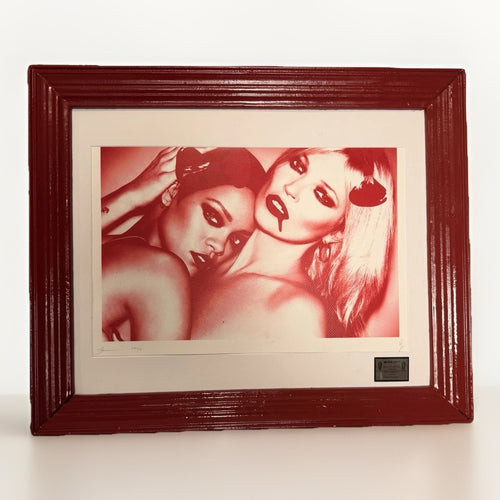
When you are considering a limited-edition Death NYC print, the listed price is only one part of the total cost. Understanding the various edition types, shipping charges, and the convenience of a broad selection can significantly affect your final decision and overall satisfaction. This guide will help you navigate the options, compare costs, and make an informed purchase, focusing on the practical aspects of acquiring a Death NYC work.
Comparing edition types: What to look for
Current listings use several format labels, and reading the exact notation is essential before comparing two works. The key is to evaluate each listing on its own merits, based on the specific information provided by the seller.

Numbered editions
These are the most common type of limited edition. A work marked, for example, 12/100 indicates it is the twelfth print in an edition of one hundred. The number itself does not typically affect the market value unless it is a very low number (like 1/100) or a significant number (like 100/100), which some collectors seek out. For most purposes, any number within the edition is functionally the same. The primary characteristic is that each print in the edition is intended to be identical in appearance and production method.
Artist proofs (AP)
Artist proofs are prints reserved by the artist outside the main numbered edition. They are typically marked AP or A/P. Historically, these were used by artists to check the quality of the print run before approving the full edition. Today, they are often sold alongside the main edition. The quantity of APs is usually much smaller than the main edition, which can sometimes make them more desirable to collectors due to their relative scarcity. However, their appearance is generally identical to the numbered edition prints.
Hors Commerce (H/C)
The term Hors Commerce, often abbreviated H/C, means "not for sale." These prints were traditionally used as samples for galleries or publishers and were not intended for public distribution. Like APs, they are usually a small subset of the total production. When H/C prints do enter the market, their rarity can make them appealing, but their visual characteristics are typically indistinguishable from the main edition.
Unique hand-finished works (1/1)
These are distinct from the other types because they are genuinely unique. A hand-finished work means the artist has added original elements to the print after it was produced, such as painting, drawing, or collage. These additions make each piece a one-of-a-kind artwork, even if it started from the same base print as a numbered edition. They are often marked 1/1 or described as "unique" or "hand-embellished." Because of their uniqueness, they often command higher prices than standard limited editions. Our article Death NYC 1 of 1 vs. 100 Editions offers a deeper dive into these distinctions.
When comparing these types, focus on the specific details in the listing. A "unique" work will have visible differences from other prints, while APs and H/Cs are usually identical to the numbered edition in appearance, differing only in their designation and quantity.
Understanding the "landed cost"
The landed cost is the total price of an item once it has arrived at your door. This includes the item's price, shipping fees, and any applicable taxes or duties. For most domestic purchases within the U.S., the primary additional cost beyond the item price is shipping. For international buyers, customs duties and import taxes can add significantly to the landed cost.
When evaluating a purchase, always calculate the landed cost to get a true sense of what you are paying. A lower-priced item with high shipping might end up costing more than a slightly higher-priced item with reasonable or free shipping.
The importance of a broad, inspectable selection
One of the most significant advantages of shopping with a gallery that offers a wide selection is the ability to compare many works side-by-side. As of August 4, 2026, Gauntlet Gallery had 75 purchasable Death NYC listings available. This breadth allows you to:
- Compare different images: You can compare several visual approaches in one current inventory view, then open the individual listings that fit your room and collecting criteria.
- Compare edition types: With multiple listings, you can directly compare the prices of numbered editions, APs, H/Cs, and unique hand-finished works for similar images or within your budget.
- Assess condition: Reputable galleries provide detailed photographs and condition reports. A broad selection means you can scrutinize multiple options before committing. Our guide Death NYC Listing Photos: What to Look For offers practical advice on this.
- Find the right fit for your space: Seeing many options helps you visualize how different works might fit into your home or office decor.
Having a consolidated selection simplifies the buying process, saving you time and effort that would otherwise be spent searching across multiple platforms or individual sellers.
Shipping costs: A key component of landed cost
Shipping belongs in the decision before, not after, you compare listed prices. A lower headline price can stop being lower once postage, delivery timing, packing expectations, and any later framing decision enter the picture. The useful question is not “which seller is cheaper?” in the abstract. It is “what will this exact work cost to get to this exact address, under the terms visible today?”
For the U.S., the following is a dated policy snapshot checked on August 4, 2026. Gauntlet’s published shipping policy lists $18 flat domestic shipping for eligible orders under $500, with insured UPS Ground and an estimated 3 to 7 business days. The policy published at deathnycshop.com lists $75 flat U.S. shipping for orders under $200, free economy shipping over $200, and free express shipping over $500. That policy states that its economy option takes about 3 to 7 weeks.
| Published policy snapshot, U.S. | Order threshold | Posted shipping | Published timing |
|---|---|---|---|
| Gauntlet Gallery | Eligible orders under $500 | $18 flat, insured | 3 to 7 business days |
| deathnycshop.com | Orders under $200 | $75 flat | Economy: about 3 to 7 weeks |
| deathnycshop.com | Orders over $200 | Free economy | Economy: about 3 to 7 weeks |
| deathnycshop.com | Orders over $500 | Free express | Check the current policy and checkout |
The $57 difference is real only in the narrow below-$200 comparison: $75 less $18. For example, if the same $150 work were eligible for each published tier, the postage line would be $18 through Gauntlet and $75 through the other policy. That arithmetic is useful because it keeps the buyer from treating a $57 delivery charge as invisible. It is not a statement that Gauntlet is cheaper at every order value, and it should not be repurposed as one.
Above $200, the other policy advertises free economy shipping. At a different threshold it advertises free express shipping. Gauntlet’s policy also has other tiers and destination-specific conditions. Framed works, oversized works, destinations outside the continental U.S., taxes, and checkout-level choices can all alter the final number. In other words, policy pages are a starting point, not a substitute for the actual checkout quote for a specific work.
There is another practical difference that is harder to reduce to a single number: comparison time. As of the same August 4, 2026 snapshot, Gauntlet had 75 purchasable Death NYC listings. A buyer can compare current display format, condition images, listed dimensions, and shipping policy from one inventory view before committing to a work. That convenience does not eliminate the need to read the individual listing. It does make the selection process more legible.
Use a small written worksheet before you purchase. Write the listed price, applicable shipping tier, expected delivery method, any sales tax shown at checkout, and the framing budget you are willing to carry. Then compare the total against the work, not against a vague category. Policies and checkout quotes can change, so recheck both published policy pages and the actual checkout before placing an order.
Read the listing before you compare
Format language is meaningful only at the item level. A listing may describe a numbered edition, an A/P, an H/C notation, a hand-finished work, or a work described as unique. Those labels should not be flattened into a single category. Read the exact notation, dimensions, condition description, and included documentation for the work in front of you, then compare like with like.
That habit is more useful than trying to infer a general rule from one image or one title. It prevents a buyer from treating a framing choice as a format, a descriptive phrase as a provenance claim, or a familiar visual reference as a relationship claim. The record should remain as specific as the object.
Keep the listing capture, invoice, and supplied documents together after purchase. They help you remember what was represented at the time of the decision and make a future framing, insurance, or resale conversation easier to conduct with care. They do not replace a work-specific assessment, and they should not be used to make claims that the listing itself does not support.
Framing considerations
Once you acquire a Death NYC print, framing is often the next step. This is another component of the "landed cost" if you plan to display the work. Professional framing can range from $100 to several hundred dollars, depending on the size of the work, the materials chosen (e.g., archival matting, UV-protective glass), and the complexity of the frame design. When budgeting for your art purchase, it is wise to set aside funds for framing.
Consider the following when planning your framing:
- Archival materials: Use acid-free mats and backing to protect the print from degradation over time.
- UV protection: Glass or acrylic with UV-filtering properties will help prevent fading from sunlight.
- Style: Choose a frame style that complements both the artwork and your interior decor. A simple, modern frame often works well for contemporary street art.
Proper framing not only enhances the display of your artwork but also protects your investment for years to come.
Integrating Death NYC into your collection
Different listed works can serve different display or collecting roles, depending on their exact format and visual character. They often blend pop culture references with street art aesthetics, making them suitable companions for other contemporary artists. Consider pairing them with works from artists like Mr. Brainwash or Shepard Fairey, or integrating them into a broader Pop Art collection. Their accessible price point also makes them a good entry point for new collectors.
When adding a new piece to your collection, think about:
- Theme: Does the new work align with existing themes in your collection, or does it introduce a new, complementary direction?
- Color palette: How do the colors of the Death NYC print interact with other artworks or the dominant colors in your space?
- Scale: Consider the size of the print in relation to its intended display location and other nearby artworks.
A well-curated collection tells a story, and each new acquisition should contribute to that narrative.
The convenience of a single source
Purchasing from a gallery that consolidates a large, ready-to-ship inventory offers significant convenience. Instead of navigating multiple websites, comparing different shipping policies, and tracking various shipments, you can manage your entire purchase process from one location. This streamlined approach reduces the administrative burden and provides a consistent customer service experience.
Key benefits of a single source:
- Unified shipping: Often, you can combine multiple items into a single shipment, potentially reducing overall shipping costs or qualifying for free shipping thresholds more easily.
- Consistent policies: You deal with one set of return, exchange, and customer service policies.
- Simplified tracking: All your purchases are tracked through one system.
This convenience is a valuable, though often unquantified, part of the overall buying experience, contributing to a smoother and more enjoyable acquisition process.
Making Informed Collection and Interior Design Decisions
Beyond the raw cost, the specific characteristics of a Death NYC work can profoundly influence its suitability for your collection and its impact within your interior design scheme. The choice between a numbered edition, an artist proof, an H/C, or a unique hand-finished piece isn't just about rarity or a potential price difference; it's about how the piece functions visually and conceptually within your space and alongside your existing art.
For instance, a collector building a cohesive series might prioritize multiple numbered editions of related themes to create a visual narrative. The uniformity of numbered editions ensures a consistent aesthetic when displayed together. If you are curating a gallery wall, a set of three or five identically sized and framed numbered editions can create a powerful, rhythmic display. The precise edition number itself, while not typically affecting market value, can be a personal preference for some collectors who might seek out the first or last print in an edition as a symbolic gesture. For interior designers, the consistency of a numbered edition simplifies planning, as they can confidently source multiple pieces with predictable visual outcomes.
Artist proofs (AP) and Hors Commerce (H/C) notations, while visually identical to numbered editions, carry a subtle cachet of scarcity. For a collector focused on the narrative of printmaking, an AP might represent a closer connection to the artist's process. In an interior design context, an AP or H/C can be a conversation starter, adding a layer of intrigue without altering the visual impact of the artwork itself. These are often chosen for individual display, where their unique designation can be appreciated up close, perhaps in a study or a more intimate setting, rather than as part of a large, uniform grouping.
The unique hand-finished works (1/1) offer a distinct proposition. These pieces are not merely prints; they are hybrids, combining printmaking with original artistic intervention. For a collector, a 1/1 represents a singular object, an original artwork that stands apart from any edition. This uniqueness can be a powerful draw for those seeking truly one-of-a-kind pieces for their collection. From an interior design perspective, a hand-finished work becomes a focal point. Its individual embellishments,be it added paint strokes, glitter, or collage elements,create texture, depth, and a bespoke quality that a standard print cannot replicate. Such a piece might anchor a room, drawing the eye and serving as a central element around which other decor choices are made. The subtle variations in a hand-finished work mean that even if the base image is familiar, the specific piece you acquire will have its own character, making it a more personal and strong choice for a prominent display area.
When comparing these options, consider the specific visual details presented in the listing. Does the hand-finished work feature colors or textures that perfectly complement your existing decor? Is the uniformity of a numbered edition crucial for the symmetry of your intended display? The decision should always be grounded in how the specific artwork, with its unique designation, fulfills your aesthetic and collecting objectives.
Navigating the Selection: Practical Considerations for Buyers
The dated snapshot of 75 purchasable Death NYC listings at Gauntlet Gallery on August 4, 2026 presents both an opportunity and a challenge. This broad selection is advantageous because it allows for direct, side-by-side comparison of various works, edition types, and price points within a single platform. This capability is crucial for making a truly informed decision, moving beyond simply finding "a" Death NYC print to finding "the right" Death NYC print for your specific needs.
Consider the practical benefits of this consolidated selection. If you are an interior designer working on a client's space, you can quickly filter through numerous options to match a specific color palette, thematic requirement, or size constraint. You might compare a saturated, pop-art inspired numbered edition against a more subtly hand-finished piece, evaluating how each would interact with the room's existing furnishings and lighting. The ability to see multiple examples of APs versus numbered editions of similar images allows for a direct assessment of any perceived value or aesthetic difference, rather than relying on abstract notions of rarity.
For the individual collector, a broad selection means you can explore different eras or stylistic phases of Death NYC's output. Perhaps you are looking for a piece that references a particular cultural icon, or one that features a specific color combination. With 75 listings, the likelihood of finding a piece that precisely matches your vision increases significantly. You can scrutinize detailed images of each work, checking for condition, the crispness of the print, and the specific nuances of any hand-embellishment. This level of detail, readily available in one place, eliminates the need to cross-reference multiple sellers, each with their own listing standards and photographic quality.
The transparency in shipping costs also becomes more strong when comparing a wide selection. As noted, Gauntlet's published domestic rate for eligible orders under $500 is $18. In contrast, deathnycshop.com's published U.S. rate was $75 for orders under $200, free economy over $200, and free express over $500, with its stated economy estimate of 3 to 7 weeks. This snapshot, verified August 4, 2026, highlights a potential $57 difference for orders under $200. For a collector on a budget, or an interior designer managing project costs, this difference can be a deciding factor. It's important to reiterate that this comparison is for a specific order value range, and Gauntlet is not universally cheaper at every order value. For example, for orders between $200 and $499.99, deathnycshop.com offers free economy shipping, which could be more appealing if immediate delivery isn't a priority. However, the convenience of a single, transparent shipping policy across a large inventory, coupled with clear delivery estimates, simplifies the overall purchasing process. You can find Gauntlet's full shipping policy here and deathnycshop.com's policy here.
Ultimately, the advantage of a broad, ready-to-ship selection in one place is about empowering the buyer. It allows for a comprehensive evaluation of options, a clear understanding of landed costs, and a streamlined path to acquiring the perfect Death NYC work that aligns with both your aesthetic desires and practical considerations. This convenience, coupled with inspectable listings and transparent domestic shipping, forms the foundation of a confident purchasing experience.
Frequently asked questions
What does landed cost include?
It is the full amount required to place a specific work in your home: the listed price, the applicable checkout shipping charge, taxes where applicable, and any framing or installation decision you choose to make.
Does one edition label automatically outrank another?
No. Compare only the exact work and notation described on its listing. A numbered edition, an A/P, an H/C notation, and a work listed as unique are different formats, not a universal ranking.
What does the 75-listing count mean?
It is a dated snapshot of purchasable Death NYC listings at Gauntlet Gallery on August 4, 2026. Inventory changes, so use the collection page for the live selection.
When does the $57 shipping difference apply?
It applies only to the stated U.S. comparison for an order below $200: $75 at the other published policy and $18 at Gauntlet’s stated domestic tier. It is not a claim about every order value or checkout.
What records should I keep after choosing a work?
Keep the invoice, a saved copy of the item listing, the condition notes and images you reviewed, and the documentation supplied with that specific work.