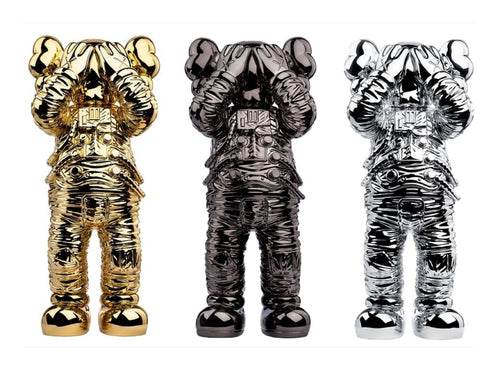
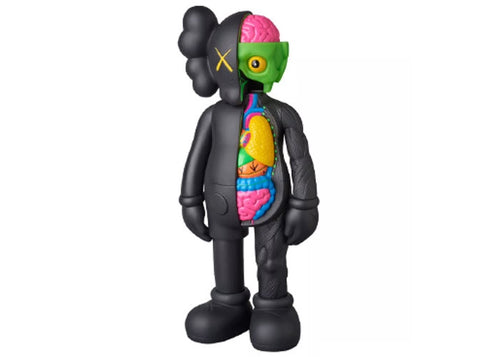
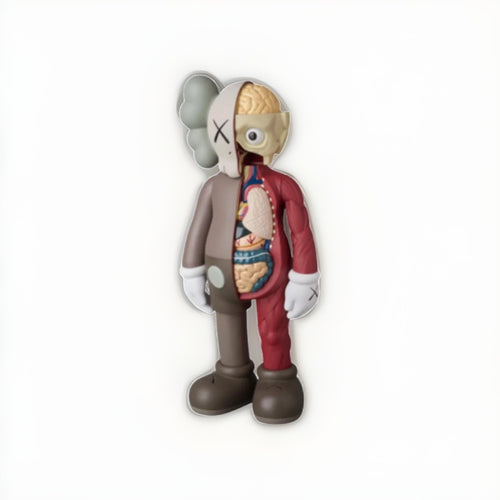
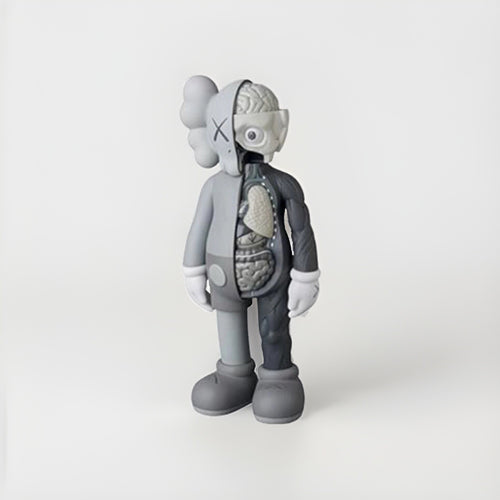
The Display Case Is Part of the Collection
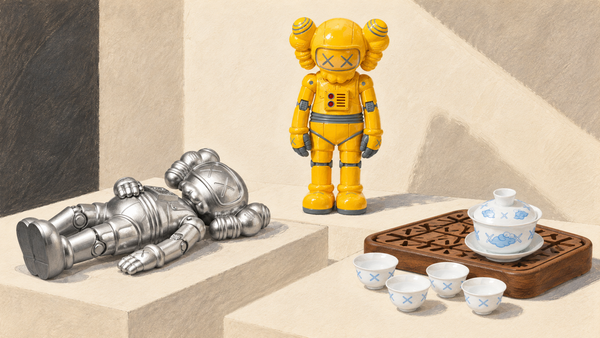
You spent real money on that KAWS Companion. Or a 400% BE@RBRICK you waited months to source. Maybe a full run of vinyl figures you've been quietly building for years.
And right now it's sitting on a shelf, in ambient light, next to whatever else happens to be there.
That's a problem.
Not a moral problem. A practical one. How you display these pieces directly affects their condition, their resale value, and frankly, whether they read as a serious collection or a hobby shelf. The difference between a curated display and a random accumulation is usually one thing: intentional housing.
This article is about how to get that right.
We'll cover material selection, UV protection, authentication integration, sizing for specific formats like KAWS Open Edition figures and 400%/1000% BE@RBRICKs, and the red flags that tell you a display solution is going to cost you later.
Why Display Infrastructure Matters More Than You Think
Let's start with condition.
Vinyl degrades. Paint oxidizes. Limited colorways fade under UV exposure. A figure that grades pristine today will not automatically grade pristine in five years if it's been sitting under track lighting without UV filtration.
This is not theoretical. The secondary market is filled with figures described as "displayed only" that show micro-yellowing on white vinyl, faded paint apps on exposed surfaces, or dust contamination in recessed detail work that's nearly impossible to clean without risk.
What does "displayed only" actually protect if the display itself is doing the damage?
The answer, increasingly, is nothing.
For pieces that carry authentication — and for KAWS and BE@RBRICK specifically, that means TrueCOA blockchain certification for applicable releases, original packaging with hologram, and Medicom release records for earlier pieces — physical condition is directly tied to authentication credibility. A figure that's been improperly stored or displayed introduces questions a serious buyer will ask. A figure in a purpose-built case with documented provenance answers those questions before they're raised.
Display infrastructure is collection infrastructure. The two are not separate.
Materials: What the Case Is Made Of Determines Everything
Acrylic vs. Glass
This is the first decision and it shapes every one that follows.
Acrylic (often sold under brand names like Plexiglas or Perspex) is lighter, shatter-resistant, and significantly easier to fabricate into custom sizes. It's also the dominant material in the designer toy display market for good reason.
The limitation: standard acrylic scratches easily and off-the-shelf acrylic offers minimal UV protection unless specified. You are looking for cast acrylic — not extruded — with UV-filtering additives. The spec you want is 98% or higher UV filtration. Some suppliers will quote this; many won't unless you ask directly.
Glass looks premium and doesn't scratch the same way. Museum-grade anti-reflective glass with UV coating is genuinely excellent for high-value static displays. The tradeoffs are weight, cost, and the fact that custom glass fabrication takes longer and involves less flexibility on dimensions.
For most vinyl figure collections, cast UV-filtering acrylic is the right answer. For single-piece trophy displays of a major KAWS original or a grail BE@RBRICK, museum glass deserves consideration.
Thickness
Acrylic panel thickness matters for structural integrity and optical clarity.
- 2mm to 3mm: Too thin for anything larger than small-format cases. Warps under its own weight over time.
- 4mm to 5mm: Acceptable for medium format cases. Common in mass-market display products.
- 6mm and above: What you want for any case housing a 1000% BE@RBRICK or a large KAWS figure. Provides optical clarity, structural rigidity, and the weight that signals quality when you handle it.
Don't let a vendor talk you into thinner panels on a case for a piece worth four figures or more.
Base and Interior Materials
The case doesn't exist in isolation. What's inside the case matters almost as much as the panels.
Avoid foam inserts that are not archival-grade. Standard polyurethane foam off-gases over time, and those gases can affect vinyl and paint surfaces. This is the same reason archival storage uses acid-free materials throughout.
For bases, look at:
- Solid wood or MDF with lacquer finish: Classic, looks intentional, provides good weight stability.
- Acrylic risers within the case: Excellent for elevation and visual separation of pieces in multi-figure displays.
- Mirror bases: High-impact visually, but watch for fingerprinting and the fact that they show dust aggressively. Worth it for single-piece showcase displays if you're maintaining them regularly.
Sizing Your Case: Format-Specific Guidance
KAWS Open Edition and Limited Figures
KAWS Open Edition vinyl figures in the standard companion format run roughly 11 inches tall. The authenticated pieces — and remember, KAWS authentication runs through TrueCOA blockchain certification for applicable releases, with original packaging and Medicom release records for earlier work — benefit from cases that allow the figure to breathe visually.
A case that's too tight makes the piece feel crowded and makes it harder to inspect base markings without moving the figure out. Plan for clearance.
Recommended internal dimensions for a single standard KAWS figure:
- Width: 14 to 16 inches internal
- Depth: 10 to 12 inches internal
- Height: 15 to 18 inches internal
If you're displaying with original box included — which is relevant for resale — you need to plan that box storage separately. Do not cram the box into the base of the display case. It introduces compression risk and looks bad.
BE@RBRICK: 100%, 400%, and 1000%
BE@RBRICK sizing is the most misunderstood dimension in the designer toy display conversation. The percentage refers to relative scale from the original 70mm (100%) form factor.
- 100%: Approximately 70mm tall. Can be displayed in multiples. Grid cases work well here — 9-cell or 16-cell configurations.
- 400%: Approximately 280mm tall (just over 11 inches). Single display or paired display cases. Internal height of 14 to 16 inches minimum.
- 1000%: Approximately 700mm tall (just under 28 inches). This is a significant object that demands its own case. Internal height of 32 to 36 inches. Width and depth of 16 inches minimum to handle the broader silhouette of many 1000% colorways.
How many collectors have a 1000% BE@RBRICK sitting on an open shelf in 2024?
More than you'd expect. And every one of them has a piece that's accumulating UV exposure, dust, and ambient humidity variation that a purpose-built case would eliminate.
For BE@RBRICK specifically, original packaging is part of the authentication chain for earlier pieces. That packaging should be stored flat, in archival sleeves, in a climate-appropriate environment — not in the display case itself, but accessibly near it.
General Vinyl Figures: Artist Series and Limited Runs
This category is broad. Dunny runs, Qee figures, Art Toy Conference exclusives, artist collaboration vinyls from studios like Toy Art Gallery or Superplastic — the format diversity here is significant.
The principle is the same: the case should complement the piece, not compete with it.
For artist series with multiple pieces in a run, modular shelving systems with individual UV-filtering acrylic covers per shelf can work well. The advantage is flexibility as the collection grows. The disadvantage is that individual shelf covers are harder to seal against dust and humidity than an enclosed case.
For high-value single pieces from recognized artists, a dedicated enclosed case is always the right move.
Environmental Controls: The Case Is the First Line of Defense
The case creates a microenvironment. What you do within that environment matters.
Humidity
Vinyl is more humidity-sensitive than most collectors realize. Elevated humidity over time can affect paint adhesion, particularly on figures with multiple paint applications or complex surface treatments. Ideal range is 45% to 55% relative humidity.
For high-value pieces, small silica gel desiccant packs inside the case — replaced or recharged regularly — are cheap insurance. Use indicating gel (the type that changes color when saturated) so you know when replacement is due.
Temperature Stability
Fluctuation is the enemy, not temperature itself (within reason). A case near a heating vent or an exterior window will experience thermal cycling. Vinyl expands and contracts with temperature changes, and repeated cycling stresses paint applications and can warp bases over time.
Keep cases away from direct heat sources and exterior walls with poor insulation. This is less about the case itself and more about case placement — but it's part of the display infrastructure conversation.
Lighting
If you're lighting your display cases — and you should be, it's the difference between a showcase and storage — the lighting choice matters enormously.
- LED strip lighting with a CRI of 90+: Renders colors accurately. Essential for evaluating colorways and for photography.
- Color temperature: 3000K to 4000K is the standard range for art display. Warmer toward 3000K for figures with warm color palettes. Cooler toward 4000K for figures with blue, grey, or metallic colorways.
- UV output from lighting: Even inside a UV-filtering case, internal lighting should be LED, not fluorescent or incandescent. Fluorescents emit UV. LEDs, by design, do not.
The case handles exterior UV. The internal lighting should not reintroduce the problem.
Authentication Integration in the Display
This section matters more as the market matures.
A display case for a significant KAWS piece or a grail BE@RBRICK is not just housing. It's the physical context in which authentication exists. How you integrate the authentication documentation into the display is a signal to serious buyers and a record for serious collectors.
TrueCOA and Physical Markings
For KAWS and BE@RBRICK pieces that carry TrueCOA certification, the certificate is verified online, but the physical markings — foot stamp, paint detail, base markings — live on the piece itself. The display case should allow inspection without requiring the figure to be removed — or, at minimum, make removal easy and non-damaging.
Cases with magnetic closure systems or lift-off tops are better for this than cases with hinged doors that require clearing a path. The fewer friction points between the piece and verification, the better.
Do not encase a piece in such a way that inspecting the foot stamp requires tools or significant disassembly. That introduces risk every time someone wants to verify.
Documentation Storage
COAs, Medicom release records, purchase receipts, and any supporting provenance documentation should be stored in archival sleeves, not in the display case itself. Heat from internal lighting, even LED heat over time, can affect paper documents. Keep documentation in a dedicated binder or archival box, cross-referenced to the displayed piece.
A simple tagging system — a small archival label on the back of the base with a piece reference number that matches your documentation binder — is more useful than it sounds when you're managing a collection of twenty or more pieces.
Photography for Insurance
A properly lit display case makes insurance photography dramatically easier. Document every piece at acquisition: full figure, all four sides, base markings, foot stamp, packaging, and COA. Store these images in a cloud backup with the file date embedded. This is your provenance photograph record and it matters if you ever need to make an insurance claim or if the piece enters the secondary market.
Custom Fabrication vs. Off-the-Shelf
This is where the market splits into two very different conversations.
Off-the-Shelf Cases
The designer toy display market has grown enough that there are dedicated vendors producing acrylic cases specifically for 400% and 1000% BE@RBRICKs and for standard KAWS figure formats. The quality varies significantly.
What to look for in off-the-shelf options:
- UV filtration specification explicitly stated. Not implied. Not "clear acrylic." Specifically rated UV protection percentage.
- Cast acrylic, not extruded. Ask. If the vendor doesn't know the difference, that's your answer.
- Panel thickness of 4mm minimum for 400% scale cases; 6mm for 1000% scale.
- Dust-seal on closures. Magnetic closures that don't fully seal are decorative, not protective.
- Base material identified. Solid base, not veneered particleboard.
Custom Fabrication
For serious collections, custom fabrication from a specialist acrylic or museum case fabricator is the right answer. The price premium is real. So is the quality differential.
Custom fabrication gives you:
- Exact internal dimensions matched to your specific pieces
- Material selection control (UV spec, panel thickness, base material)
- Integrated lighting design that you specify
- Closure systems that actually seal
- Multi-piece configurations that can house an entire thematic group with consistent visual presentation
The cost is higher. But compare it to the cost of the pieces being housed and the math becomes straightforward.
Would you insure a significant piece for five figures and then house it in a forty-dollar case from a general merchandise supplier?
We see this. More than we'd like to.
Multi-Piece Display Configurations
Collections grow. Display systems should accommodate that.
Thematic Groupings
KAWS Companions across colorways. A full BE@RBRICK artist series. Vinyl figures from a single studio across years. Thematic display creates visual coherence and tells the collection's story more effectively than pieces scattered across multiple surfaces.
For thematic groupings, consider:
- A single large case with interior acrylic shelving and individual figure risers
- Matched case sets with consistent external dimensions placed in sequence
- A modular wall system with individual enclosed modules per piece or per pair
The modular approach works particularly well when the collection is actively growing. You add modules without disrupting the existing display.
Mixed Scale Displays
Displaying 100%, 400%, and 1000% BE@RBRICKs together requires careful scale management. The 1000% dominates visually and should anchor the grouping, not compete with it. Smaller scale pieces can be elevated on risers to create visual dialogue without the case becoming chaotic.
Avoid mixing display cases of radically different visual weights in the same grouping. A handmade wooden case next to a machined acrylic case next to a generic retail display unit is a mess. Consistency of case material and finish within a display area matters.
Red Flags
Before you buy a case — or commission one — watch for these.
- No UV protection specification. "Clear" and "UV-protected" are not the same thing. If a vendor can't give you a filtration percentage, the case is not protecting your piece from light damage.
- Extruded acrylic being sold as premium. Extruded acrylic is cheaper to produce, scratches more easily, and has worse optical clarity than cast acrylic. Vendors don't always distinguish. You should.
- Foam inserts that aren't archival grade. Non-archival foam off-gasses compounds that can affect vinyl and paint over time. Ask what the foam specification is.
- Cases with fluorescent internal lighting. Fluorescents emit UV. You are adding UV exposure inside a case that is supposed to protect against UV. This is exactly backwards.
- Closure systems that don't seal. A magnetic closure that holds the panel in place but leaves gaps at the edges is not a dust seal. You will have dust contamination inside the case within months in any normal environment.
- Cases sized to "fit" a 400% or 1000% with minimal clearance. Figure removal for inspection should not require maneuvering the piece through a tight aperture. Tight clearances mean risk every time the case is opened.
- No base weight or stability. A case that can be tipped by moderate contact is a liability. Bases should be weighted and cases should be stable on their own. For 1000% BE@RBRICK cases especially, where the center of gravity is high, base weight is critical.
- Vendors conflating display cases with storage cases. These are different things. A storage case prioritizes protection and compactness. A display case prioritizes visibility and presentation while providing protection. If a vendor doesn't understand the distinction, they are not the right vendor.
Bottom Line
The piece you collected is only as good as the condition it's in.
A KAWS Companion or a significant BE@RBRICK that's been displayed carelessly — in ambient UV light, in humid or thermally unstable conditions, without dust protection — will reflect that in the secondary market. Not dramatically, not immediately, but over time in ways that are difficult to reverse and easy to avoid.
The display case is not an accessory. It's infrastructure. It protects the investment, presents the piece at its best, and integrates with the authentication chain that gives the piece its secondary market credibility.
Do this part right. Cast UV-filtering acrylic at appropriate thickness, proper internal dimensions with clearance, LED lighting at the right color temperature, archival base materials, and closures that actually seal.
Then take the documentation seriously — TrueCOA certification for applicable KAWS and BE@RBRICK pieces, Medicom release records and original packaging for earlier work — store it properly, and photograph everything at acquisition.
A well-built display is the difference between a collection and an investment. Both are worth protecting.
Frequently Asked Questions
What kind of acrylic should I use for a KAWS or BE@RBRICK display case?
Cast acrylic with a UV filtration rating of 98% or higher. Not extruded acrylic, which scratches more easily and has worse optical properties. Not generic "clear" acrylic from a hardware supplier, which offers essentially no UV protection. Panel thickness should be 6mm or above for cases housing 400% scale or larger pieces. If the vendor can't specify cast vs. extruded or give you a UV filtration percentage, source from someone who can.
Does how I display my BE@RBRICK affect its resale value?
Yes, materially. Condition is the primary variable in secondary market pricing for designer toys. Pieces that show UV fading, micro-yellowing, paint wear, or dust contamination in detail work trade at meaningful discounts to pristine examples. For earlier pieces where original packaging is part of the authentication chain, packaging condition matters independently. Proper display — UV-protected, humidity-stable, dust-sealed — preserves the condition that commands premium pricing.
How does authentication verification work with a sealed display case?
TrueCOA verification for KAWS and BE@RBRICK pieces is done online against the blockchain certificate, but physical checks — foot stamp, paint detail, base markings — still require access to the figure itself. For practical display, your case should allow easy figure removal without risk. Cases with lift-off tops or magnetic closures that open cleanly are better for this than hinged door configurations that require clearing a path. The goal is zero friction between the piece and verification.
Should I display my KAWS figure in or out of the original box?
Out of the box is the standard display approach. The figure is the piece; the box is documentation. For secondary market purposes, keeping the original box in excellent condition is important — particularly for earlier pieces where packaging is part of the provenance chain. Store the box flat, in an archival sleeve or box, away from light and humidity fluctuation. Do not store the box inside the display case. Do not stack things on top of it. Treat it as documentation, because that's what it is.
What's the right internal size for a 1000% BE@RBRICK display case?
A 1000% BE@RBRICK stands approximately 700mm tall (just under 28 inches). You want internal case height of 32 to 36 inches minimum. Internal width and depth of 16 inches minimum to accommodate the broader silhouette of many colorways, particularly those with accessories or wider sculpts. The base of the case needs to be weighted — a 1000% has a relatively high center of gravity and a case that can be tipped is a liability. If the case will be freestanding, confirm it's stable before putting the piece in it.
Is glass better than acrylic for high-value display cases?
Museum-grade anti-reflective glass with UV coating is excellent for single-piece trophy displays and has a visual and tactile quality that signals seriousness. The tradeoffs are weight, cost, longer fabrication time, and less flexibility on custom dimensions. For most vinyl figure collections — even high-value ones — cast UV-filtering acrylic is the more practical answer. For a single grail piece that you're treating as a centerpiece of a room or collection, museum glass is worth the premium consideration.
How should I light a display case for KAWS or designer toy figures?
LED strip lighting with a Color Rendering Index (CRI) of 90 or above. Color temperature in the 3000K to 4000K range depending on the colorways you're displaying — warmer for figures with warm palettes, cooler for metallic or blue-toned pieces. Do not use fluorescent internal lighting; fluorescents emit UV, which defeats the purpose of a UV-filtering case. LED lighting produces minimal heat and no UV by design, making it the right choice for enclosed display environments.
Can I display multiple figures in one case without them affecting each other?
Yes, with proper planning. Use archival-grade acrylic risers for elevation and visual separation. Avoid direct contact between figures — paint transfer is a real risk with vinyl pieces that are touching or in close proximity over extended periods. Ensure the case has adequate airflow design (most sealed cases handle this through the construction itself) and that your silica gel desiccant management covers the volume of the space you're sealing. Multi-piece displays in a single case are effective and can be visually compelling, but the humidity and dust management needs to scale with the interior volume.