Four Houses, One Market: What Buyers Actually Need to Know About Sotheby's, Christie's, Phillips, and Bonhams
Most collectors treat the major auction houses as interchangeable. They see a lot they want, they register, they bid. The house is just the venue.
For pieces in the sub-$1,000 range, gallery-direct buying offers fixed pricing with no buyer’s premium added at checkout.
Browse Authenticated InventoryThat thinking costs money.
Each of these four houses operates with a different business model, a different buyer base, a different premium structure, and a different relationship to the categories you actually care about. The experience of buying a signed photograph at Bonhams is not the same as buying one at Sotheby's. The terms are different. The due diligence culture is different. The after-sale experience is different.
This isn't a ranking. There's no "best" house in the abstract. There's only the right house for a specific lot in a specific category at a specific moment in the market.
What follows is what an experienced secondary-market buyer needs to know before they register a paddle anywhere.
The Premium Structure: Where the Real Price Lives
The hammer price is a fiction. It's the number the room hears, the number that gets quoted in press releases. The number you actually pay is the hammer plus buyer's premium plus applicable taxes plus shipping plus insurance plus any import duties if you're crossing borders.
Buyer's premium across the major houses follows a broadly similar tiered structure — higher percentage on lower hammer prices, stepped down on higher ones — but the thresholds and rates shift, and they shift more often than most buyers realize.
All four houses have adjusted their premium structures multiple times in the past decade. Sotheby's and Christie's have both introduced online-only sale premiums that can run higher than their live-sale equivalents. Phillips has restructured around a competitive tiered rate that's been used as a selling point to consignors and buyers alike. Bonhams varies significantly by sale type and region.
The practical rule: always calculate total cost before you set your maximum bid, not after.
A lot with a £20,000 hammer can clear £26,000 before you've arranged a single thing. Add VAT in a UK sale, add shipping to the US, add crating for a work on canvas, and you're looking at a number that's materially different from what the room sees.
How many buyers have walked away from an "affordable" hammer price with a genuinely unaffordable invoice?
Online-Only Sales and the Premium Differential
All four houses now run substantial online-only timed auction programs alongside their marquee live sales. The premium structures in these channels are not always the same as in the room.
Sotheby's Buy Now platform and their timed online sales carry their own terms. Christie's online-only sales — particularly in their lower-value categories — have run premium rates that differ from the main room. Phillips has leaned aggressively into online formats for street art, contemporary prints, and editions. Bonhams operates multiple specialist online channels under different sale conditions.
Read the conditions of sale for the specific channel you're bidding in. Not the house's general terms. The specific sale's terms.
Sotheby's: The Market Leader and What That Actually Means for Buyers
Sotheby's is the oldest and, by most measures, the highest-volume of the four in trophy-asset categories — Impressionist and Modern, Post-War and Contemporary, jewelry, watches, wine, and the high-end of street art and urban contemporary.
The Sotheby's buyer experience at the top end is genuinely different. Access to specialist departments is easier. Pre-sale condition reports are detailed. The client advisory function, if you're in their system as a serious buyer, is real and useful.
For buyers below the top tier, it's a different conversation.
The house's scale means that mid-range lots in competitive categories — signed prints, editions, multiples, memorabilia — can get comparatively less specialist attention before the sale. Due diligence is not uniform across the entire catalog. A £2,000 signed photograph in a Sotheby's sale did not receive the same scrutiny as a £2,000,000 painting.
This matters because Sotheby's brand carries weight in the resale market. A lot with "sold at Sotheby's" in its provenance reads well. But that provenance phrase doesn't mean Sotheby's authenticated the piece in any technical sense. It means they offered it and someone bought it.
Sotheby's and Authentication: What the House Actually Does
Sotheby's employs specialists and, in some categories, engages external authentication bodies. For Warhol works, the relevant framework post-2012 is the TrueCOA system, since the Warhol Authentication Board dissolved that year. For music memorabilia and signed items, Sotheby's increasingly references third-party authentication — Beckett (BAS), JSA, PSA/DNA — in their catalog notes, but this is not universal and it is not required by their standard terms.
If you're bidding on a signed item at Sotheby's and the lot description doesn't reference a recognized authenticator, ask the specialist directly before the sale. In writing. Keep the response.
Does "offered at Sotheby's" mean the same thing as "authenticated"? It does not.
Christie's: The Institutional Counterpart
Christie's and Sotheby's have traded the position of world's largest auction house back and forth for decades. For practical buyers, the operational differences between the two at the top of the market are less significant than the house-specific strengths in particular categories.
Christie's has traditionally been strong in Old Masters, Impressionist works, and certain jewelry categories. In the contemporary and urban art space — the categories most relevant to Gauntlet's collector base — Christie's has built genuine depth, particularly in their First Open and Prints and Multiples sales.
Christie's became fully private in 1998 (owned by François-Henri Pinault's family holding company) and Sotheby's followed into private ownership more recently after Patrick Drahi's acquisition. Neither publishes financials in the way a public company would. For buyers, this means less visibility into the house's financial health, but it's largely a background consideration rather than a day-to-day one.
Christie's Condition Reports and the Buyer's Responsibility
Christie's condition reports are available on request and, for significant lots, often proactively provided. The house's standard conditions of sale are clear that condition reports are opinions, not warranties, and that buyers bear the responsibility for in-person inspection or for appointing a representative to inspect on their behalf.
This is true of all four houses. But it bears repeating because buyers consistently underestimate how much physical inspection matters.
A photograph on a lot page is lit, cropped, and presented to sell. An in-person inspection under a UV lamp tells a different story. Christie's, like all the majors, will facilitate this inspection in the pre-sale viewing period. Use it.
Phillips: The Category-Specific House and Why It Matters
Phillips is the house that's been most intentional about category positioning in the contemporary space. Their strength in 20th Century and Contemporary Art, Design, Photographs, Watches, and particularly in street art and urban contemporary, is not accidental. It reflects deliberate consignment strategy and specialist development over more than a decade.
For buyers of works by artists like KAWS, Banksy, Shepard Fairey, and comparable figures, Phillips has become a primary venue. Their New York and London sale calendars for these categories have delivered significant results and attracted serious consignors.
This concentration of expertise is genuinely useful for buyers.
A Phillips specialist in street art and urban contemporary is likely to know the difference between a Banksy work with full Pest Control documentation and one being offered on the basis of "apparent" or "reputed" attribution. They're more likely to ask the right questions of consignors, and more likely to accurately represent what documentation exists — or doesn't.
Does specialist depth mean every lot is correctly catalogued? No. But it raises the baseline.
Phillips on Street Art and Urban Contemporary: The Authentication Reality
Banksy authentication is Pest Control only. Full stop. Gauntlet Gallery does not claim Pest Control authentication, and we hold this position because the market has learned, expensively, what happens when alternative "authentication" schemes fill the gap.
A Banksy lot in a Phillips sale that carries Pest Control documentation is a different animal from one that doesn't. Phillips' catalog language in this area has generally become more precise over time about distinguishing between the two situations. That's progress.
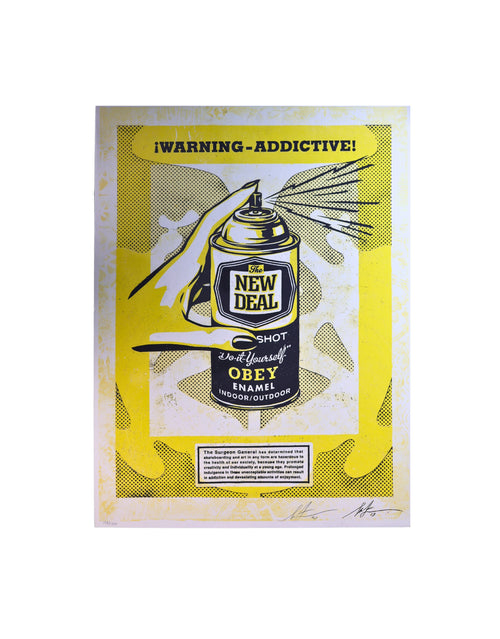
For Shepard Fairey works, there is no artist-issued COA. Authentication relies on the signature itself, edition numbering, the Obey Giant drop record, and provenance chain. A Phillips lot with clean Fairey provenance — documented from an Obey Giant original release through a verifiable chain — is materially different from one sourced from an unverifiable private party.
For KAWS and BE@RBRICK pieces in Phillips sales, original packaging, the hologram, and the Medicom release record are the relevant documentation. Phillips has generally been reliable in requesting and representing this documentation, though buyers should verify rather than assume.
Phillips' Premium Structure and Buyer Experience
Phillips has positioned its premium structure as competitive, and at various points has used this as a consignor and buyer incentive. The practical implication for buyers is that the effective total cost at Phillips, on equivalent hammer prices, can be meaningfully different from Sotheby's or Christie's.
The house is smaller. Post-sale logistics — collection, shipping, third-party handling — require the same attention to detail as the bigger houses, but the client service experience at Phillips has a reputation for being more accessible at a wider range of buyer spending levels.
Bonhams: The Specialist Opportunity and the Buyer's Homework
Bonhams is the most genuinely underestimated of the four houses by buyers who came up through the Sotheby's-Christie's duopoly mindset.
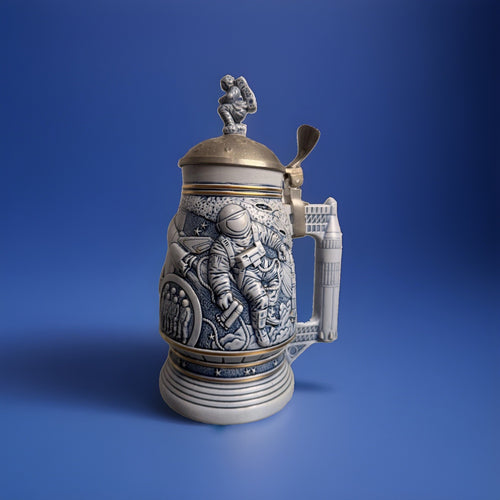
In certain specialist categories, Bonhams is not just competitive — it's the category leader. Their motor car and motorcycles sales. Their arms and militaria. Their entertainment and music memorabilia programs. Their space memorabilia sales, which have become a reference point for the category.
In these specialist areas, Bonhams' cataloguing is serious, their specialist knowledge is deep, and the consignors who trust them with significant material do so for real reasons.
The buyer opportunity at Bonhams is often found precisely because the house doesn't carry the same trophy cachet as Sotheby's or Christie's in the broader art market. Comparable material, sometimes better-catalogued in specialist terms, with a different buyer pool. That combination can produce different price outcomes.
Bonhams and Memorabilia Authentication
For music memorabilia, the authentication framework that matters is Beckett (BAS), JSA, and PSA/DNA. Within Beckett, Roger Epperson REAL is the specialist tier for music items and carries additional weight in the category. JSA offers both a Basic letter and a full LOA — the distinction matters, and a Basic letter is not the same level of service as a full Letter of Authenticity.
For space memorabilia, the same three houses apply — BAS, JSA, PSA/DNA — with the addition of a Zarelli specialist letter as the recognized senior tier for significant space items.
Bonhams' memorabilia sales have ranged in their reference to third-party authentication. In some sales, documentation is thorough. In others, provenance is relied upon more heavily than third-party certification. Buyers in these categories should treat the due diligence process as their own responsibility, not the house's, regardless of how the catalog is written.
FBI Operation Bullpen remains the defining event for understanding how forged sports and entertainment memorabilia reaches the legitimate auction market. The operation, which ran through the late 1990s and early 2000s, demonstrated that large volumes of convincingly forged signed items were moving through apparently reputable channels. The lesson for buyers is not house-specific: if there is no recognizable third-party authentication on a signed item, the provenance story alone is not sufficient protection.
PSA has its own certification-verification warning system. Beckett operates a grading and authentication record. JSA maintains a certification lookup. For any significant signed piece at any of the four houses, verification against these databases before bidding is not optional. It's basic due diligence.
Bonhams Premium and Regional Variation
Bonhams' premium structure varies more than the other three houses by region and by sale type. The UK rates, US rates, and rates in their Asian and Australian operations are not uniform. For buyers regularly crossing between Bonhams venues, this is worth tracking explicitly.
The house has also gone through significant corporate restructuring and rebranding in recent years, including the Bonhams Skinner merger and subsequent integration. The operational experience can vary more than at the more centrally standardized houses. This is neither good nor bad in the abstract — it's a variable to account for.
Gallery-Direct Alternatives to the Auction Room
Fixed prices, no buyer’s premium — three of the highest-value authenticated pieces in the gallery now.

Shepard Fairey OBEY Ai Weiwei Cost of Expression 2014 Signed /375 Screen Print
$849.56
View This Piece

Taylor Swift Signed PSA/DNA Fire Red Fender FA-135CE Electric Acoustic Guitar
$699
View This PieceThe Conditions of Sale: The Document Nobody Reads Until It's Too Late
Every house publishes conditions of sale. Every house requires bidder agreement to those conditions as part of registration. Almost nobody reads them carefully.
The conditions of sale govern what the house guarantees (almost nothing, in most cases), what they disclaim (almost everything), what your remedies are if a work turns out to be inauthentic, and how disputes are resolved.
All four houses operate under conditions that give the buyer comparatively little warranty protection. The standard framework is that the house offers lots as described but that the buyer accepts significant responsibility for their own due diligence. Rescission rights — the ability to return a lot after purchase — exist in some circumstances, but they are time-limited and condition-specific.
Know, before you bid, what the house's rescission policy actually says for the specific sale you're participating in.
Buyer Registration and Paddle Policies
All four houses now require identity verification for registration, consistent with anti-money laundering frameworks that apply across the art market in the UK, US, and EU. The process for establishing a new buyer relationship can take time, particularly for buyers seeking to spend above certain thresholds without an established account history.
If you're planning to bid at a specific sale for the first time, begin the registration process well before the viewing period, not on the day of the sale. This is not a theoretical concern. Buyers have lost lots because registration wasn't complete when the hammer fell.
Comparing the Four Houses: A Practical Reference
| House | Strongest Categories for Collectors | Online Sale Presence | Authentication Culture | Buyer Premium Tier |
|---|---|---|---|---|
| Sotheby's | Contemporary Art, Street Art, Watches, Jewelry, Wine | Very high; multiple platforms | Strong at top tier; variable below | Standard major-house tier; check current rates |
| Christie's | Impressionist/Modern, Post-War, Prints & Multiples, Jewelry | High; First Open online sales active | Strong specialist culture; variable across catalog | Standard major-house tier; check current rates |
| Phillips | Street Art, Urban Contemporary, Design, Photographs, Watches | High; aggressive online strategy | Stronger category-specific culture in core areas | Competitive positioning; check current rates |
| Bonhams | Motor Cars, Memorabilia, Space, Arms & Militaria, Entertainment | Growing; variable by region | Deep in specialist categories; variable elsewhere | Varies by region and sale type |
Red Flags
-
Lot description says "attributed to" or "in the manner of" but the estimate is priced as if it were confirmed.
These phrases have specific meanings in auction catalog language. "Attributed to" means specialists believe the work is by the artist but certainty is not claimed. "In the manner of" is a significantly softer attribution. A lot priced at confirmed-work levels with hedged catalog language is a mismatch worth questioning.
-
Authentication referenced in the catalog cannot be verified through the issuing body's lookup system.
PSA, Beckett, and JSA all operate verification systems. If the lot description references a certification number that doesn't return a result, stop. Do not bid until the discrepancy is resolved in writing with the specialist.
-
Banksy lot without Pest Control documentation being presented as a confirmed Banksy.
The only recognized authentication for Banksy is Pest Control. Alternative "expert opinion" or "authentication letters" from other parties do not substitute for this. A house presenting such a lot without being explicit about the absence of Pest Control documentation is either uninformed or not acting in the buyer's interest.
-
Provenance chain that relies on a single private-party statement with no corroborating documentation.
"From the collection of a private European gentleman" is not provenance. Real provenance is a chain of ownership, ideally with documentation at each link. The older the work, the more gaps are understandable. For a work from the last thirty years, a clean provenance chain should be achievable.
-
Estimate range that seems significantly below comparable results in the recent market.
This can be a genuine bargain opportunity. It can also be a sign that specialists know something about the lot that isn't in the catalog. Ask why the estimate is where it is. The answer, or the absence of a coherent answer, is informative.
-
No condition report available and the pre-sale viewing period is inconveniently timed or geographically inaccessible.
This is a structural problem. If you can't see the lot and can't get a condition report, your information set is incomplete. That's a risk you're taking voluntarily. Some buyers accept it for small bets. For significant purchases, it's not acceptable.
-
Pressure to bid on an online timed sale that's about to close without having reviewed the specific terms for that sale.
Online platforms are designed to create urgency. Urgency is the enemy of due diligence. The lot will either go for what you should pay, or it won't. There is no lot so compelling that you should bypass basic process to catch the closing window.
Bottom Line
The four major houses are not interchangeable. They're differentiated by category strength, by authentication culture, by premium structure, and by the buyer experience they deliver across different spending levels.
Sotheby's and Christie's command the broadest market and the most trophy-asset flow. Their name carries resale weight. Their due diligence culture is strong at the top and variable below it.
Phillips has built something deliberately useful for buyers of street art, urban contemporary, and design. The specialist depth in those categories is real and it matters when you're buying work where authentication is genuinely complex.
Bonhams earns serious consideration in its specialist categories, and the buyer opportunity there — better cataloguing in niche areas, a different buyer pool, potentially different price outcomes — is real for collectors who do their homework.
None of this substitutes for the fundamentals: calculate total cost before you bid, read the conditions of sale for the specific sale you're entering, use the pre-sale viewing period, demand documentation rather than catalog assertions, and verify third-party authentication references independently.
The auction market is not designed to protect you. It's designed to transact efficiently. Understanding which house is doing what, in which category, at what level of diligence — that's how you use the market rather than being used by it.
FAQ
Is Sotheby's or Christie's better for buying street art and urban contemporary?
In terms of sheer volume and trophy-level results, both houses have delivered significant sales in the category. But Phillips has more deliberately built specialist depth here, and for buyers of works by KAWS, Banksy, Shepard Fairey, and comparable artists, the category-specific expertise at Phillips is a genuine consideration. That said, a specific lot at Sotheby's or Christie's with clean documentation is not disadvantaged by the house it's in. Evaluate the lot, not just the logo.
Does buying at a major auction house mean the work is authenticated?
No. The major houses offer lots as described, and their conditions of sale are explicit that buyers bear primary responsibility for due diligence. A work appearing in a Sotheby's, Christie's, Phillips, or Bonhams catalog has been reviewed by the house's specialists, but that review is not an authentication guarantee and it is not equivalent to third-party authentication from a recognized body. The work should still carry appropriate documentation — Pest Control for Banksy, Medicom packaging and release records for KAWS, BAS/JSA/PSA for memorabilia, TrueCOA framework for Warhol — and that documentation should be independently verifiable.
What is buyer's premium and how much should I expect to pay on top of the hammer price?
Buyer's premium is the fee charged by the auction house to the buyer, calculated as a percentage of the hammer price. All four major houses operate on a tiered structure where lower hammer prices attract a higher percentage premium and the rate steps down at higher thresholds. The rates change periodically and vary by sale type — live sale, online timed, online-only. Always check the specific sale's current premium schedule before calculating your maximum bid. As a rough orientation, effective total buyer's premium on mid-range lots at the major houses has generally run in the 20-26% range at recent rates, but verify current terms directly.
How do I know if a signed item's authentication is legitimate before bidding?
For items with PSA, Beckett (BAS), or JSA certification, use each body's online verification system to check the certification number referenced in the catalog against their records. For music-specific items, Roger Epperson REAL within Beckett carries specialist weight. For JSA, distinguish between a Basic letter and a full Letter of Authenticity — they are not equivalent. For space memorabilia, a Zarelli specialist letter is the recognized senior tier beyond the three main bodies. If the lot description references a certification that cannot be verified, contact the house specialist in writing before the sale closes.
What is the difference between a live sale and an online timed sale at these houses, from a buyer's perspective?
The differences are practical and important. Premium structures may differ between channels. Dispute and rescission terms may differ. The level of specialist attention to lot cataloguing can differ — online timed sales often aggregate higher volumes with proportionally less per-lot specialist input. The ability to inspect the lot physically before purchase is the same in principle — viewing periods apply to online timed sales too — but buyers using online channels often skip in-person inspection in a way they wouldn't for a live sale. This is a risk decision, not just a convenience decision.
Is Bonhams worth using for art categories outside their specialist areas?
For categories where Bonhams has genuine specialist depth — motor cars, entertainment memorabilia, space, arms and militaria — the house is a serious option and arguably the category leader for some of those areas. For broader contemporary art categories, the consignment flow and specialist depth are generally below Sotheby's, Christie's, and Phillips. That said, interesting material appears across all houses in all categories. The question is whether the house's cataloguing and specialist knowledge is sufficient for you to assess the lot accurately. In categories where Bonhams' specialism is limited, you may need to do more independent work to reach that assessment.
What happens if I buy something that turns out to be inauthentic?
Each house's conditions of sale govern this, and the terms vary. Generally, the major houses offer a limited rescission right for a defined period after sale if a work is shown to be inauthentic through a qualified authentication process. The burden is on the buyer to establish inauthenticity, and the process for doing so is specified in the conditions. These rights are time-limited — typically measured in years, not indefinitely — and the evidentiary threshold is not casual. The practical lesson is to do the authentication verification before the sale, not after, because the post-sale route to resolution is more difficult, more expensive, and less certain than pre-sale diligence.
How do I build a relationship with specialist departments at these houses as a mid-level collector?
The honest answer is that relationship building at the major houses is driven primarily by purchase history and the categories you're active in. Registering, bidding, and completing purchases builds a record. Engaging directly with specialist departments before sales — requesting condition reports, asking substantive questions about documentation, attending viewings — signals the kind of buyer you are. At Sotheby's and Christie's, the depth of client service attention scales with spending level fairly explicitly. Phillips and Bonhams, being smaller operations, tend to be more accessible across a wider range of buyer levels. That accessibility is part of what makes them worth engaging with actively, not just as venues of last resort.
Skip the Buyer’s Premium
Auction houses add 20–27% on top of the hammer price. Gallery-direct pricing is the number you see — authenticated, documented, and benchmarked against comparable sales.
Browse Authenticated InventoryEvery piece ships with its stated documentation — see how our certificates of authenticity work.