
Authentication Lookup — Verify Your Piece with Gauntlet Gallery
How Gauntlet Gallery Authenticates
The industry's top authentication bodies do their job. Then we do ours. Every piece in our catalog passes an independent Gauntlet review — on top of whatever third-party certification it already carries.
Review the evidence for the individual object
Start with the evidence available for the individual object: source history, release or publisher records, photographs, and named third-party documents where included. Certificates and manufacturer features must be matched to the specific item.
We examine every piece ourselves — independently
Our team reviews provenance, substrate, signature, and condition independent of the third-party cert. Anything inconsistent stops the piece from moving forward.
Pass or reject. No gray area, no exceptions
A piece meets our standard or goes back to the seller — no caveats, no grading on a curve. What you see here passed.
Documentation matched to the object
The listing identifies the documentation supplied with that piece. A TrueCOA record applies only where expressly listed and does not replace source evidence or the named third-party documents. It is not used to authenticate KAWS or BE@RBRICK figures.
Verified By
The authenticators we trust.

A widely recognized authentication standard for signed memorabilia.
Beckett Authentication Services (BAS) grew out of Beckett's trading-card market-reference work. By the early 2000s it had become a well-known autograph authentication body. Today Beckett handles large authentication volume and is commonly used by collectors, dealers, and estate representatives when a signature needs independent review.
-
Signature comparison database Beckett maintains the largest proprietary database of verified signature exemplars in the world — examiners compare every submission against thousands of known-good references for each signer.
-
Tamper-evident hologram Each certified item receives a unique, serialized holographic label. The sticker number ties to a permanent record verifiable at beckett.com/auth/ — a counterfeit cannot duplicate the hologram or the database entry behind it.
-
Letter of Authenticity Every certified piece ships with a BAS LOA that includes the signer's name, item description, certificate number, and examiner grade — a permanent provenance document for resale and insurance.
-
Broad market recognition Beckett certification is commonly recognized across major resale and collector channels. A BAS cert can reduce buyer uncertainty when the certificate details match the physical piece.
What Gauntlet Gallery requires
- Original BAS certificate — no photocopies, no scans as primary documentation
- Hologram on the physical piece, matching the cert serial number exactly
- Grade of Authentic or higher — we do not list pieces with conditional or inconclusive rulings
- Cert verifiable at beckett.com/auth/ before the listing goes live
Gauntlet Gallery categories

The authentication firm built on music-industry relationships — artists, estates, and labels trust JSA first.
James Spence Authentication was founded in 2005 after James Spence spent years as one of the most recognized autograph authenticators in the hobby. JSA built its reputation specifically in the music and entertainment space — a category where Beckett focuses on sports and cards. JSA examiners maintain personal contact with artists and their management to build the most accurate music-signature databases available anywhere.
-
Music-specialist examiners JSA employs examiners with decades of focus on music and entertainment signatures — the depth of their reference database in this category is unmatched and updated continuously as artists sign in new contexts.
-
Full certification documents Every certified item receives a JSA Letter of Authenticity and a tamper-evident holographic sticker with a unique serial number traceable at jsa.cc — the two-document package is industry standard for resale.
-
Preferred by auction houses Heritage Auctions, Julien's Auctions, and RR Auction — the three dominant music-memorabilia sale platforms — all reference JSA certification in catalog descriptions as a primary trust signal.
-
Real-time online lookup Every JSA serial number is queryable at jsa.cc within moments of certification — buyers can verify independently without contacting anyone.
What Gauntlet Gallery requires
- Original JSA Letter of Authenticity — not a digital copy as sole documentation
- JSA hologram on the physical item, serial matching the LOA
- Full authentication (not witnessed-signature cert) — the examiner must have inspected the signature
- Online verification passing at jsa.cc before listing
Gauntlet Gallery categories

The world's largest third-party authentication and grading service — 50 million certified items and counting.
Professional Sports Authenticator (PSA) was founded in 1991 and is operated by Collectors Universe. PSA revolutionized the collectibles industry by introducing an impartial, standardized grading scale that allowed objects to be traded confidently by buyers who had never seen them in person. Its DNA division expanded into autograph authentication and is now one of the three most-cited certifiers for signed collectibles globally.
-
10-point grading standard PSA's 1–10 scale (MT 10 = Mint, GD 2 = Good) is the industry reference for condition. A one-point grade difference can represent a 20–200% price swing depending on the item and population data.
-
Population Report PSA publishes a live Population Report showing how many of every item have been graded and at what grade — the definitive condition-scarcity reference for collectors and resellers pricing their holdings.
-
Slabbed encapsulation Graded items are sealed in a tamper-evident hard plastic slab with grade and cert number embedded — it protects condition, prevents substitution, and permanently records the identity of the object.
-
Broad collector acceptance PSA is widely used across trading-card, memorabilia, auction, and resale channels as a reference point for condition and authentication documentation.
What Gauntlet Gallery requires
- PSA slab or PSA/DNA Letter of Authenticity for signed items
- Cert number verifiable at psacard.com/cert/ before listing
- For graded cards: PSA grade of 7 or higher (Near Mint or better) for standard listings — lower grades disclosed explicitly
- No cracks, breaks, or evidence of slab tampering — we inspect every slabbed item on receipt
Gauntlet Gallery categories

The only authority specifically examining NASA and Apollo-era space artifacts — no other firm comes close.
Robert Zarelli has spent decades building the definitive reference library for NASA, Apollo, and space-program artifacts. His authentication practice is the recognized standard for anything that flew, was carried aboard, or was used in American human spaceflight. Zarelli has worked directly with NASA astronauts, their estates, and major auction houses to authenticate some of the most historically significant space artifacts ever offered for sale.
-
Provenance chain verification Space artifacts require an unbroken chain of custody from NASA or astronaut origin through every subsequent transfer. Zarelli traces each item to verify the provenance has not been manufactured or altered at any point.
-
Materials and condition examination Genuine space hardware has specific material signatures — alloy compositions, manufacturing marks, part numbers, and aging patterns that cannot be replicated. Zarelli's physical examination goes well beyond paperwork.
-
Astronaut signature cross-reference For signed space items, Zarelli cross-references against his proprietary astronaut signature database — built over decades of direct contact with crew members, families, and estates — to rule out common forgeries.
-
Accepted by elite auction houses RR Auction, Heritage Auctions, and Christie's Science and Natural History sales all reference Zarelli certification in lots containing NASA and space memorabilia. It is the non-negotiable credential in this category.
What Gauntlet Gallery requires
- Zarelli Letter of Authenticity — original physical document, not a photocopy as sole provenance
- Full provenance chain from NASA or astronaut origin to current seller, with no unexplained gaps
- Where applicable: PSA/DNA signature authentication for signed space pieces — both certs required
- No items whose provenance relies solely on dealer word without documentation — zero exceptions in this category
Gauntlet Gallery categories

A documentation record for selected works, assessed alongside the object and its evidence.
TrueCOA is a documentation and certificate record used for selected works where the product listing expressly identifies it. Compare the record with photographs, source history and any named third-party documents. A digital record does not independently establish authenticity or create missing provenance. KAWS and BE@RBRICK figures are not authenticated through TrueCOA.
-
Record accuracy and scope A ledger entry records information submitted to it. The accuracy of that information and its relationship to the physical object must still be assessed; an entry alone does not prove authorship.
-
High-resolution photographic archive Compare the photographs and identifying details actually available in the record with the physical object, signature, marks and accompanying documents.
-
Check the available certificate record Where a certificate includes a code or link, use it to locate the record and compare the details. Ask the gallery for clarification if the record is incomplete or cannot be located.
-
Works alongside third-party certs TrueCOA does not replace Beckett, JSA, PSA or Zarelli documents. The listing identifies exactly which materials accompany the particular object; do not assume every item has both a physical certificate and a digital record.
How to verify your TrueCOA
- Scan the QR code on your physical certificate — it links directly to the on-chain record
- Visit truecoa.com and enter your certificate code to view full provenance, photos, and blockchain transaction hash
- Look up the Polygon contract directly at polygonscan.com for raw on-chain verification without our website
- Email info@gauntlet.gallery if your code does not resolve — we trace the record manually within one business day
Gauntlet Gallery categories
Available at Gauntlet Gallery
Explore current pieces available from the gallery.
-

1963 Farquhar Earth in Space Transparent Celestial Globe 16" Compass VTG
$699.00 USD
-

1967 Beatles Richard Avedon STERN Original Posters Set of 4 Linen Backed Copy
$999.00 USD
-
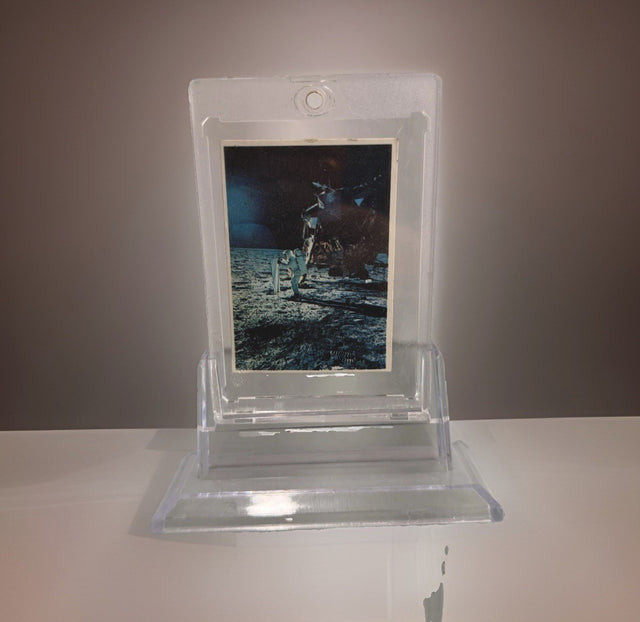
1969 Space Candy Buzz Aldrin Apollo 11 On The Moon Card #19 Taylor-Reed Display
$59.00 USD
-

1980 Polo Player Green Pink Chalk Pastel Bears Andy Warhol Signature AS-IS
$399.00 USD
-

After Andy Warhol Moon Landing Line Drawing 5/50 w/ Astronaut Autographs As-Is
$175.00 USD
-

After John Lennon "I Do" Framed Print, Marked A/P Unverified
$99.00 USD
-

After Roy Lichtenstein I Love Liberty Framed Pop Art Print
$75.00 USD
-

Alice in Wonderland DNYC –$1 Dollar Bills Signed & Numbered Rare
$90.00 USD
-

Alkaline Trio Signed Acoustic Guitar Pickguard Autograph PSA/DNA AN21501
$100.00 USD
-

Andy Warhol The Beatles 1980 Vintage Poster Framed Pop Art Times Books Stokes
$349.00 USD
-

Angels & Airwaves — “Valkyrie Missile: A Brighter Tomorrow”
$89.00 USD
-
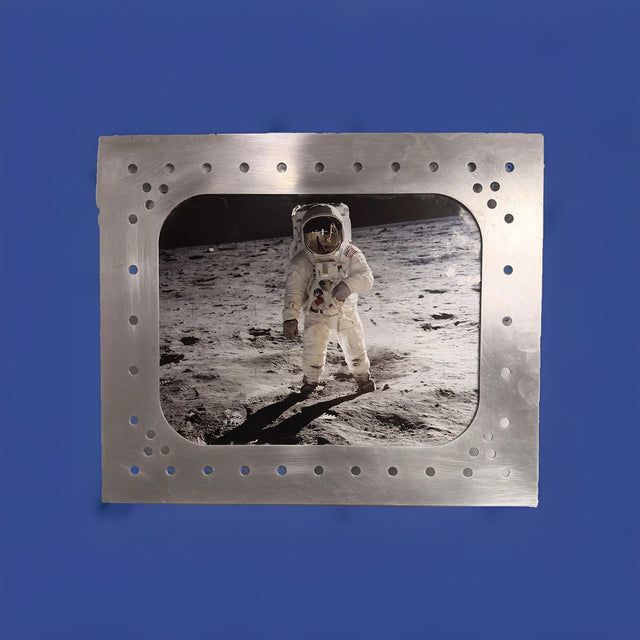
Apollo 11 Astronaut on the Moon NASA Photo Riveted Aluminum Spacecraft Frame
$89.00 USD


Browse the collection for current listings.