Where to Buy Authentic DEATH NYC Prints (and Avoid Fakes)
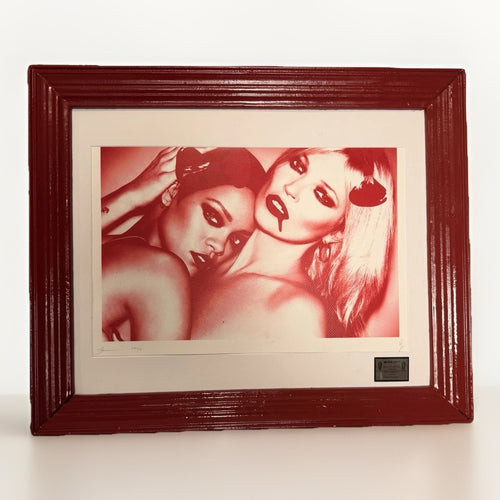
To purchase authentic DEATH NYC prints, buy from an established dealer or reputable platform that supplies each work with its DEATH NYC Certificate of Authenticity (COA) and hologram gold seal, and that can speak to the piece's provenance. Every genuine DEATH NYC print is a small, hand-numbered edition (typically editions of 100) issued with a matching signed and numbered COA and an embossed gold seal. If a seller cannot show the COA, the gold seal, and a clear account of where the print came from, treat the listing as unverified. At Gauntlet Gallery, every DEATH NYC print ships with its original COA and seal, fully documented.
Who is DEATH NYC and why authenticity matters
DEATH NYC is an anonymous New York street and pop artist known for dense, satirical collage prints that mash together luxury-fashion logos, cartoon icons, and art-history references — Warhol, Banksy motifs, Chanel, Louis Vuitton, Hermès, Disney characters, and more. The work is produced as small, hand-numbered limited editions, released steadily and sold at accessible price points compared with blue-chip street art. That combination — recognizable imagery, low entry prices, and high volume — is exactly what makes the market attractive to new collectors, and exactly what makes it a frequent target for unauthorized reproductions and misrepresented listings.
Because the imagery is so widely shared online, anyone can print a poster of a DEATH NYC design. What separates a genuine, collectible DEATH NYC print from a decorative reproduction is the documentation and provenance that travel with it: the signed and numbered COA, the embossed gold seal, and a credible chain of ownership. Knowing how that system works is the single most important skill for buying with confidence.
How DEATH NYC authentication actually works
DEATH NYC uses a straightforward, consistent authentication system built around two physical elements plus provenance. You do not need specialist equipment to check the basics — you need to know what should be present and to insist on seeing it before you pay.
1. The Certificate of Authenticity (COA)
Each genuine DEATH NYC print is issued with its own Certificate of Authenticity. The COA identifies the work, states the edition, and is hand-signed and numbered so it corresponds to the print it accompanies. The COA is not a marketing flyer — it is the primary document that ties a specific numbered print to the artist's release. A legitimate sale keeps the print and its matching COA together.
2. The embossed gold seal
Authentic DEATH NYC works carry a gold seal — an embossed authenticity mark that accompanies the print and certificate. The seal is part of the standard issuance and should be present alongside the COA. When you evaluate a piece, you want to see the print, the signed and numbered COA, and the gold seal presented together as a set.
3. Provenance and the hand-numbered edition
DEATH NYC prints are released as limited editions and are hand-numbered (commonly in editions of 100). Provenance — a clear record of where the piece came from and who has owned it — reinforces the physical documentation. A trustworthy seller can tell you how they acquired the work and can present the COA and seal without hesitation. Vague or missing provenance is a caution flag even when imagery looks correct.
Two important boundaries to keep in mind. First, DEATH NYC's authentication is its own COA-and-seal system; it is not authenticated by any third-party artist authentication board. Do not accept claims that a DEATH NYC print is "authenticated by Pest Control" — Pest Control authenticates Banksy, not DEATH NYC, and mixing those chains is a red flag in itself. Second, a certificate alone is only as trustworthy as the party issuing and selling it, which is why buying through a reputable dealer matters as much as the paperwork.
Why the COA, seal, and print must travel together
The single most common way a legitimate DEATH NYC print loses value — or becomes impossible to verify — is separation. A print sold without its COA, or a COA that has drifted away from the print it was issued for, breaks the documented link between the physical work and its edition. When you evaluate a piece, think of it as a three-part set: the hand-numbered print, the signed and numbered certificate, and the embossed gold seal. All three should be present, and the number on the certificate should correspond to the numbering on the print. If a seller offers the print "without paperwork but I promise it's real," you are being asked to buy on trust alone with nothing to pass on to the next owner. That is a materially weaker position, and it should be reflected in a much lower price — if you buy at all.
Where to buy authentic DEATH NYC prints
There is no single "official store," so where you buy determines how much authentication risk you carry. Here are the realistic channels, ranked by how much verification and recourse they typically offer.
Established authenticated dealers (lowest risk)
A specialist dealer curates inventory, verifies each print's COA and gold seal before listing, and stands behind the sale. This is the most reliable path for a new or intermediate collector because the authentication work is done for you and documented. Gauntlet Gallery's DEATH NYC collection is built this way: every piece is presented with its original COA and seal, with condition and provenance described up front. If you want to skip the guesswork, this is the route.
Reputable auction houses and vetted marketplaces (moderate risk)
Auction houses and established art marketplaces can be good sources, but quality control varies. Read the lot's condition report and authentication statement carefully, confirm the COA and seal are included, and factor in buyer's premiums. On broad marketplaces, seller reputation and return policy matter enormously.
General marketplaces such as eBay and Etsy (highest risk)
You can find genuine DEATH NYC prints on open marketplaces, but this is where the most misrepresented and reproduction listings appear. Only buy from sellers who photograph the actual COA and gold seal, show the hand-numbered edition, disclose condition honestly, and offer returns. Prices that look far below the going rate for a comparable edition are the classic bait — treat "too good to be true" as a warning, not a bargain.
| Channel | Authentication done for you? | Typical risk | Best for |
|---|---|---|---|
| Specialist authenticated dealer | Yes — COA + seal verified and documented | Low | New/intermediate collectors who want certainty |
| Auction house / vetted marketplace | Sometimes — read the lot notes | Moderate | Collectors comfortable reading condition reports |
| Open marketplace (eBay, Etsy) | No — you must verify | High | Experienced buyers who vet sellers carefully |
| Social media / DMs | No — minimal recourse | Very high | Generally avoid unless dealer is known |
Red flags that signal a fake or misrepresented DEATH NYC print
You do not need to memorize secret "tells." Most bad listings fail on the fundamentals below. Any single red flag is a reason to slow down; two or more is a reason to walk away.
- No COA or no gold seal. Genuine DEATH NYC prints ship with a signed, numbered COA and embossed gold seal. If the seller can't show both, you're likely looking at a reproduction or an incomplete set.
- No hand-numbered edition. These are limited editions. A missing or vague edition number ("limited edition" with no actual number) is a caution flag.
- Prices far below market. Unusually cheap listings for desirable designs are the most common lure for reproductions and posters sold as originals.
- The word "poster," "print reproduction," or "giclée copy" buried in the description. Read the full listing — decorative reproductions are sometimes disclosed in fine print, which means it is not an authentic issued edition.
- Mismatched or mixed authentication claims. Claims like "authenticated by Pest Control" (that's Banksy, not DEATH NYC) or references to unrelated authentication services signal a seller who doesn't understand the work.
- Only stock/press images, no photos of the actual piece. Insist on real photographs of the specific print, its COA, its numbering, and the seal.
- Weak or missing provenance and no returns. A seller who can't say where a piece came from and won't accept returns is asking you to carry all the risk.
How to verify a DEATH NYC print before you buy
Run this checklist on any listing before money changes hands. It works whether you're buying from a dealer, an auction, or a marketplace.
- Confirm the COA is present, signed, and numbered — and that its number matches the print.
- Confirm the embossed gold seal is included and pictured.
- Confirm the edition is hand-numbered and ask what the edition size is.
- Request clear photos of the actual piece — front, numbering, signature area, COA, and seal — not stock images.
- Ask about provenance — where did the seller acquire it, and can they document the chain?
- Check condition honestly — creases, fading, foxing, and trimming all affect value; ask for close-ups.
- Sanity-check the price against comparable editions and condition (see the ranges below and our market context resources).
- Confirm returns and buyer protection before paying, especially on open marketplaces.
For the deeper version of this checklist — with more on reading condition and edition details — see our DEATH NYC authentication guide, and for a broader buying walkthrough, the DEATH NYC buyer's guide.
Questions worth asking any seller
A confident, legitimate seller will answer all of these without friction. Hesitation, deflection, or vague non-answers on the basics are themselves informative:
- "Can you send a clear photo of the Certificate of Authenticity and the gold seal?"
- "What is the edition size, and what number is this print?"
- "Does the number on the COA match the number on the print?"
- "Where did you acquire this piece, and how long have you owned it?"
- "Can you photograph any condition issues — creases, spots, edge wear — up close?"
- "What is your return policy if the piece isn't as described?"
None of these questions are adversarial; they are the normal diligence any experienced collector performs. A reputable dealer expects them and has the answers ready. On an open marketplace, the willingness to answer is often the clearest signal you'll get about whether a listing is trustworthy.
Protecting yourself at the point of payment
How you pay is part of your protection. Favor payment methods and platforms that offer buyer recourse if a piece arrives misrepresented or never arrives at all. Be wary of any seller who pushes you off-platform to a friends-and-family transfer, wire, or other irreversible method — that request removes your safety net and is a frequent feature of scam listings. Keep the listing description, the photos you were sent, and your messages; that record is what supports a dispute if one becomes necessary.
What authentic DEATH NYC prints cost: price ranges
DEATH NYC prints are one of the more accessible entry points into collectible contemporary street/pop art, which is a large part of their appeal. Exact prices vary by design, edition, condition, and demand for a particular motif, so treat the following as general ranges rather than fixed quotes.
- Standard hand-numbered prints (common designs, good condition): generally sit in an accessible entry-level band for authenticated contemporary editions — often in the low hundreds of dollars.
- More sought-after motifs and popular crossovers (heavily requested luxury-logo or pop-culture mashups) tend to command a premium above the baseline.
- Condition and completeness matter: a clean print with its matching COA and gold seal is worth meaningfully more than a comparable print missing its documentation or showing handling damage.
Because this market moves and individual designs vary, we don't quote fixed figures here. For current market context and how edition, condition, and demand interact, see our Financial Insights resources, and compare live, documented pieces in the DEATH NYC collection.
What drives the price of one DEATH NYC print over another
Within the DEATH NYC catalog, a handful of factors explain most of the price variation you'll see from one print to the next:
- Design and subject. Mashups featuring the most recognizable luxury logos and pop-culture characters tend to be more requested than obscure ones, and demand for a specific motif can shift over time.
- Edition size and number. Smaller editions concentrate demand; some collectors also pay attention to low or symbolic edition numbers, though this is a preference rather than a rule.
- Condition. A crisp, unfaded, undamaged print commands a clear premium over one with creases, foxing, or trimmed margins.
- Completeness of documentation. A print accompanied by its matching COA and gold seal is the standard; anything missing that documentation should trade at a discount because it is harder to resell.
- Framing and presentation. Professional, archival framing can add convenience and protect condition, though it should never be a substitute for verifying the underlying piece and its paperwork.
The practical takeaway: don't anchor on a single "DEATH NYC price." Compare like with like — same relative desirability, similar condition, complete documentation — and let current, documented sales guide you rather than a headline figure from an unrelated listing.
DEATH NYC in a well-rounded collection
Many collectors who start with DEATH NYC go on to broaden into adjacent street and pop art. If that's your path, the same discipline — insist on documentation, buy on provenance, verify before you pay — applies across artists, even though each has its own authentication chain. Shepard Fairey works, for example, are bought on dealer provenance and trust rather than an artist-issued COA, while KAWS and BE@RBRICK figures rely on TrueCOA and verification against documented release records. Our buyer's guides hub covers each artist's chain so you're never guessing, and the Collector's Hub pulls the authentication, condition, and market resources into one place.
Frequently asked questions
Where can I purchase authentic DEATH NYC prints?
Buy from an established, reputable dealer or a vetted marketplace that supplies each print with its original DEATH NYC Certificate of Authenticity and embossed gold seal and can document provenance. Specialist dealers such as Gauntlet Gallery verify the COA and seal before listing, which removes most of the authentication risk. On open marketplaces like eBay or Etsy you can find genuine pieces, but you must personally confirm the COA, gold seal, hand-numbered edition, and return policy first.
How do I know a DEATH NYC print is real?
A genuine DEATH NYC print comes with a signed, hand-numbered Certificate of Authenticity and an embossed gold seal, and it is part of a hand-numbered limited edition. Confirm all three are present and that the COA number matches the print, request real photos of the actual piece, and ask the seller about provenance. If the COA or seal is missing, the edition isn't numbered, or the price is far below market, treat the listing as unverified.
Does DEATH NYC come with a certificate of authenticity?
Yes. Every authentic DEATH NYC print is issued with its own Certificate of Authenticity plus an embossed gold seal. The COA is signed and numbered to correspond to the specific print. A legitimate seller keeps the print, COA, and seal together as one documented set, and any reputable resale should transfer all of it to you.
Is DEATH NYC authenticated by Pest Control?
No. Pest Control authenticates Banksy — not DEATH NYC. DEATH NYC uses its own COA-and-gold-seal system. Any listing claiming a DEATH NYC print is "authenticated by Pest Control" is mixing authentication chains, which is itself a red flag that the seller doesn't understand the work.
How much do authentic DEATH NYC prints cost?
DEATH NYC prints are relatively accessible, with common hand-numbered designs in good condition typically falling in an entry-level band for authenticated contemporary editions, and more sought-after motifs commanding a premium. Exact prices vary by design, edition, condition, and demand, so use current market context rather than fixed figures — see our Financial Insights resources and compare documented live pieces before you buy.
What condition issues should I watch for in a DEATH NYC print?
Because these are paper prints, look for creases, corner or edge wear, fading, foxing (small spots), and trimming. Ask for close-up photos of the surface, corners, signature, and numbering. A print in clean condition with its matching COA and gold seal is worth meaningfully more than one with handling damage or missing documentation.
Buy and authenticate with confidence
The rule for DEATH NYC is simple: insist on the signed, numbered COA and the embossed gold seal, buy on documented provenance, and verify before you pay. Do that and you're collecting genuine, hand-numbered editions with real resale integrity. Browse authenticated, fully documented pieces in our DEATH NYC collection, learn the details in the DEATH NYC buyer's guide and authentication guide, and put it all in context with the Collector's Hub and Financial Insights. Buy the documentation, not just the image — that's how you avoid fakes and build a collection that holds up.