Direct answer
Store signed Post Malone memorabilia in a stable indoor environment, supported by archival-quality materials selected for the exact object, away from direct sunlight, heat, moisture, pressure, and unnecessary handling. Display it only after documenting the front, reverse, corners, signature, frame, and included records. A professional framer or conservator can assess whether a photograph, poster, signed insert, or card needs a mat, glazing, hinge, sleeve, or separate storage. For insurance, keep an inventory with photographs, purchase records, dimensions, documentation, and a realistic replacement discussion with your insurer; do not assume a certificate or a high asking price establishes coverage. For a gift, explain what is included, what is documented, and what remains uncertain. This is a practical care framework, not conservation treatment, an insurance opinion, an appraisal, or a guarantee of preservation or value.
Table of contents
- Make an ownership record first
- Choose a stable storage environment
- Store photos, records or posters and inserts differently
- Plan a display before framing
- Manage light, handling and travel
- Build an insurance file
- Gift responsibly
- Review the object over time
- Practical storage and display checklist
- FAQs and limitations
1. Make an ownership record first
Care begins with knowing what you own. Create an internal record for each signed item rather than one broad folder labeled “Post Malone memorabilia.” Record the format, exact signed component, dimensions, visible inscription, ink color, frame or mount, packaging, certificates or receipts, acquisition date, price paid, and current location. Give the item an internal ID that helps you distinguish similar pieces. An ID is a household tracking tool, not an authenticity number or a claim about rarity.
Photograph the actual object before moving it into a new frame or storage box. Make a full front image, reverse image, edge and corner images, signature close-up, document images with personal data redacted, and a frame or backing image. Retain original files and a simple date note. If the object already has a crease, fading, adhesive residue, pressure mark, or frame shadow, record it before storage. A baseline lets you distinguish a pre-existing feature from a later change and gives an insurer, framer, or future buyer something concrete to review.
Record the difference between the signed surface and the package. For example, a record or poster may include a signed card, a retail jacket, a disc, an outer sleeve, and a shipping mailer. A framed photograph may include the signed sheet, mat, glazing, frame, and backing. List each component and whether it is original, replaced, or unknown. Do not describe a complete package if an insert or sleeve is absent. Accurate inventory is more important than a dramatic title.
2. Choose a stable storage environment
Paper, coatings, ink, cardboard, adhesives, plastics, and frames respond to temperature and humidity. Aim for a stable, ordinary indoor environment rather than a garage, attic, basement, bathroom, kitchen, or window ledge. Avoid rapid swings, heat vents, radiators, fireplaces, and exterior walls that show condensation. A dedicated room with moderate, consistent conditions is generally easier to manage than a room that is very dry or very damp for part of the year.
Do not improvise a conservation claim. “Climate controlled” can mean many things, and a home sensor does not diagnose the material condition of an object. If the item is unusually valuable, fragile, previously wet, mounted, or showing active change, consult a paper conservator. They can assess the exact substrate, ink, adhesive, frame, and storage history and recommend materials appropriate to that object.
Use clean hands or suitable nitrile gloves according to the surface and professional guidance. Cotton gloves can reduce grip and leave fibers; they are not automatically safer for every task. Hold paper by supported edges, never by a corner or signature. Clear a large, clean work surface before opening a package. Keep beverages, food, pens, loose jewelry, pets, and children away during handling.
Vertical versus flat storage
Flat storage can reduce edge pressure on some paper works, but a very large or flexible sheet may need support designed for its size. Vertical storage can work for properly supported folders and framed objects, but leaning unframed sheets against a wall can create a bend or corner load. Do not stack heavy records or posters or boxes on a framed item. Leave enough space to remove an object without dragging it across another surface.
3. Store photos, records or posters and inserts differently
A signed photo may have a glossy, satin, or matte surface and may be mounted to board. Place it in a clean, appropriately sized archival sleeve or folder with a rigid support that does not touch the signature. Use interleaving only when its material is known to be suitable. Avoid ordinary office folders, newsprint, bare cardboard, PVC plastics, pressure-sensitive tape, and adhesive corners placed directly on the sheet.
For a poster or signed insert, separate the signed paper from the media when practical. A record or disc can add weight, pressure, and abrasion. Store the signed insert in its own protective sleeve while keeping the record or poster package and media together in an inventory bag or box. If you choose to display the jacket and store the record separately, label the internal record so the components do not become mixed with another release. The label is for your recordkeeping and should not be presented as an official edition mark.
Sealed packaging deserves careful thought. Opening a package may make the signed component easier to inspect but can change the condition or market description. Leaving it sealed may preserve packaging while limiting inspection and creating hidden pressure risks. Do not cut a seal, remove a shrink wrap, or separate an insert merely to improve photographs without understanding the consequences. Ask a framer or conservator before making an irreversible change.
Frames and glazing
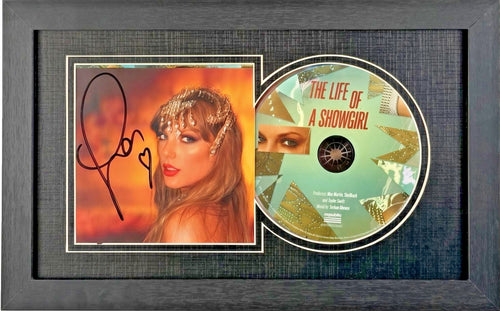
A frame is part of the care system, not a guarantee. Use a mat or spacer that keeps the signature and paper from touching glazing. Choose glazing that controls ultraviolet exposure where appropriate, but remember that UV protection does not make direct sun safe and does not prevent heat, humidity, pressure, or handling damage. A frame should have a clean backing, secure hardware, and enough depth for the object. If the sheet is mounted, ask whether the attachment is reversible and whether it is placing tension on the paper.
4. Plan a display before framing
Make a paper mockup of the frame size and mat opening on the wall. Place the signature where it can be read from the normal viewing distance, but do not crop a meaningful inscription or push an edge against the frame. A photo may suit a portrait-led wall, while a signed poster insert may be better in a shallow display case with the rest of the record or poster stored nearby. A complete package does not need to be displayed all at once.
Choose a wall away from direct sun, skylights, heating vents, damp exterior corners, and areas where people brush past. Keep the lower edge high enough to avoid vacuum cleaners, furniture, and children’s hands. Use hardware rated for the actual frame weight and inspect it after installation. Photograph the installed display and note the date; this is useful for your inventory and insurance records.
Rotate displays when practical. A shorter display period in lower light can reduce cumulative exposure, but rotation is not a substitute for suitable glazing or stable conditions. Store the removed item in its prepared folder immediately and update its location. If a frame develops condensation, a new mark, loose backing, or a noticeable odor, remove it from the wall and seek advice rather than sealing in the problem.
Display language and authenticity
A label next to a frame should describe the item without making an unsupported guarantee. “Signed Post Malone photograph, acquired [month/year], documentation pictured in file” is safer than “certified authentic original.” A display card can become part of a future sale or insurance file, so write what the record supports. If the evidence remains incomplete, say so in your private inventory and avoid overstating it publicly.
5. Manage light, handling and travel
Light damage accumulates. Keep signed paper away from direct sun and strong spotlights, and use a timer for display lighting. A dark room is not required, but the object should not be treated like a poster intended for a sunny window. Check for fading or color change during scheduled inspections rather than waiting until the difference is obvious.
When handling, clear the route first. Support a framed piece with two hands, keep it upright, and do not rest the glazing on a rough floor. For an unframed sheet, use a rigid folder larger than the paper and avoid bending it to fit a bag. Do not touch the autograph to “test” whether the ink is dry; old signatures can smear, transfer, or react to moisture.
For travel, use a fitted sleeve, rigid board, and a protective outer case. Avoid leaving the object in a parked car, checked luggage, or a hotel bathroom. If air travel or an international move is unavoidable, plan for security inspection, customs paperwork, temperature exposure, and declared value with the carrier. Photograph the packed object and seal before departure. Follow current airline, carrier, and destination rules; these can change.
If a shipping box arrives damaged, photograph the outer carton, label, inner packing, and object before discarding anything. Do not clean, flatten, or reframe a potentially damaged item before documenting it. Contact the seller, carrier, platform, and insurer according to current terms. A prompt record is more useful than an angry conclusion about cause.
6. Build an insurance file
Ask your insurer how signed entertainment memorabilia is treated under your policy. Some policies use household limits, sublimits, scheduled property, named-peril terms, actual-cash-value calculations, replacement-cost conditions, deductibles, exclusions, and appraisal requirements. Do not assume that a purchase receipt or certificate establishes the amount payable after a loss. Ask what documentation, security, storage, and valuation date the insurer requires.
Create a file with the purchase receipt, seller and venue, date, item description, dimensions, signed component, condition photographs, documentation, frame cost, shipping record, and any specialist report. Keep a separate note explaining what is known and what is uncertain. If you use current comparable sales, label them as research and record whether each is a completed sale or an unsold ask. A high asking price is not automatically a replacement cost.
For a scheduled item, ask whether the insurer wants an appraisal by a particular type of professional and how often it should be updated. Appraisals can have a purpose—replacement, fair market, liquidation, or another definition—so identify the purpose before relying on a number. A market estimate for a private sale may not match the cost of replacing an item through a specialist channel.
Review coverage after reframing, moving, gifting, selling, or changing storage. Keep the insurer’s written answer with the inventory. Never describe an item as “fully insured” to a buyer unless you can state what policy, limits, exclusions, and dates actually apply.
7. Gift responsibly
A signed Post Malone item can be a meaningful gift, but the recipient deserves an honest description. Explain whether the object is a signed photo, record or poster component, insert, card, or complete package. State what documents are included, whether they are originals or copies, and what remains unverified. Include storage and display instructions in plain language and identify the person or business to contact if the recipient has questions.
Do not transfer private data in a receipt or message history without redacting addresses, payment details, and order numbers. Keep the original record and give the recipient an appropriate copy. If a certificate names the original purchaser, explain whether it transfers and whether the issuer has a current process for updates. Do not alter a certificate to make the gift appear more official.
Discuss practical expectations. The recipient may want to display the object in a sunny room, frame it immediately, or travel with it. Offer a conservation-minded frame consultation and an inventory copy. If the gift is for a child or shared household, use a secure display location and explain handling. A gift is not a promise of future value; it is a transfer of an object and the information needed to care for it.
The companion article signed Post Malone photo versus signed poster can help a recipient understand format choices. The evidence guide Post Malone autograph assessment and red flags explains why a certificate or attractive presentation should not be treated as a universal guarantee.
8. Review the object over time
Set a quarterly or semiannual inspection reminder. Review the front, reverse, corners, signature, frame, glazing, backing, storage folder, and room conditions. Compare new photographs with the baseline and note any change, even if you are unsure of the cause. Do not rub, clean, flatten, or apply household products to paper or ink. Ask a conservator before making a treatment decision.
Update the inventory after every move, frame change, loan, sale, or gift. If an item leaves your possession, record the date, recipient or carrier, condition at handoff, and tracking or signed receipt. A clear chain of custody helps with insurance, future sale, and family records. It also prevents a poster, certificate, or frame from becoming separated from the item it describes.
What not to do
Do not tape the signature to backing board, laminate a paper autograph, place it in PVC, use a household iron to flatten a crease, spray cleaner on glazing while the object is inside, store it in an attic, leave it in a car, or rely on a social-media image as an inventory record. These actions can cause irreversible changes. When in doubt, stop and ask a qualified professional.
Good care is mostly unglamorous: a clean surface, a stable room, a labeled folder, a scheduled photograph, and enough time to ask before changing the object. Those habits protect both the object and the story attached to it.
Practical storage and display checklist
| Area | Action | Record |
|---|---|---|
| Identity | Identify exact signed component and dimensions | Internal ID and inventory |
| Baseline | Photograph front, reverse, edges, signature and documents | Original files and date |
| Environment | Select stable indoor location away from sun and heat | Room and shelf/wall location |
| Materials | Use suitable sleeve, support, mat, spacer and glazing | Material notes or framer invoice |
| Handling | Support edges, clear work surface, limit touches | Handling date and reason |
| Travel | Rigid protection, photographs, current carrier rules | Packing photos and tracking |
| Insurance | Ask policy-specific questions and retain written answer | Policy, limits, valuation file |
| Gift or sale | Transfer item list, documents, care notes and condition | Signed handoff or delivery record |
| Review | Compare inspection photos on a schedule | Change log |
A maintenance calendar for the collection
Create a small maintenance calendar rather than waiting for visible damage. Every few months, inspect the frame or case for pressure, dust, condensation, shifted backing, insects, or new fading. Photograph the object through the same neutral lighting setup so changes can be compared over time. Once a year, review the inventory, purchase record, certificate, insurance schedule, and emergency contact information. If the item moves, record who handled it, how it was packed, and its condition before and after transport.
This practice is especially helpful when a collection includes several formats. A signed booklet may need a flat archival sleeve, a photograph may need glazing and a reversible mount, and a guitar may need a stable stand or fitted case. Treat each format according to its materials; do not assume one display solution protects every signed object.
Keep a current contact sheet with the item handle, location, dimensions, photograph date, and any open condition question. A contact sheet is useful after a move, during an insurance review, or when a family member needs to identify the object without opening a case. Store a digital copy separately from the physical collection and update it whenever the display, frame, or storage environment changes.
Related guides
- Draft: Signed Post Malone photo versus signed poster —
https://gauntlet.gallery/blogs/editorial/signed-post-malone-photo-vs-poster-comparison - Draft: Post Malone autograph evidence and red flags —
https://gauntlet.gallery/blogs/editorial/authenticate-post-malone-autograph-evidence-red-flags - Existing Gauntlet provenance guide —
{{URL: /blogs/editorial/provenance-more-than-hype}} - Planned Post Malone CD evidence guide —
https://gauntlet.gallery/blogs/editorial/signed-post-malone-cd-authentication-provenance - Planned Post Malone vinyl condition guide —
https://gauntlet.gallery/blogs/editorial/signed-post-malone-vinyl-record-condition-guide - Planned Post Malone guitar chain-of-custody guide —
https://gauntlet.gallery/blogs/editorial/signed-post-malone-guitar-authentication-chain-of-custody - Planned Post Malone safe-buying guide —
https://gauntlet.gallery/blogs/editorial/buy-signed-post-malone-memorabilia-safely - Planned Post Malone resale workflow —
https://gauntlet.gallery/blogs/editorial/sell-signed-post-malone-cd-vinyl-resale-workflow - Planned Post Malone album-booklet care guide —
https://gauntlet.gallery/blogs/editorial/preserve-signed-post-malone-album-booklet-condition - Planned Post Malone collector-format guide —
https://gauntlet.gallery/blogs/editorial/best-signed-post-malone-items-for-collectors
FAQs
Should I wear gloves when handling a signed Post Malone record or poster?
Use clean hands or gloves appropriate to the surface and task. Gloves are not automatically safer if they reduce grip. The key practices are clean handling, edge support, and a clear work surface.
Is UV-protective glazing enough to prevent fading?
No. It can reduce one exposure pathway but does not eliminate light, heat, humidity, pressure, or handling risk. Keep the display out of direct sun and ask a professional about the exact object.
Can I store the signed insert inside the poster?
It may be better to store the signed paper separately if the media, seams, or pressure could abrade it. Use suitable sleeves and keep the components clearly inventoried.
Does a receipt tell an insurer how much the item is worth?
It documents a transaction at a particular time. Your insurer may require a different valuation, appraisal, limit, or schedule. Ask the insurer what it needs under the current policy.
What should I tell someone receiving the item as a gift?
Explain the exact object, included documents, known condition, storage and display steps, and any uncertainty. Give them a copy of the inventory without exposing private purchase information.
Source notes and limitations
This is a collector-care draft, not conservation treatment, an appraisal, an authentication opinion, legal or tax advice, or an insurance coverage determination. Materials, climate recommendations, framing systems, carrier requirements, marketplace rules, and insurance policies vary and change. A conservator, professional framer, insurer, carrier, or qualified adviser should address the exact object and circumstances. No storage method guarantees preservation, and no certificate, frame, price, or insurance schedule guarantees authenticity or future value.