Direct answer
Neither a signed blink-182 photo nor a signed poster is automatically the better collectible. The better choice depends on the exact object, the evidence that accompanies it, condition, intended display, budget, and how comfortable you are with the remaining uncertainty. A signed photo can offer a visually focused display and a clearer subject, while a signed poster can connect the autograph to a specific music release and often has a more defined format. Both categories include examples with different signing circumstances, paper or packaging conditions, signatures, inscriptions, and records. Compare the individual item rather than assuming that a format, era, seller, certificate, or price proves authenticity. This guide is a collecting framework, not an authentication, appraisal, insurance, or investment opinion.
Table of contents
- Define what you are comparing
- Why format changes the collecting experience
- Compare the evidence packet
- Evaluate condition without confusing age and damage
- Think through display and handling
- Research price and scarcity responsibly
- Ask a seller better questions
- Decide with a scorecard and a cooling-off period
- Practical comparison table and checklist
- FAQs and limitations
1. Define what you are comparing
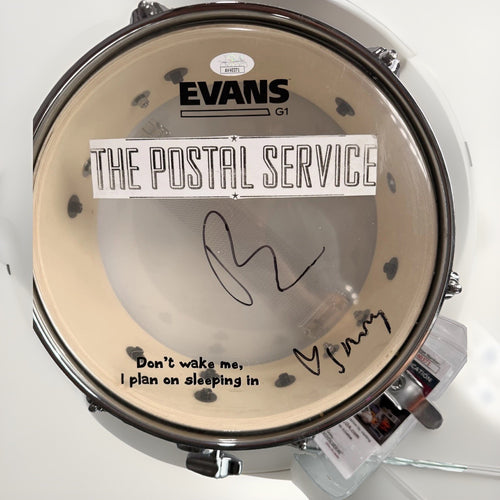
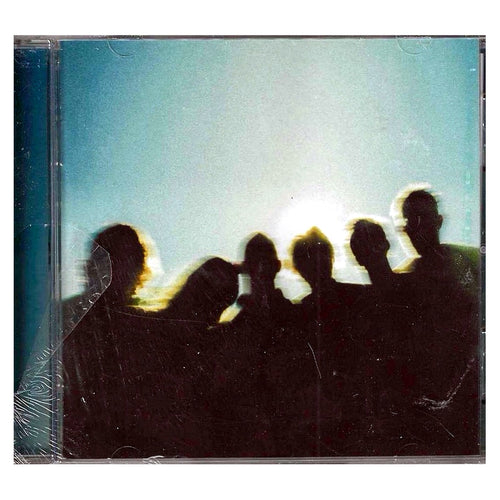
The phrase “signed blink-182 collectible” describes a broad market, not one standardized product. A photograph may be a studio portrait, tour image, promotional still, fan photograph, or reproduction. An record or poster may be a complete retail package, a signed insert, a signed booklet page, a vinyl jacket, a compact-disc insert, or a record with a separately signed card. The signature may be alone, personalized, dated, accompanied by a short inscription, or placed in an unusual area because of the object’s size. The condition of the autograph and the condition of the underlying object may differ.
Before comparing two listings, write a short object definition for each. Record the format, what physical components are included, dimensions, visible markings, signature placement, inscriptions, framing, packaging, and documents. If a listing uses a title such as “signed poster,” ask whether the signed item is the jacket, an insert, a booklet page, or a card that is merely packaged with an unsigned poster. If a photo is described as “original,” ask whether that means a vintage photographic print, a signed promotional photograph, or an original signature on a modern reproduction. A precise definition prevents an attractive headline from doing the comparison for you.
Object record template
| Field | Signed photo | Signed poster or poster insert |
|---|---|---|
| Physical item | Sheet, border, paper type, frame | Jacket, insert, booklet, card, media, packaging |
| Dimensions | Sheet and framed size separately | Signed surface and complete package separately |
| Signature | Location, orientation, ink appearance, inscription | Location on jacket/insert/card, ink appearance |
| Included items | Frame, backing, certificate, receipt, envelope | Album, insert, media, outer sleeve, certificate, receipt |
| Condition | Paper, corners, surface, fading, mounting | Paper, spine, seams, shrink wrap, disc, insert |
| Acquisition | Seller’s first-hand account and date | Same, with edition/release identification |
| Uncertainty | What is not documented or visible | What is not documented or visible |
Do not use this table as an authenticity test. It is an inventory tool that keeps the comparison anchored to the specific lot.
2. Why format changes the collecting experience
A signed photo generally presents the autograph as the main visual event. The image can occupy most of the frame, and a mat can create a clean border around the signature. This may suit a collector who wants a portrait-led display, a small wall arrangement, or a piece that can be viewed without handling a full music package. The tradeoff is that the photo’s production history can be difficult to identify from the sheet alone. Paper type, image source, crop, finish, and reproduction method can vary, and a photograph can be reprinted or mounted after signing. The object’s visual clarity does not resolve those questions.
An record or poster-related signature ties the object to a named release, packaging design, and listening history. Some collectors value the connection to a record or poster more than a larger image. The format can be easier to catalog because the release, edition, and component names are visible. That apparent specificity can also create false confidence: a recognizable jacket can be paired with a different signed insert, an unsigned retail package, or documentation that does not identify the exact signature. A complete record or poster may also create more handling and storage obligations than a single sheet.
The choice can be framed as a use decision rather than a winner. If your priority is a restrained wall display, compare photo dimensions, framing quality, glare, and whether the signature remains visible from the intended viewing distance. If your priority is release history, compare the exact poster component, edition identifiers, packaging completeness, and whether the media will be stored separately from the signed surface. If your priority is gifting, consider whether the recipient connects more strongly with a portrait or a particular record or poster era. A gift should not force the recipient to accept an uncertainty you have not disclosed.
Signature placement and visual hierarchy
Placement matters for display but does not itself prove authenticity. A signature across a dark area may be hard to see under ordinary lighting. A signature on a light margin may be visually prominent but more exposed to framing pressure, trimming, or mat overlap. On a poster, a signature near a fold, seam, or glossy coating may have different conservation concerns from one on a flat insert. Measure the visible signed area and make a mock layout with a paper substitute before choosing a frame. This prevents a mat opening from hiding a meaningful portion of the signature or placing pressure on a corner.
3. Compare the evidence packet
Evidence is not a single certificate. It is a set of records that may include a purchase receipt, order confirmation, signing announcement, event or retailer information, photographs, prior owner correspondence, a provenance timeline, an item-specific certificate, and the seller’s own condition photographs. The value of each item depends on whether it identifies the exact object and whether the account is internally consistent.
For a photo, ask when and where it was acquired, whether it was signed in person or through a retail release, what the original source of the photograph is, and whether the same sheet has been framed, mounted, trimmed, or reprinted. For a record or poster, ask whether the signed surface is the original jacket, a card, a booklet page, or another insert; whether the record or poster and signed component came together; and whether the seller can show the front, back, spine, seams, and the signed surface in one coherent record.
A certificate may be useful context, but it does not automatically authenticate every object that later travels with it. Check who issued it, what exactly it identifies, the date, any serial or lot reference, and whether the document is an original or a copy. If the certificate describes a different format, artist, title, edition, or dimension, treat the mismatch as a question requiring resolution. Do not “fix” a mismatch by rewriting the document in your listing.
Build a timeline
Use a simple dated timeline: acquisition, any framing or storage changes, transfers, inspections, and current sale. Mark each entry as first-hand, reported by a prior owner, or supported by a document. A short timeline with honest gaps is more useful than a long narrative that merges assumptions with facts. If a seller cannot answer a question, record “not provided” rather than treating silence as a positive fact.
The companion guide blink-182 autograph evidence and red flags covers the evidence packet in greater depth. Use it as a question list, not as a promise that a buyer can authenticate a signature from photographs alone.
4. Evaluate condition without confusing age and damage
Condition has at least two layers: the signed surface and the surrounding object. A signature can look strong while the paper has a crease, adhesive residue, foxing, abrasion, fading, or trimming. An record or poster may have a clean signed card but a split seam, corner crush, ring wear, shrink-wrap tear, or missing insert. Conversely, minor age-related handling may be visible but not materially affect the display you plan. The correct description is work-specific.
Ask for photographs in diffuse light and at an angle that reveals surface changes. Request full front and back views, each corner, the signature close-up, edges, labels, and any frame or mounting hardware. For a glossy photo or jacket, reflections can hide scratches and indentations. For a matte insert, low contrast can hide stains. A single flattering image is not a condition report.
Do not assume that “sealed” means the signed surface is untouched or that “new” means the autograph was signed recently. A sealed package can still have pressure damage, warped contents, or a signature on a separate card that was added before packaging. Ask what is actually sealed and whether the seller has inspected the signed component. If opening would destroy a legitimate original seal, ask for the strongest available documentation and understand the limitation before buying.
Condition note language
Use observations: “small diagonal crease near the lower edge,” “signature crosses the glossy area,” “corner protector leaves a visible impression,” or “frame has reflection in image 4.” Avoid conclusions such as “mint,” “flawless,” or “archival” unless a qualified professional has defined those terms for the exact object. If a seller uses a grade, ask which grading system and what evidence supports it. A grade without a description is not a substitute for photographs.
5. Think through display and handling
Signed photos and poster components both benefit from stable indoor conditions, limited direct light, clean support, and minimal handling. The ideal setup depends on the actual paper, inks, coatings, frame, and local environment. Use conservation materials appropriate to the object, keep the signed surface from touching ordinary cardboard or acidic paper, and avoid pressure that can transfer texture or cause a signature to adhere to glazing. A professional framer should inspect the object before recommending a mount.
For a photo, choose a mat opening that leaves the signature visible and does not force the sheet against the glazing. For a record or poster, decide whether to display the signed jacket, the signed insert, or the complete package. Displaying a record vertically may stress a sleeve; storing a complete package in a tight frame may hide seams and prevent inspection. Some collectors rotate a signed insert into display and store the remaining poster components separately in protective sleeves. Document any separation so a future buyer understands what is included.
Keep display out of direct sun and away from heat sources, damp walls, kitchens, bathrooms, and areas with frequent temperature swings. Do not place a heavy object on a poster package or lean a framed work where it can fall. If you travel with it, use a rigid protective folder or a professional carrier rather than a loose tote. These are risk-reduction steps, not guarantees of preservation.
6. Research price and scarcity responsibly
Price research should start with the exact format and evidence, then move outward to close comparables. Separate completed sales from current asks, and note dates, venue fees, buyer premiums, shipping, condition, signature placement, and included components. An unsold listing is evidence of a seller’s expectation, not proof that buyers accepted the number. A headline auction result may include fees or reflect a rare circumstance that does not repeat.
Create two worksheets, one for photos and one for records or posters. For each observed comparison, record the format, release or image description, dimensions, condition, documentation, signed component, date, venue, and result type. Do not average unlike objects. If the available evidence is thin, state that your range is provisional. A lower price with clearer evidence can be a stronger buying decision than a higher price attached to a vague story.
Scarcity is also format-specific. A limited signing window, a retailer release, a tour event, or a particular record or poster era may influence availability, but a claim such as “one of only a few signed” requires item-specific evidence. Avoid repeating scarcity language copied from another seller. Treat “rare,” “hard to find,” and “investment” as marketing terms until the underlying record is clear.
7. Ask a seller better questions
Ask concise questions that can be answered with photographs or records. “Which exact surface is signed?” is more useful than “Is it authentic?” “Can you photograph all four corners and the reverse?” is more useful than “What condition?” “Is the certificate original and does it identify this item?” is more useful than “Does it come with a COA?”
Before paying, ask who owns the item now, where it has been stored, whether it has been framed or mounted, what is included, what is excluded, and what the current return process is. Save the listing and answers. If the seller changes the explanation after you ask for evidence, pause. The right response to uncertainty is more documentation or a decision not to proceed, not an increasingly confident label.
8. Decide with a scorecard and a cooling-off period
Use a scorecard with five categories: object clarity, evidence quality, condition transparency, display fit, and transaction protections. Give each a note rather than an arbitrary number. A blank category is a risk to investigate, not a zero that can be hidden inside an average. Sleep on a high-value purchase, especially if a countdown, social-media hype, or “last chance” message is pushing urgency.
For a gift, add recipient fit and care instructions. Tell the recipient what is documented, what is included, and what remains uncertain. Do not give a certificate as though it were a warranty. A short record of purchase and display guidance can preserve trust better than a dramatic claim about future value.
A note on liquidity and reversibility
The easiest object to display is not always the easiest object to resell. A custom frame, personalized inscription, unusual crop, or incomplete poster package can narrow the future audience even when the item is meaningful to you. Consider whether you could safely remove a frame, ship the object, or explain the documentation to another buyer without losing information. This is not an argument against an unusual piece; it is a reminder to price the enjoyment of ownership separately from an imagined exit price.
Practical comparison checklist
| Question | Photo | Album |
|---|---|---|
| What exactly is signed? | Photo sheet, print, or reproduction? | Jacket, insert, booklet, or card? |
| Are dimensions stated? | Sheet and framed | Signed surface and package |
| Is the actual item photographed? | Front, back, corners, signature | Same plus spine, seams, inserts |
| What evidence identifies it? | Acquisition and photo source | Release, component, and acquisition |
| What condition risks apply? | Mounting, fading, paper damage | Seams, corners, shrink wrap, missing parts |
| How will it be displayed? | Mat and glazing | Jacket/insert choice and storage |
| What remains unknown? | Record gaps and reproduction risk | Component history and package completeness |
How the format affects the handoff
Before you buy, imagine explaining the object to a second collector who has not seen the original listing. A good handoff names the signed surface, gives measurements, identifies every included component, and links each provenance statement to a document or message. For a photograph, include the image dimensions, paper description if known, frame or mat details, and a photograph of the reverse. For a record or poster, list the disc, jacket or case, insert, booklet, stickers, and any protective sleeve separately. This simple inventory prevents a future listing from collapsing several different condition claims into the phrase “signed poster.”
Also record what you chose not to test. If the frame was not opened, say so. If the disc was not played, say so. If the signature was photographed through glazing, say so. A clear limitation does not weaken a careful listing; it tells the next person exactly where more evidence would be useful.
Related guides
- Draft: blink-182 autograph evidence and red flags —
https://gauntlet.gallery/blogs/editorial/authenticate-blink-182-autograph-evidence-red-flags - Draft: Storing, displaying, insuring and gifting signed blink-182 memorabilia —
https://gauntlet.gallery/blogs/editorial/store-display-insure-signed-blink-182-memorabilia - Existing Gauntlet provenance guide —
{{URL: /blogs/editorial/provenance-more-than-hype}} - Planned blink-182 CD evidence guide —
https://gauntlet.gallery/blogs/editorial/signed-blink-182-cd-authentication-provenance - Planned blink-182 vinyl condition guide —
https://gauntlet.gallery/blogs/editorial/signed-blink-182-vinyl-record-condition-guide - Planned blink-182 guitar chain-of-custody guide —
https://gauntlet.gallery/blogs/editorial/signed-blink-182-guitar-authentication-chain-of-custody - Planned blink-182 safe-buying guide —
https://gauntlet.gallery/blogs/editorial/buy-signed-blink-182-memorabilia-safely - Planned blink-182 resale workflow —
https://gauntlet.gallery/blogs/editorial/sell-signed-blink-182-cd-vinyl-resale-workflow - Planned blink-182 album-booklet care guide —
https://gauntlet.gallery/blogs/editorial/preserve-signed-blink-182-album-booklet-condition - Planned blink-182 collector-format guide —
https://gauntlet.gallery/blogs/editorial/best-signed-blink-182-items-for-collectors
FAQs
Is a signed poster more valuable than a signed photo?
There is no universal rule. Compare the exact signed component, evidence, condition, release context, dimensions, and completed-sale research for the individual objects.
Does a certificate prove a blink-182 autograph is authentic?
Not by itself. Read who issued it, what it identifies, whether it is original or copied, and whether its details match the exact item. Treat it as one piece of evidence.
Should I buy a record or poster that is still sealed?
Only after you understand what is sealed and whether the signed surface can be inspected. Sealed packaging can preserve condition, but it can also limit inspection.
Is a personalized signature less desirable?
That depends on the buyer and the exact inscription. A personalization can be meaningful to one collector and less suitable for resale to another. Describe it accurately rather than assuming a universal premium or discount.
Can I frame the signed poster and keep the record playable?
Plan the display around the signed component and storage requirements. A professional framer can help separate display from media storage; do not force the package into a mount that creates pressure or hides condition.
Source notes and limitations
This is a collector-education draft, not a signature authentication, appraisal, conservation treatment, legal opinion, insurance policy, or investment recommendation. blink-182 merchandise, signing practices, marketplace rules, fees, return rights, shipping requirements, tax treatment, and insurance terms can change. Confirm current facts with the relevant official seller, venue, carrier, insurer, or qualified professional. No format, seller, certificate, price, or visual feature described here guarantees authenticity, scarcity, value, or future resale. The comparison must be made from the exact object and its item-specific evidence.