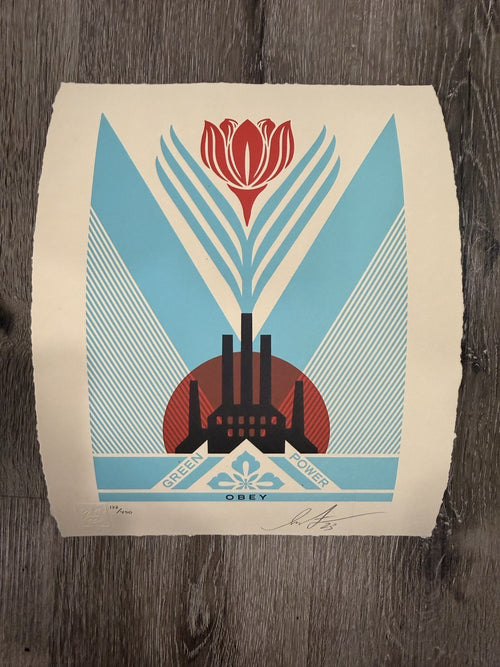
Shepard Fairey's environmental and climate prints are a significant segment of his artistic output, representing his long-standing commitment to ecological issues and social justice. These works directly confront pressing global challenges, from climate change and resource depletion to the preservation of natural habitats and species. Often produced in collaboration with environmental organizations or as part of specific awareness campaigns, these prints serve not only as artistic expressions but also as calls to action, embodying the spirit of activism that defines much of Fairey's career.
The Roots of Fairey's Environmental Activism
Shepard Fairey's engagement with environmental themes is a natural extension of his broader artistic and political philosophy. From his early days with the OBEY Giant campaign, Fairey has consistently used his art as a tool for critical commentary, challenging viewers to question power structures and societal norms. The environment, as a shared resource and a subject of global concern, fits squarely within this framework. His work often highlights the imbalance between human consumption and ecological sustainability, urging a reevaluation of our relationship with the planet.
His artistic language, characterized by bold graphics, limited color palettes, and iconic imagery, is particularly effective in conveying urgent messages. When applied to environmental issues, these visual strategies cut through the noise, making complex topics accessible and emotionally resonant. Whether depicting a fragile ecosystem under threat or a symbolic figure advocating for change, Fairey's environmental prints are designed to provoke thought and inspire action, aligning with the counterculture movements that have influenced his aesthetic and ideological development.
The urgency of climate change and the degradation of natural environments have provided a fertile ground for Fairey's activist spirit, allowing him to channel his art toward tangible causes. This commitment is not merely thematic; it often translates into direct support for organizations working on the front lines of environmental protection, making many of these prints inherently tied to philanthropic efforts.
Key Themes and Iconography in Climate and Nature Editions
Fairey's environmental prints explore a diverse range of themes, all orbiting the central idea of humanity's impact on the natural world. Collectors will encounter works that celebrate the beauty and resilience of nature, often juxtaposed with stark warnings about its vulnerability. Common motifs include:
- Endangered Species: Prints frequently feature animals threatened by habitat loss or climate change, serving as poignant symbols of ecological fragility.
- Natural Landscapes: Depictions of forests, oceans, and mountains, sometimes pristine, sometimes marred by pollution or industrial encroachment, highlight the contrast between nature's grandeur and human destruction.
- Symbolic Figures: Fairey often incorporates figures, sometimes human, sometimes allegorical, who interact with nature—either protecting it, lamenting its loss, or embodying its spirit.
- Industrial Impact: Imagery related to fossil fuels, pollution, and unsustainable consumption patterns directly addresses the root causes of environmental degradation.
- Renewable Energy and Solutions: While many prints highlight problems, others offer a vision of hope, promoting renewable energy sources or sustainable practices.
These themes are woven into Fairey's distinctive visual language, often incorporating elements of his broader OBEY iconography. The use of stars, propaganda-style graphics, and a blend of vintage and contemporary aesthetics gives these environmental messages a timeless yet urgent quality. The duality of beauty and destruction, hope and despair, is a recurring tension in these works, reflecting the complex nature of the environmental crisis itself.
Formats and Release Context: A Collector's Perspective
Shepard Fairey's environmental prints are typically released in various formats, primarily as screen prints, but also occasionally as lithographs, offset prints, or even unique works on paper. Understanding these formats and their release context is crucial for collectors.
Most of these editions are screen prints, known for their vibrant colors and tactile quality. They are often produced on high-quality archival paper, ensuring longevity. Edition sizes can vary significantly, from smaller, highly limited runs to larger editions intended for broader distribution and fundraising. The specific paper type, dimensions, and printing techniques are all details that contribute to a print's unique identity and can be critical for proper identification and authentication.
The release context is particularly important for environmental prints. Many are issued as part of specific campaigns or in partnership with non-profit organizations. For instance, a print might be released to benefit a rainforest conservation group, an ocean clean-up initiative, or an advocacy organization fighting for climate policy. These affiliations are often documented in the print's title, description, or accompanying release information. This connection to a cause not only adds to the print's narrative but can also be a vital piece of its provenance.
Common Print Formats and Characteristics
| Format Type | Typical Characteristics | Collector Considerations |
|---|---|---|
| Screen Print | Hand-pulled, vibrant colors, visible ink texture, often on heavy paper. | Most common, edition size impacts rarity, condition is key. |
| Lithograph | Softer tones, fine detail, printed from a stone or metal plate. | Less frequent for environmental themes, check for artist's signature. |
| Offset Print | Mass-produced, often for posters or lower-cost editions. | Generally lower value, less sought after by fine art collectors. |
| Mixed Media | Screen print with hand-finishing, collage, or unique elements. | Higher value and rarity, each piece is unique. |
When collecting, always seek out the original release documentation where possible. This might include purchase receipts from the official release, information from the collaborating charity, or details from the artist's studio. Such documentation forms a crucial part of a print's provenance, which is essential for both authentication and understanding its historical context.
Navigating the Market for Environmental Prints
The market for Shepard Fairey's environmental prints, like all his works, is dynamic and influenced by a variety of factors. While the thematic significance and charitable context of these prints are undeniable, their market value is ultimately determined by standard art market principles: rarity, condition, demand, and provenance.
Works that were produced in smaller editions, are in pristine condition, and have a clear, documented history tend to command higher interest. The specific imagery can also play a role; some iconic environmental designs may resonate more broadly with collectors. It is important to remember that a print's initial release price, especially if it was part of a charity fundraiser, does not necessarily dictate its long-term market value. Values can fluctuate based on artist popularity, overall market trends, and the specific desirability of an individual piece.
Gauntlet Gallery's Shepard Fairey Print & Fine-Art Index documents 2,623 OBEY Giant works, including many environmental and climate-themed pieces. For approximately 29% of these works, recorded market ranges are available, offering a valuable resource for collectors seeking to understand potential values. However, these are ranges, and actual sold comparables should always be reviewed to make informed decisions. For a deeper dive into market dynamics, consult our Shepard Fairey Price Guide.
“Shepard Fairey’s environmental prints serve as a powerful testament to art’s capacity for advocacy, transforming critical issues into compelling visual narratives that resonate with collectors and activists alike.”
When considering an acquisition, research is paramount. Compare the specific print you are interested in with similar works that have recently sold. Pay close attention to the print's condition, as even minor flaws can significantly impact value. The enduring relevance of environmental issues ensures that these prints will likely maintain their significance, but market performance for any individual work can vary.
Authentication and Provenance for Environmental Editions
Authenticating a Shepard Fairey environmental print requires a careful and systematic approach. It is a multi-faceted process that relies heavily on a coherent provenance chain, supporting documentation, and physical inspection of the artwork. This is critical for any serious collector.
A coherent provenance chain means a clear, unbroken history of ownership from the original release to the present day. This might include original purchase receipts, invoices, or other verifiable records that link the print directly to its initial sale. For prints released for charity, documentation from the benefiting organization can also be a valuable part of this chain.
Physical inspection is another indispensable step. This involves examining the print for its specific characteristics: the quality of the paper, the precision of the screen printing, the presence and nature of any artist's signature or numbering, and any unique marks or details known to be associated with genuine works. It is crucial to understand that while a signature is often present, a signature alone does not authenticate a print. There are many counterfeit signatures and forged works in the market. Authentication relies on a comprehensive assessment of all these factors.
Gauntlet Gallery strongly advises collectors to be vigilant. Never assume a print is authentic based solely on a signature or a verbal claim. Always seek to verify the history and physical characteristics of the work. For more detailed guidance on identifying genuine works, please refer to our comprehensive article on How to Spot a Fake Shepard Fairey.
Frequently Asked Questions About Shepard Fairey Environmental Prints
How can I identify a specific Shepard Fairey environmental print?
To identify a specific Shepard Fairey environmental print, the most reliable method is to consult comprehensive resources like the Gauntlet Gallery Shepard Fairey Print & Fine-Art Index. This index provides detailed information on thousands of his works, including titles, release dates, and descriptions. Cross-referencing the visual characteristics of your print with the documented details in such an index, along with any known release information or collaborating organizations, will help confirm its identity.
Do environmental prints hold their value differently than other Fairey works?
The market value of Shepard Fairey's environmental prints, like all his editions, is primarily determined by factors such as rarity (edition size), condition, provenance, and overall market demand for that specific image. While the thematic significance and charitable context add to their cultural importance, they do not inherently guarantee a higher or lower market value compared to other themes. Collectors should always review sold comparables and consider the individual merits of each work.
What role does charity play in the market for these prints?
Many of Shepard Fairey's environmental prints were initially released with a portion or all of the proceeds benefiting environmental charities. This charitable context is an integral part of their history and provenance, highlighting the artist's commitment to activism. While it adds a unique narrative to the print, the secondary market value is still driven by collector demand, rarity, and condition, rather than the initial charitable contribution. However, a clear connection to a reputable charity can strengthen a print's provenance.
Discovering Shepard Fairey Environmental Prints at Gauntlet Gallery
Shepard Fairey's environmental and climate prints offer a compelling intersection of art, activism, and social commentary. These works not only enrich a collection aesthetically but also carry a powerful message about our collective responsibility to the planet. At Gauntlet Gallery, we are dedicated to providing collectors with access to authentic and well-documented works by Shepard Fairey. We invite you to explore our curated selection of his impactful creations, including many from his significant body of environmental art. Review our Shepard Fairey collection to find pieces that resonate with your passion for art and advocacy.