

Featured image: AI-generated interior concept using product reference photography. Scale, setting, framing, and placement are illustrative.
When a room relies strictly on black and white, the visual margin for error narrows dramatically. In colorful environments, value shifts can take a back seat to hue relationships; a muted sage velvet can quiet a saturated ochre chair through complementary temperature alone. Strip away color, however, and every choice becomes an explicit statement about edge, reflectance, weight, and silhouette. The common pitfall in monochrome curation is flat equivalence. A space where a matte white plaster wall holds a flat black painted frame, which in turn holds a digitally printed jet-black geometric graphic, quickly feels sterile, over-controlled, and strangely absent of depth. To build a monochrome interior that feels alive across changing light, the designer must introduce multiple categories of contrast simultaneously.
Instead of thinking of black and white as static endpoints on a line, treat them as dynamic systems of texture, luster, mass, and line quality. Consider two contemporary works that inhabit this restricted tonal palette while operating on entirely opposing physical logic: Cleon Peterson A Perfect Trade White Screen Print Signed Numbered /125 and the KAWS Companion Flayed Open Edition Black Medicom Toy Dissected Sealed New Figure. One relies on flat screen-printing ink absorbed into a heavy paper matrix with organic deckle edges; the other relies on a molded, three-dimensional vinyl surface that catches light along smooth contours and dissected anatomical interior forms. Placing such works in proximity within a disciplined palette forces a closer examination of how light, boundary, and material finish build depth in a minimalist home.
The Fallacy of the Colorless Room
Designers often inherit client briefs requesting a pure black-and-white space under the assumption that removing color simplifies decision-making. In practice, the opposite is true. A monochrome room is never truly colorless because ambient light, spatial volume, and material substrates constantly inject subtle warm and cool undertones. Natural daylight bouncing off an exterior red-brick courtyard will cast a delicate warm pink wash across a nominally neutral white wall, while soft evening sky-glow brings a crisp blue cast to deep charcoal textiles. A successful monochrome scheme does not fight these shifts; it anticipates them by balancing warm whites against cool blacks, matte surfaces against luminous lusters, and razor-sharp printed lines against soft architectural shadows.
When we examine white and black substrates in real architectural spaces, we quickly discover that white is rarely absolute. Paper stocks used in high-end screen printing, such as the heavy cotton rag favored for fine art editions, retain an organic warmth. In Cleon Peterson's work, the unprinted white background of the paper is not a cold digital void; it possesses a soft, toothy creaminess that absorbs light gently rather than reflecting it back with stark glare. Conversely, synthetic materials like vinyl or lacquered wood can achieve an intensely cold, deep black that seems to absorb all ambient light while casting hard-edged reflections along its highlights. Understanding these underlying material qualities allows an art consultant or designer to build layer upon layer of subtle contrast without ever needing to introduce a third primary hue.
Edge and Boundary: Printed Lines Versus Physical Profiles
In a color-restricted environment, the nature of a line carries enormous visual importance. How an artwork meets its background dictates whether a room feels architectural, painterly, or sculptural. Two-dimensional works rely on graphic boundaries to assert their presence, whereas three-dimensional objects communicate through their physical profile against the surrounding space. When these two modalities are combined, the eye moves between planar tension and spatial volume.
In the screen-printed medium, ink sits directly upon or within the paper fibers. The boundary between black ink and white paper is absolute in its graphic intent yet subtly softened by the physical absorbency of the substrate. Looking at the composition of Cleon Peterson A Perfect Trade White, one observes stark, muscular silhouettes where razor-sharp black shapes cut through the off-white field. The ink application creates a flat, non-reflective zone that contrasts sharply with the delicate, feathered deckle edge of the heavy paper stock. Floating a print with a deckle edge over a warm white backer board in a deep shadowbox frame creates a double edge condition: first, the sharp graphic boundary within the image field, and second, the soft, organic shadow cast by the deckle edge onto the mounting board behind it.
This planar edge quality interacts quite differently than the physical boundary of a three-dimensional object. A piece like the KAWS Companion Flayed Open Edition Black presents a dynamic profile that shifts as the viewer moves around the room. Because it is a sculpted form cast in smooth black vinyl, its edge is defined entirely by light reflecting off its curved surfaces against whatever backdrop it stands before. Where the figure is intact, smooth convex forms create long, sweeping highlights; where the figure is dissected, intricate internal organs and bones create a complex lattice of micro-shadows and micro-edges. Placing a two-dimensional print with an organic deckle edge on a wall behind a smooth, hard-edged vinyl sculpture introduces an immediate conversation between graphic silhouette and physical relief.
Sheen and Luster as Tonal Substitutes
When color is withheld, finish becomes the primary engine of contrast. Two objects painted the exact same color value of jet black will read as completely different visual weights if one is finished in a dead-matte coat and the other in a wet high-gloss lacquer. High-gloss finishes reflect the surrounding environment, pulling room highlights onto their surfaces and breaking up their solid form with energetic bright spots. Dead-matte finishes absorb light, maintaining an uncompromising, graphic presence regardless of light placement or angle.
In fine art prints, the screen-printing process allows for localized variations in sheen. Heavy pigment inks can leave a slight satin sheen where the ink is applied thickly, contrasting with the completely matte, absorbent texture of the unprinted cotton rag. This micro-contrast in sheen gives the print a tactile depth that flat digital reproductions cannot match. When lighting a screen print, an art consultant must angle directional fixtures to avoid specular glare while ensuring that the subtle sheen of the screen-printed ink remains readable against the matte paper ground.
Sculptural collectibles manipulate sheen to accentuate form. The smooth exterior shell of a black vinyl figure catches soft, diffused highlights along its shoulders and head, emphasizing its iconic silhouette. Meanwhile, the interior dissected anatomical sections feature varying surface textures that trap light within tiny crevices. When specifying surrounding furnishings, a designer can echo these sheen variations across larger architectural elements: pairing a satin-hued charcoal plaster wall finish with a ultra-matte black oak pedestal, or placing a high-gloss black ceramic side table beside a low-pile wool rug in an off-white un-dyed yarn. This layering of luster creates a rich visual rhythm that replaces the need for varied color palettes.
The Shadow Matrix: Material Finishes in Monochrome Spaces
To systematically plan a monochrome interior, designers must map out how different materials, sheens, and spatial positions interact with ambient and artificial light. The table below outlines key surface relationships, illustrating how complementary textures and finishes prevent visual flattening across an all-black-and-white palette.
| Element / Artwork | Primary Material | Sheen / Luster | Edge Character | Shadow Behavior | Design Application |
|---|---|---|---|---|---|
| Cleon Peterson Print | Heavy cotton art paper with screen-print ink | Matte paper ground with subtle satin ink film | Deckle paper edge; sharp graphic printed line | Casts soft peripheral shadow when float-mounted in frame | Anchor wall piece; provides graphic tension against smooth architectural plaster |
| KAWS Flayed Companion | Molded smooth black vinyl | Satin-matte exterior with detailed textural crevices | Curved, continuous silhouette with intricate internal relief | Casts crisp, detailed directional shadow on display surface | Pedestal or shelf anchor; introduces 3D figurative contour to clean millwork |
| Architectural Wall | Lime-wash or Venetian plaster | Ultra-matte to low-sheen velvet | Seamless wall plane with soft corner returns | Diffuses ambient light softly across plane changes | Background substrate; unifies floating paper and freestanding sculpture |
| Custom Millwork | Ebonized wire-brushed black oak | Open-grain matte to low satin | Architectural square edges with exposed wood grain detail | Traps light within deep grain channels | Pedestals, shelving, or cabinetry; grounds the lower visual field of the room |
| Upholstery Textile | Un-dyed off-white bouclé or heavy wool twill | Non-reflective, high-texture matte | Soft, rounded furniture contours | Creates deep micro-shadows within looped yarn loops | Seating anchors; cushions hard architectural edges and sharp graphic art |
Anatomy of Form: Cleon Peterson's Graphic Violence and Order
Cleon Peterson's work offers a masterclass in how graphic composition can command architectural space. His work draws upon classical Greek vase painting, mid-century graphic design, and brutalist political poster art to construct narrative scenes of chaotic conflict, dominance, and order. In A Perfect Trade White Screen Print Signed Numbered /125, Peterson employs a ruthlessly restrained palette, black ink over an off-white background, to depict figures locked in timeless, elemental struggle. The composition relies entirely on positive and negative space to define mass and energy.
From an interior architecture perspective, a Peterson print acts as a high-contrast visual anchor. The sheer density of his solid black figures creates an immediate focal point that draws the eye across a room. Because the artwork lacks intermediate greys, gradients, or soft washes, its impact is immediate and unyielding. The figures are not merely drawn on the paper; they carve out space, transforming the surrounding white paper into an active, pressurized void. Placing such a work on a quiet, plaster wall transforms the wall itself into a dynamic architectural field.
The physical qualities of this edition demand thoughtful framing and placement choices. Printed on heavy art paper, the work features hand-torn deckle edges that reveal the organic manufacture of the sheet. Hiding these deckle edges under a standard window mat deprives the room of a critical tactile transition. Instead, the print should be float-mounted on an acid-free mat board that closely matches the unprinted paper's subtle off-white tone. This allows the sheet to cast a delicate, natural shadow inside the frame, softening the transition between the stark graphic violence of the composition and the surrounding room. Designers specifying this work should note that final framed dimensions will vary based on custom matting margins and frame profiles, requiring direct verification with a framer prior to setting lighting junction box locations or recessed niche dimensions.
The Sculptural Silhouette: KAWS Companion in the Third Dimension
Where Peterson controls the wall through two-dimensional graphic weight, KAWS commands spatial volume through iconic sculptural silhouettes. The KAWS Companion Flayed Open Edition Black Medicom Toy Dissected Sealed New Figure presents an entirely different set of monochrome design opportunities. With its exact dimensions to be confirmed, this black vinyl figure translates street art iconography into a refined physical collectible. By splitting the figure down the middle, one half preserving the classic cartoon silhouette with its cross-bone head and gloved hands, the other half exposing a meticulously detailed anatomical interior, KAWS creates a dual visual personality within a single object.
In a monochrome interior, a small-scale sculpture like the Flayed Companion performs essential organizational work. It acts as a visual bridge between flat, wall-mounted graphic art and the functional furniture arranged throughout the floor plan. Placed on an ebonized wood pedestal, a minimalist concrete shelf, or a matte black steel side table, the figure breaks up horizontal planes with its distinctive, recognizable profile. The smooth black finish of the figure allows light to slide over its rounded limbs, while the dissected side captures complex pockets of shadow that reward close inspection.
Because the figure's height is approximately 11 inches (27.9 cm), it functions best when elevated close to eye level or integrated into a curated display matrix alongside art books, architectural models, or small stoneware ceramics. Its synthetic material finish, smooth, cast vinyl, provides a striking textural contrast against natural materials like honed marble, raw linen, or wire-brushed oak. The listing describes a sealed collectible. Decide whether the client intends to open it for display, and confirm the specific packaging and condition before designing a cabinet around the figure. Its exposed anatomy also introduces color: the black exterior does not make the entire object monochrome. That small color interruption should be a deliberate choice.
Light, Shadow, and the Nighttime Transformation
A monochrome room that looks stunning under direct midday sun can easily turn flat, gloomy, or harsh once night falls if artificial lighting is not carefully planned. Sunlight provides broad, continuous-spectrum light that brings out subtle variations in paper grain, plaster texture, and woven textiles. Electric lighting, by contrast, is highly directional and narrow in spectrum, making light fixture placement, beam angle, and color temperature critical to preserving the room's layered contrasts.
For a room anchored by black-and-white artwork, light fixtures should operate on separate control zones to allow for dramatic shifts in evening mood. Direct overhead lighting aimed straight down at a screen print like Cleon Peterson's work can wash out the subtle paper texture and create unwanted reflections on protective glazing. Instead, use adjustable recessed wall-washers or surface-mounted spotlights equipped with cross-baffle louvers. Position these lights at a thirty-degree angle relative to the wall to highlight the tactile texture of the deckle edge and the matte finish of the paper without blinding the viewer.
Sculptural objects like the black KAWS figure require multi-directional lighting to maintain their form after dark. A single light source placed directly above a black vinyl sculpture creates dark shadows that cause the lower half of the figure to disappear into a dark pedestal. By pairing a subtle overhead accent beam with ambient low-level fill light, such as warm uplighting integrated into custom millwork or a nearby table lamp with an opaque shade, you preserve the continuous outline of the figure while capturing reflections along its dissected anatomical details. Keep color temperatures consistent across the room; warm 2700K or neutral 3000K illumination keeps off-white paper stock and plaster walls feeling rich and invited, whereas cold light above 4000K can make white surfaces feel clinical and transform black surfaces into a harsh, dull grey.
Hypothetical Worked Example: A Collector's Minimalist Study
Consider a hypothetical modern executive study measuring 18 by 14 feet. The primary focal wall features an off-white Venetian plaster, while remaining walls use dead-matte white paint. Wide-plank European white oak floors in pale grey and an un-dyed, off-white wool rug establish a soft ground plane.
On the focal wall, Cleon Peterson A Perfect Trade White Screen Print Signed Numbered /125 is float-mounted over a matching off-white rag board inside a deep, narrow matte black aluminum frame. The deckle edge of the heavy paper catches low-angle illumination from recessed wall-washers. To the right, ebonized oak millwork displays the KAWS Companion Flayed Open Edition Black Medicom Toy Dissected Sealed New Figure on a matte-white plaster pedestal. A miniature overhead spotlight highlights the contrast between the figure's smooth exterior vinyl and its dissected interior anatomy, balancing the flat graphic weight of the print.
A structured sofa in off-white bouclé introduces micro-shadows, paired with a high-gloss black hand-blown glass end table and a satin-finish black anodized aluminum desk. At night, warm 2700K lighting zones drop low-level ambient light while illuminating the artwork, creating a focused gallery atmosphere without color accents.
| Surface | Finish / Texture | Visual Role |
|---|---|---|
| Plaster Focal Wall | Hand-troweled off-white | Catches low-angle light behind float-mounted print |
| Ebonized Millwork | Wire-brushed matte black | Absorbs ambient light; frames vinyl sculpture |
| End Table | High-gloss black glass | Reflects sharp highlights against matte bouclé |
Curating Narrative Tension within Restricted Palettes
Monochrome design succeeds when the items chosen for the space share a clear visual dialogue. Curating art for a black-and-white space requires finding works that challenge each other's material assumptions while maintaining thematic harmony. Cleon Peterson and KAWS both emerged from street art, illustration, and graphic design traditions, yet they express their ideas through drastically different artistic languages. Peterson's work is intense, mythic, and graphic, using flattened human forms to explore power dynamics and chaos. KAWS's work operates through pop iconography, cartoon nostalgia, and physical form, using re-imagined figures to explore human vulnerability, isolation, and pop culture consumerism.
When brought together in an interior, these visual languages produce an engaging spatial tension. Peterson's flat, aggressive linework on raw paper challenges the smooth, manufactured, three-dimensional perfection of KAWS's vinyl sculpture. The viewer's mind continuously bridges the gap between the two-dimensional planar world of the screen print and the tactile, object-based reality of the collectible figure. The room becomes a canvas where these visual ideas converse across space, proving that removing color does not mean removing narrative depth or visual excitement.
To maintain this tension, avoid over-populating the room with competing graphic elements. If every wall holds a high-contrast black-and-white print, and every shelf is crowded with vinyl figures, the room quickly turns noisy and chaotic, causing individual works to lose their punch. Give each artwork breathing room by surrounding it with quiet, textured surfaces like plaster, natural wood, or matte textiles. The goal is to create visual resting places that make high-contrast artworks feel deliberate, authoritative, and rare.
Preservation, Mounting, and Specification Realities
Integrating high-value contemporary art and collectibles into residential interiors requires careful attention to framing, mounting, and environmental preservation. Works on paper like Cleon Peterson A Perfect Trade White screen print are susceptible to environmental degradation if exposed to uncontrolled light, humidity, or unconditioned framing materials. Paper fibers expand and contract in response to atmospheric changes, and organic inks can fade over time under direct ultraviolet radiation. While light-filtering glazing significantly reduces UV exposure, it does not make organic paper entirely immune to light damage. Therefore, prints should never be hung in direct path of un-curtained sunlight, near high-heat HVAC registers, or in areas prone to elevated humidity like bathrooms or kitchen zones.
When specifying custom framing for fine art screen prints, insist on acid-free rag mats, reversible Japanese paper hinging, and conservation-grade UV-filtering acrylic or glass. Hinging allows the heavy cotton paper sheet to expand and contract naturally without buckling or tearing. Direct contact between the paper and the framing glazing must always be avoided by utilizing rag board spacers or mat borders. Design professionals should always confirm the exact sheet dimensions and edge characteristics of the physical print directly with a professional framer prior to building custom recessed wall niches or finalizing hanging hardware locations.
For three-dimensional vinyl figures like the KAWS Companion Flayed Open Edition Black, long-term care involves protecting the material from prolonged direct sunlight and ambient thermal heat, which can soften synthetic vinyl over time or cause subtle surface yellowing. Cleaning should be restricted to gentle dusting with a dry micro-fiber cloth; harsh chemical cleaners, solvent sprays, or abrasive polishes can strip the satin finish or damage delicate surface paint details. Keeping original packaging, factory blister packs, and authentication records such as the Medicom Toy HiddenTag hologram safe in archive storage preserves the object's provenance and long-term documentation record for future art collectors.
Structuring the Complete Monochrome Composition
Building a successful monochrome interior is an exercise in restraint, observation, and precise material selection. By recognizing that black and white are rich, dynamic categories filled with varied undertones, sheens, and physical textures, designers can create sophisticated spaces that feel balanced, warm, and inviting. The key lies in layering different kinds of contrast throughout the environment: flat graphic paper prints against continuous plaster walls, smooth three-dimensional vinyl sculptures against wire-brushed ebonized oak shelves, and soft matte textiles against reflective high-gloss glass accents.
Works like Cleon Peterson A Perfect Trade White Screen Print Signed Numbered /125 provide the stark graphic tension that grounds an architectural wall plane, while sculptural objects like the KAWS Companion Flayed Open Edition Black Medicom Toy Dissected Sealed New Figure introduce figurative contours and spatial relief into the room's three-dimensional envelope. When integrated with thoughtful, layered lighting plans and careful attention to material finishes, these contemporary artworks transform a simple monochrome space into a rich home gallery experience.
To begin developing a balanced monochrome concept for your next interior project, review the specific lighting, wall finishes, and scale requirements of your target space. Take time to verify exact framed dimensions, site lighting conditions, and material samples before finalizing installation specifications. Explore Gauntlet Gallery's curated collection of authenticated street art prints, modern sculptures, and rare contemporary collectibles to discover exceptional anchor pieces that bring visual clarity and narrative depth to your interior designs.
Shop KAWS
Explore current pieces available from the gallery.
-
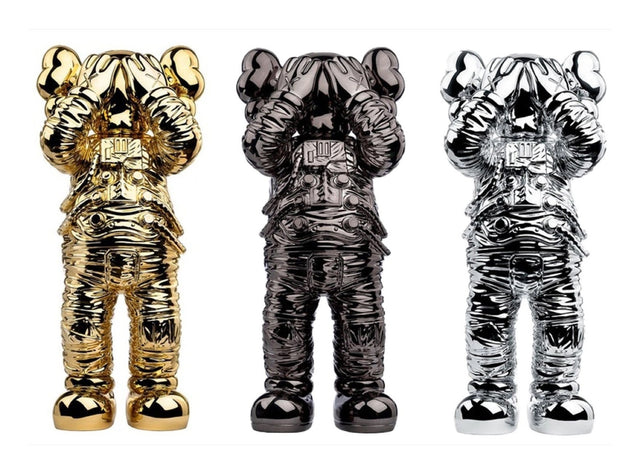
KAWS Holiday Space Set of 3 Gold Black Silver Companion Astronaut Figure Rare
$2,900.00 USD
-
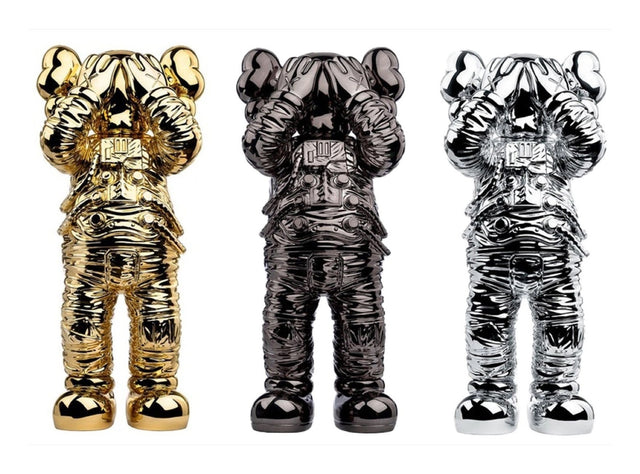
KAWS Holiday Space Set of 3 Gold Black Silver Companion Astronaut Figure
$2,900.00 USD
-

KAWS Companion Flayed Open Edition Black Medicom Toy Dissected Sealed New Figure
$599.00 USD
-

KAWS Companion Flayed Open Edition Brown Medicom Toy Dissected Sealed New Figure
$349.00 USD
-
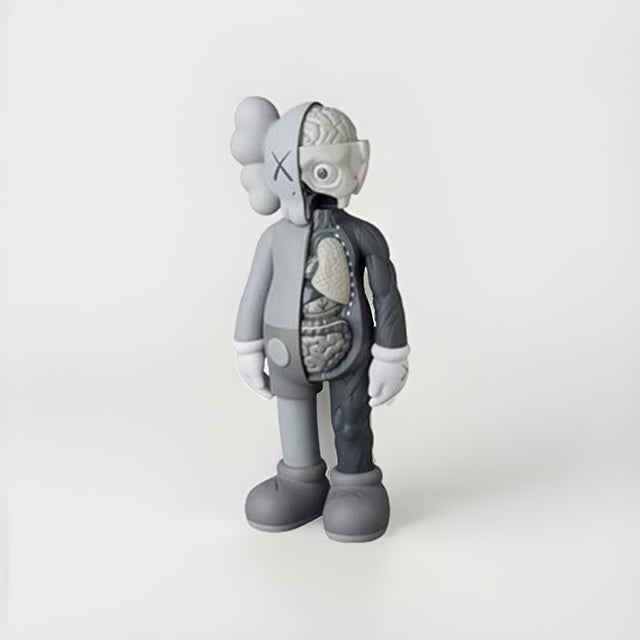
KAWS Companion Flayed Open Edition Grey Medicom Toy Dissected Sealed New Figure
$349.00 USD
Browse the collection for current listings.