Updated 2026-07-11
An evidence-led guide to PSA/DNA verification, Strat-style versus Fender claims, signature condition, provenance, valuation, and preservation.
Updated July 11, 2026 · By Gauntlet Gallery Research
Quick answer: A strong Jack Johnson signed-guitar purchase aligns three independent records: the autograph authentication, the guitar’s actual manufacturer and model, and item-specific provenance. Verify a PSA/DNA number on PSA’s site, photograph the guitar’s serial and component markings, and never treat “Stratocaster-style,” “signed,” and “played by Jack Johnson” as equivalent claims.
Separate autograph identity from guitar identity

Authentication of Jack Johnson’s signature does not authenticate the underlying guitar. Evaluate two objects at once:
- The autograph: signer, placement, ink, condition, certification, and provenance.
- The instrument: brand, model, serial, components, condition, and playability.
A surf-blue double-cutaway guitar may visually suit Johnson’s catalog, but color and shape do not establish manufacturer. Use “Fender Stratocaster” only when markings, serial information, specifications, and supporting records justify it. Otherwise, “Strat-style guitar” is the accurate description.
The relevance of guitar-based memorabilia is supported by Johnson’s official catalog: his official store carries albums and signed songbooks and discs. That context does not verify an aftermarket guitar or prove that Johnson played it.
Verify PSA/DNA correctly

Enter the certification number directly at PSA Cert Verification. Confirm that the record identifies Jack Johnson and the correct item category. Match it with the physical label and accompanying Letter of Authenticity where supplied.
PSA explicitly cautions that a valid number does not eliminate risk because numbers from genuine items can be reused on counterfeit documents. A responsible review matches:
- certification number;
- signer;
- item type;
- physical tamper-evident label;
- LOA details and image, when available;
- signature location and object appearance;
- seller identity and transaction history.
PSA describes its post-signing process as including ink analysis, signature-structure analysis, object evaluation, comparison, and documentation on its autograph authentication page. That service is an expert opinion about the autograph, not an appraisal or instrument certification.
Verify the guitar model and components

Request high-resolution images of the full front and back, headstock faces, neck plate, serial location, bridge, pickups, tuners, electronics, and case. Compare the claimed model with manufacturer specifications and retain the seller’s receipt if available.
Watch for replacement necks, aftermarket decals, swapped pickguards, modified electronics, and generic bodies paired with branded parts. These changes are not automatically bad, but they must be disclosed. A signed pickguard moved onto a different instrument should be described as a signed pickguard installed on that guitar.
Do not let authentication language bleed across categories. A PSA/DNA certification for “signed guitar” does not necessarily establish a specific Fender model; a manufacturer serial lookup does not authenticate Johnson’s signature.
Assess signature placement and condition

The most display-friendly signatures have strong contrast, stable ink, and clearance from strings, knobs, pickups, and mounting hardware. Ask whether the guitar was signed assembled or whether a detached pickguard was signed separately.
Inspect under straight and angled light for fading, marker skips, smearing, scratches through the ink, adhesive residue, and clear coat. Never clean or polish over the autograph. Do not add a protective coating without advice from a conservator familiar with the ink and guitar finish.
Photograph the signed area at acquisition and under consistent light thereafter. A dated condition record helps distinguish later fading from pre-purchase wear.
Prove provenance and avoid artist-use inflation

A certification may support the signature; it does not prove Johnson owned, played, toured with, or presented the instrument. Those higher-level claims need item-specific records such as a dated event file, direct invoice, contemporaneous photographs, serial match, or a letter from a documented source.
Retain the original listing, invoice, messages, verification screenshot, label and serial photographs, shipping record, and any event evidence. A generic backstage story should remain a story unless it can be connected to the exact guitar.
Use restrained language: “signed by Jack Johnson” is materially different from “Jack Johnson’s guitar.”
Build a defensible price range

Use completed sales that match the signer, guitar class, signed component, authentication type, condition, and provenance. Separate generic display guitars from verified Fender models and both from artist-used instruments.
Record the hammer price, buyer’s premium, shipping, currency, sale date, and whether the transaction completed. A premium frame, case, or guitar may contribute value, but its retail cost does not transfer dollar-for-dollar to a memorabilia buyer.
Because no dated sold-comparable dataset is attached to this article, Gauntlet Gallery does not state a market-value range. The defensible result is a documented range built at the time of purchase, not a permanent number copied from an asking-price page.
Preserve and ship the guitar

Keep the autograph away from direct sunlight, heat, moisture, foam, straps, and cleaning products. Use a fitted hard case for transport, immobilize the instrument without contacting the signature, support the neck appropriately, double-box high-value shipments, photograph each packing stage, and insure the full declared value.
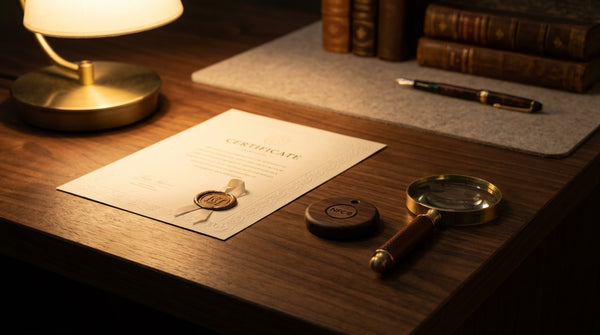
For wall display, use a weight-rated hanger anchored to the structure and keep the signed surface away from acrylic or mounting material. AI-created images in this article are explanatory illustrations and never evidence about a particular guitar.
Buyer checklist

- PSA/DNA number verifies on PSA’s official site.
- Signer, item type, label, LOA, and any certification image agree.
- Guitar brand and model are independently supported.
- Signed component and any part transfer are disclosed.
- Serial and component photographs are retained.
- Signature condition is shown under useful light.
- No unsupported ownership, play, stage, or tour claim appears.
- Comparable sales match the object and authentication level.
- Return and insured-shipping terms are written.
Buy the evidence bundle, not the color, celebrity name, or certificate card in isolation.
Frequently asked questions
Does PSA/DNA authenticate the instrument as well as the signature?
No. PSA/DNA authentication addresses the autograph submitted. Manufacturer, model, serial, components, and playability require an instrument review. Keep the autograph and guitar conclusions in separate fields of the acquisition record.
Is a surf-blue Strat-style guitar necessarily a Fender?
No. Many manufacturers use similar double-cutaway shapes and colors. Inspect headstock, neck plate, serial information, hardware, and specifications. If manufacturer evidence is incomplete, use “Strat-style” rather than the Fender model name.
What if the PSA database returns the correct signer but no image?
A matching signer and item category are helpful, but continue comparing the physical label, LOA, number, item description, and seller record. PSA’s own warning explains why number verification is not a complete counterfeit screen.
Is a signed pickguard worth less than a signed body?
There is no automatic rule. Pickguards can display well and allow safer separation, but they can also be transferred. Body signatures have stronger object integration but may be more exposed to wear. Value depends on evidence, presentation, condition, and buyer preference.
Can I play a signed guitar?
Possibly, but playing exposes the autograph to hands, straps, picks, sweat, cleaning, maintenance, and impact. Confirm that no hardware or movement contacts the ink. For a serious collectible, preservation usually takes priority over regular use.
Does a photo of Jack Johnson with a similar guitar prove stage use?
No. Similarity is not object identity. Stage-use evidence should connect the exact instrument through a serial number, distinctive wear, component configuration, documented chain of custody, or item-specific photograph.
What is the most important remote-purchase request?
Ask for one coherent evidence set: certification lookup, label and LOA, signature close-ups, full instrument views, headstock, serial and components, provenance, condition, case, and packing plan. Missing categories should be treated as unanswered questions, not filled by inference.
Does an official Jack Johnson signed songbook help authenticate a guitar?
It can provide a legitimate comparison context, but it does not authenticate another object. Surface, period, signing circumstances, and execution can differ. Use official signed products as contextual material and rely on item-specific provenance or authentication for the guitar.
What if the serial lookup returns no result?
A missing database result does not automatically prove a guitar is counterfeit; manufacturer databases can be incomplete. Continue with model specifications, factory markings, receipts, component inspection, and expert instrument review. State the unresolved result rather than forcing a conclusion.
The buyer’s file should show both the search result and the alternative evidence used. That transparency lets a later owner repeat the inquiry instead of mistaking an undocumented conclusion for a manufacturer confirmation.
Methodology and disclosure
This guide uses official artist-store context and PSA’s own authentication and verification guidance. Gauntlet inventory identifies the buyer question but is not independent evidence of authenticity, manufacture, provenance, or value.
Gauntlet Gallery provides the live signed-guitar context; the article’s verification standard applies equally to its inventory and other sellers.
Editorial image disclosure: Illustrations on this page were generated with Nano Banana for explanatory use. They are not authentication evidence, provenance records, or reproductions of any specific collectible.