Is a DEATH NYC Print a Smart First Purchase for a New Collector?
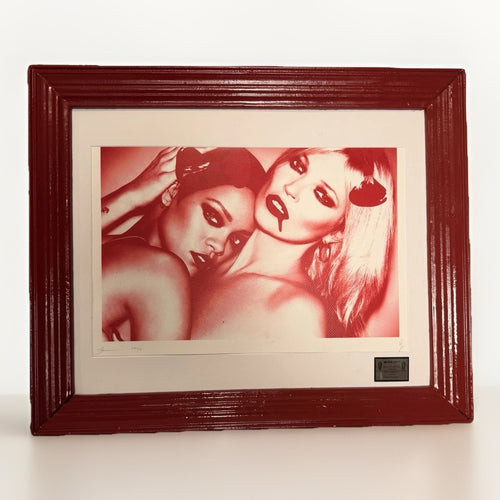
Yes, a DEATH NYC print is one of the most sensible entry points into contemporary art collecting, provided you buy it for enjoyment first and treat any future value as a bonus. These prints are accessible in price, released in signed and numbered small editions, and ship with a Certificate of Authenticity and the studio's signature gold seal, so a first-time buyer gets a genuine, authenticated, hand-finished piece without the barrier of blue-chip prices. What a DEATH NYC print is not is a guaranteed investment. Approach it as an affordable, authenticated way to start collecting recognizable pop-art imagery you love, and you will make a smart first purchase.
Who is DEATH NYC and why do new collectors gravitate to the work?
DEATH NYC is an anonymous New York-based pop and street artist known for dense, collage-style prints that mash up instantly recognizable characters, luxury-brand motifs, and cultural icons into a single graphic image. The appeal for a new collector is immediate: the imagery is familiar and fun, the format is approachable, and the price of entry is far lower than the established names collectors eventually chase.
For someone who has never bought art before, the psychology matters. A first purchase should feel low-risk enough to be a joyful decision rather than a financial one. DEATH NYC checks that box. You get a hand-signed, numbered, physically authenticated object on your wall for a fraction of what a Banksy, KAWS, or Shepard Fairey print commands, while learning the mechanics of collecting: editions, certificates, provenance, condition, and where to buy safely.
What "entry point" really means here
- Accessible price. DEATH NYC prints typically sell in a modest range that varies by edition, subject, and condition, making them one of the least intimidating ways to own signed contemporary art.
- Signed and numbered. Editions are small and hand-numbered, which is exactly the kind of transparency a beginner should learn to look for.
- Authenticated on delivery. Each piece comes with a Certificate of Authenticity and the studio's gold seal, giving a first-time buyer a concrete authentication artifact to hold and file.
- Recognizable imagery. The pop-culture mashups are easy to love and easy to display, which keeps the purchase enjoyable regardless of what the market does.
How DEATH NYC prints are authenticated
Authentication is the single most important concept for any new collector, and DEATH NYC keeps it refreshingly simple. Each print is issued as part of a small, numbered edition and accompanied by a Certificate of Authenticity. The studio also applies its signature gold seal, which serves as a physical authentication marker tied to the piece.
This is the accurate authentication canon for DEATH NYC, and it is worth understanding precisely, because different artists use completely different systems and mixing them up is a classic beginner error:
- DEATH NYC: ships with a Certificate of Authenticity plus the gold seal.
- Shepard Fairey: comes with no artist-issued certificate; authenticity rests on provenance and dealer trust.
- KAWS and BE@RBRICK: commonly authenticated through packaging and foot-stamp checks alongside third-party certification where applicable.
- Signed music and memorabilia: authenticated by third-party services such as Beckett, JSA, or PSA.
You do not need to memorize every chain today. The takeaway is that for DEATH NYC, the certificate and gold seal are the expected authentication package, and their presence, condition, and consistency with the print are what you verify. If you want to go deeper on exactly what to look for, our DEATH NYC authentication guide walks through the seal and certificate in detail.
Why the certificate is a learning tool, not just paperwork
Handling a real Certificate of Authenticity on your first purchase teaches you the habits that protect you on every purchase after: keep the certificate with the piece, photograph both, record where and when you bought it, and never discard packaging or documentation. Those habits compound. A well-documented, authenticated first piece is far easier to enjoy, insure, gift, or one day pass along than an undocumented one bought on impulse.
The honest case: pros and cons for a first-time buyer
A trustworthy dealer tells you both sides. Here is the balanced view.
| Strengths | Honest cautions |
|---|---|
| Low, approachable price of entry | Not a guaranteed investment; buy for enjoyment |
| Signed and numbered small editions | Values vary widely by edition, subject, and demand |
| Certificate of Authenticity plus gold seal | Anonymous artist, so no traditional gallery representation history to lean on |
| Instantly recognizable, display-friendly imagery | Popular imagery attracts counterfeits, so buy from reputable sources |
| Teaches core collecting habits at low cost | Resale liquidity is uneven compared with blue-chip names |
Enjoyment first, investment second
The healthiest framing for any first art purchase, and especially for accessible editions like DEATH NYC, is to buy something you would be happy to own for years even if its market value never moved. Contemporary print values are driven by demand, edition size, condition, and cultural momentum, all of which change. Some pieces appreciate, many hold, and some simply stay flat. If you love the image on your wall, you have already won the most important part of the transaction. For grounded context on how contemporary print markets behave, our Financial Insights hub is a better compass than any single price rumor.
What a first-time buyer should check before buying
Run through this short checklist on any DEATH NYC print before you commit. It applies to a first purchase and to your hundredth.
- Confirm the authentication package. Is a Certificate of Authenticity included, and does the piece carry the gold seal? These are the expected DEATH NYC markers.
- Check edition transparency. Is the print signed and numbered, and is the edition information disclosed clearly?
- Assess condition. Look for creasing, fading, foxing, trimming, or moisture damage. Condition materially affects both enjoyment and value.
- Verify provenance and seller reputation. Where did the piece come from, and does the seller stand behind authenticity in writing?
- Match documentation to the object. The certificate, numbering, and imagery should be internally consistent.
- Understand the return and authenticity policy. A reputable dealer will guarantee authenticity and offer a clear path if something is wrong.
Condition and framing basics
Prints are paper, and paper is fragile. Ask whether the piece has been stored flat and away from direct sunlight. When you frame it, use UV-protective glazing and acid-free, archival materials, and avoid mounting methods that permanently adhere the sheet. Good framing protects both the pleasure of owning the piece and its long-term condition.
How to buy a DEATH NYC print safely
Most authentication problems are really sourcing problems. Buy well and you avoid the majority of risks before they start.
- Buy from a reputable dealer or platform that authenticates its inventory and guarantees it in writing, rather than from anonymous or unvetted resellers.
- Insist on the certificate and gold seal being present and delivered with the piece.
- Favor sellers who show clear photos of the print, the numbering, the signature, and the authentication markers.
- Keep every document. Store the certificate, receipt, and any packaging together with your record of purchase.
- Be skeptical of prices that seem too good. Deep discounts on popular imagery are a classic counterfeit signal.
You can browse authenticated inventory in our DEATH NYC collection, and if you are brand new to the category, start with our plain-English DEATH NYC buyer's guide. For the bigger picture of how to think, document, and build a collection over time, the collector hub and our library of buyer's guides across artists will keep you oriented as your taste expands.
How DEATH NYC compares to other entry points
DEATH NYC is not the only accessible on-ramp into collecting, and understanding where it sits helps set expectations. Compared with a Shepard Fairey print, which relies on provenance rather than a certificate, DEATH NYC offers a more tangible authentication artifact for a beginner. Compared with KAWS figures or BE@RBRICKs, which often rely on packaging checks and third-party certification and can carry higher price tags, DEATH NYC is lighter on both cost and complexity. That combination, low price plus a concrete certificate-and-seal package, is precisely why it works so well as a first purchase.
Where each entry point fits
| Entry point | Typical price posture | Authentication basis | Best for a beginner because |
|---|---|---|---|
| DEATH NYC print | Most accessible | Certificate of Authenticity plus gold seal | Concrete documentation at low cost |
| Shepard Fairey print | Mid | Provenance and dealer trust, no artist certificate | Established name, but requires trusting the source |
| KAWS / BE@RBRICK | Higher | Third-party certification where applicable | Strong verification, but a bigger financial step |
| Signed music / memorabilia | Varies widely | Beckett, JSA, or PSA | Rigorous authentication, category expertise needed |
The point of this comparison is not to rank artists but to show that DEATH NYC uniquely pairs the lowest barrier to entry with a physical certificate a beginner can actually hold and file. That is a rare combination, and it is why so many collections begin here before branching into other artists and categories.
Building a collection from your first DEATH NYC print
A first purchase is a starting line, not a finish line. The habits you form around one accessible, authenticated print scale directly into a real collection. Think of your DEATH NYC piece as a low-stakes training ground for the disciplines that separate confident collectors from impulsive buyers.
Document everything from day one
Create a simple record for the piece: title or description, edition number, purchase date, price paid, seller, and photographs of the print, signature, numbering, certificate, and gold seal. Store the certificate and receipt together and keep a digital backup. This single habit protects resale value, simplifies insurance, and makes any future authenticity question trivial to answer.
Learn to read the market without chasing it
Follow how comparable prints sell over time rather than reacting to one eye-catching listing. Edition size, subject popularity, and condition drive demand, and patterns emerge only across many data points. Our Financial Insights hub exists precisely so beginners can build market intuition from grounded context instead of hype or a single outlier sale.
Let taste lead, then diversify
Once you have lived with a piece, you will understand your own taste far better than any trend report could tell you. That clarity is what should guide your second and third purchases, whether you stay with DEATH NYC or move toward a Fairey, a KAWS figure, or signed memorabilia. The collector hub is designed to help you plan that progression deliberately, so your collection reflects a point of view rather than a scattershot of impulse buys.
Care for what you own
Protect condition actively. Keep prints framed with UV-protective glazing, away from direct sunlight, humidity, and heat sources. Handle unframed sheets by the edges with clean hands. A print you have preserved carefully is worth more, shows better, and stays enjoyable far longer than one left exposed. Good stewardship is the quiet discipline behind every serious collection.
Frequently asked questions
Is a DEATH NYC print a sensible first purchase for a new art collector?
Yes. It is one of the most accessible authenticated entry points into contemporary collecting, offering signed and numbered small editions with a Certificate of Authenticity and gold seal at an approachable price. Treat it as a piece to enjoy first, with any appreciation as a bonus rather than a guarantee.
Do DEATH NYC prints come with a certificate of authenticity?
Yes. Each DEATH NYC print is issued as part of a small numbered edition and comes with a Certificate of Authenticity, and the studio applies its signature gold seal as a physical authentication marker. Keep both with the piece.
Are DEATH NYC prints a good investment?
They are best viewed as an affordable, authenticated way to enjoy contemporary pop art, not as a guaranteed investment. Values vary by edition, subject, condition, and demand. Buy something you love to own, and consult market context resources rather than relying on price speculation.
How do I know a DEATH NYC print is authentic?
Confirm the Certificate of Authenticity and gold seal are present, verify the print is signed and numbered, check that documentation is internally consistent with the piece, and buy from a reputable dealer that guarantees authenticity in writing. Sourcing from a trusted seller is your strongest protection.
How much should I expect to pay for a DEATH NYC print?
Prices vary by edition, subject, and condition, but DEATH NYC sits at the accessible end of the contemporary print market, which is a large part of its appeal to new collectors. Rather than chasing a single number, review current authenticated listings and general market context before you buy.
What should I check before buying my first print?
Confirm the authentication package, check edition transparency, assess condition, verify provenance and seller reputation, make sure the documentation matches the object, and understand the return and authenticity policy. This checklist protects your first purchase and every one after it.
Buy and authenticate with confidence
A DEATH NYC print is a smart first purchase when you buy it the right way: for the joy of the image, from a reputable source, with its Certificate of Authenticity and gold seal in hand. It gives a new collector an authenticated, signed, numbered piece of recognizable pop art at an accessible price, and it teaches the habits that will serve you across every future acquisition. Explore authenticated pieces in the DEATH NYC buyer's guide and the DEATH NYC collection, learn the markers in the authentication guide, and use the collector hub to build from here with confidence.