How to Frame and Display Street Art and Designer Toys for Display and Value
To frame and display street art and designer toys well, use conservation-grade materials that block UV light and never touch the artwork chemically: acid-free mats, UV-filtering glazing, and reversible hinges for prints, and UV-protected acrylic cases for vinyl figures and BE@RBRICKs. Keep everything out of direct sunlight, hold a stable indoor climate (roughly 40–55% relative humidity, 65–72°F), control dust, and—critically for collectibles—keep the original boxes. Good display is not just about looking great on the wall or shelf; the same choices that make a piece look museum-clean are the ones that protect its long-term condition, and condition is the single biggest lever on resale value.
At Gauntlet Gallery we authenticate and sell contemporary street art and designer collectibles—Shepard Fairey, KAWS, BE@RBRICK, Banksy, Invader, Mr. Brainwash, and more—so we see firsthand how presentation and preservation compound over years. This guide walks through framing prints properly, displaying figures safely, lighting and climate, and how it all ties back to value.
Why display choices protect long-term value
Collectors and appraisers talk constantly about “condition,” and for good reason. Two identical prints or figures can trade at very different prices based purely on how well they have been kept. Fading, foxing (small brown spots), mat burn, warping, yellowing acrylic, and damaged packaging are all things a knowledgeable buyer looks for—and all of them are preventable with the right display setup.
The encouraging part: the practices that keep a piece looking crisp are the same ones that preserve its market condition. UV protection prevents both visible fading and the invisible paper degradation that hurts grading. Acid-free materials keep whites white. A sealed case keeps a figure dust-free and glossy. You are not choosing between “looks good” and “holds value”—done right, they are the same decision. For a broader view of how condition, edition, and provenance move prices in this market, our Financial Insights hub is a useful companion to this guide.
The three enemies: light, air, and contact
- Light (especially UV) fades inks and degrades paper and plastics over time.
- Air carries humidity swings, pollutants, and dust that cause warping, foxing, and grime.
- Contact with acidic or reactive materials (cheap mats, tape, raw MDF, some foams) chemically damages art from behind the scenes.
Every recommendation below is really just a way to neutralize one of these three.
Framing street art prints the right way
Most street art in a collection is on paper—screen prints, giclées, lithographs, and offset editions. Paper is sensitive, so framing is where the biggest preservation wins (and mistakes) happen. The goal is a frame that isolates the artwork from light, acid, and moisture while keeping every step reversible.
UV-filtering glazing (glass vs. acrylic)
“Glazing” is the clear sheet in front of the art. This is the most important upgrade you can make.
- Conservation/UV glass blocks a large share of ultraviolet light and resists scratching. It is heavier and can break, which matters for large pieces.
- UV-filtering acrylic (e.g., museum-grade acrylic) is lighter, shatter-resistant, and safer for oversized prints—a common choice for big street-art formats. Clean it only with a soft cloth and acrylic-safe cleaner, never paper towels or ammonia glass cleaner.
- Anti-reflective / “museum” options add glare reduction on top of UV filtering for the clearest view; they cost more but transform how a piece reads on the wall.
Whatever you choose, insist on UV protection. Standard picture glass does very little to stop fading.
Acid-free (archival) mats
The mat is the border between the artwork and the glazing. It is not just decorative—it creates an air gap so the art never touches the glass, which prevents moisture from bonding paper to glazing.
- Use 100% cotton rag or acid-free, lignin-free (“museum” or “conservation”) matboard. Cheap mats yellow and cause “mat burn,” a brown line that permanently marks the sheet.
- Make sure the backing board behind the art is also acid-free—not raw cardboard or brown kraft, which are highly acidic.
- If a piece is showcased without a mat (a common modern look), use spacers to keep the same critical air gap between art and glazing.
Float mounting vs. window mats
There are two main ways to present a print, and the right one depends on the edition and the deckled or trimmed edges.
- Window mat: the mat overlaps the artwork’s edges by a few millimeters, hiding the border. Classic, protective, and forgiving.
- Float mount: the full sheet “floats” on top of a backing so the edges—including any hand-torn deckle or plate mark—are visible. This showcases the paper as an object and is popular for signed, limited editions where the full sheet is part of the value. Floating requires careful, reversible hinging so the sheet stays flat and supported.
Conservation hinging—never tape
How the art is attached inside the frame is where a lot of value is quietly lost. The rule: the artwork should be attached with as little material as possible, and everything must be reversible.
- Use Japanese paper hinges with a wheat- or rice-starch paste, or archival photo corners/edge strips that hold the sheet without adhesive touching the front.
- Never use regular tape, masking tape, duct tape, or “magic” office tape. These stain, yellow, and tear the paper when removed—often the first thing that drops a print’s condition grade.
- Avoid dry-mounting (permanently gluing a print flat). It is essentially irreversible and can significantly reduce the value of a collectible edition.
A simple archival framing checklist
| Layer | Do use | Avoid |
|---|---|---|
| Glazing | UV-filtering glass or acrylic; anti-reflective if budget allows | Standard glass with no UV filtering |
| Mat / spacers | Cotton rag or conservation matboard; spacers if no mat | Cheap paper mats that yellow; art touching glass |
| Backing | Acid-free, lignin-free board | Raw cardboard, kraft paper, bare MDF |
| Attachment | Starch-paste paper hinges or archival corners | Any tape; dry-mounting; glue |
| Frame seal | Dust cover on the back; snug fit | Open, gappy backs that let in dust and pests |
When in doubt, use a framer who explicitly offers “conservation” or “archival” framing and can name their materials. It costs more than a big-box frame shop, and it is worth it on anything you consider an investment.
Displaying vinyl figures, BE@RBRICKs, and designer toys
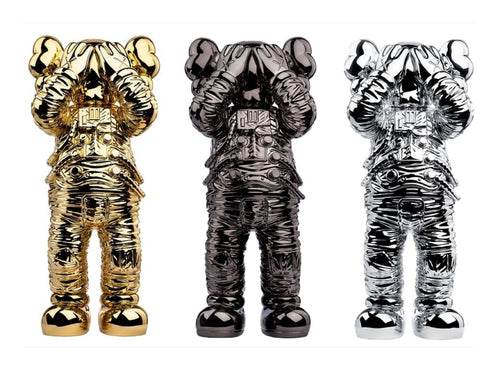
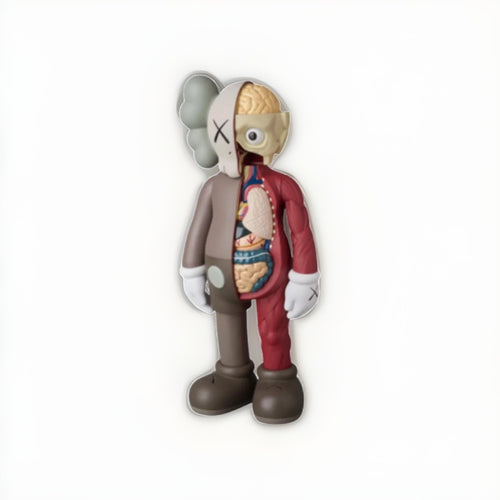
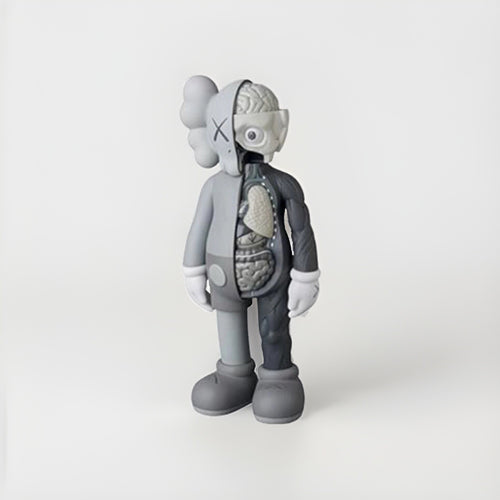
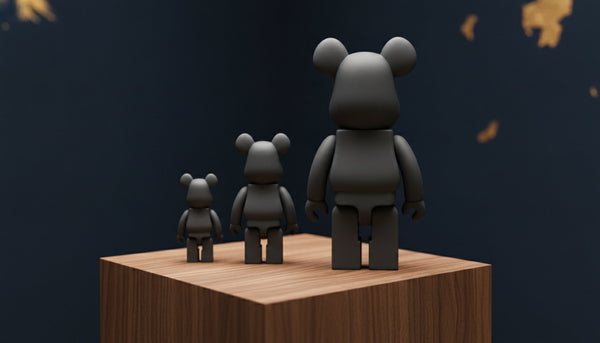
Designer toys—KAWS Companions, BE@RBRICKs, and other vinyl and resin figures—have their own preservation rules. They do not fade the way paper does, but glossy surfaces, joints, and paint apps are vulnerable to sunlight, dust, and handling, and—uniquely—their packaging is part of the asset.
UV-protected display cases
An enclosed case is the single best upgrade for a figure. It solves dust, handling, and much of the light problem at once.
- Choose UV-filtering acrylic display cases to slow sunlight-driven yellowing and color shift, especially on white or translucent figures.
- Look for cases with a solid, stable base and a snug lid; a good case is effectively a personal micro-museum vitrine.
- For larger BE@RBRICKs (400% and 1000%) and big KAWS pieces, make sure the shelf or cabinet can carry the weight and the case has enough clearance.
Dust, sunlight, and handling
- Keep figures out of direct sun. A sunny windowsill will yellow white vinyl and dull colors over months, and heat can even soften or warp a figure.
- Dust gently. Use a soft microfiber cloth or a soft brush; avoid solvents and household cleaners that can haze or lift paint. Canned air on a low, angled burst helps with seams and joints.
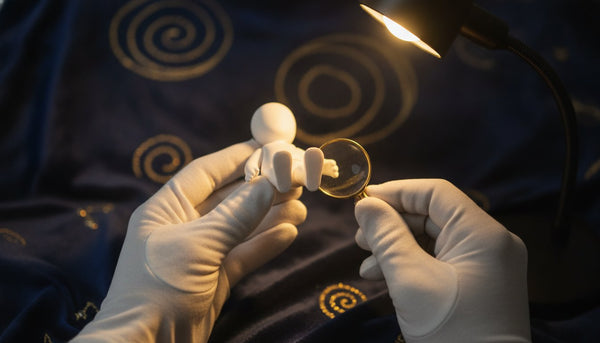
- Handle by the body, with clean or gloved hands. Skin oils attract dust and can leave marks on matte finishes over time.
- Don’t over-pose articulated figures. Repeated joint stress can stress-mark or crack vinyl at the seams.
Keep the box—it’s part of the value
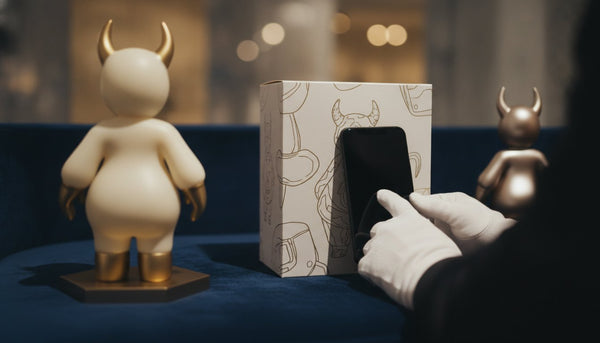
This is the point new collectors most often miss: for designer toys, the original box, inserts, and any hang tags materially affect resale value. A figure “with original packaging” typically commands a premium over a loose one.
- Store boxes flat and protected, away from light and moisture; box artwork fades and cardboard warps just like anything else.
- Keep inserts, blister trays, and any authentication cards together with the figure.
- If you display a figure out of its box, store the box safely rather than discarding it—you are preserving optionality for a future sale.
Authentication cases for designer toys
Preservation and authentication go hand in hand. Different makers use different verification systems, so keep the right paperwork with the right piece:
- KAWS and BE@RBRICK collectibles in our care are backed by TrueCOA blockchain certification—keep any card or documentation with the figure and its box. See our KAWS authentication guide and browse the BE@RBRICK collection for examples of properly documented pieces.
- Always store certificates flat and dry alongside the item; a figure that ships with complete, verifiable documentation is far easier to resell with confidence.
Lighting your collection without damaging it
Lighting is where display and preservation most obviously meet: you want your pieces to look striking, but light is also the fastest cause of fading. The goal is drama without UV.
- Use LED lighting. Modern LEDs emit little to no UV and run cool, making them ideal for both framed art and figures. Avoid halogen and older incandescent picture lights that run hot and can emit UV.
- Never hang art or place figures in direct sunlight. Even UV glazing and UV cases slow damage rather than stop it entirely; the sun is still the biggest threat.
- Angle picture lights to graze across the frame rather than blasting the surface, which reduces glare and heat on the sheet.
- Rotate what’s on display if you own a lot. Giving pieces “rest” time out of the light is a classic museum tactic to extend the life of a collection.
Humidity, temperature, and where to hang
Climate is the quiet factor that decides whether a piece ages gracefully or develops problems you cannot reverse. Paper especially reacts to moisture—too damp invites foxing and mold, too dry makes it brittle, and swings between the two cause warping and cockling.
Target a stable indoor climate
- Aim for roughly 40–55% relative humidity and a steady temperature around 65–72°F. The exact number matters less than stability—avoid big swings.
- Use a small hygrometer to monitor the room, and a humidifier or dehumidifier if your climate runs to extremes.
- Vinyl figures are more forgiving than paper on humidity, but heat and swings still risk warping and packaging damage, so the same stable-room logic applies.
Where not to hang or shelve art
- Above radiators, vents, or fireplaces—heat and soot are hard on both art and frames.
- Bathrooms and unconverted basements/attics—humidity extremes and poor air are a recipe for foxing and mold.
- Directly on exterior walls in humid climates—these can trap moisture behind the frame. A small spacer or cork bumper improves airflow.
- Sunlit walls—revisit the lighting section; sun is the top offender.
Putting it together: a display plan that also protects value
Here is a simple sequence to bring it all together, whether you are hanging a single Fairey screen print or building a shelf of figures.
- Frame prints archivally: UV glazing, acid-free mat and backing, reversible starch-paste hinges or corners, sealed dust cover. Float-mount signed editions where the full sheet is part of the appeal.
- Case your figures: UV-protected acrylic cases on a stable shelf, out of direct sun, and keep every original box and card.
- Light with LEDs and keep everything off sunny walls.
- Control the room: stable 40–55% humidity, moderate temperature, a hygrometer to keep you honest.
- Keep the paperwork together: COAs, cards, and provenance stored flat and dry with each piece—this is what makes a future sale smooth.
Do these five things and your collection will both look its best today and hold condition—and therefore value—for the long run. To see how these pieces are sourced and documented before they ever reach a wall or shelf, explore the full Gauntlet Gallery collection, and use our collector hub and buyer’s guides to go deeper on any artist.
Frequently asked questions
Does UV-protective glass or acrylic really prevent fading?
UV-filtering glazing blocks a large portion of the ultraviolet light that causes inks and paper to fade, so it meaningfully slows deterioration compared with standard glass. It is not a force field—visible light and heat still contribute—so the best results come from combining UV glazing with keeping the piece out of direct sunlight and using cool LED lighting.
Should I keep the box for a KAWS figure or BE@RBRICK?
Yes. For designer toys, the original box, inserts, and any authentication cards are part of the asset and typically add a premium at resale. Even if you display the figure out of its packaging, store the box flat, dry, and out of light so it stays in strong condition for a future sale.
What’s the difference between float mounting and a window mat?
A window mat overlaps the artwork’s edges and hides the border, while float mounting lets the entire sheet sit on top of a backing so the edges—including any deckle or plate mark—stay visible. Float mounting showcases the paper as an object and is popular for signed limited editions; it requires careful, reversible hinging to keep the sheet flat and supported.
What humidity and temperature should I keep art in?
Aim for roughly 40–55% relative humidity and a steady temperature around 65–72°F, prioritizing stability over any exact number. Avoid hanging near radiators, vents, fireplaces, bathrooms, or damp basements, and use a hygrometer plus a humidifier or dehumidifier if your climate swings.
Is regular tape ever okay for mounting a print?
No. Regular tape, masking tape, and office tape stain, yellow, and tear paper when removed, and they are one of the most common ways a print loses condition and value. Use starch-paste Japanese paper hinges or archival photo corners instead, and avoid permanent dry-mounting on any collectible edition.
How does good display actually protect resale value?
Condition is the biggest driver of price for prints and figures alike, and the same choices that make a piece look museum-clean—UV protection, acid-free materials, sealed cases, kept boxes, and a stable climate—are exactly what preserve condition. For market context on how condition, edition, and provenance affect prices, our Financial Insights hub is a helpful reference.
Buy & authenticate with confidence
Great display starts with a great piece that is documented and genuine. At Gauntlet Gallery, every work is authenticated and sold with the appropriate provenance and certification for its maker, so you can frame it, case it, and pass it on with confidence. Browse the full collection, start with our buyer’s guides and collector hub, and consult Financial Insights for market context—then use the framing and display practices above to protect what you buy for years to come.