The secondary-market price of a BE@RBRICK almost never matches its retail price — and the gap runs in both directions. The moment a release sells out at retail, its price is set by collector demand rather than by Medicom Toy's list price. Sought-after artist collaborations, chase figures from blind-box series, and larger-format pieces routinely trade at meaningful multiples of what they cost at launch, while common basic-series figures from heavily produced runs can hover near retail or even dip below it once the initial excitement fades. In other words, retail is a starting line, not a valuation. The figures that appreciate share predictable traits — scarcity, collaboration pedigree, sealed condition, and documented authenticity — and the ones that stagnate share the opposite traits. Understanding which side of that divide a given BE@RBRICK sits on is the core skill of collecting in this category, and it is exactly what this guide teaches.
Below, we break down how BE@RBRICK retail pricing actually works, why secondary prices diverge so quickly and so widely, the typical price journey a release takes from drop day onward, and how condition, packaging, and authentication shape what a figure is really worth. We will also share how our gallery evaluates fair value using verified comparable sales rather than asking prices, because the single most common mistake new collectors make is confusing what sellers hope to get with what buyers actually pay.
How BE@RBRICK Retail Pricing Works
To understand the secondary market, you first need to understand the primary one. BE@RBRICK is produced by Medicom Toy, the Tokyo-based company that has released the bear-shaped collectible platform since the early 2000s. Retail pricing follows a fairly consistent internal logic based on three variables: size, release format, and licensing.
Size drives the retail baseline
BE@RBRICK figures are produced in percentage-based sizes, with 100% as the pocket-sized standard, 400% as the popular mid-size display format, and 1000% as the large statement piece that stands roughly seventy centimeters tall. Retail prices scale with size — a 1000% figure costs many times what the same design costs at 100% — and secondary-market behavior scales with it too, because larger formats are produced in smaller quantities and appeal to a display-driven collector who is less price-sensitive. Combined 100% and 400% sets occupy a middle position and are among the most commonly traded formats on the secondary market.
Release format: blind box versus boxed release
Medicom's basic series releases arrive as blind-boxed assortments: you buy a sealed box without knowing which design is inside, and each design appears at a stated rarity ratio within the production run. Some designs are common; others — the so-called chase or secret figures — appear at very low ratios. This structure means that two figures with an identical retail price can have wildly different secondary values the moment the boxes are opened. The common design might trade below its blind-box cost, while the chase figure trades at a large multiple, because the blind-box price averaged the odds across the whole assortment. The secondary market simply un-averages them.
Licensing and collaboration premiums at retail
Collaboration releases — with artists, fashion houses, musicians, film studios, and character licensors — are typically sold as boxed, known-design releases rather than blind boxes, and they often carry a modest retail premium over comparable basic-series figures. But that retail premium rarely reflects the collaboration's true market value. Medicom generally prices collaborations within a familiar band for the size, regardless of whether the partner is a niche illustrator or a globally famous artist. The market, by contrast, prices the partner's cultural weight immediately. This is the single largest source of the retail-to-secondary gap: retail treats a famous-artist 400% and an obscure-license 400% as roughly equivalent products, and the secondary market emphatically does not.
Distribution: why so many collectors never get retail access at all
Many of the most desirable BE@RBRICK releases never sit on an open shelf. They sell through lottery entries, brand-partner web stores, event exclusives, or regional channels that most collectors cannot access. When supply is allocated rather than openly sold, the "retail price" becomes almost theoretical for the majority of the market — the practical entry price for most collectors is the secondary price from day one. This is worth internalizing: for hyped releases, comparing secondary to retail is comparing what buyers actually pay to a number very few people were ever able to pay.
Why Secondary Prices Diverge From Retail So Quickly
BE@RBRICK secondary pricing is a clean case study in collectible economics. Five forces do most of the work.
1. Fixed supply meets discovered demand
Medicom produces a release once, in a quantity decided before anyone knows how the market will receive it. When demand turns out to exceed that fixed supply — because the collaboration resonates, the colorway photographs well, or the artist's broader market is rising — the only place price discovery can happen is the secondary market. Retail never adjusts; resale does, instantly.
2. Rarity ratios inside blind-box series
Within a basic series, the printed rarity ratios function like a built-in scarcity schedule. A design inserted at a tiny ratio is, by construction, far scarcer than its box-mates, and the secondary market prices that scarcity from the first week. Chase figures are the purest example of secondary price having no relationship to retail price: the retail "price" of a chase figure was never really its price — it was a lottery ticket's price.
3. Collaboration pedigree and the partner's own market
A BE@RBRICK that carries an artist's imagery becomes, functionally, an edition within that artist's market. When the artist's prints, paintings, or other editions appreciate, their BE@RBRICK collaborations tend to move sympathetically — collectors of the artist treat the figure as an accessible entry point. Our BE@RBRICK index catalogs releases in a structured way precisely so collectors can see a figure in the context of its series and its collaborators. Compare the same BE@RBRICK release, size and collaboration using dated completed sales, including packaging, condition and provenance. A format-wide growth rate does not value an individual figure.
4. Condition scarcity compounds edition scarcity
Even for a moderately produced release, the supply of examples that remain sealed, with crisp box corners and the original hologram intact, shrinks every year. Figures get opened, displayed, sun-faded, and separated from their packaging. Ten years on, the sealed-with-packaging population of a release can be a small fraction of the produced quantity, and sealed examples price accordingly. Secondary premiums are therefore partly a condition premium that simply cannot exist at retail, where everything is new by definition.
5. Counterfeit pressure raises the value of verifiable examples
Popular collectibles attract counterfeiters, and the most-faked BE@RBRICK releases are, unsurprisingly, the most valuable ones. This bifurcates the secondary market: undocumented figures from unknown sellers trade at a discount reflecting authentication risk, while figures with verifiable provenance and authentication trade at a premium. The gap between those two prices is effectively the market's price for certainty. Our guide on how to spot a fake BE@RBRICK covers the practical inspection side of this in depth.
The Typical Price Journey of a BE@RBRICK Release
While every release is its own story, most follow a recognizable arc. Knowing the arc helps you decide when to buy — and when patience pays.
Phase one: the drop-day spike
Hyped releases usually show their largest percentage premium over retail in the first days after selling out. Demand is concentrated, supply on resale platforms is thin, and fear of missing out is at its peak. This is very often the worst time to buy. Asking prices in this window are set by the most aggressive sellers, and early transaction prices reflect the most impatient buyers.
Phase two: the cooling period
Over the following weeks and months, more sellers list their pieces, the initial urgency fades, and prices typically settle below the drop-day peak — sometimes far below it. Releases that were hyped beyond their fundamentals can drift back toward retail; a portion fall below it. This settling phase reveals the release's real demand base: the collectors who want the piece for itself rather than for a quick flip.
Phase three: the long run — divergence
Years out, releases sort themselves into tiers. Pieces tied to appreciating artists, culturally durable licenses, or genuinely small supply grind upward as sealed examples grow scarcer. Pieces from oversupplied runs or faded licenses go quiet, trading thinly near or below their original retail. The long-run winners are rarely a surprise in hindsight — they are almost always the releases where the collaboration partner's own cultural stock kept rising.
The re-release wrinkle
One BE@RBRICK-specific dynamic deserves its own mention: popular designs sometimes return in new versions, sizes, or colorway variants. A re-issue or close variant can soften secondary prices for the earlier release, or — counterintuitively — reinforce them by renewing attention on the design while confirming that the original version remains distinct. Before paying a strong premium for any figure, it is worth checking the release's history for variants and understanding exactly which version you are buying. This is another place a structured reference like our release index earns its keep.
Above Retail or Below? The Factors at a Glance
The table below summarizes the traits that push a BE@RBRICK's secondary price above its retail price — and the traits that hold it at or below retail.
| Factor | Pushes price above retail | Holds price at or below retail |
|---|---|---|
| Collaboration partner | Blue-chip artist, iconic brand, or culturally durable license with its own appreciating market | Generic or faded license; no collector base beyond the BE@RBRICK format itself |
| Supply | Small production run, lottery-only distribution, regional or event exclusivity | Large open-retail run; easy availability at launch |
| Rarity within series | Chase or secret figure at a low insertion ratio | Common design in the assortment |
| Size format | Larger formats (400%, 1000%), typically produced in smaller quantities | Widely produced 100% singles from basic series |
| Condition | Sealed, complete original packaging, hologram intact, no sun fade | Opened, displayed, missing packaging, worn box |
| Authentication | Documented provenance and verifiable authenticity | Unknown source, no documentation, red flags on packaging |
| Timing | Bought in the cooling phase; held while sealed supply thins | Bought at the drop-day peak; sold into a crowded market |
No single row decides the outcome — value is the interaction of all of them. A sealed common from an oversupplied series is still a common; an opened figure from a legendary collaboration is still a legendary collaboration, just at a condition-adjusted price.
The Tiers of Secondary-Market Behavior
In practice, we find it useful to sort BE@RBRICK releases into behavioral tiers rather than thinking of "the" BE@RBRICK market as a single thing.
Tier one: blue-chip artist collaborations
Collaborations with major contemporary artists behave most like fine-art editions. Their prices correlate with the artist's broader market, they attract crossover buyers from the print and painting world, and sealed examples in larger formats are the trophy assets of the category. These releases show the largest and most durable premiums over retail — but they also demand the most rigor on authentication, because they are the most profitable to fake. This is the tier where verified sourcing matters most, and where our gallery concentrates its BE@RBRICK offerings.
Tier two: strong licenses and design icons
Releases carrying beloved characters, music acts, films, and fashion collaborations form a broad middle tier. Premiums over retail are real but more cyclical, tracking the cultural moment of the license. A film anniversary, a re-release of an album, or a museum retrospective can reawaken demand for a related figure years after launch. Patience and cultural awareness are the collector's edge here.
Tier three: basic-series commons
The common designs from blind-box basic series are the entry point of the hobby, and honestly, they should be enjoyed as exactly that. Most commons trade in a modest band around their original cost, with the fun of the category — the variety, the display appeal, the completionist chase — as the real return. There is nothing wrong with this tier; it simply should not be bought with appreciation expectations.
Tier four: chases, secrets, and exclusives
Low-ratio chase figures and event or regional exclusives are the lottery winners of the category. Their secondary prices detach from retail entirely and are governed by scarcity and completionist demand within each series. Because their value is concentrated and their supply tiny, prices can be volatile and sensitive to a single collection hitting the market at once. Comparable-sales discipline — looking at actual recent transactions rather than one aspirational listing — matters more in this tier than anywhere else.
Condition and Packaging: Where Premiums Live or Die
Two examples of the same release can trade at very different prices based on condition alone, and BE@RBRICK condition grading has its own conventions worth learning.
- Sealed versus opened. A factory-sealed example commands the strongest price because it preserves every element of the release exactly as issued and eliminates questions about swapped contents. Opening a figure is a legitimate choice — these are display objects — but it is also a valuation event.
- Complete packaging. The box, inner tray or blister, any inserts or cards, and the outer sleeve where one exists all contribute to value. A figure separated from its packaging loses a meaningful slice of its market, because the packaging carries much of the verifiable release information.
- The hologram. Authentic Medicom packaging carries a hologram element, and its presence and condition are among the first things an experienced buyer checks. Damaged, missing, or suspicious hologram stickers are immediate value and authenticity questions.
- Display wear. Vinyl can pick up sun fade, yellowing on light colorways, paint rubs at joints, and dust residue. Faded or yellowed examples trade at material discounts, which is why serious collectors display away from direct light and keep boxes in stable conditions.
- Smoke and odor. Packaging absorbs environment. Odor issues, humidity warping, and sticker residue on boxes all show up in price.
When comparing a secondary-market price to retail, always ask: for what condition? A quoted premium usually describes sealed, complete examples. The premium for an opened, incomplete example of the same figure may be dramatically smaller — a nuance that headline "this bear is worth X times retail" commentary tends to ignore.
Authentication: The Price of Certainty
Because value in this category concentrates in a minority of releases, counterfeiters concentrate there too. Fakes range from crude to genuinely sophisticated, imitating packaging, printing, and even security features.
Our approach as a dealer reflects that reality. That last point is underrated: authentication is not just protection when you buy, it is liquidity when you sell. A figure that a future buyer can verify in seconds is simply easier to sell at a strong price than one that requires the buyer to take a leap of faith. For a deeper walkthrough of what to inspect and why, see our BE@RBRICK buyer's guide and the companion spot-a-fake guide . For a KAWS or BE@RBRICK purchase, check the individual listing for release-specific packaging, production marks, condition and provenance. Manufacturer NFC is relevant only on releases that include it; a certificate alone does not establish authenticity.
How We Evaluate Fair Value: Comps, Not Asks
The most important habit in secondary-market buying is refusing to price anything off asking prices. Listings tell you what sellers hope for; only completed sales tell you what buyers pay. The two can differ enormously, especially for hyped releases where aspirational listings pile up at fantasy numbers that never transact.
For BE@RBRICK specifically, a sound comp process looks like this:
- Match the exact release. Same design, same size format, same version or colorway. A 400% and a 1000% of the same design are different markets; so are an original release and a later variant.
- Match the condition. Sealed comps for sealed figures, opened comps for opened figures. Mixing them corrupts the estimate in whichever direction flatters the seller.
- Weight recency. Markets move. Recent verified sales deserve far more weight than results from years ago, particularly for collaboration pieces whose artists' markets are in motion.
- Discard outliers with stories. A charity auction result, a sale bundled with other items, or a transaction between related parties is not a clean comp.
- Look at the trend, not one point. Three to five recent, clean, condition-matched sales sketch a range and a direction. One data point sketches nothing.
Collectors who want to build this discipline can start with our BE@RBRICK price guide, which frames how we think about value tiers across the category, and our broader financial insights hub, where we publish data-driven perspective on how these markets behave over time. The goal is not to turn collecting into spreadsheet work — it is to make sure the premium you pay over retail is one the market actually supports.
What This Means for Different Kinds of Buyers
If you collect for joy first
Buy what you love, favor the cooling phase over drop-day frenzy, and treat any appreciation as a bonus. The category's basic series and mid-tier licenses offer enormous display pleasure without demanding investment-grade discipline. Opened figures of designs you love are legitimate, often excellent value — you are paying the condition-adjusted price and receiving the same object on your shelf.
If you collect with one eye on value
Concentrate on the traits the long-run winners share: collaboration partners with real, appreciating markets of their own; genuinely constrained supply; larger formats; sealed, complete, verifiable examples. Buy from authenticated sources, keep every scrap of documentation, and check recent verified comps before paying any premium. Accept that this approach means owning fewer, better pieces rather than many casual ones.
If you are selling
Everything that supports a buying premium supports your exit: sealed condition, complete packaging, provenance paperwork, and independent authentication. Sellers routinely leave money on the table by offering strong figures with weak documentation. If you are weighing a sale, gather the release details and your purchase history first — the difference in achievable price is real.
Buying Checklist: Paying the Right Premium
Before paying above retail for any BE@RBRICK on the secondary market, run through this list:
- Identify the exact release: design, size format, version, colorway, and series context. Confirm against a structured reference such as our BE@RBRICK index.
- Check for re-releases or close variants that could affect the version you are buying.
- Pull recent verified sales for the exact release in the same condition — not asking prices.
- Confirm condition claims with photographs: seals, box corners, hologram, inserts, and the figure itself if opened.
- Scrutinize the seller: track record, sourcing, willingness to document, and return posture.
- Prefer examples with independent authentication and documented provenance; price undocumented examples with a risk discount or walk away.
- Ask where the piece has lived — light exposure, humidity, and smoke history all matter for vinyl and packaging.
- Decide your ceiling before negotiating, anchored to comps rather than to the listing price.
New collectors sometimes worry this rigor drains the fun out of the hobby. In our experience it does the opposite: confidence is what makes collecting fun at higher price levels. Knowing exactly what you own, what it is worth, and that you can prove both is the difference between a collection and a pile of hopeful purchases. Our Collector's Hub gathers the reference material, and our full library of buyer's guides extends the same approach across every category we deal in.
Caring for the Premium You Paid
Once you own a figure trading above retail, stewardship protects the premium:
- Light: keep displayed vinyl out of direct sunlight; UV exposure fades printed graphics and yellows pale colorways over time.
- Climate: stable, moderate temperature and humidity protect both vinyl and cardboard. Attics and garages are where box corners go to die.
- Packaging: store boxes upright, away from pressure, in archival sleeves if the release justifies it. Never discard inserts.
- Records: keep invoices, certificates, correspondence, and photographs together. A tidy provenance file transfers with the piece and strengthens every future sale.
- Handling: clean, dry hands; support figures at the torso rather than the limbs; dust with a soft brush rather than cloths that can rub printed surfaces.
None of this is burdensome, and all of it compounds. The sealed, well-kept, fully documented example you maintain today is precisely the example that commands the strongest price in the future — because it will be competing against every faded, boxless, undocumented survivor from the same release.
The Bottom Line
Retail price tells you what Medicom charged; secondary price tells you what the market decided the figure is actually worth. For most BE@RBRICK releases the two part ways immediately and permanently — upward for scarce, collaboration-driven, well-preserved, verifiable pieces, and sideways or downward for abundant commons. The collector's job is not to guess but to check: identify the exact release, weigh the scarcity and collaboration fundamentals, verify condition and authenticity, and anchor every decision to recent verified sales. Do that consistently and the retail-versus-secondary question stops being a mystery and becomes what it should be — a measurable, navigable spread that rewards informed buyers.
Frequently Asked Questions
Do all BE@RBRICK figures increase in value over retail?
No. Appreciation concentrates in a minority of releases — artist collaborations with strong markets, low-ratio chase figures, exclusives, and larger formats in sealed condition. Common basic-series designs from large production runs frequently trade near or below their original cost. Buying with appreciation expectations requires selecting for scarcity, pedigree, condition, and documentation rather than assuming the category rises as a whole.
When is the best time to buy a new release on the secondary market?
Usually after the drop-day spike fades. Prices for hyped releases tend to peak in the first days after sell-out, then settle as more sellers list and urgency fades. The cooling phase — weeks to months later — typically offers better entry prices and a clearer read on genuine demand. Exceptions exist for truly tiny supplies, but patience is the higher-percentage play.
Why do sealed BE@RBRICKs cost so much more than opened ones?
Sealed examples preserve the release exactly as issued, eliminate questions about swapped or damaged contents, and become scarcer every year as more get opened and displayed. The market prices that shrinking supply of pristine examples with a premium. Opened figures remain fully collectible — they simply trade at a condition-adjusted level that reflects the larger available supply.
Does the original box really matter to the price?
Yes, materially. The packaging carries release information, inserts, and the hologram element that buyers use to verify authenticity, and complete examples consistently outsell boxless ones. If you open and display a figure, keep every component of the packaging stored safely — reuniting a figure with its complete box at sale time protects a meaningful share of its value.
How should I check whether a secondary-market price is fair?
Anchor to completed, verified sales of the exact release in the same condition — never to asking prices. Match the design, size format, version, and sealed-or-opened status; weight recent results most heavily; and discard bundled or anomalous sales. Three to five clean comparable sales sketch a reliable range.
Does authentication actually affect what a BE@RBRICK sells for?
Consistently. Because the most valuable releases attract the most counterfeiting, buyers pay a premium for certainty: documented provenance, sealed original packaging with the hologram, and independent verification such as a blockchain certificate. The same figure without documentation trades at a risk discount and takes longer to sell. Authentication protects you at purchase and improves liquidity at resale.
Shop BE@RBRICK
Explore current pieces available from the gallery.
-
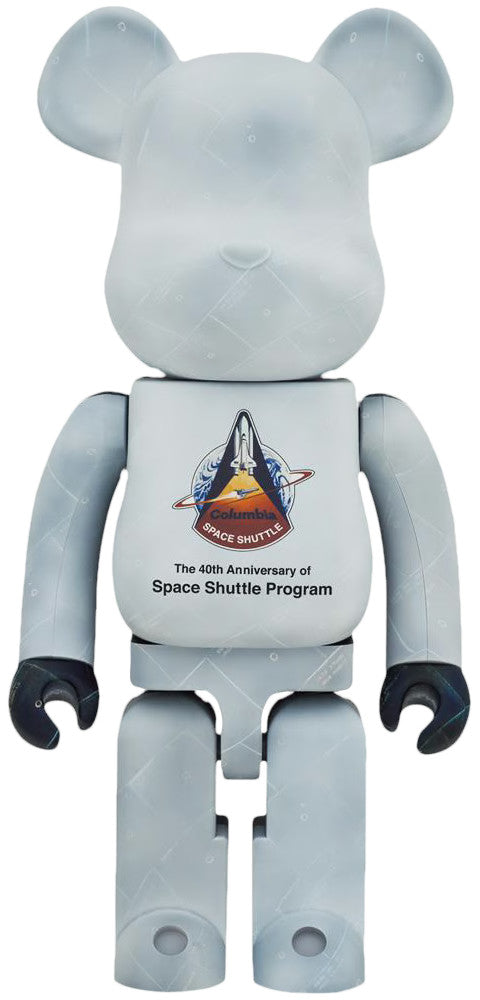
BE@RBRICK NASA Space Shuttle 40th Anniversary 1000% Medicom Toy Bearbrick
$600.00 USD
-
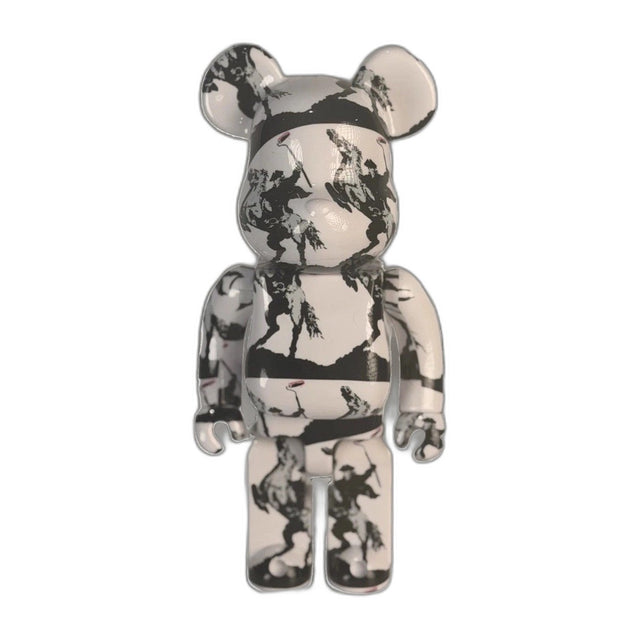
BE@RBRICK Brandalism Sync Banksy Medicom Toy Art Figure du-al.io Authenticated
$199.00 USD
-
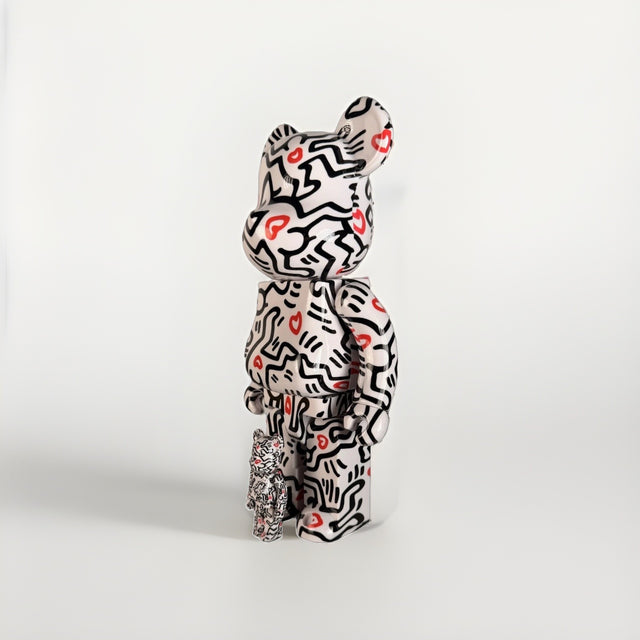
BE@RBRICK Keith Haring 400% + 100% Set Medicom Toy Bearbrick Foundation Art New
$199.00 USD
-
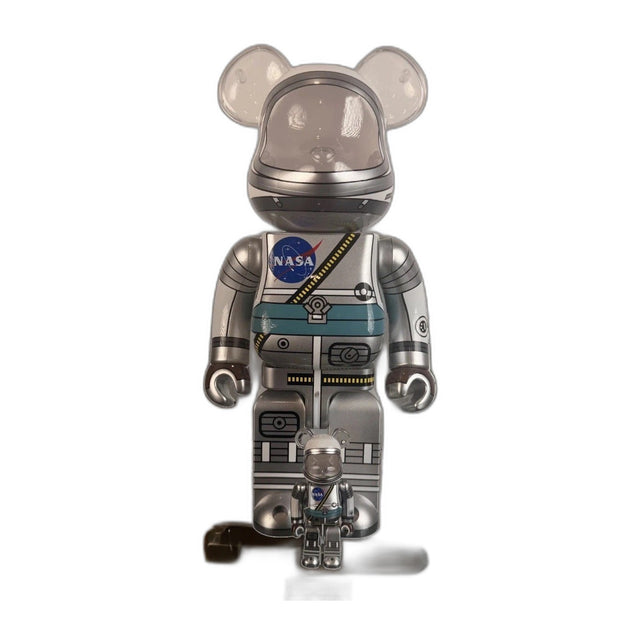
Bearbrick BE@RBRICK Mercury Astronaut 400% 100% Set NASA Medicom Toy Sealed New
$225.00 USD
-
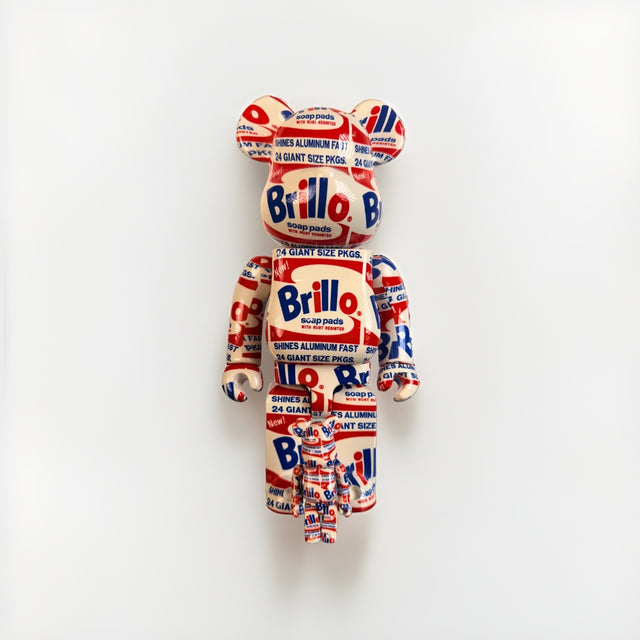
Bearbrick BE@RBRICK Andy Warhol Brillo 400% 100% Set Original 2020 Medicom New
$275.00 USD
Browse the collection for current listings.