The Four Words That Should Make Every Collector Nervous
"From a private collection."
You see it in auction catalogs. You see it on gallery walls. You see it in dealer invoices typed in a font chosen to suggest understated elegance.
And every time you see it, you should feel something tighten in your chest.
Not panic. Not automatic suspicion. But a very specific kind of alertness — the kind an experienced buyer develops after years of watching beautiful objects move through the market trailing nothing but a ghost story where their history should be.
"From a private collection" is not provenance. It is the absence of provenance dressed up in a morning coat.
This article is about what those four words actually mean, why the auction and gallery trade keeps using them, and how to protect yourself when you encounter them — because you will encounter them constantly if you buy anywhere near the secondary market.
What Provenance Actually Is
Let's start with the thing itself, because the word gets thrown around so loosely that its meaning has worn thin.
Provenance is the documented chain of ownership for an object from the moment it left the artist's hand — or the moment it was created — to the moment it sits in front of you. Every link in that chain matters. A break in the chain is not a minor administrative inconvenience. It is a gap through which forgeries, stolen works, and legally compromised pieces regularly pass.
Good provenance looks like this: artist's studio receipt, first purchaser's invoice, estate documentation, second purchaser's invoice, auction catalog with lot number, current owner. Every transaction recorded. Every transfer dated.
Bad provenance — or weak provenance — looks like a one-liner.
"From a private collection" is the one-liner. It tells you that the work exists and that someone owned it. That is, essentially, the minimum observable fact about any object that isn't actively on fire.
The Language Spectrum: What Catalog Copy Actually Signals
Auction houses have a loose but fairly consistent vocabulary for provenance disclosure. Understanding where "private collection" sits on that spectrum is useful.
| Catalog Language | What It Usually Means | Collector Alert Level |
|---|---|---|
| Named collector, dated purchase, receipt on file | Verifiable chain of ownership | Low — verify anyway |
| Named collector, no date | Partial chain, requires follow-up | Moderate |
| "European private collection" | Geographic softening of anonymity | Elevated |
| "Private collection, [City]" | Plausible but unverifiable | Elevated |
| "From a private collection" | Consignor unknown or anonymous by agreement | High |
| "Property of a gentleman/lady" | Older British phrasing for same anonymity | High |
| No provenance listed at all | Either newly surfaced or deliberately scrubbed | Very High |
The further you move down that table, the less you know about who actually owned the piece, when they got it, and how it moved through the world before it reached the block.
Why Sellers Use It (The Legitimate Reasons)
Before we talk about the problems, let's be fair. There are real reasons a consignor might request anonymity, and they are not all sinister.
Privacy
Wealthy collectors sometimes don't want the world to know they're selling. Liquidating a portion of a collection can signal financial stress. It can invite unwanted attention. It can complicate estate planning or divorce proceedings. Anonymity in these cases is a legitimate personal preference, not a cover-up.
Security
If you own a seven-figure work and you publicly sell it, you've just told every interested party that you own works of that value. Some collectors reasonably don't want that information circulating. High-value art and home security concerns are more connected than people like to acknowledge.
Diplomatic or Business Relationships
In markets with significant international collectors — think Korean, Middle Eastern, Chinese, Russian buyers from earlier decades — public attribution of a sale can carry political or business implications that have nothing to do with the art itself.
The Work Simply Hasn't Been Public
Not every collected work passes through exhibition or institutional hands. A piece acquired directly from an artist's studio in 1987 and never shown publicly will have genuine provenance that looks thin on paper, because paper wasn't always the point.
These are real situations. They happen regularly. The problem is that exactly the same language — "from a private collection" — covers all of them, including the cases that are not legitimate at all.
Why Sellers Use It (The Problems)
The forgery market is not a cottage industry. FBI Operation Bullpen, which ran through the late 1990s and early 2000s, dismantled a forgery ring that had moved tens of millions of dollars in fake sports memorabilia into the market through auction houses, dealers, and online platforms. The works carried authentication from companies the ring had either created or compromised. The provenance on most of the pieces? Thin. Anonymous. Convenient.
The lesson from Bullpen wasn't just that forgers are sophisticated. It was that anonymous provenance is one of the primary tools the secondary market uses to insert fakes into legitimate circulation.
If you can't name the collector, how do you check whether the collector ever had the piece?
That's the fundamental problem. Anonymity breaks the verification chain at the most important point — the point just before the current sale.
Stolen Works
The Art Loss Register maintains a database of stolen works. Interpol maintains one. The FBI maintains one. When a piece surfaces "from a private collection" with no named prior ownership, running it against those databases is genuinely harder. Stolen works can sit for years — sometimes decades — in private hands before surfacing at auction. "Private collection" is often the last piece of cover a stolen work needs before it re-enters legitimate circulation.
Works With Unresolved Restitution Claims
Nazi-era looted art remains a live issue in the market. The 1998 Washington Principles established guidelines for identifying and returning works confiscated between 1933 and 1945, but implementation has been uneven. A work that moved through European hands during those years and surfaces now with "private collection, Switzerland" as its only provenance line is not automatically suspect — but it warrants significant additional research before purchase.
Works Without Valid Authentication
This is where the street-level forgery meets the secondary market. A piece that cannot withstand authentication scrutiny does not come with named-collector provenance, because named collectors generate paper trails. The safest way to move a work that can't survive expert review is to attach it to an anonymous source and pair it with a plausible-looking authentication document.
PSA's own certification-verification warnings make the point explicitly: a certificate number that doesn't match a live database entry, or a certificate attached to an item that differs from what was originally certified, is a major red flag. Forgers have long understood that a weak-provenance work paired with a questionable COA is still more saleable than a work with no documentation at all.
How to Actually Evaluate a Private-Collection Piece
The goal isn't to reject every work with thin provenance. Some of the most interesting pieces in the market have imperfect paper trails. The goal is to know what you're buying and price the risk accordingly.
Step One: Ask Who Is Making the Claim
There is a significant difference between a major auction house saying "from a private collection" and a small online marketplace listing making the same statement. The major house has (theoretically) done due diligence. They have signed consignment agreements. They have legal liability. The online seller has none of that.
This doesn't make the major house automatically trustworthy. But it does mean there is at least a party with skin in the game who, if pressed, might have more information than the catalog reveals.
Always ask. Directly. In writing.
Step Two: Push for What Exists Behind the Curtain
The anonymity of a consignor doesn't necessarily mean the auction house or gallery has no documentation. They may have signed agreements, receipts, correspondence, or other materials that substantiate the consignor's ownership — they're just not publishing the name.
A reputable house should be willing to confirm, in some form, that they have reviewed documentation of ownership. If they can't or won't say that, the "private collection" line is doing a lot of heavy lifting over nothing.
Step Three: Focus Hard on the Authentication Layer
When provenance is weak, authentication has to carry more of the weight. This means knowing exactly what authentication standard applies to the specific work you're considering — and holding to that standard without compromise.
-
Banksy works
- Pest Control is the sole authentication body. Full stop.
- Any Banksy without a current Pest Control certificate and matching Certificate of Authenticity issued by Pest Control is unverified, regardless of what any other party claims.
- Gauntlet Gallery does not claim Pest Control authentication. We require it for any Banksy we offer.
-
Shepard Fairey works
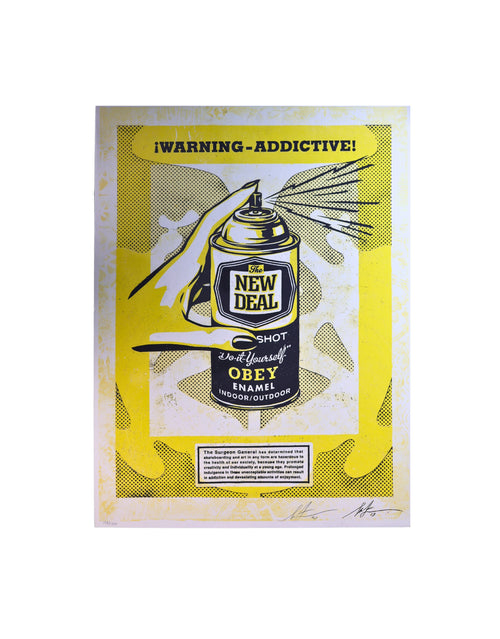
- Fairey does not issue artist-controlled COAs. Authentication runs through signature verification, correct edition numbering matched to Obey Giant drop records, and a clean provenance chain back to an official release.
- If the provenance is "private collection" with no connection to a documented drop or authorized retailer, you're working on signature verification alone. That's a harder case.
-
Death NYC works
- Requires the artist-signed COA and the studio gold seal. Both. Neither alone is sufficient.
- A private-collection piece missing either element needs direct artist verification before purchase.
-
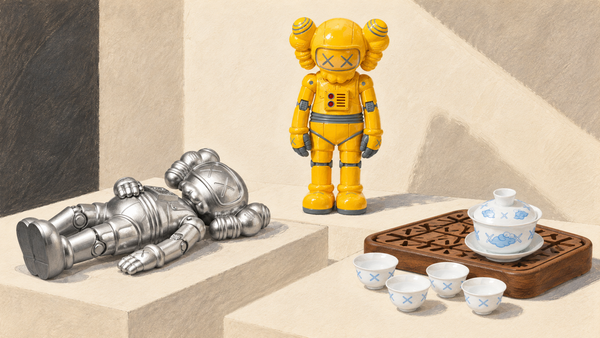
KAWS and BE@RBRICK
- Original packaging, hologram integrity, and Medicom release record verification are the primary tools. A private-collection piece that cannot be matched to a documented release is a major problem.
- Check the molded foot stamp, copyright markings, and paint quality against documented examples of the same release.
-
Warhol works
- The Warhol Authentication Board dissolved in 2012. The TrueCOA framework is the operative standard for post-dissolution verification.
- A private-collection Warhol with no foundation documentation and no TrueCOA framework verification is a significant risk regardless of what other claims accompany it.
-
Music and sports memorabilia
- Beckett (BAS), JSA, and PSA/DNA are the primary authentication tiers.
- For music items specifically, Roger Epperson REAL operates as the specialist tier within BAS for high-value or complex pieces.
- Note the JSA distinction: a JSA Basic certification and a JSA Letter of Authenticity (LOA) are not equivalent. A private-collection piece with only a JSA Basic stamp on a high-value item should prompt a request for the full LOA.
- Run every item against PSA's live database. The database number must match what's on the label and what's in the system. Discrepancies end the conversation.
-
Space memorabilia
- BAS, JSA, and PSA/DNA apply, plus a Zarelli specialist letter for significant pieces.
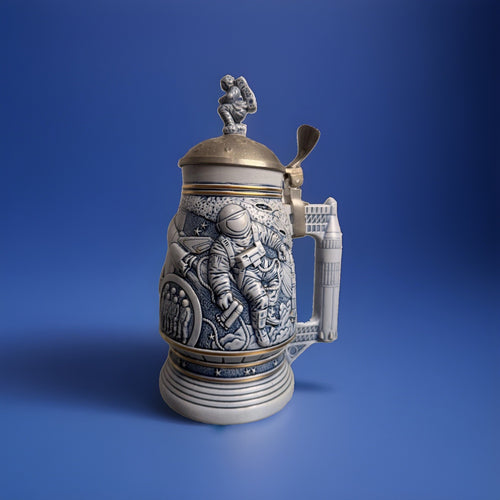
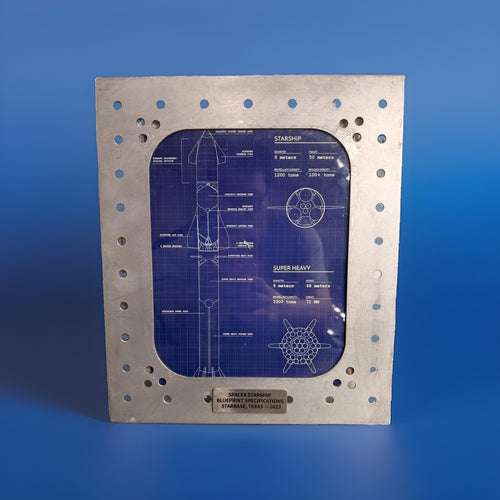
- Private-collection space items without mission documentation are particularly vulnerable to misattribution. "Flown" items require chain of custody documentation that goes well beyond collector anonymity.
Step Four: Run the Databases
This is not optional for any significant purchase.
- Art Loss Register — fee-based search for stolen/looted works
- Interpol Works of Art database — publicly accessible
- FBI Art Crime Team database — publicly accessible
- AAMD Object Registry — focuses on works that changed hands in Nazi-controlled territories
- Commission for Looted Art in Europe database
A clean result across those databases doesn't clear a piece. It removes one category of known problem. The piece may still be a forgery, or may have an unresolved dispute not yet registered. But a hit in any of those databases stops the transaction entirely.
Step Five: Commission Independent Expert Review
For purchases above a meaningful threshold — and you define that threshold for your own collection — an independent expert opinion is not an extravagance. It is the minimum reasonable due diligence.
Note that "expert opinion" means someone with documented expertise in the specific artist or category, with no financial interest in the sale. The seller's in-house authentication is not independent. The platform's internal review is not independent. You need someone who has no stake in whether you buy the piece.
The Secondary Market's Uncomfortable Relationship with Anonymity
Here's the part that doesn't get discussed enough in polite company.
The secondary market often prefers anonymous provenance. Not because the market is corrupt — though individual participants sometimes are — but because named provenance is complicated and expensive to verify, and anonymous provenance lets everyone move faster.
Auction houses are in the volume business. Dealers are in the margin business. Online platforms are in the listing business. None of these incentive structures favor spending significant time and resources verifying that the private collection behind lot 47 is exactly who they claim to be.
Who benefits when the chain of ownership stays vague?
Not you. Not the legitimate market. The people who benefit from vague provenance are the people with something to hide, and the platforms that profit from moving inventory without asking hard questions.
That's a structural problem. Individual collectors have to compensate for it with individual due diligence.
When "Private Collection" Is Fine (And When to Walk Away)
There is a workable version of private-collection provenance. It looks like this:
The work has strong, independently verified authentication. The seller (auction house, gallery, or dealer) is willing to confirm in writing that they have reviewed documentation of the consignor's ownership, even if they can't share the name. A database search returns clean. An independent expert review supports the attribution. And the price reflects the provenance gap — not a premium calculated as if the chain were complete.
When all of those conditions are met, "private collection" is an inconvenience rather than a deal-breaker. You're buying with eyes open, authentication doing the work that provenance can't, and risk appropriately priced.
Walk away when:
- Authentication is absent, weak, or from a non-standard source
- The seller is unwilling to confirm they've reviewed any ownership documentation
- The price is premiumed as if provenance were complete
- The piece is in a category with known forgery problems and the authentication is from the same period/region as documented fraud operations
- Database searches can't be run or are discouraged
- Independent expert review is resisted or "not necessary according to" the seller
Red Flags
Before you proceed with any purchase where "private collection" is the provenance story, run through this list. Every item that applies increases your risk. Any single starred item is a potential deal-breaker on its own.
- No authentication documentation at all — The work exists. Someone claims it's authentic. No paper, no database entry, no third-party review. Hard stop.
- Authentication from an entity that no longer exists or can't be verified ★ — This is a documented forgery-ring technique. If you can't find the authenticating entity in a current, verifiable form, treat the authentication as void.
- Certificate numbers that don't match live databases ★ — PSA, Beckett, JSA all maintain live verification systems. A number that doesn't return a match in the current system is a major red flag per PSA's own published warnings.
- Seller resistance to independent expert review ★ — Legitimate sellers of legitimate works want you to feel confident. Resistance to independent review is information.
- "European collection" or "Asian collection" with no further detail — Geographic softening of the anonymity. It's more specific than "private collection" while remaining completely unverifiable.
- A work that "recently surfaced" after decades — Pieces that were unknown to the market for extended periods and surface without explanation deserve additional scrutiny. Not automatic rejection — but scrutiny.
- Price that seems low given stated authenticity — Fakes are sold at prices that seem like deals. Pricing pressure is one of the tools used to close sales quickly before scrutiny can develop.
- Seller urgency — "This won't last" and "there's another buyer" are sales tactics everywhere, but in the context of weak provenance they're particularly concerning. Urgency discourages due diligence.
- Chain-of-custody inconsistencies — The catalog says one thing. The COA says another. The seller's verbal account is a third version. Inconsistencies about the history of a piece are not administrative errors. They are errors about what happened.
- Platform without buyer protection or dispute resolution — Online marketplaces without real enforcement mechanisms offer no recourse. "Private collection" from an unvetted seller on an unregulated platform is a lottery ticket dressed as a purchase.
Bottom Line
"From a private collection" is not necessarily a lie. It is not necessarily a cover story. But it is always a gap — a place where the chain of ownership is invisible to you, the buyer, and that invisibility has real consequences for your risk.
The secondary market is not going to fix this on your behalf. Auction houses have limited incentives to demand named-collector documentation from every consignor. Platforms have limited incentives to require verifiable ownership history from every listing. The regulatory environment around art market provenance disclosure is improving slowly, but "slowly" is doing a lot of work in that sentence.
Which means the work falls to you.
When you see those four words, treat them as a prompt. Not a stop sign, not a green light — a prompt. Ask what authentication exists and verify it independently. Run the databases. Ask the seller in writing what they know about ownership history. Price the risk honestly. And if any of the red flags above apply and the seller isn't helping you resolve them, walk away without drama and without regret.
The right piece with weak provenance, at the right price, with strong authentication and clean database results, can be a reasonable purchase. The wrong piece with the same story is an expensive lesson.
Know the difference before you write the check.
Frequently Asked Questions
Is "from a private collection" ever actually fine?
Yes. There are legitimate reasons for consignor anonymity, from personal privacy to security concerns. The question isn't whether the phrase is inherently disqualifying — it isn't — but whether the rest of the documentation holds up. Strong authentication, clean database results, and a seller who can confirm (even without naming the consignor) that they reviewed ownership documentation can make a private-collection piece a reasonable purchase. The phrase becomes a problem when it's the only thing standing between you and a question mark.
Should I always pay less for a private-collection work?
You should price the risk honestly. Weak provenance is a real factor that affects value — in part because it may affect your ability to resell the piece later, since buyers will ask the same questions you're asking now. A work with a complete, named, documented provenance chain is worth more, all else being equal, than an identical work with anonymous origins. If the seller is pricing a private-collection piece at a premium that assumes complete provenance, that's a misrepresentation of what you're getting. The discount you should expect is proportional to the gap in the chain and the risk it represents.
Do major auction houses do enough due diligence on private-collection consignments?
More than smaller platforms, less than they sometimes imply. Major houses have legal and reputational incentives to avoid obviously stolen or fraudulent works. But they operate in high volume and with consignor agreements that may include anonymity provisions. They are not authenticators, and their provenance research is not comprehensive art historical investigation. The due diligence of a major house is a floor, not a ceiling. Build on it, don't rely on it as your only protection.
How do I run an Art Loss Register search?
The Art Loss Register is a fee-based service. You can request a search through their website at artloss.com. For significant purchases, the cost is trivial relative to the protection it provides. They will issue a certificate if the work is not in their database of stolen and looted art. That certificate is worth having in your file. The Interpol and FBI databases are publicly searchable at no cost and should always be checked in addition to the Art Loss Register, not instead of it.
What if the seller refuses to let me get an independent expert opinion?
Walk away. There is no legitimate reason for a seller of a legitimate work to resist independent expert review. The only people who lose when you get a second opinion are people selling something that won't survive a second opinion. Resistance to due diligence is itself material information about the piece. Document the refusal and move on.
Is "European private collection" more or less trustworthy than "private collection"?
It's equally unverifiable, with the additional concern that it may signal a work that passed through Europe during a period of significant looted-art movement. It is not inherently more or less legitimate, but the geographic qualifier without specifics doesn't add information — it creates the impression of information while actually telling you nothing you can verify. Treat it with the same level of scrutiny you'd apply to any anonymous-source claim.
Can a piece with "private collection" provenance be insured and resold?
Insured, usually yes — insurers care primarily about current appraisal value and the authentication you can document. Resold, potentially more difficult. Future buyers will ask the same provenance questions you should be asking now. A private-collection piece that can't be strengthened with additional research over time — exhibition history, artist records, estate documentation that surfaces later — may be harder to move in the secondary market, and harder to realize full value on, than a piece with a clean named chain. Consider your exit strategy before you enter.
Are there specific categories of art where "private collection" provenance is a bigger risk?
Yes. Several categories have elevated concern. Works by artists with documented, active forgery markets — certain post-war, street art, and sports/music memorabilia categories have well-documented fraud histories, including the cases prosecuted under FBI Operation Bullpen. Works with significant value gaps between authenticated and unauthenticated examples — where authentication adds substantial monetary value, the incentive to fabricate it is higher. And works from periods or regions associated with looting or state-sponsored art movement. The specific categories shift over time as market dynamics change, but those structural risk factors are consistent.