The Frame Adds Value Trap: When Framing Costs Exceed the Print
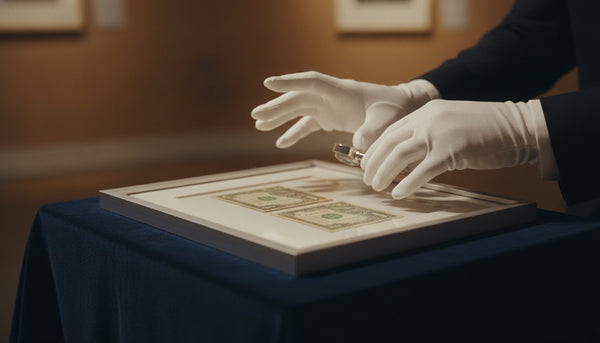
You bought a print for $400. You spent $800 framing it.
Congratulations. You now own a $400 print in an $800 frame, and the market will pay you exactly what it paid before: $400 for the print, and almost nothing for the frame.
This is the frame adds value trap, and it catches smart collectors more often than obvious fakes do.
It's not a scam anyone runs on you. You run it on yourself, usually with the best intentions — conservation concerns, aesthetic matching, a desire to "do it right." The framing shop is happy to help. They'll quote you museum-quality UV glass, hand-finished hardwood moulding, archival matting, and a backing system that could survive a minor flood. The invoice arrives and it feels justified.
It rarely is, from a pure value standpoint.
Understanding when framing serves you and when it costs you is one of the more practically useful skills in collecting. This piece is about exactly that.
The Basic Math the Framing Industry Doesn't Advertise
Custom framing is priced as a service. Labor, specialty materials, overhead on a retail shop with low foot traffic — all of it ends up in your quote. The frame itself is a physical object, but when you go to resell the work, that object has essentially zero liquidity.
Secondary market buyers of prints are buying the print.
They'll often ask you to ship it unframed. They may already have a frame they prefer. They have a wall space with specific dimensions. What felt like an upgrade to you is, to them, a complication.
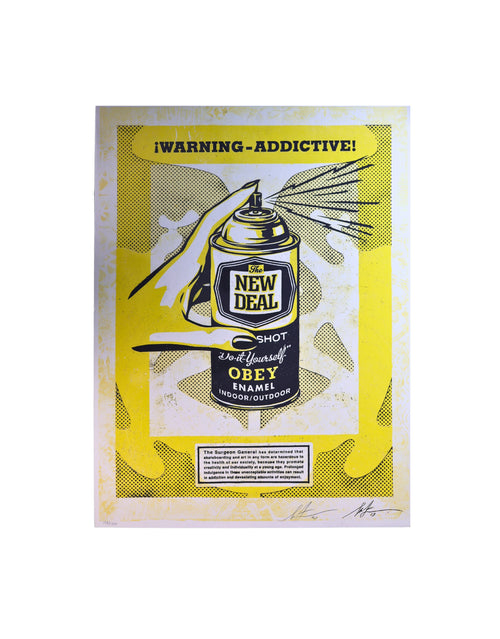
This is structurally different from, say, original paintings where the frame can carry genuine historical value, or where a period-appropriate frame signals authenticity and care. For contemporary limited edition prints — the Banksy screenprints, the Shepard Fairey releases, the KAWS editions, the Death NYC signed works — the frame is almost always a personal expenditure, not a value-building one.
So why do so many collectors keep doing it?
Because the framing conversation happens at an emotionally satisfying moment. You just acquired something you love. Of course you want to display it beautifully. The framer confirms your taste, upsells you on materials you genuinely should care about, and you leave feeling like a responsible custodian.
You are being a responsible custodian. You're just not building equity.
Conservation First: What Archival Framing Actually Does (and Doesn't Do)
What it does
Real archival framing — acid-free mats, UV-filtering glazing, archival foam board backing, proper hinging with reversible conservation tissue — genuinely protects a work from the things that destroy prints over time: UV exposure, acid migration, humidity fluctuation, and physical contact with reactive materials.
If you plan to hold a work for decades, conservation-grade protection makes sense. A screenprint on quality paper that's been properly framed and stored will look significantly better at resale than one that's been stuck behind standard glass with a cardboard backing. Condition is the primary variable in print valuation on the secondary market.
So conservation framing isn't worthless. It's just worth something different than people assume.
It's worth condition preservation. It's not worth framing costs recovered.
What it doesn't do
Archival framing does not:
- Increase the edition value of the print itself
- Transfer any monetary premium to the resale price
- Authenticate the work
- Make a low-tier edition behave like a high-tier one
- Compensate for a weak provenance chain
The frame is invisible to the authentication ecosystem. PSA, JSA, Beckett — none of them care what it's framed in. Pest Control (the only legitimate Banksy authentication body) doesn't factor the frame. The Obey Giant drop record that anchors Shepard Fairey provenance is about the print, the edition number, and the purchase documentation — not the Larson-Juhl moulding around it.
When did we start conflating display quality with investment quality?
The Spend Tiers: Where Framing Makes Sense and Where It Doesn't
Let's talk about the print market in practical tiers, because framing decisions should scale with what you actually own.
Tier 1: Prints under $500
At this level, custom framing that costs more than the print itself is almost always an economic error.
This doesn't mean display them poorly. IKEA's Ribba frames aren't acid-free but they're fine for works you're not holding as investments. For works at this price point that you actually care about protecting, a simple solution — pre-made frame with UV plexi, acid-free backing from a framing supply store — can run you $80 to $150 and do 80% of the conservation work of a $600 custom job.
Full custom framing on a $300 open-edition print is the definition of the trap.
Tier 2: Prints in the $500–$2,500 range
This is where the math gets genuinely interesting.
A $1,200 limited edition screenprint from a recognized artist — authenticated, numbered, in solid condition — is worth protecting properly. Conservation framing in this range makes sense as a percentage of value. You're not doubling your cost on the frame; you're adding 20-40% in protection costs against a work that has real resale potential.
But even here, keep the frame neutral and reversible. Heavy custom presentation framing with ornate moulding, double mats, spacers, and specialty glass that runs $800+ on a $1,200 print is still misallocated spend. The market won't reimburse you.
Tier 3: Prints above $2,500
At this level, proper conservation framing is genuinely non-optional if you care about long-term value. You're holding something with real secondary market presence, and condition degradation is a direct hit to that value.
Spend appropriately on conservation here. Get Tru Vue Museum Glass or equivalent. Use a conservator, not just a framing shop, if the work is particularly delicate. Keep all paperwork on the framing work done — who did it, what materials, when.
But even here: don't let the frame become the statement. The work is the statement.
The Resale Reality Check
Here's what happens when you try to sell a framed print.
A buyer sees your listing. They're interested in the print. They ask: "Is this framed?" You say yes. They ask: "Can you ship it unframed?"
Now you have to deframe it, which costs you time, risks the work if done carelessly, and leaves you with an $800 frame you're trying to recoup somewhere.
Or you list it framed. You price it at print value plus "a little extra" for the beautiful frame. The buyer does not perceive the frame as you do. They see it as your aesthetic choice, which they may not share, applied to their potential purchase. They offer you print value minus the inconvenience of dealing with the frame.
Neither outcome is what you imagined when you picked out that moulding sample at the framing counter.
Has anyone ever actually sold a print for more because of the frame?
Occasionally, when the frame is itself historically or artistically significant — a period Whistler frame on an appropriate work, a frame with documented provenance to the artist or a notable collector. That's a different conversation. For 99% of contemporary limited editions, the answer is no.
When the Frame Is Part of the Work
There are cases where the frame genuinely is part of what you own, and this deserves its own section because conflating it with decorative framing is a mistake.
Some artists produce works where the frame is integral to the presentation and was part of the original release. Certain Death NYC works are issued with specific presentation hardware. Some Banksy pieces have been sold through auction with their original framing, and that framing has provenance significance because it was part of how the work entered the market.
In these cases, reframing is actually value-destructive. You're removing something with documented history and replacing it with something without.
The rule: if the work arrived framed from the artist, the gallery, or the original auction, document that frame and think hard before changing it. If you framed it yourself after purchase, the frame is yours — aesthetically, financially, and entirely.
The Moulding Markup and Why Framers Are Not Your Investment Advisors
This isn't a critique of framers as people or as craftspeople. Good framing is a real skill, and conservation framing done properly requires knowledge most collectors don't have.
But the incentive structure of a framing shop is not aligned with your investment interests. They make money on materials markup and labor. The more elaborate the job, the more they earn. They are not, structurally, in a position to tell you that your $350 print doesn't warrant a $700 frame. Even if they privately believe it.
The language they use is often technically accurate but emotionally loaded. "Museum quality." "Archival standard." "UV protection." All real things, all genuinely valuable for the right work at the right price point. All also effective at making a collector feel that spending less is irresponsible.
Is skipping the $600 frame on a $200 print really irresponsible, or just honest?
Know the difference between conservation-necessary and conservation-aspirational. For most prints most collectors own, a clean, acid-free, UV-protected basic frame does the job. The hand-gilded, linen-lined, spacer-separated, museum-glass masterpiece is aspirational — and it's yours to enjoy if you choose it. Just don't book it as an investment.
Archival Framing Costs: A Realistic Breakdown
| Component | Budget Option | Mid-Range | Full Conservation |
|---|---|---|---|
| Glazing (glass/plexi) | Standard glass / basic plexi | UV-filtering acrylic (e.g., Optium) | Tru Vue Museum Glass or equivalent |
| Mat | Standard mat (may off-gas) | Acid-free mat, single layer | 100% cotton rag mat, conservation board |
| Backing | Cardboard / foam board | Acid-free foam board | Archival foam board + moisture barrier |
| Hinging / mounting | Tape (often reactive) | Linen hinge tape | Reversible conservation tissue, Japanese hinging |
| Moulding / frame | Aluminum or basic wood | Solid wood, basic finish | Hand-finished, period-appropriate or neutral |
| Total cost range | $40–$120 | $150–$400 | $500–$1,500+ |
The conservation tier is appropriate when the work justifies it by value and by holding period. For everything else, the mid-range option gives you most of the protection at a fraction of the cost.
The "It Makes It Look Better" Argument
You will hear this. You will think it yourself. A beautiful frame genuinely does make a print look better on a wall. This is true and not contested.
But "looks better on the wall" is an enjoyment argument, not an investment argument. Those are both legitimate reasons to spend money on art. They're just different reasons, and you should be clear which one is operating when you're writing that check.
Collectors who buy for enjoyment and frame beautifully for the pleasure of living with art well — that's a complete philosophy. Collectors who buy to build value and then unconsciously reframe every acquisition into an investment are making a category error every time they approve a framing quote.
The trap isn't spending money on frames. The trap is telling yourself it's adding value when it's adding pleasure.
One of those is honest. The other one will mess up your resale expectations for years.
What About Floater Frames and Canvas Works?
Canvas prints and giclées on canvas present a slightly different situation, and it's worth addressing separately.
Stretched canvas works are typically displayed without glazing, with a floater frame that creates visual separation between edge and moulding. The floater frame here is more directly a presentation element and less a conservation one — glazing isn't involved, so the UV protection argument largely disappears.
For canvas works, framing expenditure is almost entirely aesthetic. Be honest about that. A good floater frame enhances display. It doesn't enhance the work's authentication status, its edition value, or its secondary market position.
The same math applies: what's the relationship between the frame cost and the work's value? If they're close to equal, you're in the trap.
Red Flags
Watch for these signals that you're heading into the frame adds value trap.
- The framing quote arrives and it's close to or above what you paid for the print. Full stop. Ask yourself whether conservation framing at this level is genuinely warranted or if you're in aspirational spend territory.
- The framer says the frame will "really make it pop" or "add to the presentation." Accurate, irrelevant to resale, and a sign you're being sold aesthetics rather than conservation.
- You're framing an open-edition print. Open editions have no scarcity premium and limited resale ceiling regardless of condition. Conservation spend here is almost never recovered.
- You're planning to sell within two to three years. Short holding period plus high framing cost is almost guaranteed negative ROI on the framing spend.
- The work arrived from the artist or original gallery with existing framing and you're planning to reframe it. Stop. Document what you have. The original framing may carry provenance value you're about to discard.
- You're using framing cost in your mental calculation of the work's value. The market won't. Don't.
- The frame is more stylistically distinctive than neutral. Distinctive frames are the hardest to transfer to a new buyer. Neutral frames are invisible. Invisible is better for resale.
- No documentation of what archival materials were actually used. If the framer can't give you a written spec of materials (mat board type, glazing specification, mounting method), "archival" may be a selling term, not a technical standard. Ask for specifics.
Bottom Line
Framing is not an investment. It's an expense that can be justified by conservation need, by display enjoyment, or by the significance of the work — and it should be sized accordingly.
The rule of thumb we operate by: framing costs should not exceed 25-30% of the print's secondary market value for works you're holding as investments. For works you're buying purely for enjoyment and display, that ceiling is yours to set — just set it consciously.
The print market rewards condition, authenticity, provenance, and edition significance. It does not reward beautiful frames. When Pest Control reviews a Banksy, they're looking at the work, the sticker, the documentation — not the frame. When a serious buyer evaluates a numbered Shepard Fairey, they're checking the Obey Giant drop record and the edition number — not the moulding profile. When a KAWS piece goes to authentication, it's the packaging, the hologram, and the Medicom release record that matter.
Spend on what the market values. Display how you want. Just don't confuse the two.
The trap isn't expensive framing. The trap is expensive framing mistaken for something else.
Frequently Asked Questions
Does archival framing actually matter for resale condition?
Yes, but indirectly. Archival framing preserves the physical condition of the print — and condition is a primary variable in secondary market pricing. So archival framing has real value, it just doesn't transfer as framing cost. It transfers as condition quality. A well-preserved print in fine condition commands more than the same edition in poor condition. The archival frame helped achieve that condition, but you won't get the framing cost back as a line item. You get it back (if at all) through better condition grade at sale.
Can I deframe a print myself to prepare it for sale?
For basic works, yes, with care. For anything valuable or delicate, no — deframing incorrectly can damage the work through improper hinging removal, humidity exposure, or physical contact. If you're holding a work worth several thousand dollars and it needs to come out of its frame, have a conservator do it. The cost of professional deframing is trivial relative to the risk of damaging the work's condition.
What glazing is actually worth the money for high-value prints?
For works above $1,500-$2,000 that you plan to display (rather than store flat), Tru Vue Museum Glass or Optium Museum Acrylic is genuinely worth it. Both provide high UV filtration (99%+) and significant anti-reflection properties. The difference between standard glass and conservation glazing over a ten to twenty year hold period is measurable in condition outcome. Below that value threshold, standard UV-filtering acrylic is a reasonable middle ground. Standard non-UV glass is not recommended for anything you're holding as an investment.
My print came framed from the gallery. Should I keep the original frame?
Generally yes, especially if it came directly from a gallery that represents the artist, or if it was part of an original sale that included the frame as part of the presentation. Document the framing — photograph it, note it in your provenance records. Reframing erases that chain. If the original frame is damaged or the conservation materials are genuinely inadequate, consult a conservator before making changes rather than simply replacing it.
Does the frame affect authentication at all?
No, with very narrow exceptions. Authentication bodies evaluate the work itself: the print, the signature, the edition numbering, the paper or substrate, any embedded authentication markers. Pest Control for Banksy, the TrueCOA framework for Warhol, JSA or Beckett for signed memorabilia — none of them are influenced by the frame. The exception is when a frame itself has documented provenance to the artist's studio or to a historically significant collection, in which case the frame becomes a separate object of interest. That's rare and applies mainly to historical works, not contemporary limited editions.
What's the difference between a conservator and a framer, and when do I need each?
A framer is a trained craftsperson who builds and assembles frames, cuts mats, and mounts works. They may use archival materials or may not — ask specifically. A conservator is typically a specialist with formal training in art conservation science, including knowledge of material chemistry, aging behavior, and reversibility of treatments. For works of significant value or works requiring any remediation (cleaning, deacidification, repair), you want a conservator. For straightforward protective framing of a print in good condition, a skilled framer using documented archival materials is appropriate.
Is there any scenario where reframing increases resale value?
Occasionally. If a work comes in a damaged, visually distracting, or actively harmful frame (one using acidic materials that are degrading the work), proper reframing improves condition and presentation simultaneously. In those cases, reframing cost can be partially justified as condition remediation. If you can document that you moved from an inadequate frame to a proper conservation frame and the work's condition improved or stabilized, that's a legitimate part of the provenance and condition narrative. Even then, you won't recover dollar-for-dollar framing costs at resale — but you may recover some of it through better condition grade.
How should I document my framing for resale purposes?
Keep it simple but complete. Photograph the framed work and the unframed print (if you have pre-framing shots, even better). Get a written spec from the framer listing the materials used by name and grade — mat board type, glazing product, mounting method, hinging material. Keep the invoice. Note the date and the name of the framing shop. This documentation does two things: it substantiates any condition claims you make at resale, and it gives a buyer or conservator the information they need to properly deframe the work if needed. Buyers who care about condition will appreciate it. Buyers who don't won't penalize you for having it.