Direct answer: Buy only after you can identify the exact item, evaluate item-specific evidence, understand the return and payment protections, and accept that no checklist can guarantee authenticity or future value.
Table of contents
- Start with the exact object
- Map the evidence before price
- Understand official-release context
- Read signatures and substrates cautiously
- Seller and platform diligence
- Questions to ask before checkout
- Receiving and documenting the item
- When to seek specialist review
- Budgeting and avoiding urgency
- How to store the evidence file
What this guide can and cannot establish
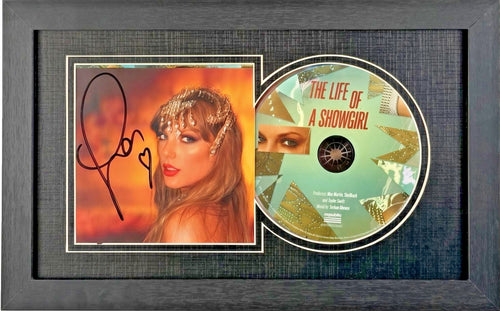
The safest way to approach a signed Taylor Swift item is to treat it as a documented collectible, not as a guaranteed investment. Start with the exact object, seller history, photographs, provenance, and return terms. A signature can be genuine while the surrounding listing is incomplete, altered, or difficult to resell. Digital photographs are useful for screening but cannot answer every authenticity question. Ask for straight-on and angled views, close-ups of the signature and paper, the full back, corners, packaging, and any matching receipt or order record. Save the original files and the listing text before paying.
Start with the exact object
Define whether you are buying a signed CD booklet, vinyl insert, photograph, book, guitar, or another format before comparing prices.
The safest way to approach a signed Taylor Swift item is to treat it as a documented collectible, not as a guaranteed investment. Start with the exact object, seller history, photographs, provenance, and return terms. A signature can be genuine while the surrounding listing is incomplete, altered, or difficult to resell. Digital photographs are useful for screening but cannot answer every authenticity question. Ask for straight-on and angled views, close-ups of the signature and paper, the full back, corners, packaging, and any matching receipt or order record. Save the original files and the listing text before paying.
Collectors should separate what is visible from what is claimed. Visible evidence includes the substrate, ink behavior, placement, edge wear, packaging, and any serial or order information. Claims include where the item was obtained, whether it came from an official release, and whether a certificate belongs to that specific piece. Record both categories separately. A careful buyer also plans the exit. Keep invoices, shipping records, photographs taken on arrival, and a condition log. These records help with insurance, future resale, a marketplace dispute, or a professional opinion. They also prevent memory from filling gaps that the evidence cannot support.
Taylor Swift memorabilia changes quickly because releases, tours, fan demand, and media attention change quickly. A current asking price is not proof of fair value. Compare completed sales where available, note whether examples are sealed or opened, and discount listings that rely on urgency, celebrity association, or vague guarantees. Do not treat a certificate of authenticity as independent proof by itself. Evaluate who issued it, what they actually inspected, whether the certificate identifies the item, and whether the issuer has a verifiable track record. A generic certificate can accompany a genuine item, a questionable item, or an item that has been separated from its original documentation.
Digital photographs are useful for screening but cannot answer every authenticity question. Ask for straight-on and angled views, close-ups of the signature and paper, the full back, corners, packaging, and any matching receipt or order record. Save the original files and the listing text before paying. When a seller refuses reasonable questions, uses only cropped images, or pressures you to pay outside the platform, pause. A slower purchase with a clear record is usually better than a fast purchase that leaves you trying to reconstruct the transaction later.
A careful buyer also plans the exit. Keep invoices, shipping records, photographs taken on arrival, and a condition log. These records help with insurance, future resale, a marketplace dispute, or a professional opinion. They also prevent memory from filling gaps that the evidence cannot support. Condition affects both enjoyment and marketability. Small bends, ink skips, corner compression, fading, adhesive residue, and cracked sleeves should be described plainly. Avoid language such as mint, investment grade, or guaranteed authentic unless you can define the basis and retain evidence for that statement.
Map the evidence before price
Build a record of the listing, seller, source, images, certificate, and return terms.
Taylor Swift memorabilia changes quickly because releases, tours, fan demand, and media attention change quickly. A current asking price is not proof of fair value. Compare completed sales where available, note whether examples are sealed or opened, and discount listings that rely on urgency, celebrity association, or vague guarantees. Do not treat a certificate of authenticity as independent proof by itself. Evaluate who issued it, what they actually inspected, whether the certificate identifies the item, and whether the issuer has a verifiable track record. A generic certificate can accompany a genuine item, a questionable item, or an item that has been separated from its original documentation.
Digital photographs are useful for screening but cannot answer every authenticity question. Ask for straight-on and angled views, close-ups of the signature and paper, the full back, corners, packaging, and any matching receipt or order record. Save the original files and the listing text before paying. When a seller refuses reasonable questions, uses only cropped images, or pressures you to pay outside the platform, pause. A slower purchase with a clear record is usually better than a fast purchase that leaves you trying to reconstruct the transaction later.
A careful buyer also plans the exit. Keep invoices, shipping records, photographs taken on arrival, and a condition log. These records help with insurance, future resale, a marketplace dispute, or a professional opinion. They also prevent memory from filling gaps that the evidence cannot support. Condition affects both enjoyment and marketability. Small bends, ink skips, corner compression, fading, adhesive residue, and cracked sleeves should be described plainly. Avoid language such as mint, investment grade, or guaranteed authentic unless you can define the basis and retain evidence for that statement.
Do not treat a certificate of authenticity as independent proof by itself. Evaluate who issued it, what they actually inspected, whether the certificate identifies the item, and whether the issuer has a verifiable track record. A generic certificate can accompany a genuine item, a questionable item, or an item that has been separated from its original documentation. For high-value pieces, consider a qualified specialist, auction-house review, or authentication service before the return window closes. The right expert depends on the object and the question. A paper conservator can discuss damage; an autograph specialist can assess signature characteristics; neither automatically proves the entire chain of custody.
When a seller refuses reasonable questions, uses only cropped images, or pressures you to pay outside the platform, pause. A slower purchase with a clear record is usually better than a fast purchase that leaves you trying to reconstruct the transaction later. The most useful habit is a repeatable checklist. It makes comparisons easier, reduces impulse buying, and gives a future buyer the same facts you used. The articles in this cluster link to one another so that acquisition, listing, and preservation decisions remain connected.
Understand official-release context
Distinguish an item sold through an official channel from a secondary-market claim.
A careful buyer also plans the exit. Keep invoices, shipping records, photographs taken on arrival, and a condition log. These records help with insurance, future resale, a marketplace dispute, or a professional opinion. They also prevent memory from filling gaps that the evidence cannot support. Condition affects both enjoyment and marketability. Small bends, ink skips, corner compression, fading, adhesive residue, and cracked sleeves should be described plainly. Avoid language such as mint, investment grade, or guaranteed authentic unless you can define the basis and retain evidence for that statement.
Do not treat a certificate of authenticity as independent proof by itself. Evaluate who issued it, what they actually inspected, whether the certificate identifies the item, and whether the issuer has a verifiable track record. A generic certificate can accompany a genuine item, a questionable item, or an item that has been separated from its original documentation. For high-value pieces, consider a qualified specialist, auction-house review, or authentication service before the return window closes. The right expert depends on the object and the question. A paper conservator can discuss damage; an autograph specialist can assess signature characteristics; neither automatically proves the entire chain of custody.
When a seller refuses reasonable questions, uses only cropped images, or pressures you to pay outside the platform, pause. A slower purchase with a clear record is usually better than a fast purchase that leaves you trying to reconstruct the transaction later. The most useful habit is a repeatable checklist. It makes comparisons easier, reduces impulse buying, and gives a future buyer the same facts you used. The articles in this cluster link to one another so that acquisition, listing, and preservation decisions remain connected.
Condition affects both enjoyment and marketability. Small bends, ink skips, corner compression, fading, adhesive residue, and cracked sleeves should be described plainly. Avoid language such as mint, investment grade, or guaranteed authentic unless you can define the basis and retain evidence for that statement. The safest way to approach a signed Taylor Swift item is to treat it as a documented collectible, not as a guaranteed investment. Start with the exact object, seller history, photographs, provenance, and return terms. A signature can be genuine while the surrounding listing is incomplete, altered, or difficult to resell.
For high-value pieces, consider a qualified specialist, auction-house review, or authentication service before the return window closes. The right expert depends on the object and the question. A paper conservator can discuss damage; an autograph specialist can assess signature characteristics; neither automatically proves the entire chain of custody. Collectors should separate what is visible from what is claimed. Visible evidence includes the substrate, ink behavior, placement, edge wear, packaging, and any serial or order information. Claims include where the item was obtained, whether it came from an official release, and whether a certificate belongs to that specific piece. Record both categories separately.
Practical checkpoint
| Check | What to record | Why it matters |
|---|---|---|
| Identity | Exact release, format, size, and edition language | Prevents mixing unlike items |
| Evidence | Seller, invoice, photos, provenance, and certificate details | Preserves a reviewable record |
| Condition | Front, back, corners, signature, sleeve, and packaging | Supports fair pricing and disputes |
| Terms | Return window, fees, shipping, and platform protections | Defines the risk before payment |
Use the table as a worksheet, not as a substitute for specialist review. A missing field should remain marked unknown rather than filled with an assumption.
Read signatures and substrates cautiously
Look at ink, pressure, placement, paper, and handling without treating one visual cue as decisive.
When a seller refuses reasonable questions, uses only cropped images, or pressures you to pay outside the platform, pause. A slower purchase with a clear record is usually better than a fast purchase that leaves you trying to reconstruct the transaction later. The most useful habit is a repeatable checklist. It makes comparisons easier, reduces impulse buying, and gives a future buyer the same facts you used. The articles in this cluster link to one another so that acquisition, listing, and preservation decisions remain connected.
Condition affects both enjoyment and marketability. Small bends, ink skips, corner compression, fading, adhesive residue, and cracked sleeves should be described plainly. Avoid language such as mint, investment grade, or guaranteed authentic unless you can define the basis and retain evidence for that statement. The safest way to approach a signed Taylor Swift item is to treat it as a documented collectible, not as a guaranteed investment. Start with the exact object, seller history, photographs, provenance, and return terms. A signature can be genuine while the surrounding listing is incomplete, altered, or difficult to resell.
For high-value pieces, consider a qualified specialist, auction-house review, or authentication service before the return window closes. The right expert depends on the object and the question. A paper conservator can discuss damage; an autograph specialist can assess signature characteristics; neither automatically proves the entire chain of custody. Collectors should separate what is visible from what is claimed. Visible evidence includes the substrate, ink behavior, placement, edge wear, packaging, and any serial or order information. Claims include where the item was obtained, whether it came from an official release, and whether a certificate belongs to that specific piece. Record both categories separately.
The most useful habit is a repeatable checklist. It makes comparisons easier, reduces impulse buying, and gives a future buyer the same facts you used. The articles in this cluster link to one another so that acquisition, listing, and preservation decisions remain connected. Taylor Swift memorabilia changes quickly because releases, tours, fan demand, and media attention change quickly. A current asking price is not proof of fair value. Compare completed sales where available, note whether examples are sealed or opened, and discount listings that rely on urgency, celebrity association, or vague guarantees.
The safest way to approach a signed Taylor Swift item is to treat it as a documented collectible, not as a guaranteed investment. Start with the exact object, seller history, photographs, provenance, and return terms. A signature can be genuine while the surrounding listing is incomplete, altered, or difficult to resell. Digital photographs are useful for screening but cannot answer every authenticity question. Ask for straight-on and angled views, close-ups of the signature and paper, the full back, corners, packaging, and any matching receipt or order record. Save the original files and the listing text before paying.
Seller and platform diligence
Use account history, payment protections, and written policies to reduce transaction risk.
For high-value pieces, consider a qualified specialist, auction-house review, or authentication service before the return window closes. The right expert depends on the object and the question. A paper conservator can discuss damage; an autograph specialist can assess signature characteristics; neither automatically proves the entire chain of custody. Collectors should separate what is visible from what is claimed. Visible evidence includes the substrate, ink behavior, placement, edge wear, packaging, and any serial or order information. Claims include where the item was obtained, whether it came from an official release, and whether a certificate belongs to that specific piece. Record both categories separately.
The most useful habit is a repeatable checklist. It makes comparisons easier, reduces impulse buying, and gives a future buyer the same facts you used. The articles in this cluster link to one another so that acquisition, listing, and preservation decisions remain connected. Taylor Swift memorabilia changes quickly because releases, tours, fan demand, and media attention change quickly. A current asking price is not proof of fair value. Compare completed sales where available, note whether examples are sealed or opened, and discount listings that rely on urgency, celebrity association, or vague guarantees.
The safest way to approach a signed Taylor Swift item is to treat it as a documented collectible, not as a guaranteed investment. Start with the exact object, seller history, photographs, provenance, and return terms. A signature can be genuine while the surrounding listing is incomplete, altered, or difficult to resell. Digital photographs are useful for screening but cannot answer every authenticity question. Ask for straight-on and angled views, close-ups of the signature and paper, the full back, corners, packaging, and any matching receipt or order record. Save the original files and the listing text before paying.
Collectors should separate what is visible from what is claimed. Visible evidence includes the substrate, ink behavior, placement, edge wear, packaging, and any serial or order information. Claims include where the item was obtained, whether it came from an official release, and whether a certificate belongs to that specific piece. Record both categories separately. A careful buyer also plans the exit. Keep invoices, shipping records, photographs taken on arrival, and a condition log. These records help with insurance, future resale, a marketplace dispute, or a professional opinion. They also prevent memory from filling gaps that the evidence cannot support.
Taylor Swift memorabilia changes quickly because releases, tours, fan demand, and media attention change quickly. A current asking price is not proof of fair value. Compare completed sales where available, note whether examples are sealed or opened, and discount listings that rely on urgency, celebrity association, or vague guarantees. Do not treat a certificate of authenticity as independent proof by itself. Evaluate who issued it, what they actually inspected, whether the certificate identifies the item, and whether the issuer has a verifiable track record. A generic certificate can accompany a genuine item, a questionable item, or an item that has been separated from its original documentation.
Questions to ask before checkout
Ask concise questions that produce evidence rather than reassurance.
The safest way to approach a signed Taylor Swift item is to treat it as a documented collectible, not as a guaranteed investment. Start with the exact object, seller history, photographs, provenance, and return terms. A signature can be genuine while the surrounding listing is incomplete, altered, or difficult to resell. Digital photographs are useful for screening but cannot answer every authenticity question. Ask for straight-on and angled views, close-ups of the signature and paper, the full back, corners, packaging, and any matching receipt or order record. Save the original files and the listing text before paying.
Collectors should separate what is visible from what is claimed. Visible evidence includes the substrate, ink behavior, placement, edge wear, packaging, and any serial or order information. Claims include where the item was obtained, whether it came from an official release, and whether a certificate belongs to that specific piece. Record both categories separately. A careful buyer also plans the exit. Keep invoices, shipping records, photographs taken on arrival, and a condition log. These records help with insurance, future resale, a marketplace dispute, or a professional opinion. They also prevent memory from filling gaps that the evidence cannot support.
Taylor Swift memorabilia changes quickly because releases, tours, fan demand, and media attention change quickly. A current asking price is not proof of fair value. Compare completed sales where available, note whether examples are sealed or opened, and discount listings that rely on urgency, celebrity association, or vague guarantees. Do not treat a certificate of authenticity as independent proof by itself. Evaluate who issued it, what they actually inspected, whether the certificate identifies the item, and whether the issuer has a verifiable track record. A generic certificate can accompany a genuine item, a questionable item, or an item that has been separated from its original documentation.
Digital photographs are useful for screening but cannot answer every authenticity question. Ask for straight-on and angled views, close-ups of the signature and paper, the full back, corners, packaging, and any matching receipt or order record. Save the original files and the listing text before paying. When a seller refuses reasonable questions, uses only cropped images, or pressures you to pay outside the platform, pause. A slower purchase with a clear record is usually better than a fast purchase that leaves you trying to reconstruct the transaction later.
A careful buyer also plans the exit. Keep invoices, shipping records, photographs taken on arrival, and a condition log. These records help with insurance, future resale, a marketplace dispute, or a professional opinion. They also prevent memory from filling gaps that the evidence cannot support. Condition affects both enjoyment and marketability. Small bends, ink skips, corner compression, fading, adhesive residue, and cracked sleeves should be described plainly. Avoid language such as mint, investment grade, or guaranteed authentic unless you can define the basis and retain evidence for that statement.
Receiving and documenting the item
Inspect the package, photograph the contents, and preserve the condition record.
Taylor Swift memorabilia changes quickly because releases, tours, fan demand, and media attention change quickly. A current asking price is not proof of fair value. Compare completed sales where available, note whether examples are sealed or opened, and discount listings that rely on urgency, celebrity association, or vague guarantees. Do not treat a certificate of authenticity as independent proof by itself. Evaluate who issued it, what they actually inspected, whether the certificate identifies the item, and whether the issuer has a verifiable track record. A generic certificate can accompany a genuine item, a questionable item, or an item that has been separated from its original documentation.
Digital photographs are useful for screening but cannot answer every authenticity question. Ask for straight-on and angled views, close-ups of the signature and paper, the full back, corners, packaging, and any matching receipt or order record. Save the original files and the listing text before paying. When a seller refuses reasonable questions, uses only cropped images, or pressures you to pay outside the platform, pause. A slower purchase with a clear record is usually better than a fast purchase that leaves you trying to reconstruct the transaction later.
A careful buyer also plans the exit. Keep invoices, shipping records, photographs taken on arrival, and a condition log. These records help with insurance, future resale, a marketplace dispute, or a professional opinion. They also prevent memory from filling gaps that the evidence cannot support. Condition affects both enjoyment and marketability. Small bends, ink skips, corner compression, fading, adhesive residue, and cracked sleeves should be described plainly. Avoid language such as mint, investment grade, or guaranteed authentic unless you can define the basis and retain evidence for that statement.
Do not treat a certificate of authenticity as independent proof by itself. Evaluate who issued it, what they actually inspected, whether the certificate identifies the item, and whether the issuer has a verifiable track record. A generic certificate can accompany a genuine item, a questionable item, or an item that has been separated from its original documentation. For high-value pieces, consider a qualified specialist, auction-house review, or authentication service before the return window closes. The right expert depends on the object and the question. A paper conservator can discuss damage; an autograph specialist can assess signature characteristics; neither automatically proves the entire chain of custody.
When a seller refuses reasonable questions, uses only cropped images, or pressures you to pay outside the platform, pause. A slower purchase with a clear record is usually better than a fast purchase that leaves you trying to reconstruct the transaction later. The most useful habit is a repeatable checklist. It makes comparisons easier, reduces impulse buying, and gives a future buyer the same facts you used. The articles in this cluster link to one another so that acquisition, listing, and preservation decisions remain connected.
Practical checkpoint
| Check | What to record | Why it matters |
|---|---|---|
| Identity | Exact release, format, size, and edition language | Prevents mixing unlike items |
| Evidence | Seller, invoice, photos, provenance, and certificate details | Preserves a reviewable record |
| Condition | Front, back, corners, signature, sleeve, and packaging | Supports fair pricing and disputes |
| Terms | Return window, fees, shipping, and platform protections | Defines the risk before payment |
Use the table as a worksheet, not as a substitute for specialist review. A missing field should remain marked unknown rather than filled with an assumption.
When to seek specialist review
Match the expert to the question and the object.
A careful buyer also plans the exit. Keep invoices, shipping records, photographs taken on arrival, and a condition log. These records help with insurance, future resale, a marketplace dispute, or a professional opinion. They also prevent memory from filling gaps that the evidence cannot support. Condition affects both enjoyment and marketability. Small bends, ink skips, corner compression, fading, adhesive residue, and cracked sleeves should be described plainly. Avoid language such as mint, investment grade, or guaranteed authentic unless you can define the basis and retain evidence for that statement.
Do not treat a certificate of authenticity as independent proof by itself. Evaluate who issued it, what they actually inspected, whether the certificate identifies the item, and whether the issuer has a verifiable track record. A generic certificate can accompany a genuine item, a questionable item, or an item that has been separated from its original documentation. For high-value pieces, consider a qualified specialist, auction-house review, or authentication service before the return window closes. The right expert depends on the object and the question. A paper conservator can discuss damage; an autograph specialist can assess signature characteristics; neither automatically proves the entire chain of custody.
When a seller refuses reasonable questions, uses only cropped images, or pressures you to pay outside the platform, pause. A slower purchase with a clear record is usually better than a fast purchase that leaves you trying to reconstruct the transaction later. The most useful habit is a repeatable checklist. It makes comparisons easier, reduces impulse buying, and gives a future buyer the same facts you used. The articles in this cluster link to one another so that acquisition, listing, and preservation decisions remain connected.
Condition affects both enjoyment and marketability. Small bends, ink skips, corner compression, fading, adhesive residue, and cracked sleeves should be described plainly. Avoid language such as mint, investment grade, or guaranteed authentic unless you can define the basis and retain evidence for that statement. The safest way to approach a signed Taylor Swift item is to treat it as a documented collectible, not as a guaranteed investment. Start with the exact object, seller history, photographs, provenance, and return terms. A signature can be genuine while the surrounding listing is incomplete, altered, or difficult to resell.
For high-value pieces, consider a qualified specialist, auction-house review, or authentication service before the return window closes. The right expert depends on the object and the question. A paper conservator can discuss damage; an autograph specialist can assess signature characteristics; neither automatically proves the entire chain of custody. Collectors should separate what is visible from what is claimed. Visible evidence includes the substrate, ink behavior, placement, edge wear, packaging, and any serial or order information. Claims include where the item was obtained, whether it came from an official release, and whether a certificate belongs to that specific piece. Record both categories separately.
Budgeting and avoiding urgency
Set a ceiling that includes fees, shipping, and review costs.
When a seller refuses reasonable questions, uses only cropped images, or pressures you to pay outside the platform, pause. A slower purchase with a clear record is usually better than a fast purchase that leaves you trying to reconstruct the transaction later. The most useful habit is a repeatable checklist. It makes comparisons easier, reduces impulse buying, and gives a future buyer the same facts you used. The articles in this cluster link to one another so that acquisition, listing, and preservation decisions remain connected.
Condition affects both enjoyment and marketability. Small bends, ink skips, corner compression, fading, adhesive residue, and cracked sleeves should be described plainly. Avoid language such as mint, investment grade, or guaranteed authentic unless you can define the basis and retain evidence for that statement. The safest way to approach a signed Taylor Swift item is to treat it as a documented collectible, not as a guaranteed investment. Start with the exact object, seller history, photographs, provenance, and return terms. A signature can be genuine while the surrounding listing is incomplete, altered, or difficult to resell.
For high-value pieces, consider a qualified specialist, auction-house review, or authentication service before the return window closes. The right expert depends on the object and the question. A paper conservator can discuss damage; an autograph specialist can assess signature characteristics; neither automatically proves the entire chain of custody. Collectors should separate what is visible from what is claimed. Visible evidence includes the substrate, ink behavior, placement, edge wear, packaging, and any serial or order information. Claims include where the item was obtained, whether it came from an official release, and whether a certificate belongs to that specific piece. Record both categories separately.
The most useful habit is a repeatable checklist. It makes comparisons easier, reduces impulse buying, and gives a future buyer the same facts you used. The articles in this cluster link to one another so that acquisition, listing, and preservation decisions remain connected. Taylor Swift memorabilia changes quickly because releases, tours, fan demand, and media attention change quickly. A current asking price is not proof of fair value. Compare completed sales where available, note whether examples are sealed or opened, and discount listings that rely on urgency, celebrity association, or vague guarantees.
The safest way to approach a signed Taylor Swift item is to treat it as a documented collectible, not as a guaranteed investment. Start with the exact object, seller history, photographs, provenance, and return terms. A signature can be genuine while the surrounding listing is incomplete, altered, or difficult to resell. Digital photographs are useful for screening but cannot answer every authenticity question. Ask for straight-on and angled views, close-ups of the signature and paper, the full back, corners, packaging, and any matching receipt or order record. Save the original files and the listing text before paying.
How to store the evidence file
Keep an organized digital and physical record for future decisions.
For high-value pieces, consider a qualified specialist, auction-house review, or authentication service before the return window closes. The right expert depends on the object and the question. A paper conservator can discuss damage; an autograph specialist can assess signature characteristics; neither automatically proves the entire chain of custody. Collectors should separate what is visible from what is claimed. Visible evidence includes the substrate, ink behavior, placement, edge wear, packaging, and any serial or order information. Claims include where the item was obtained, whether it came from an official release, and whether a certificate belongs to that specific piece. Record both categories separately.
The most useful habit is a repeatable checklist. It makes comparisons easier, reduces impulse buying, and gives a future buyer the same facts you used. The articles in this cluster link to one another so that acquisition, listing, and preservation decisions remain connected. Taylor Swift memorabilia changes quickly because releases, tours, fan demand, and media attention change quickly. A current asking price is not proof of fair value. Compare completed sales where available, note whether examples are sealed or opened, and discount listings that rely on urgency, celebrity association, or vague guarantees.
The safest way to approach a signed Taylor Swift item is to treat it as a documented collectible, not as a guaranteed investment. Start with the exact object, seller history, photographs, provenance, and return terms. A signature can be genuine while the surrounding listing is incomplete, altered, or difficult to resell. Digital photographs are useful for screening but cannot answer every authenticity question. Ask for straight-on and angled views, close-ups of the signature and paper, the full back, corners, packaging, and any matching receipt or order record. Save the original files and the listing text before paying.
Collectors should separate what is visible from what is claimed. Visible evidence includes the substrate, ink behavior, placement, edge wear, packaging, and any serial or order information. Claims include where the item was obtained, whether it came from an official release, and whether a certificate belongs to that specific piece. Record both categories separately. A careful buyer also plans the exit. Keep invoices, shipping records, photographs taken on arrival, and a condition log. These records help with insurance, future resale, a marketplace dispute, or a professional opinion. They also prevent memory from filling gaps that the evidence cannot support.
Taylor Swift memorabilia changes quickly because releases, tours, fan demand, and media attention change quickly. A current asking price is not proof of fair value. Compare completed sales where available, note whether examples are sealed or opened, and discount listings that rely on urgency, celebrity association, or vague guarantees. Do not treat a certificate of authenticity as independent proof by itself. Evaluate who issued it, what they actually inspected, whether the certificate identifies the item, and whether the issuer has a verifiable track record. A generic certificate can accompany a genuine item, a questionable item, or an item that has been separated from its original documentation.
Buyer or seller checklist
- Identify the exact item and release before discussing price.
- Request complete, unedited photographs and preserve the listing.
- Separate observed facts from seller statements.
- Confirm payment, return, shipping, and platform-protection terms.
- Photograph the package and item immediately on arrival.
- Keep a condition and provenance file for future resale.
- Escalate unusual or high-value questions to an appropriate specialist.
Frequently asked questions
Is every signed Taylor Swift item valuable?
No. Demand, release context, signature confidence, condition, documentation, and buyer demand all vary. A signature alone does not establish a price or investment outcome.
Does a certificate of authenticity prove authenticity?
Not by itself. Review the issuer, item-specific information, chain of custody, and the underlying evidence. Treat a certificate as one part of a file.
Should I buy if the seller says the item is guaranteed?
Only after you understand what the guarantee covers, who stands behind it, how long it lasts, and what evidence is required for a claim. Written terms matter more than a headline.
How should I photograph a signed item?
Use even light, a straight-on full view, angled detail views, all edges, the reverse, packaging, and any paperwork. Keep originals with metadata when possible.
Can I resell an item later?
You may be able to, but resale depends on buyer demand, platform rules, fees, condition, documentation, and clear disclosure. Never assume a future price or fast sale.
Sources, limitations, and responsible language
Do not treat a certificate of authenticity as independent proof by itself. Evaluate who issued it, what they actually inspected, whether the certificate identifies the item, and whether the issuer has a verifiable track record. A generic certificate can accompany a genuine item, a questionable item, or an item that has been separated from its original documentation. For high-value pieces, consider a qualified specialist, auction-house review, or authentication service before the return window closes. The right expert depends on the object and the question. A paper conservator can discuss damage; an autograph specialist can assess signature characteristics; neither automatically proves the entire chain of custody. This guide is educational and is not an appraisal, legal opinion, authentication guarantee, or investment advice. Policies, release details, prices, and marketplace rules can change. Verify current terms and consult a qualified professional for a consequential purchase.
Related Taylor guides
- https://gauntlet.gallery/blogs/editorial/buy-signed-taylor-swift-memorabilia-safely
- https://gauntlet.gallery/blogs/editorial/sell-signed-taylor-swift-cd-vinyl-resale-workflow
- https://gauntlet.gallery/blogs/editorial/preserve-signed-taylor-swift-album-booklet-condition