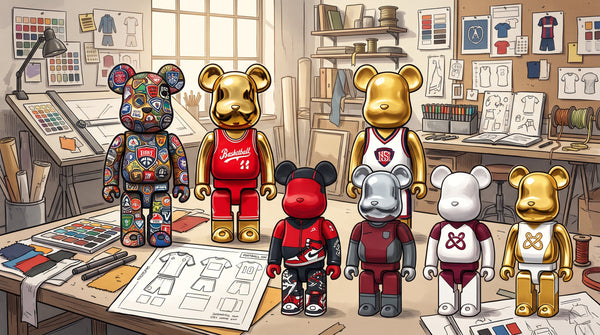
AI-generated conceptual editorial illustration created with Nano Banana. Imagined visual elements explain the essay; they do not document actual releases or gallery inventory.
In this essay
- Start with the hero's name
- Ultraman establishes a clear arrangement of red and silver
- Ultraseven shifts the point of recognition upward
- Jack makes a second outline consequential
- Zoffy's collar brings detail around the center
- Ace gives the forehead and chest separate jobs
- Leo and 80 change the rhythm of the upper body
- Joneus brings stars into the comparison
- Father of Ultra makes a belt part of the reading
- Two-character packs create a different kind of contrast
- Build the comparison from specific locations
The quickest way to miss the differences between Ultraman BE@RBRICKs is to describe them all as silver bears with red markings. That description gets the palette roughly right and leaves almost everything distinctive out. A second red outline can separate Ultraman Jack from Ultraman. A row of small collar marks can make Zoffy recognizable. Ultraseven directs attention toward a green point on the forehead, while Joneus introduces stars into the head and chest. Recognition depends on where the marks go, how they meet and what surrounds them.
The shared bear body makes those decisions unusually visible. A broad rounded head replaces the proportions of a screen hero's face. Circular ears remain beside a design that may otherwise suggest a helmet. Arms, waist and legs divide an uninterrupted costume into separate surfaces. Each adaptation has to preserve an identity through that different anatomy. The result is a useful lesson in character design: a limited group of colors can support many names when the boundaries and small identifying features are handled carefully.
Start with the hero's name
Tsuburaya's official hero encyclopedia lists Ultraman, Ultraseven, Ultraman Jack, Zoffy, Ultraman Ace, Ultraman Leo, Ultraman 80, Ultraman Joneus and Father of Ultra separately. These names identify different heroes within the wider franchise. They also provide a firmer starting point than a loose product description that uses “Ultraman” for every red-and-silver figure. A television title, a hero and the franchise can be related without being interchangeable.
The distinction becomes practical with Jack. Tsuburaya's Ultraman Jack profile connects him with Return of Ultraman and identifies his Ultra Bracelet. MEDICOM's corresponding figure notice names Ultraman Jack. Retaining that name lets the wrist marking and more elaborate red borders become identifying details rather than apparent inconsistencies in a generic Ultraman design.
Names also affect the way two figures are compared. The Jack and Zoffy pack brings together two heroes at one nominal size. A 100% and 400% Ace set repeats one named hero in two sizes. Both arrangements contain two figures, but they make different comparisons possible. One emphasizes difference within a family resemblance; the other shows how a single identity reads at different physical scales.
Ultraman establishes a clear arrangement of red and silver
The Ultraman 400% announcement specified December 2018, approximately 280 millimeters and a Project 1/6-exclusive release. Its reference image shows a silver-colored head, arms and lower legs, with red regions across the torso, waist and thighs. Pale yellow oval eyes and dark mouth lines organize the face. Curved red trim frames a blue circular chest mark.

That blue circle holds the middle of the design while the red markings spread outward across the body. It gives the eye a compact place to settle inside a larger arrangement of curves. The torso does not need a sculpted human chest to suggest the hero's costume. The relationship between a central mark, the red border around it and the silver-colored areas does much of the work.
The red is equally important where it stops. A silver-colored arm can remain distinct from a red section of the torso, even though the shoulder joint already separates them physically. Lower down, a change of color helps divide the legs into recognizable costume regions. The adaptation uses both the manufactured body and its graphic boundaries. Either one alone would give a less specific account of the character.
The head makes the translation plainest. Its large bear proportions give the eyes a broad field, while the circular ears continue to identify the platform. A thin dark center line can suggest a different head structure without replacing the underlying shape. The figure asks the viewer to recognize a hero through an arrangement laid over anatomy that still belongs to a bear.
The chest offers a useful exercise in looking at empty space. Follow the silver-colored area just outside the red curve, rather than the curve itself. Its width and direction help determine how broad the upper body appears. The same is true of the face: the interval between an eye and the center line contributes to the expression as much as the eye's shape. The marks work through their surroundings, so enlarging a single detail in isolation would give only part of the design.
Ultraseven shifts the point of recognition upward
MEDICOM announced Ultraseven 400% for the same December 2018 month and approximate 280-millimeter height. Putting these two references beside each other therefore removes a large change of scale from the comparison. Ultraseven's red body and limbs meet geometric silver-colored panels around the shoulders and upper chest. His face has more angular eye shapes, segmented mouth lines and a green forehead point.

Tsuburaya names a forehead Beam Lamp in Ultraseven's profile. That specific location helps explain the force of the green mark in the adaptation. The viewer is pulled toward the upper face, while the segmented silver-colored chest supplies a broader supporting pattern. It is a different hierarchy from the blue circle and curved red framing of the Ultraman reference.
A helmet-like reading emerges from a few changes of shape and placement. The eyes feel more sharply bounded. The forehead becomes an active identifying region. The chest is organized through repeated divisions rather than only an enclosing curve. These differences are small compared with the complete silhouette, yet together they keep the two heroes from collapsing into one design.
The comparison also shows why every colored point should not be given the same name. Ace's chest Color Timer and forehead Ultra Star are separately identified in his official profile; Ultraseven's profile names a forehead Beam Lamp. The figures can preserve recognizable visual cues without making those cues identical. Their marks represent features of the characters, rather than establishing that a collectible contains an operating light or counter.
Seen together, the two December announcements also show two ways to negotiate the shoulder joint. Ultraman allows a broad color division to articulate the arm against the torso. Ultraseven's upper pattern draws the shoulder into a more segmented chest arrangement. A viewer can read the same physical joint either as a break between costume regions or as one interruption within a larger graphic system. The body has stayed consistent; the painted divisions change the apparent structure surrounding it.
Jack makes a second outline consequential
The Ultraman Jack 400% notice specified April 2019 and approximately 280 millimeters. Its reference keeps the silver-colored base, pale yellow eyes, dark face lines and blue chest circle familiar from Ultraman. The differences gather in the red panels and their thinner secondary borders, together with a yellow-and-dark band around the left wrist.

A secondary line changes the relationship between a large colored area and the ground around it. Instead of meeting silver in one direct boundary, a red region can be accompanied by a narrower line that echoes its shape. That echo makes the pattern more articulated. The eye follows a route around the chest or down a leg rather than registering only a broad block of red.
The wrist band adds another level of specificity. Tsuburaya's Jack profile supplies the Ultra Bracelet context, while the release image supplies the appearance of the pictured band. On the bear's short arm, a small contrasting ring remains conspicuous because it interrupts a much larger field. Its importance comes from that placement, not from occupying a large percentage of the figure.
Jack demonstrates how close resemblance can make differences more rewarding to examine. The common palette establishes kinship immediately. The finer outline and wrist detail slow recognition enough to make it precise. A collection arranged only by dominant color would lose that second encounter, in which the viewer starts distinguishing how each hero organizes the same available space.
Zoffy's collar brings detail around the center
The Jack and Zoffy 2PACK announcement specified May 2019 and approximately 70 millimeters for each figure. In its paired reference, Jack's wrist band and curved chest treatment sit beside Zoffy's beaded-looking silver collar. The shared size makes the different distribution of detail particularly easy to notice. One small identifying feature appears on an arm; another gathers around the upper torso.
Zoffy's separate 400% announcement specified August 2023 and approximately 280 millimeters. The reference shows yellow eyes, dark mouth marks, a central blue chest motif and the dotted collar arrangement. At this larger pictured format, the little repeated collar marks become a clear rhythm around the chest. They lead attention inward while also distinguishing the upper body from the broader red-and-silver leg pattern.
Tsuburaya describes Zoffy as leader of the Ultraman Brothers. That narrative identity belongs beside his name; it does not have to be invented from the apparent richness of the decoration. The visual analysis can remain more modest and more exact. Repeated collar details give this particular figure a different balance of fine and broad information from the comparatively open Ultraman chest.
The small Jack and Zoffy pair offers a different viewing distance from the separate 400% references. At approximately 70 millimeters, the collar can first register as a textured-looking band; closer inspection separates its individual marks. On a larger figure, that second reading becomes available from farther away. This is a change in access to the pattern, rather than a reason to assume a different character or an added mechanism. The announced dimensions describe how much physical room the same recognition problem receives.
Ace gives the forehead and chest separate jobs
The Ultraman A 100% and 400% release was announced for February 2020 at approximately 70 and 280 millimeters. The title's A connects with the hero named Ultraman Ace in Tsuburaya's encyclopedia. The pictured figures have a silver-grey appearance with red linework across the torso, shoulders and limbs, a blue forehead feature and a round blue graphic on the upper chest.
The official Ace profile distinguishes the chest Color Timer from the forehead Ultra Star. On the adaptation, these two locations create a vertical relationship. A viewer can move from the upper face down toward the torso, finding a compact colored feature at each point. The surrounding red and silver-colored regions hold that route within the complete body.
This is more useful than describing every blue detail as interchangeable decoration. A small mark can be identified through its position even before its fictional name is known. Once the name is supplied, placement becomes part of character recognition. The broad bear head and short torso still have room for two distinct centers, provided the other markings allow them to remain clear.
There is also a useful difference between symmetry and repetition here. A chest mark can sit centrally while lines on either side balance it. A second colored feature on the forehead repeats the central placement at a different height. The eye therefore receives both a left-to-right balance and an up-and-down sequence. Ace's paired blue locations make that sequence especially legible, showing how two modest details can organize the full figure without making every part equally busy.
Leo and 80 change the rhythm of the upper body
The Ultraman Leo pairing, announced for December 2021, uses the familiar approximate 70- and 280-millimeter formats. Its reference adds a turquoise forehead detail, yellow-orange eyes and a scalloped pale collar dotted with red. A central blue chest circle sits above a stylized pale abdomen mark. A gold-colored band around the upper left arm provides a smaller interruption farther from the center.
The collar gives Leo a lively upper boundary. Its repeated curves differ from Zoffy's small bead-like marks and Ultraseven's segmented panels. Similar body regions are being used, but the local rhythms change. The arm band then prevents all the distinctive information from collecting down one central axis. Recognition can move outward from the chest toward a particular limb.
Ultraman 80 was announced as a 100% and 400% pairing for April 2023. The reference shows prominent yellow eyes, red striping along the top of the head, broad red body graphics and a turquoise chest circle above a small diamond-like waist accent. The crest and waist detail establish two more places at which to compare the designs.
The visual route through 80 is consequently different from Leo's. The eye can follow the red crest into the face, then move toward the chest circle and lower accent. Leo spreads more of his identifying activity around the collar and upper arm. Neither requires a radically altered bear silhouette. A few changes in the location and rhythm of marks create another recognizable arrangement.
Leo and 80 reward a comparison that begins below the eyes. Leo's scalloped collar creates a curved boundary immediately beneath the head, then the abdomen mark and arm band disperse attention. In 80, the small waist diamond gives the chest circle a lower companion. A circle and a diamond can share a central line while producing different kinds of edge: one continuous, one made from corners. That relationship adds a second beat beneath the more conspicuous eyes and crest.
Joneus brings stars into the comparison
The Ultraman Joneus pairing specified January 2025 and approximate heights of 70 and 280 millimeters. Tsuburaya's Joneus profile confirms the English hero name and associates him with The☆Ultraman. That naming context is particularly helpful when moving between a Japanese release title and an English-language collection description.
In the reference, a white head and angular yellow eyes meet clear-looking round ears. A green star appears on the forehead, with a star-shaped feature at the red-and-white chest. Chevron-like bands organize the legs above red feet. The green and star geometry make this figure a strong comparison with the circular chest marks of the other selected heroes.
A star has a different visual pressure from a circle. Its points establish directions toward the surrounding pattern, while a round mark can feel more self-contained. Repeating star geometry at the forehead and chest connects two separated regions. The design can therefore establish continuity without making the whole head and torso one uninterrupted field of color.
The white appearance also changes the balance within the group. Against red, it makes the boundaries read with a different brightness from the silver-colored references. Those pictured differences are enough to discuss the composition. They do not require an assumption about a new base material, a different metal content or an unlisted luminous effect.
Joneus also changes how the round ears participate in recognition. Their clear-looking appearance makes their circular outlines less visually weighty than the white face between them. The platform's ears remain present, but the star on the forehead can claim attention without a strong competing block at either side. This is an effect of the pictured color arrangement, rather than proof of invisibility or a particular optical specification. It helps explain how a conspicuous bear feature can become quieter within one character treatment.
Father of Ultra makes a belt part of the reading
The Father of Ultra 100% and 400% announcement specified June 2026 and approximately 70 and 280 millimeters. Its reference shows silver-toned head, shoulders and chest against broad red graphics, with pale eyes and dark facial linework. A red chest surround frames a blue central dot above a stylized belt graphic.
Tsuburaya identifies Father of Ultra as executive leader of the Inter Galactic Defense Force. The figure preserves that named identity through the adapted costume rather than requiring a separate explanatory scene. Visually, the belt gives the lower torso an organizing boundary. Chest, waist and legs become successive regions with different amounts of detail.
Looking at that sequence beside the other heroes reveals how much the waist contributes. Jack draws attention toward a wrist, Leo adds an upper-arm accent, and Father of Ultra gives a belt-like region particular emphasis. A comparison confined to headshots would miss these differences. The costume's identity is distributed through the body, even when the face attracts the first glance.
The belt also brings a horizontal emphasis into a group often described through vertical features. A forehead point and chest circle encourage a downward glance; a belt asks the eye to move across the waist. That crossing can make the lower body feel more firmly divided from the chest. It is a small compositional distinction, but a meaningful one on a platform whose head occupies so much attention. Father of Ultra's design gives the waist a reason to remain part of the comparison.
Two-character packs create a different kind of contrast
The January 2019 Ultraman and Zetton 2 PACK places two approximately 70-millimeter characters together. In the reference, Ultraman's silver-colored base and curved red pattern meet Zetton's black body, yellow-orange chest areas, segmented pale arm bands and horn-like details around the ears. The figures share the platform while proposing very different kinds of anatomy.
The matching Ultraseven and King Joe pack was also announced for January 2019 at approximately 70 millimeters each. King Joe's champagne-gold appearance, multicolored chest vents and gridded markings provide another comparison with Ultraseven's red body and silver-colored upper regions. Color, density and the suggestion of machinery distinguish the companions before any story is retold.
These packs have a useful double effect. The common bear outline makes radically different characters look related as objects. Their surface programs keep them distinct as characters. A dark field with bright chest patches reads differently from an open silver-colored face or a field of metallic-looking grids. Putting those approaches together turns the shared silhouette into an instrument of comparison.
They also make purchasing configurations worth naming plainly. Two different 100% characters in a 2 PACK are a different proposition from one hero repeated in a 100% and 400% set. The distinction is visible in the announced titles and dimensions. Keeping it intact lets the collection be organized by character relationships as well as by size.
King Joe and Zetton make different uses of dark marks. A grid can suggest a body divided into panels, while pale bands against black can segment an arm through repeated contrasts. Neither effect depends on changing the round bear hand into a new kind of appendage. The surface provides an alternative account of what that hand and arm might belong to. Beside the heroes, these companions reveal that a costume pattern and an imagined anatomy can occupy the same manufactured form.
Build the comparison from specific locations
A productive arrangement of these figures can begin with the forehead, continue through the chest and finish with the smaller accents on arms or waist. The route makes similarities useful rather than frustrating. Shared red and silver-colored areas establish a family resemblance. A green point, blue circle, star, dotted collar or fine secondary border then tells the eye where the individual design becomes more specific.
The BE@RBRICK master index helps retain those full hero names and separate release configurations. Alongside the series-format guide, it can keep a named pairing from being mistaken for a numbered-series assortment. The close comparison itself belongs with the figures: trace a border, notice where a small mark interrupts it, then return to the complete body. The silver bear becomes a particular hero through those exact relationships.
BE@RBRICK master index: This index is in beta and may contain errors, missing information, or display issues. We’re continuing to review and improve it.
Continue exploring
Browse the BEARBRICK essay library or continue with these related studies.
- Kamen Rider BE@RBRICK: Helmets, Forms, and the Visual Grammar of Transformation
- Astro Boy and Mazinger Z BE@RBRICK: Two Visions of the Mechanical Body
- Glow-in-the-Dark BE@RBRICK: Designing for Two Lighting States
Primary release and background sources
- Hero Encyclopedia
- Ultraman Jack
- BE@RBRICK Ultraman 400%
- BE@RBRICK Ultraseven 400%
- Ultraseven
- BE@RBRICK Ultraman Jack 400%
- BE@RBRICK Ultraman Jack & Zoffy 2-Pack
- BE@RBRICK Zoffy 400%
- Zoffy
- BE@RBRICK Ultraman A 100% & 400%
- Ultraman Ace
- BE@RBRICK Ultraman Leo 100% & 400%
- BE@RBRICK Ultraman 80 100% & 400%
- BE@RBRICK Ultraman Joneus 100% & 400%
- Ultraman Joneus
- BE@RBRICK Father of Ultra 100% & 400%
- Father of Ultra
- Ultraman & Zetton BE@RBRICK 2-Pack
- Ultraseven & King Joe BE@RBRICK 2-Pack Set
Shop BE@RBRICK
Explore current pieces available from the gallery.
-

BE@RBRICK Shepard Fairey Make Art Not War 400% + 100% Set
$225.00 USD
-

BE@RBRICK The Doors Strange Days 400% + 100% Set
$203.00 USD
-

BE@RBRICK Emotionally Unavailable Gradient Heart 400% + 100% Set
$299.00 USD
-

BE@RBRICK Oasis Noel Gallagher — Knebworth 1996 400% + 100% Set
$110.00 USD
-

BE@RBRICK PAC-MAN × GRAFFLEX × 9090 × S.H.I.P&crew 400% + 100% Set
$110.00 USD
-
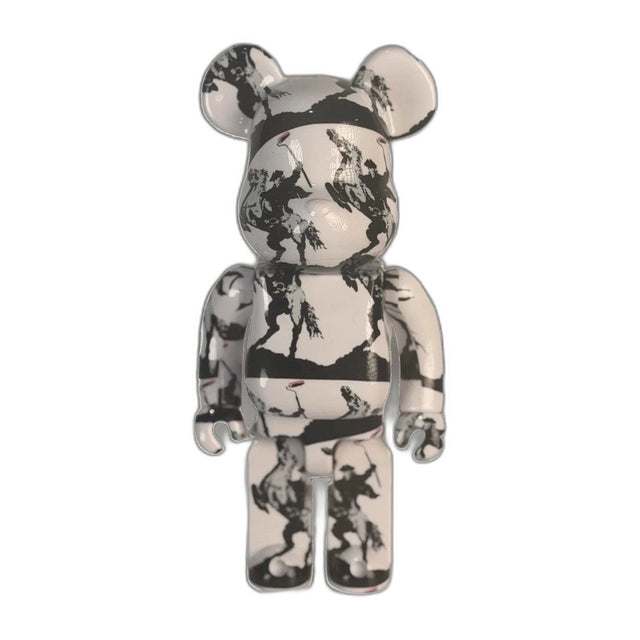
BE@RBRICK Brandalism Highwayman 400% Medicom Toy Sync 2022
$228.85 USD


Browse the collection for current listings.