AI-generated conceptual editorial illustration created with Nano Banana. Imagined visual elements explain the essay; they do not document actual releases or gallery inventory.
In this essay
- Two different starting points for a robot body
- Astro Boy's face remains the first point of contact
- Hair has to negotiate the bear's ears
- A quiet torso makes the waist and boots consequential
- The first-volume version changes a familiar arrangement
- Chrome makes the boy-like surface look newly mechanical
- Chogokin identifies another object format
- Mazinger Z replaces the smile with an assembled face
- Red chest plates establish a broad mechanical sign
- Plating changes which parts of Mazinger appear reflective
- Great Mazinger keeps its own name
- The common bear makes the difference easier to see
Astro Boy and Mazinger Z are both robots, but their BE@RBRICK faces ask to be read very differently. Astro Boy has large expressive eyes, a small drawn nose and an open smile. Mazinger Z has angular eyes, a colored faceplate and a barred mouth region. One face draws the viewer toward a boy-like personality; the other makes the head appear assembled from mechanical divisions. The shared bear shape makes that contrast especially clear.
The difference continues below the head. Astro Boy's pale torso gives way to a striped belt, dark trunks and red boots. Mazinger Z arranges black chest regions, red angular plates, a pale middle and contrasting forearms and lower legs. Both images divide the same short body into recognizable parts, yet those divisions suggest different relationships between a person and a machine. One robot looks bodily and expressive; the other looks armored and constructed.
Looking across standard-looking, chrome, plated and Chogokin releases adds another question. What happens when a surface that suggests skin becomes reflective? What changes when a robot already covered in mechanical graphics gains more reflective regions? These are not identical transformations. The finish meets an existing character image, and that image determines what the new surface makes more conspicuous.
Two different starting points for a robot body
Tezuka Productions' account of Astro Boy identifies Atom as a humanoid robot depicted as a boy and dates the manga's serialization in Shonen from April 1952 to March 1968. Its story begins with a robot made to resemble a lost child. The boy-like appearance is therefore fundamental to the character's identity, rather than merely a softer visual treatment given to an otherwise anonymous machine.
The relevant contrast is available in Dynamic Planning's official Mazinger Z account. It identifies the television work with December 3, 1972, credits Go Nagai and Dynamic Pro, and describes Koji Kabuto boarding a giant robot. Astro Boy is presented as a robot character with the appearance of a boy; Mazinger Z is a robot entered by a human pilot. That distinction provides a useful framework for reading their faces and bodies.
The BE@RBRICK adaptations do not reproduce those fictional scales. A 400% Astro Boy and a 400% Mazinger Z each stand approximately 280 millimeters in the selected manufacturer records. Bringing them into the same size category removes one of the most dramatic differences between their worlds. Facial expression, color boundaries and the suggestion of armor then have to carry more of the contrast.
The platform also gives both robots the same underlying contradiction. Rounded ears and a broad bear head persist around designs associated with very different kinds of anatomy. A reader can recognize each character while continuing to see the bear. The interest lies in how the image accommodates that double recognition, rather than in pretending the original body has been reproduced without alteration.
Astro Boy's face remains the first point of contact
The Astro Boy 400% announcement specified March 2017 release and shipping plans and approximately 280 millimeters. A separate 1000% announcement specified the same month and approximately 700 millimeters. They are separate named formats. Their references show the familiar open smile, wide dark eyes, black pointed hair, pale body, green-and-white waist treatment, black trunks and red boots.

The eyes occupy generous space within the rounded head. Curved lash and brow lines make their boundaries feel expressive rather than mechanical. A nose can be suggested by a modest curve, leaving much of the face visually open. The smile then gives the lower part of the head a clear expression without covering it in a dense network of panels.
That openness matters on the bear's broad face. The platform offers more width than a conventionally proportioned boy's head, but a few well-separated features can make the area feel intentional. Space around the eyes and mouth allows each to remain distinct. The design does not have to fill every available region to keep the character recognizable.
Astro Boy's face also works through unequal kinds of mark. The eyes are dark, relatively substantial shapes. The nose is a fine line, and the open mouth combines a darker interior with its surrounding contour. These differences produce a hierarchy within a limited palette. The viewer can identify the main expression quickly, then notice the smaller decisions that hold it together.
Hair has to negotiate the bear's ears
Pointed black hair is an important counterweight to the round head. In the 2017 references, its graphic spikes remain visible beneath clear-looking bear ears. The sharp directions of the hair do not replace the circular outline; they create a second outline within and around it. The head can therefore suggest Astro Boy's characteristic hair while remaining visibly part of the BE@RBRICK platform.
The clear-looking regions reduce the amount of solid color competing at the sides. That gives the black peaks more visual force, even though the round ear contours remain. This is a particularly useful adaptation where a character's hairstyle is strongly directional. Making every surrounding area equally dark would change the balance between the hair image and the bear anatomy.
The distinction between graphic point and physical contour is part of the pleasure of looking. A black triangular area can imply a sharp tuft without turning the whole head into a pointed sculptural form. The eye accepts the suggestion while still perceiving a rounded surface. Recognition becomes an agreement between the image and the object that carries it.
The muzzle region provides another useful point of comparison with Mazinger. Astro Boy's fine nose curve and smiling mouth allow that rounded area to remain relatively open. The mechanical face places a denser barred pattern in a similar lower-head location. The same volume can consequently suggest a cheek and mouth in one image, or a faceplate in another. Its physical roundness does not dictate a single character reading; the spacing and density of the marks alter what it appears to represent.
A quiet torso makes the waist and boots consequential
Below the head, the pale upper body is comparatively unbroken. The green belt with white vertical stripes sits above black trunks, and red fills the lower legs as boots. These few boundaries provide a concise account of the character's outfit. They also establish different levels along a body whose short proportions could otherwise compress everything into one busy band.
The waist is a transition between two kinds of simplicity. Above it, the broad pale torso allows the face to dominate. Below it, a dark area separates the torso from bright red boots. The stripes introduce finer detail at the point where those larger color regions meet. That detail has more effect because it is surrounded by relatively open fields.
The red boots give the figure a strong lower conclusion. They repeat a single color across both legs without needing intricate mechanical linework to identify the feet. Their brightness draws attention away from the face just enough to establish the complete body. A viewer can read the character through head and boots, then move back through the waist to connect them.
This is one reason the body should not be described only as a support for the smile. The waist and lower legs establish the figure's distinctive arrangement at a distance. Without those regions, the face would still communicate Astro Boy, but the body would offer fewer identifying cues. The adaptation distributes recognition while allowing the head to remain the most expressive region.
Even the waist stripes contribute a direction that differs from the larger body regions. Their narrow vertical repetitions are enclosed within a horizontal band. The result is a small patterned interval between the pale torso and the dark trunks, giving the eye something finer to examine after the major colors have registered. Mazinger's face uses repeated bars for another purpose, suggesting a mechanical grille. Repetition itself is neutral; placement and the surrounding image give it a more particular meaning.
The first-volume version changes a familiar arrangement
The Astro Boy first manga-volume appearance version was announced as a 100% and 400% pairing for July 2025, at approximately 70 and 280 millimeters. The notice's specific version wording belongs in its identity. It points toward a particular treatment of the character and should not be shortened into an unsupported claim that this was the first Astro Boy BE@RBRICK.

The pictured figures retain an open-mouthed face, large eyes and black spiked hair around clear-looking ears. The waist changes more conspicuously: a red striped band sits over bright green briefs, rather than the green-and-white belt and black trunks of the 2017 references. Red boots remain below. The comparison gives a precise place to look for variation within an immediately recognizable character.
Changing the briefs from black to green alters the amount of darkness below the torso. The green becomes a larger colored area instead of remaining confined to a narrow waist treatment. Red at the waistband then establishes another bright line above it. The body has not needed a wholly new costume structure to produce a different color rhythm.
The continuing boots are equally useful to notice. A comparison that lists only changed elements would miss how much is held steady. The red lower legs maintain a familiar endpoint, while the central arrangement changes. Continuity makes the difference easier to understand: the viewer can compare two specific regions within a shared image rather than relearn the entire character.
Chrome makes the boy-like surface look newly mechanical
The Astro Boy CHROME 100% and 400% announcement and separate 1000% announcement specified April 2023. Their heights were approximately 70 and 280 millimeters for the pair and 700 millimeters for the larger figure. Both notices connected the projects with BE@RBRICK WORLD WIDE TOUR 3 in Hong Kong.

The references retain black hair, expressive eyes, an open smile, the green-and-white waist pattern, dark trunks and red boots. Reflective metallic-looking areas now occupy the head and much of the body. In the larger reference, the ears appear silver-toned while other broad regions have a warmer champagne-like appearance. The familiar character image meets a ground that can look less like a stable skin color.
That meeting gives Astro Boy's robot identity a different visual emphasis. The smile remains, so the face does not become a blank mechanical mask. Yet highlights across the head and torso make those surfaces appear more object-like and reflective. Humanlike expression and metallic appearance occupy the same regions, making their coexistence harder to overlook.
Black hair and dark facial marks become anchors within that changing ground. Reflections can travel across the rounded surface, while the drawn eye and mouth boundaries remain located. The design combines a relatively stable graphic expression with a surface whose appearance depends more strongly on surrounding light. The tension belongs to the picture of the robot boy as much as to the finish itself.
The boots preserve another kind of stability. Their red establishes a familiar lower field beneath the more reflective body. This helps the figure remain connected to the earlier arrangement even when its head and torso have a strikingly different appearance. The changed surface does not erase the importance of the original color divisions; it makes their organizing role more apparent.
Chogokin identifies another object format
The Chogokin BE@RBRICK Astro Boy notice specified August 2017 release and shipping plans and approximately 145 millimeters. It also identified Chogokin as a Bandai registered trademark. This is a different named format from the percentage-scaled releases, so its dimensions are more informative than assigning it an approximate percentage that the announcement does not provide.
The reference keeps a smiling pale face, black hair tufts, a green belt with white stripes, dark trunks and red boots. Hair shapes rise onto pale ears, giving the head a different-looking boundary from the clear-looking ears of the earlier references. A small change at the outer edge can affect how strongly the bear's circular anatomy participates in the character image.
The word Chogokin belongs to the manufactured object's identity. Astro Boy's fictional robotic body belongs to the character's story. They can make an interesting pairing without becoming the same type of statement. The selected notice does not supply an alloy formula or a weight, and neither is necessary to explain how this particular face and costume occupy a 145-millimeter bear-shaped object.
Placed beside CHROME, the distinction becomes especially useful. One title identifies the Chogokin format; another explicitly identifies a chrome version in named percentage sizes. Both can invite thoughts about a robot's material presence, while presenting different documented objects. Keeping their names intact allows appearance, format and fictional identity to remain related without being collapsed into one description.
Mazinger Z replaces the smile with an assembled face
The Mazinger Z 400% announcement specified March 2014 release and shipping plans and approximately 280 millimeters. It described the figure as a spin-off from Series 26. The separate 1000% announcement specified September 2014 and approximately 700 millimeters. The references use a closely related black, white, blue and red mechanical arrangement.
Yellow eyes sit within a head divided into blue, pale and dark regions. A barred mouth area replaces the open smile seen in Astro Boy. Above the eyes, a red-and-pale-blue craft-like graphic adds another identifying region at the crown. Clear-looking ears remain around this more segmented central image, letting the platform persist without becoming the head's dominant visual feature.
The mouth bars create repetition rather than expression through an open cavity. Several parallel divisions suggest a constructed face surface. The eyes are angular and more tightly bounded than Astro Boy's broad curved shapes. These differences let a similarly rounded head communicate another kind of robot without needing the original mechanical silhouette to be reproduced in full.
The crown graphic also changes how the upper head is read. Astro Boy's black peaks suggest hair rising from a boy-like face. Mazinger Z's colored crown region suggests an additional mechanical element above the faceplate. Both designs direct attention upward, but the implied relationship differs: hairstyle around a face in one, a constructed assembly around another.
Red chest plates establish a broad mechanical sign
Mazinger Z's red angular chest regions are among its clearest body cues. They sit against a dark upper torso, above a pale midsection and black waist. Blue forearms and lower legs establish another repeated field. The arrangement divides the body into zones that suggest a mechanical structure rather than a comparatively bare boy-like torso.
The chest angles contrast with the bear's rounded surfaces. A sharp red edge can give the impression of a plate even where the underlying torso remains smoothly curved. The picture supplies an alternative explanation of the volume. The viewer sees both the platform's short body and the suggestion of a machine assembled from more angular parts.
Blue extremities have a different relationship to the chest than Astro Boy's red boots have to his pale torso. Mazinger Z repeats blue at the face, forearms and lower legs, distributing it through several levels. Red remains more concentrated at the chest and crown. The colors help connect separate mechanical regions rather than describing one broad bodily field with a few pieces of clothing.
The white-looking middle is an important interval. It separates the red-and-black chest from the darker waist, giving each region a more distinct identity. Without that interval, the torso could feel like one compact block. Its relative quietness makes the red angles above appear sharper and gives the lower body a clear point from which to begin.
Plating changes which parts of Mazinger appear reflective
The 2014 plated Mazinger Z was announced for July at approximately 70 millimeters. Its reference places familiar blue, red, yellow and dark details over reflective silver-colored regions. The face's bars and the red chest shapes remain recognizable, while the new ground introduces highlights into an already mechanical-looking arrangement.
The October 2024 releases used separate notices for a 100% and 400% pairing and a 1000% figure, at approximately 70, 280 and 700 millimeters respectively. Their references combine reflective silver-colored regions with dark upper-body areas, red chest elements and blue-to-violet-looking face and limb passages. The plating does not make every region look uniformly silver.
Compared with Astro Boy CHROME, the effect begins from a different premise. Astro Boy's reflective ground changes a boy-like body into something more visibly metallic. Mazinger Z already announces machinery through its face, chest and segmented limbs. Reflective regions reinforce some of those divisions and give the pale middle and upper limbs another relation to the colored armor around them.
Dark areas become especially important beside those highlights. They give the reflective regions boundaries, while red chest shapes continue to provide a stable graphic center. The figure can therefore move between an overall metallic impression and a more exact reading of individual colored sections. The underlying arrangement remains the guide through the changed surface.
Great Mazinger keeps its own name
The Great Mazinger plated 1000% announcement specified November 2024 and approximately 700 millimeters. It names Great Mazinger, not another finish of Mazinger Z. Dynamic Planning's Great Mazinger page likewise treats the television work separately, dating it to September 8, 1974. The related names establish a connection while preserving a distinct identity.
In the reference, reflective silver-colored regions meet black upper armor and a sharp red chest chevron. The crown combines red and cyan-looking areas above yellow eyes, purple-looking faceplates and a slotted mouth region. The resemblance to the broader mechanical vocabulary makes the individual arrangement more interesting to examine, rather than making the complete name unnecessary.
The chevron provides a particularly clear direction across the chest. Its two angled sections can gather attention toward the center while spreading outward across the torso. Beside Astro Boy's comparatively open pale body and striped waist, it shows how differently the same short surface can be organized. One body leaves room around a personality; another offers a succession of mechanical signs.
Great Mazinger also makes the value of the complete body apparent. A quick glance at yellow eyes and a barred mouth might establish a general family of mechanical faces. The chest chevron, crown colors and reflective regions give that first recognition a more specific destination. Comparing head and torso together preserves more information than isolating a single shared feature. The platform can make related robots resemble each other as objects while their internal arrangements continue to distinguish the named subjects.
The common bear makes the difference easier to see
These figures offer several linked comparisons: an expressive face against a barred one, pointed hair against a mechanical crown, a quiet torso against angular chest regions, and red boots against a more distributed system of blue limbs. Chrome and plating then change the surrounding light without making those graphic relationships irrelevant. The character image determines how the surface is understood.
The BE@RBRICK master index keeps the exact versions and formats connected to their announcements. The series-format guide gives context for the Series 26 spin-off wording in the Mazinger Z notice. Return to the faces after following those details through the body. Astro Boy's smile and Mazinger's grille still occupy a familiar rounded head, but they make that head suggest two very different kinds of mechanical life.
BE@RBRICK master index: This index is in beta and may contain errors, missing information, or display issues. We’re continuing to review and improve it.
Continue exploring
Browse the BEARBRICK essay library or continue with these related studies.
- BE@RBRICK × Transformers: When a Bear Shape Must Also Change Form
- Chogokin BE@RBRICK Beyond the Artist Editions: Weight, Proportion, and Character
- Ultraman BE@RBRICK: Silver Bodies, Color Timers, and Named Heroes
Primary release and background sources
- Tezuka Productions manga business page
- Dynamic Planning Mazinger Z televisionwork
- BE@RBRICK Astro Boy 400%
- BE@RBRICK Astro Boy 1000%
- BE@RBRICK Astro Boy First Manga Volume Appearance Ver. 100% & 400%
- BE@RBRICK Astro Boy CHROME Ver. 100% & 400%
- BE@RBRICK Astro Boy CHROME Ver. 1000%
- Chogokin BE@RBRICK Astro Boy
- BE@RBRICK Mazinger Z 400%
- BE@RBRICK Mazinger Z 1000%
- BE@RBRICK Mazinger Z (Plated Ver.)
- BE@RBRICK Mazinger Z Plated Ver. 100% & 400%
- BE@RBRICK Mazinger Z Plated Ver. 1000%
- BE@RBRICK Great Mazinger Plated Ver. 1000%
- Dynamic Planning Great Mazinger televisionwork
Shop BE@RBRICK
Explore current pieces available from the gallery.
-

BE@RBRICK Shepard Fairey Make Art Not War 400% + 100% Set
$225.00 USD
-

BE@RBRICK The Doors Strange Days 400% + 100% Set
$203.00 USD
-

BE@RBRICK Emotionally Unavailable Gradient Heart 400% + 100% Set
$299.00 USD
-

BE@RBRICK Oasis Noel Gallagher — Knebworth 1996 400% + 100% Set
$110.00 USD
-

BE@RBRICK PAC-MAN × GRAFFLEX × 9090 × S.H.I.P&crew 400% + 100% Set
$110.00 USD
-
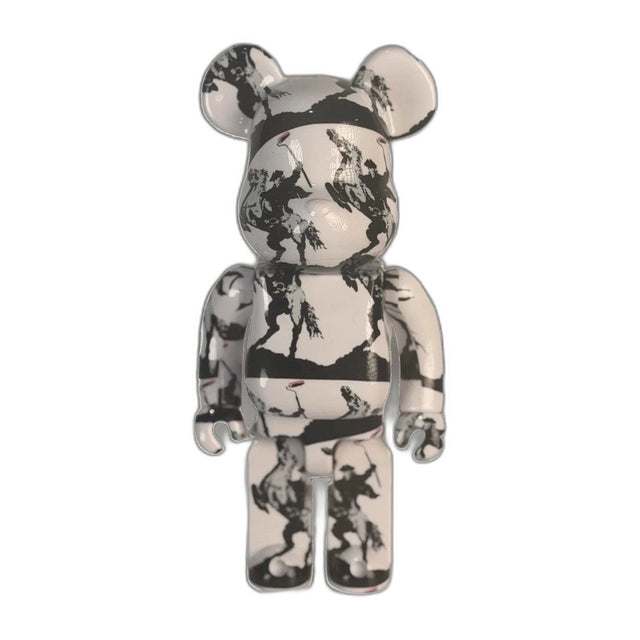
BE@RBRICK Brandalism Highwayman 400% Medicom Toy Sync 2022
$228.85 USD


Browse the collection for current listings.