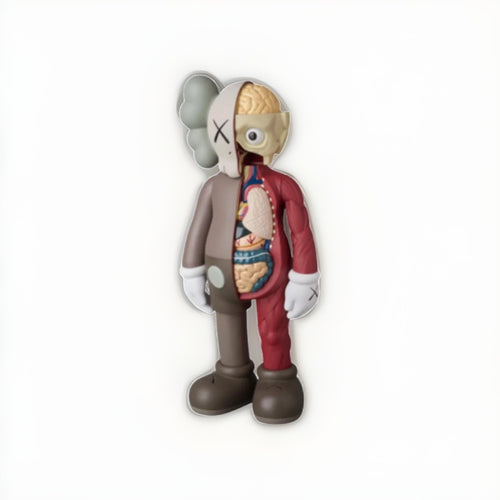
The Calendar Is the Market
Most collectors think they're making decisions. They're not. They're responding to a rhythm.
The major auction houses set a calendar every year — spring and fall, evening and day, New York and London and Hong Kong timed like a metronome — and the entire secondary market organizes itself around those dates. Prices soften when nothing is on the block. Demand compresses into six-week windows twice a year. Dealers time their inventory. Collectors time their liquidity. The whole ecosystem pulses on a schedule most buyers never consciously register.
Understanding that schedule isn't just trivia. It's leverage.
This piece breaks down how the auction calendar actually works, what it does to collecting cycles, and how a smart buyer — or seller — positions themselves relative to it rather than being dragged along by it.
The Two-Season Structure
The contemporary and modern art market, the streetwear collectibles market, the high-end memorabilia market — they all share a version of the same skeleton.
Two primary seasons. Spring and fall.
Spring runs roughly from late April through early June. Fall runs from October into mid-December. Everything else — the summer single-owner sales, the February "curated" drops, the online-only auctions that run year-round — is noise around those two poles.
Christie's, Sotheby's, and Phillips anchor each season with their flagship evening sales in New York. London follows closely, often within the same week. Hong Kong runs its own parallel calendar that increasingly sets price signals for the Asian collector base, which feeds back into Western valuations faster than most American buyers realize.
The evening sale is the premium tier. White-glove service. Telephoned bidding. Works with eight-figure estimates. The evening sale is where records get set and where the press attention concentrates.
The day sales follow. More lots, lower estimates, broader category coverage. Day sales are where the real volume moves.
And then there are the online-only sales — once considered the B-tier, now increasingly serious real estate for works in the five-figure range, which covers most of the street art and contemporary print market where Gauntlet operates.
Why the Calendar Concentrates Everything
When you have three major houses running evening sales within the same two-week window, you get artificial concentration of buyer attention and capital.
Serious collectors are watching multiple sales simultaneously. Their liquidity is committed or reserved. Their advisors are fielding calls. Their storage facilities are prepped for incoming lots.
Everything outside that window is fighting for scraps of attention.
This is why a private dealer offering a strong work in July is often negotiating from a weaker position than the same dealer offering the same work in September. Not because the work changed. Because the buyer's mental bandwidth and financial posture changed.
Does the work get better in October? Or does the market just wake up?The answer tells you everything about how to time your moves.
Pre-Sale Season: Where the Real Work Happens
The six to eight weeks before a major sale season are when the secondary market really activates.
Auction specialists are traveling. Previews are being arranged. Consignment agreements are being signed. The houses are publishing their estimates and their highlighted lots, and that publication alone reshapes what dealers are asking and what collectors are willing to pay in the private market.
Here's the mechanism: when Christie's announces an evening sale estimate of a significant range for a particular artist, every private holder of that artist's work recalibrates. They're not irrational to do so. The auction estimate is the most transparent price signal in the market. It's public, it's researched, and it implies a liquidity floor.
For collectors, this means pre-sale season is when you'll often see private sellers holding firm on prices they might have negotiated on two months earlier. The auction preview is their implicit leverage.
It also means this is when you want your relationships in place. If you're a known buyer with a clean track record — pays promptly, doesn't flip immediately, doesn't generate drama — dealers will call you before a work hits the auction pipeline. Not as a favor. As a business decision. Private sales close faster, generate less uncertainty, and avoid the house's buyer's premium.
The Consignment Window
For sellers, understanding the consignment deadline is critical. The houses stop accepting consignments weeks before the sale date. Miss that window and you're either waiting for the next season or you're going to an online-only sale with lower visibility.
That deadline creates a secondary effect: works that missed the spring consignment window often hit the private market in June and July at softer prices. The seller wanted to move, didn't make the cut, and now has to find a buyer through other channels with less urgency behind them.
Is a motivated summer seller a problem or an opportunity?Depends entirely on which side of the transaction you're on.
The Evening Sale Calendar and Its Effect on Street Art Prices
The street art and urban contemporary market doesn't headline the evening sales at the major houses. But it absolutely feeds off them.
When a strong evening sale season drives confidence in the broader contemporary market — when records fall, when sell-through rates are high, when the press coverage is positive — that confidence percolates down into the day sales, into the online sales, and into the private market for Banksy prints, KAWS figures, and Shepard Fairey editions within weeks.
Conversely, when an evening sale disappoints — high buy-in rates, works passed-in, estimate cuts circulating — the chill moves down the stack fast. Collectors who were about to pull the trigger on a secondary-market Banksy pause. Not because anything changed in Banksy's career or in the quality of that specific print. Because the temperature in the room dropped.
This is the transmission mechanism most newer collectors miss. They watch their niche. They should be watching the whole calendar.
Banksy and the Calendar
Banksy is an instructive case because the authentication requirement is absolute and well-known: Pest Control only. No Pest Control certificate, no legitimate provenance claim, full stop. Gauntlet Gallery doesn't issue Pest Control certificates and doesn't claim to — that's Banksy's own authentication body and the only one that counts.
What the auction calendar does to Banksy is interesting. When a major authenticated Banksy work appears in an evening or day sale, the result — whether a record or a disappointment — immediately reprices every comparable work in private hands. Dealers adjust. Collectors holding pieces get calls from advisors. The market moves in real time around that single data point.
This is why auction results for Banksy works need to be read carefully, not just celebrated or mourned. The question isn't just what it sold for. It's what edition, what size, what condition, what Pest Control certificate generation, and what the pre-sale estimate was relative to result. A work that sells at the low end of estimate in a hot room is a very different signal than a work that sells above estimate in a quiet room.
KAWS and the Collectibles Calendar
The collectibles market — KAWS figures, BE@RBRICK, designer toys at the high end — runs on a slightly different calendar that overlaps with but doesn't perfectly mirror the fine art auction calendar.
Medicom drop dates matter here. Heritage Auctions' dedicated streetwear and collectibles sales matter. The timing of major KAWS exhibition announcements or collaboration releases creates its own demand spikes that don't always align with the spring/fall fine art seasons.
For KAWS pieces, authentication due diligence centers on original packaging integrity, the Medicom hologram, and matching the piece to the documented release record. That verification work is a season-independent authentication anchor — but the market timing dynamics still apply to pricing.
Does authentication change with the season? No. Does the price you can get for a fully authenticated piece change with the season? Absolutely.Post-Sale Season: The Quiet Window
After the fall sales close in December, the market enters a period that dealers often describe as "the pause."
January and much of February are genuinely slow. The houses are digesting results. Consignors are deciding whether to try again next season or sell privately. Buyers are assessing what they paid and what they still want.
This is not dead time. This is buying time.
Works that didn't sell at auction — passed-in lots, buy-ins — often become available privately in January at prices that reflect the seller's fatigue with the process rather than any underlying weakness in the work. A work that was estimated at a strong range and failed to sell is not necessarily a bad work. It may have been estimated too aggressively, previewed in a crowded week, or simply attracted the wrong room on the night.
The smart buyer who's been tracking specific works knows this. They've seen the pre-sale estimate. They've seen the pass-in. They call the specialist, or they call the consignor's dealer, and they have a conversation that wasn't possible two months earlier.
The Summer Gap
The same dynamic applies to the summer gap between spring and fall seasons. June through August is traditionally slow in New York and London, though Hong Kong runs a summer sale that has grown in significance.
Summer is when patient collectors build positions quietly. No auction-driven urgency. Sellers who missed the spring deadline. Private dealers clearing inventory before fall. The temperature is lower in every sense.
The risk in summer buying is liquidity. If you buy in July and want to sell in September, you're essentially trying to time a short cycle against the fall season launch. Sometimes that works. Often the fall season absorbs attention in ways that make your newly acquired piece feel less urgent than you expected.
Summer buying is better suited to long-term position building than to short-cycle speculation.
How Dealers Ride the Calendar
Professional dealers don't just react to the auction calendar. They build their entire inventory strategy around it.
The typical move: acquire in the quiet window, prepare and authenticate inventory through winter and early spring, bring works to market in the pre-sale excitement window when buyer attention is highest and private-sale premiums are most achievable.
For works with complex authentication requirements, timing the preparation correctly matters. A Shepard Fairey print needs edition verification against the Obey Giant drop record and provenance documentation alongside the signature. A Death NYC work needs the artist-signed COA and the studio gold seal — both, not just one. Music memorabilia heading to market needs Beckett (BAS) evaluation, and for the highest-value signed instruments or stage-used pieces, the Roger Epperson REAL tier within BAS is the relevant benchmark.
None of that authentication work happens overnight. Dealers who are bringing properly documented work to market in April started that process in January at the latest.
This is the institutional knowledge that separates professional operations from casual flippers. The calendar doesn't just govern when to sell. It governs when to start preparing to sell.
The Estimate Game
One of the more sophisticated ways dealers interact with the auction calendar is through the estimate negotiation process.
When a dealer or collector consigns a work, the estimate isn't set unilaterally by the house. It's negotiated. A dealer who understands the current season's temperature — what category is hot, what the competitive lots in the same sale look like, what the buyer pool for that specific work looks like — can argue for estimates that position their work advantageously.
An aggressive estimate that fails to sell damages the work's record. A conservative estimate that generates competition can reset the market perception of an artist upward.
The house has its own incentives, which don't always align with the consignor's. Understanding that tension is part of navigating the calendar professionally.
Authentication and the Auction Timeline
The auction calendar creates time pressure, and time pressure is where authentication shortcuts get made.
This is one of the most important practical implications of the seasonal structure for collectors. When a work needs to hit a sale deadline and the authentication process is moving slowly, there's pressure — sometimes explicit, sometimes ambient — to move forward with incomplete documentation.
Don't.
Missing a season is recoverable. Selling or buying a work with problematic provenance is not.
The FBI's Operation Bullpen, which remains one of the most cited enforcement actions in the sports memorabilia world, demonstrated what happens when authentication shortcuts become systemic. Forged signatures, fabricated provenance chains, fake certification documents — all of it moved faster and at higher volume precisely because buyers were operating under deadline pressure and social proof from auction inclusion.
PSA has its own well-documented history of certification-verification warnings circulating in the collector community regarding tampered holders and certification number manipulation. Beckett's process includes specific anti-tampering protocols for this reason. JSA distinguishes between its Basic authentication and its full Letter of Authenticity — a distinction that matters enormously for high-value pieces and that buyers sometimes collapse under the urgency of an auction window.
Does a sale deadline make a questionable COA more legitimate?The question sounds absurd. But the behavior it describes is extremely common.
If the authentication isn't right, the season doesn't matter. The work doesn't go.
Regional Calendars and the Global Collector
The New York-London axis is not the whole story anymore.
Hong Kong's major sale windows have become genuinely market-moving events, particularly for artists with strong Asian collector bases. The results from Hong Kong don't just reflect Asian demand — they increasingly set price signals that Western collectors and dealers monitor and respond to.
For a collector operating in the street art space, this matters because several artists with significant Western reputations — KAWS being the clearest example — have enormous followings in Asia. The Hong Kong results for KAWS works can move the private market for those works globally within days of the sale.
Paris has its own calendar rhythms. The FIAC-adjacent sales cluster, now reorganized around Paris+ par Art Basel, create another concentration point that European-focused collectors navigate. The Art Basel calendar itself — Basel in June, Miami Beach in December, Hong Kong in March — creates a fair calendar that overlaps with and sometimes competes with the auction calendar for collector attention and capital.
The sophisticated collector is mapping all of these. Not to trade around them like a day trader, but to understand when their own market — whatever niche they collect in — is most and least susceptible to external pressure.
Collecting Cycles Driven by the Calendar
Zoom out far enough and you can see multi-year collecting cycles that are partly driven by the accumulation of auction calendar effects.
A strong run of evening sales over two or three consecutive seasons creates a feedback loop: results attract press, press attracts new collectors, new collector capital increases competition, increased competition drives results higher. The cycle feeds itself until it doesn't.
The correction comes when evening sale results disappoint for a season or two. Pass-in rates rise. Estimates get cut. The press narrative shifts. New collectors who entered at the peak pull back. Private market liquidity tightens. Works that would have sold in a week sit for months.
None of this is unique to art. It's a version of the same cyclical pattern visible in any market with seasonal concentration of activity and significant social proof dynamics.
What's specific to the art and collectibles market is the role of authentication and provenance as cycle anchors. Works with bulletproof documentation — unimpeachable chain of ownership, correct authentication for the artist — hold their value through cycles better than works with thin or improvised provenance. The cycle affects price. It doesn't affect the underlying quality of a properly documented piece.
This is why the authentication discipline isn't just a compliance exercise. It's a value-preservation strategy across multiple market cycles.
How to Use the Cycle Rather Than Chase It
-
Map your category's sensitivity.
- Is your collecting area driven primarily by the major evening sale calendar, or does it have its own parallel cycle (collectibles, memorabilia, specific regional markets)?
- Identify which auctions actually move prices in your niche. Not all sales are equal signals.
-
Build positions in the quiet windows.
- January through February and June through August are when motivated sellers and patient buyers find each other.
- Resist the urgency of the pre-sale window. Urgency is a sales environment, not a buying environment.
-
Track passed-in lots systematically.
- A work that didn't sell at auction is not damaged goods by definition. Evaluate it on its merits and the reason for the pass-in.
- Post-sale conversations with specialists can yield access to works at realistic prices stripped of pre-sale hype.
-
Complete authentication before the deadline pressure hits.
- Start the documentation process in the quiet window, not when you're trying to make a spring consignment deadline.
- Authentication timelines are real. Pest Control, Beckett, PSA/DNA, JSA LOA — all have processing queues that lengthen during busy seasons.
-
Read sell-through rates, not just headline results.
- A record sale in a season where overall sell-through is declining is a different signal than a record sale in a season where everything is moving.
- The houses publish some of this data. Third-party analytics services provide more granular breakdowns.
-
Watch the Hong Kong calendar.
- For any artist with significant Asian collector demand, the Hong Kong results are first-order data, not secondary signals.
- Price differences between New York and Hong Kong results for comparable works tell you something about where demand is concentrated.
Red Flags
Urgency framing tied to a sale deadline. "This needs to move before the fall consignment window closes" is a sales pitch, not a fact that should accelerate your due diligence. Legitimate works survive missed deadlines.
Authentication shortcuts justified by timing. If a seller is presenting a work with incomplete documentation because "there wasn't time" to get full authentication before the season, that's a problem that will outlast the season. A JSA Basic stamp is not the same as a JSA LOA. Pest Control certification takes the time it takes.
Estimate anchoring used as private-market price justification. "Christie's estimated it at X" means a specialist believed the work could achieve that in a specific room on a specific night. It is not a floor price guarantee for private sales, and it certainly doesn't compensate for authentication gaps.
Post-pass-in price inflation. Occasionally a seller whose work failed to sell at auction will attempt to reprice upward based on the theory that "the market wasn't ready." This is rare but happens. A pass-in is information. It usually moves price in one direction.
Calendar-driven FOMO on thin provenance. The concentration of buyer attention during sale season creates social proof pressure. When everyone around you at a preview is excited about a work, the natural response is to align with that excitement. The authentication checklist doesn't care about the room temperature.
Online-only sale misclassification. As the houses move more volume through online-only sales, works that would once have been declined for major sale inclusion are appearing with the house brand attached. The house brand is not an authentication. Evaluate the work on its documentation, not on which platform it's being sold through.
Bottom Line
The auction calendar is infrastructure. Like any infrastructure, you can be unaware of it and still function — you just won't understand why some things work better at certain times and worse at others.
The collectors who build meaningful collections over time aren't the ones who react fastest to sale results. They're the ones who understand the rhythm well enough to move ahead of it.
Buy in the quiet. Authenticate before the deadline. Watch the whole calendar, not just your niche. Read the sell-through, not just the headline. And never let a closing date make a decision that should be made on the merits of the work.
The calendar drives the market. The calendar does not have to drive you.
FAQ
When exactly do the major spring and fall auction seasons run?
The spring season concentrates roughly from late April through early June, with major New York evening sales typically clustered in a two-week window. The fall season runs from October through mid-December. These windows shift slightly year to year, and the houses occasionally schedule additional single-owner or curated sales outside the main windows. London sales typically follow the New York dates by days to a week. The Hong Kong calendar runs on its own schedule, with major sale periods in spring and fall that don't always align precisely with the Western calendar.
Does the auction calendar affect prints and editions the same way it affects unique works?
Yes, but with some differences. Unique works — paintings, drawings, one-of-a-kind sculptures — are more directly affected by the concentration of buyer attention during sale season because each work is a single opportunity. Prints and editions have a broader market because there are multiple examples in circulation. However, auction results for a specific print in a specific condition still reprice comparable examples in private hands immediately. An authenticated Banksy screen print in excellent condition, with full Pest Control documentation, will be priced differently the week after a major auction result than it was the week before, regardless of the edition size.
Is it better to buy at auction or in the private market?
Neither is categorically better. Auction provides price transparency and a competitive process that can reflect genuine market value. Private purchases allow for more deliberate due diligence, negotiation, and relationship-based access to works that never hit the public market. The buyer's premium at major houses is a real cost that private purchases avoid. Many serious collectors use both channels, treating them as complementary rather than competing.
How do I track passed-in lots after a major sale?
The houses publish their results, and works that didn't sell are listed as "bought-in" or "passed" in official post-sale records. Third-party databases aggregate this information across houses and seasons. Building a relationship with a specialist at the house who handled the lot is often the most direct path to understanding what's available post-sale and at what revised terms. A competent dealer or advisor maintains these relationships as a core part of their service.
How does the auction calendar affect authentication processing times?
Authentication services — PSA/DNA, Beckett, JSA, and artist-specific bodies like Pest Control — all experience increased submission volume in the weeks leading up to major sale seasons. Processing queues lengthen. This is a practical argument for initiating authentication well in advance of any sale deadline, not just a theoretical one. For collectors who are building inventory with the intention of consigning in a particular season, starting authentication in the prior quiet window is standard practice in professional operations.
What's the relationship between Art Basel and the auction calendar?
Art Basel — Basel in June, Miami Beach in December, Hong Kong in March — is a fair calendar, not an auction calendar, but the two interact significantly. Major fair weeks concentrate collector capital and attention in ways that parallel the auction season effect. Some collectors reserve significant purchasing decisions for fair week when they can see works in person and speak directly with gallery representatives. The December Miami Beach fair overlaps with the tail end of the fall auction season, creating a particularly active market period. Dealers and auction houses both plan around this.
Should I wait for auction results before buying privately?
It depends on the situation. If you're tracking a specific artist or work type and a comparable piece is heading to auction soon, waiting for that result gives you a current price signal. The risk is that a strong result either prices you out of comparable private works or triggers competitive dynamics that weren't present before. If you've identified a specific work at a fair price with clean documentation, waiting for external validation is a form of indecision masquerading as diligence. Know what you want, know what it's worth, and act on that knowledge rather than waiting for the market to tell you what you already know.
How do I know when I'm paying a "season premium" versus fair market value?
The honest answer is that the season premium is embedded in fair market value at peak times — there's no clean separation. What you can do is track private-market pricing for comparable works across the full calendar year, not just during sale seasons. If you consistently see prices 15 to 25 percent softer during the quiet windows for the same quality of work, you have a rough sense of what the season premium looks like in your specific market. Experienced dealers and advisors who are active across the full year will have an intuitive grasp of this spread. It's one of the more practical reasons to maintain ongoing relationships rather than engaging only when you're ready to transact.