

Gauntlet Gallery — Complete KAWS Index
Companion vs Pikachu (First Edition)
Work Summary & Collector Notes
This screenprint overlays KAWS's Companion figure with the unmistakable silhouette of Pikachu, the Pokemon mascot. KAWS fuses his X-eyed, gloved Companion with one of the most globally recognized cartoon characters of the modern era, rendering the hybrid in his flat, bold graphic style with crisp outlines and a limited palette. A 'First Edition' print, it belongs to a pairing of 'versus' works that set Companion against beloved Japanese pop-culture icons. The composition collapses two mascots into a single image, treating Pikachu's familiar form as raw material for KAWS's ongoing remix of mass-culture characters.
Collector notes: Edition label was not stated, and total quantity was not documented in the saved record. Edition-specific signature, numbering, and stamp details were not stated in the saved release record. Verify signing and numbering against a documented example of this edition.
Why It Matters
Pikachu is among the most valuable and recognizable characters in entertainment, and KAWS's appropriation of it crystallizes his thesis that mascots constitute a shared visual language he can reshape. Pairing Companion with Pikachu underscores how thoroughly KAWS's own figure has itself become an icon capable of standing alongside a global franchise. The work also reflects KAWS's longstanding orientation toward Japan, the home of both Pokemon and much of his early collector base. For collectors, the print sits naturally beside the Companion-versus-Astro-Boy edition as a matched pair, and its instantly readable subject gives it broad crossover appeal among Pokemon and street-art audiences alike. As with KAWS's other appropriation works, it foregrounds the tension between affection and irony — celebrating a beloved character while filtering it through his melancholic X-eyed idiom.
Collector Perspective
This print appeals to collectors of KAWS's Companion works and to a broader audience drawn by the Pokemon reference, giving it unusually wide crossover demand. It pairs directly with the Companion-versus-Astro-Boy edition as a set, which collectors often pursue together. As a bold, flat graphic with an immediately legible subject, it displays well and reads from a distance, making it an effective anchor or accent piece. Buyers attracted to KAWS's Japanese-market roots and pop-culture mashups gravitate here. Condition, framing, signature, and authentication should be confirmed, as these drive value across the KAWS editions market.
Historical Context
The work belongs to KAWS's mature period, after his shift from subway interventions and graffiti to designer toys and gallery editions. The Pikachu reference connects to his deep ties with Japan, where collaborations with Tokyo toy and streetwear brands established his collector base from the late 1990s onward. Appropriating Pikachu continues the approach he began by reworking Mickey, the Michelin Man, the Simpsons, and SpongeBob — absorbing familiar mascots into his X-eyed symbology. It reflects the phase in which Companion had matured into a recognizable brand, enabling KAWS to stage dialogues between his own creation and the global icons that surround it.
Documented Release Details
- Object type
- Editioned print or object
- Release date
- 2002
- Release-date note
- Catalog-listed release year from the saved secondary record; primary release-page confirmation remains pending.
- Series
- Companion Series
- Medium and materials
- Medium and materials were not documented in the saved record.
- Edition details
- Edition label was not stated, and total quantity was not documented in the saved record.
- Signature and marks
- Edition-specific signature, numbering, and stamp details were not stated in the saved release record. Verify signing and numbering against a documented example of this edition.
Documented History and Meaning
History note: This page treats KAWS's broader career as background context, not proof that this specific edition belongs to any single exhibition or event. Release-level facts here come from a saved secondary catalog record.
Meaning / interpretation: No per-work artist statement is recorded for this edition. Any thematic reading should be treated as interpretation of the imagery, not a documented statement of the artist's intent. This interpretive note follows the cited artist or publisher context.
Release context: The saved catalog lists 2002. It is grouped under Companion Series in the saved record.
Authentication, Presentation and Provenance
- Original presentation
- Original packaging or presentation was not documented in the release sources reviewed.
- Authentication note
- Compare the support, dimensions, edition number, and signature against a documented example of this edition. Gauntlet Gallery does not authenticate works purchased from third parties.
- Provenance note
- Edition origin is attributed in the saved record to the release source named in the saved record. That does not establish the ownership history of an individual copy: retain the original invoice, reseller or gallery paperwork, labels, correspondence, and condition photographs.
Sources and Verification
Verification status: Secondary catalog snapshot; artist-level context added
- KAWSONE — official site — KAWS studio · primary artist source · Accessed 2026-07-13 · Official artist site; career context, not an individual-edition record.
- KAWS — Wikipedia · reference encyclopedia · Accessed 2026-07-13 · General artist-level biographical and career reference.
- KAWS (Q3194367) — Wikidata · reference knowledge base · Accessed 2026-07-13 · Structured identifier used for the artist across catalog metadata.
FAQ
What is depicted in Companion vs Pikachu?
KAWS overlays his Companion figure with the silhouette of Pikachu, the Pokemon mascot, fusing two icons into a single flat graphic image.
Does this pair with another KAWS print?
Yes — it is commonly collected alongside the Companion-versus-Astro-Boy 'First Edition' print as a matched pair of cartoon-mashup works.
Is this a signed limited edition?
It is presented as a limited screenprint edition. Confirm signature, edition size, and authentication documentation directly before purchase.
Why does KAWS appropriate characters like Pikachu?
Remixing recognizable mascots is central to KAWS's practice; he absorbs familiar icons into his own X-eyed visual language, reflecting his street-art and designer-toy roots.
Related KAWS Works


Shop KAWS at Gauntlet Gallery
Live listings with authentication, provenance and documentation.
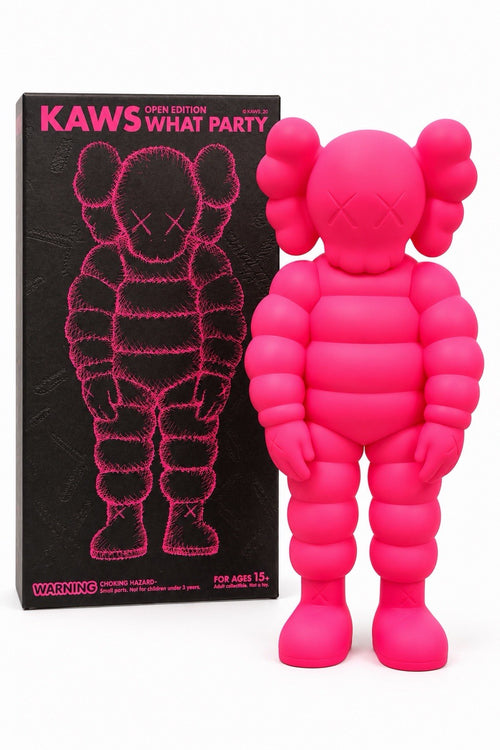
KAWS What Party Pink Companion Figure 11” Medicom Toy 2020 w/ Original Box
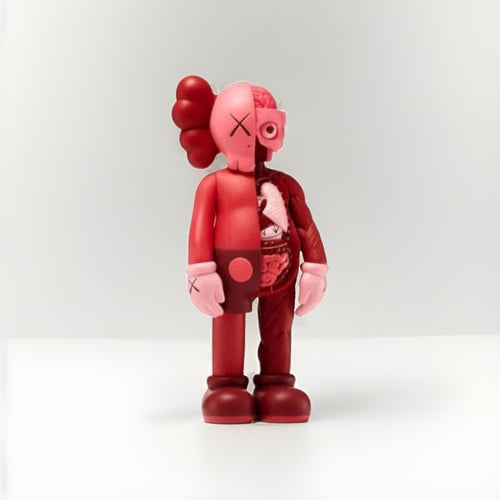
KAWS Companion Flayed Open Edition Blush Medicom Toy Dissected Sealed New Figure
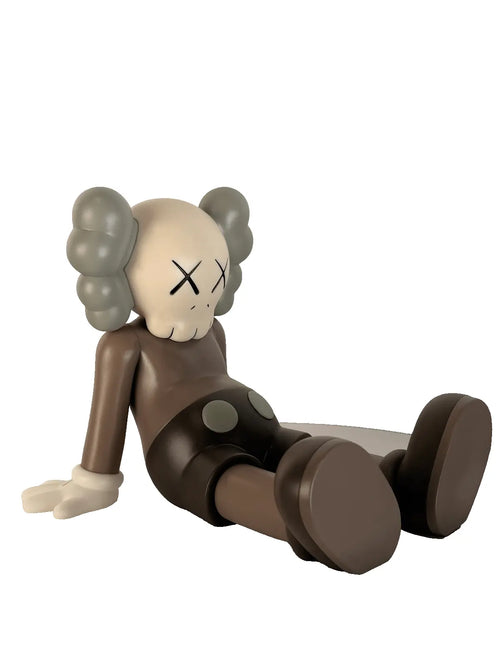
KAWS Holiday Taipei Companion Brown Vinyl Figure 2019 11.5" SEALED w/ Box
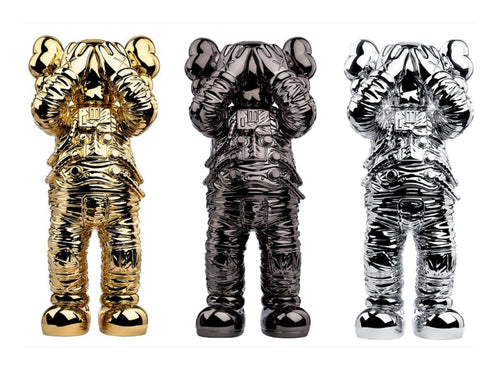
KAWS Holiday Space Set of 3 Gold Black Silver Companion Astronaut Figure Rare
$2,900.00Be first when new KAWS pieces drop
You're on the list ✓ — first look at every new KAWS arrival.
Shop KAWS
Explore current pieces available from the gallery.
-
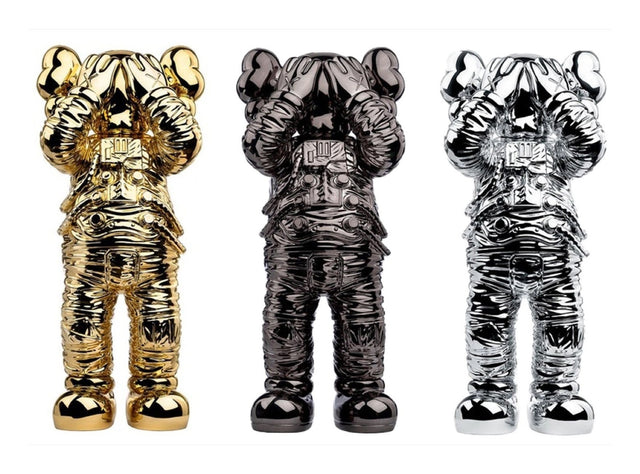
KAWS Holiday Space Set of 3 Gold Black Silver Companion Astronaut Figure Rare
$2,900.00 USD
-
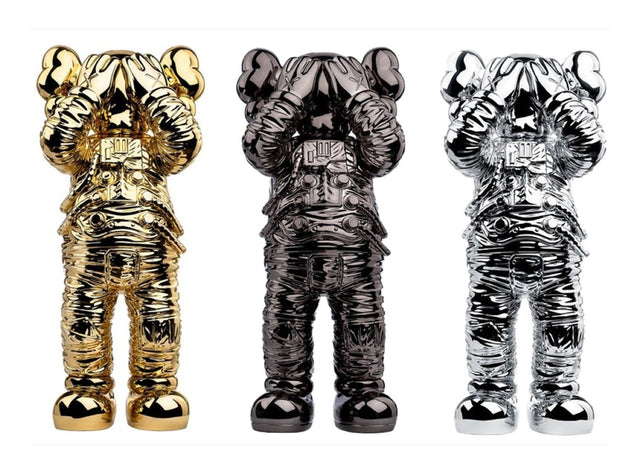
KAWS Holiday Space Set of 3 Gold Black Silver Companion Astronaut Figure
$2,900.00 USD
-
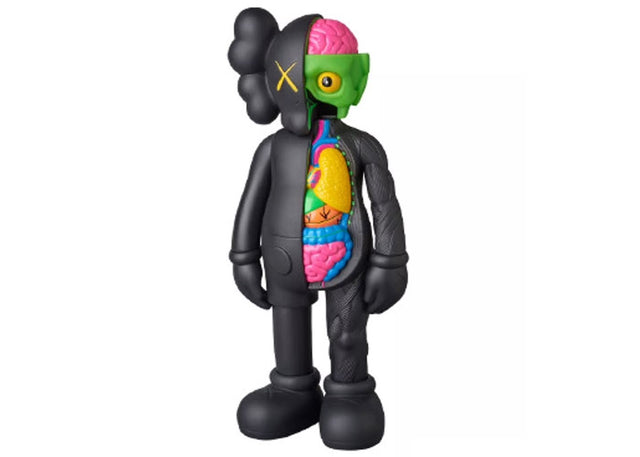
KAWS Companion Flayed Open Edition Black Medicom Toy Dissected Sealed New Figure
$599.00 USD
-
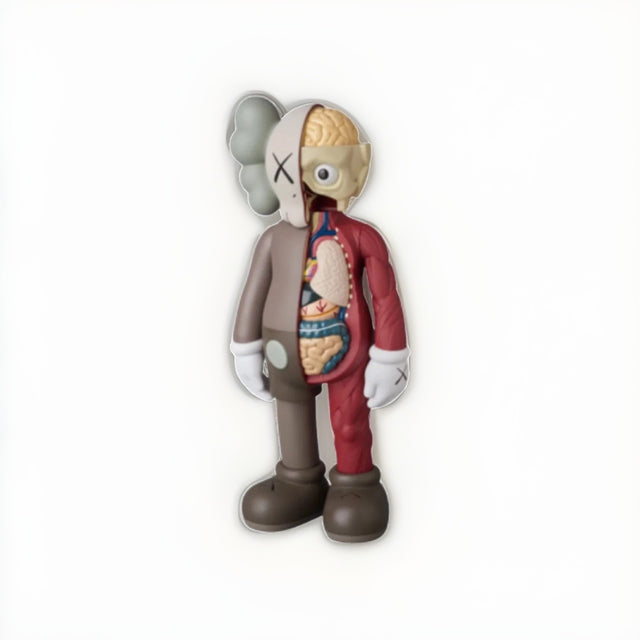
KAWS Companion Flayed Open Edition Brown Medicom Toy Dissected Sealed New Figure
$349.00 USD
-
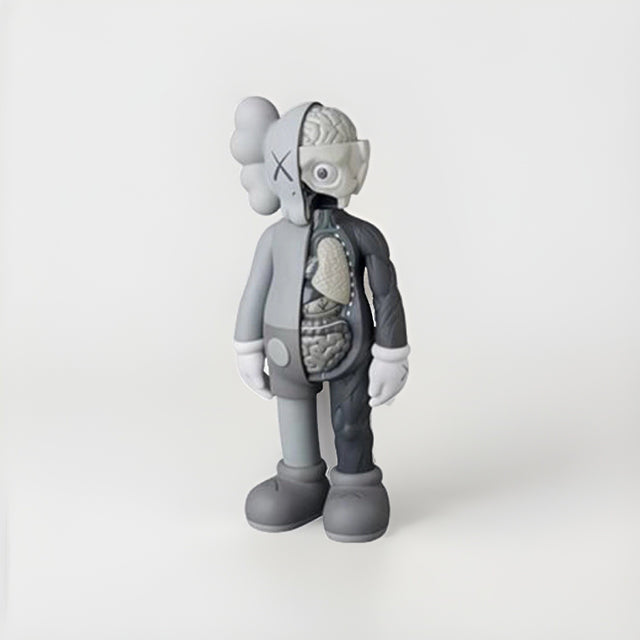
KAWS Companion Flayed Open Edition Grey Medicom Toy Dissected Sealed New Figure
$349.00 USD
Browse the collection for current listings.