

Gauntlet Gallery — Banksy Prints
Golf Sale (Unsigned)
Work Summary & Collector Notes
A stark black-and-white screen print showing a column of three heavy military battle tanks rolling forward, while a small lone figure stands at far left holding a hand-lettered "GOLF SALE" placard, as if directing them toward a sidewalk sale. The image is a direct visual quotation of the 1989 Tiananmen Square "Tank Man" photograph, with Banksy swapping the protester's defiance for the banal absurdity of a retail sign — a defining piece of his early stencil-era satire on protest and consumerism.
Collector notes: Edition label was not stated, and total quantity was not documented in the saved record. Edition-specific signature, numbering, and stamp details were not stated in the saved release record. Verify signing and numbering against a documented example of this edition.
Why It Matters
Golf Sale collapses one of the 20th century's most iconic images of political courage — the unarmed man halting a line of tanks in Beijing — into a throwaway joke about a sale rack. The gag cuts in two directions at once: it mocks a consumer culture that has flattened genuine dissent into background noise, and it implicates the viewer in a society where even the memory of revolution gets repurposed to sell merchandise. It is one of the clearest statements of Banksy's recurring thesis that capitalism absorbs and neutralizes resistance, executed with the spare, high-contrast stencil language that made his work instantly legible and endlessly reproducible.
Collector Perspective
Golf Sale was issued in both a signed and an unsigned edition through Pictures on Walls; this is the unsigned variant, which trades at a meaningful discount to its signed counterpart and is the more accessible entry point into the image. As an unnumbered, unsigned POW release the exact run is not publicly fixed, so condition, paper, and full POW provenance carry the weight in establishing value rather than an edition number. It remains a recognizable and frequently traded early Banksy with a strong conceptual hook, but buyers should expect the signed edition to command a clear premium and should insist on documentation tying any example back to Pictures on Walls.
Historical Context
The print directly references the June 1989 "Tank Man" photograph from the Tiananmen Square protests, when a single civilian blocked a column of People's Liberation Army tanks — an image that became global shorthand for individual defiance against state power. Released in 2003 during Banksy's prolific Stencil Boom era, Golf Sale sits alongside his other anti-war and anti-consumerist works of the period, a moment when his Pictures on Walls prints were circulating widely and his public profile was rising sharply in Britain.
Documented Release Details
- Object type
- Editioned screenprint
- Release date
- 2003
- Release-date note
- Catalog-listed release year from the saved secondary record; primary release-page confirmation remains pending.
- Medium and materials
- Screen Print.
- Edition details
- Edition label was not stated, and total quantity was not documented in the saved record.
- Signature and marks
- Edition-specific signature, numbering, and stamp details were not stated in the saved release record. Verify signing and numbering against a documented example of this edition.
Documented History and Meaning
History note: This page treats Banksy's broader career as background context, not proof that this specific edition belongs to any single exhibition or event. Release-level facts here come from a saved secondary catalog record.
Meaning / interpretation: Read as documented context rather than stated intent: The print directly references the June 1989 "Tank Man" photograph from the Tiananmen Square protests, when a single civilian blocked a column of People's Liberation Army tanks — an image that became global shorthand for individual defiance against state power. This is an interpretive reading of the release context, not a statement of the artist's intent for this specific work. This interpretive note follows the cited artist or publisher context.
Release context: The saved catalog lists 2003.
Authentication, Presentation and Provenance
- Original presentation
- Original packaging or presentation was not documented in the release sources reviewed.
- Authentication note
- Compare the support, dimensions, edition number, and signature against a documented example of this edition. Gauntlet Gallery does not authenticate works purchased from third parties.
- Provenance note
- Edition origin is attributed in the saved record to the release source named in the saved record. That does not establish the ownership history of an individual copy: retain the original invoice, reseller or gallery paperwork, labels, correspondence, and condition photographs.
Sources and Verification
Verification status: Secondary catalog snapshot; artist-level context added
- Banksy — Wikipedia · reference encyclopedia · Accessed 2026-07-13 · General artist-level biographical and career reference.
- Banksy (Q133600) — Wikidata · reference knowledge base · Accessed 2026-07-13 · Structured identifier used for the artist across catalog metadata.
FAQ
What does Golf Sale depict?
Three military tanks advancing in a line while a small lone figure holds up a hand-lettered 'GOLF SALE' sign in their path. It is a direct parody of the 1989 Tiananmen Square 'Tank Man' photograph, replacing the protester's act of defiance with a banal retail advertisement.
Is this print signed or unsigned?
This is the unsigned edition. Banksy released Golf Sale in both signed and unsigned versions through Pictures on Walls; the unsigned variant typically sells for less than the hand-signed one.
What is the edition size?
The exact edition size for the unsigned run is not publicly confirmed. It was published as a Pictures on Walls release in 2003, and the unsigned examples are unnumbered.
What medium is it?
It is a screen print on paper, produced in Banksy's characteristic high-contrast black-and-white stencil style.
Who is Banksy?
Banksy is an anonymous England-based street artist who emerged from Bristol in the early 1990s, known for fast stencil work, dark humour, and anti-war, anti-capitalist, and anti-establishment imagery, with many prints published through Pictures on Walls.
Related Banksy Works


Shop Banksy at Gauntlet Gallery
Live listings with authentication, provenance and documentation.
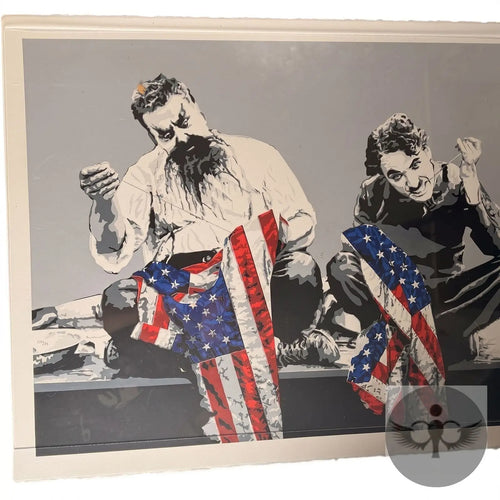
Mr. Brainwash 2018 "Recovery Plan" Signed Screenprint of Chaplin with USA Flag
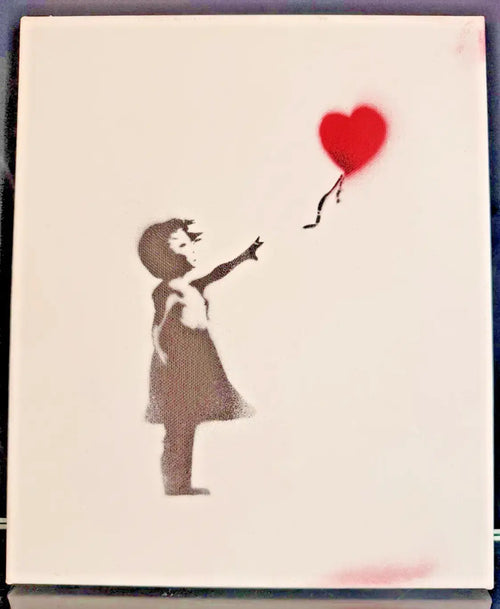
Banksy Girl with Balloon Dismaland 2/12 Signed Stencil Canvas 2015 Ticket
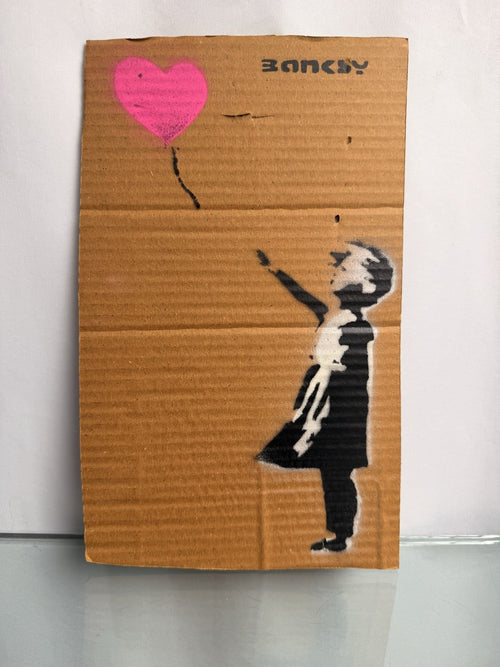
WMMS Signed Original Stencil Spray Art on Cardboard Banksy Dismaland Style 3/3
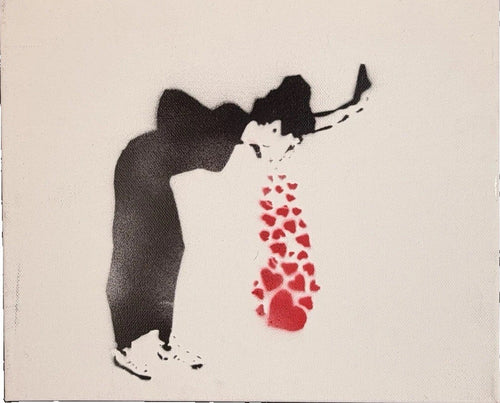
Banksy Dismaland Achieve Greatness 1/10 Signed Stencil Canvas 2015 Ticket
Be first when new Banksy pieces drop
You're on the list ✓ — first look at every new Banksy arrival.
Shop Banksy & Dismaland
Explore current pieces available from the gallery.

Browse the collection for current listings.