The Tuesday Drop Phenomenon: How Print Releases Got Their Schedule
You wake up at 9:47 a.m. on a Wednesday and check your email. Sold out. You missed another one.
Then someone in a collector forum tells you: "It drops Tuesday. Always Tuesday. Set your alarm."
And you think — wait, why Tuesday?
That question is more interesting than it sounds. The Tuesday print drop is not an accident, not a quirk, not a coincidence across a handful of platforms. It is a deliberate infrastructure decision that shaped how the entire limited-edition print market operates today. Understanding it makes you a smarter buyer. It also explains a lot about why the secondary market behaves the way it does.
Let's pull this apart properly.
Before the Drop: How Prints Used to Sell
Rewind to the pre-internet gallery model. An artist released a print. A gallery took inventory. You walked in, or you were on a mailing list, or you knew someone who knew someone. The release was quiet, slow, and mostly local.
The secondary market barely existed in any formal sense for street art prints. You bought what you could find, from who was selling it, at whatever price the gallery set. Scarcity was real but not manufactured. The idea of a "drop" — a timed, simultaneous, online release event — did not exist yet.
Then two things happened almost simultaneously: the internet made global simultaneous access possible, and artists like Shepard Fairey started building audiences that dwarfed what any single brick-and-mortar gallery could serve.
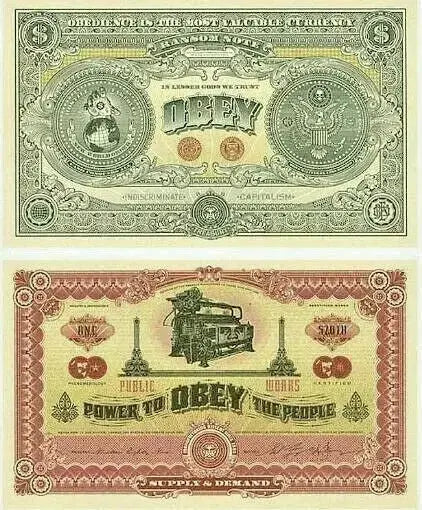
Obey Giant's web store became one of the first real laboratories for the drop model in street art. Early releases were informal. Fairey or his team would announce something, post it, and collectors would scramble. The timing was irregular. The demand was enormous. The friction was brutal for everyone.
What happens when you have infinite demand and no release structure?
Chaos. Bot attacks. Crashes. Complaints. And a secondary market that formed within hours of every release because the primary sale was over before most people even knew it happened.
The industry needed a system. And the system it landed on was Tuesday.
The Music Industry Blueprint
To understand why Tuesday became the default, you have to look outside the art world entirely.
For decades, the music industry standardized new album releases on Tuesdays in North America. This was not arbitrary. It was a logistical convention rooted in physical distribution: trucks shipped from central warehouses over the weekend, product arrived at stores Monday night, and sales began Tuesday. The chart tracking week started Wednesday, so Tuesday gave labels a full tracking period from day one. The whole ecosystem — radio promotions, advertising buys, chart calculations — was synchronized around that single day.
The art print world absorbed this logic almost by osmosis. Platforms and publishers who came up through music, merchandise, or entertainment retail carried the Tuesday convention with them. It felt stable. It felt legible to consumers trained by years of music drops. And critically, it gave secondary market platforms, resellers, and collectors a predictable rhythm to plan around.
In 2015, the global music release day shifted to Friday under a unified international standard coordinated by IFPI. The print drop world did not follow. Tuesday had already calcified into habit, infrastructure, and collector expectation. Moving it would have cost platforms audience attention and market share.
So Tuesday stayed.
Platform Architecture and the Drop Clock
The Tuesday standard is not just about tradition. It is about how these platforms are actually built and staffed.
The Operational Logic
Run a print platform and you face a consistent operational challenge: release days spike your server load, your customer service volume, your payment processing stress, and your fulfillment queue all at once. You need staff coverage. You need technical resources available. You need someone to monitor the queue, manage bot filtering, respond to failed transactions, and handle the inevitable angry emails.
Tuesday solves this. Your team is fresh. The week's internal administrative work — accounting closes, inventory reconciliation, shipping manifests — often runs Friday through Monday. By Tuesday, the machine is ready. You have four full working days to handle post-drop fulfillment and customer issues before the next weekend disrupts staffing.
Drop something on Friday and your customer service queue festers over a two-day gap. Drop it on a Monday and your team is still catching up from the weekend. Thursday starts looking attractive but puts fulfillment pressure against the end of the week.
Tuesday morning, typically between 9 a.m. and noon in the platform's home time zone, became the sweet spot.
Avant Arte's Approach
Avant Arte, the London-based platform that has become one of the most significant players in accessible limited-edition prints, operates with a disciplined release cadence that collectors have learned to anticipate. Their drops are structured, announced in advance, and timed with enough consistency that building a collection strategy around them is entirely viable.
The platform's approach reflects a broader shift: the drop is not just a sales event. It is a marketing moment, a community trigger, and an algorithm feed. Announcing a drop in advance creates engagement across the days leading up to it. The scarcity window — the minutes or hours when the edition is available — concentrates attention in a way that a week-long sale never could.
What is a drop if not a controlled panic with a guest list?
OBEY's Tuesday Infrastructure
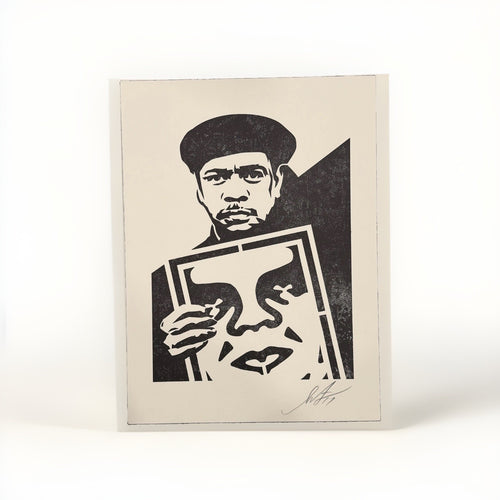
For Shepard Fairey's Obey Giant store, the Tuesday drop became almost ritualized. Regular collectors know to check the newsletter, watch the social posts, and have payment details saved. The release window for sought-after editions can be extraordinarily short.
It is worth noting the authentication context here: Fairey does not issue artist COAs in the traditional sense. Authentication for Obey prints runs through the signature itself, edition numbering, the documented drop record from the Obey Giant store, and the provenance chain you build from point of purchase forward. The original receipt from an Obey drop — timestamped, order-numbered, shipped to you directly — is a foundational provenance document. Treat it that way. File it. Do not lose it.
This is directly relevant to the drop schedule: buying at primary, directly from the Obey store on drop day, is your cleanest provenance origin point. That Tuesday timestamp matters more than most collectors realize when they go to sell years later.
The Psychology of the Scheduled Drop
There is something behaviorally interesting happening here that goes beyond logistics.
Scheduled scarcity is different from permanent scarcity. If something is always sold out, you give up. If something drops on a known schedule and then sells out, you feel the proximity of access. You almost got it. You will be ready next time.
This is not manipulation in a cynical sense — it is just how anticipation works. Humans respond to rhythmic opportunity differently than to random opportunity. The Tuesday cadence trains collectors. It creates a weekly attention cycle that benefits platforms, artists, and frankly the secondary market too, because consistent primary drops create consistent secondary supply.
The Queue Ritual
Any collector who has sat in a virtual queue for a significant drop knows the particular anxiety of it. The timer counting down. The "you are number 4,847 in line" notification that makes your stomach drop. The frantic browser refresh.
That ritual is not incidental to the value of what you are buying. It is part of the story you tell about the piece. "I was in the queue for forty minutes" is provenance of a kind — not the legal kind, but the emotional kind that drives collector attachment and, downstream, resale premium.
The Tuesday drop concentrates that ritual into a predictable moment. Collectors build their week around it. That is an extraordinary amount of earned attention for a single sales event.
The Secondary Market Lives on Primary Drop Data
Here is what most casual collectors miss: the secondary market for limited prints is almost entirely priced off primary drop behavior.
Edition size, sell-through time, secondary listings within 24 hours, authenticated resale prices in the first month — these are the signals dealers and serious collectors use to establish value. And all of those signals originate at the primary drop moment.
A Tuesday drop that sells out in four minutes from a platform with bot filtering tells you something very different about real collector demand than a drop that takes three hours to clear on a platform with no queue management.
Understanding the drop infrastructure helps you read secondary market pricing. A piece that "sold out instantly" on a platform with lax bot controls may have very different organic demand than one that cleared quickly on a platform with verified-human queue systems. The secondary price should reflect real collector demand, not bot-assisted sellout theater.
The Authentication Chain Starts at the Drop
This is critical and underappreciated.
For secondary market authentication — particularly for works by artists without formal authentication board infrastructure — the provenance chain that starts at the primary sale is your bedrock. This applies across the board:
- Shepard Fairey / Obey: Original order confirmation, shipping documentation, edition number on the piece, signature. No artist COA exists. The drop record is your primary document.
- Death NYC: Works should carry both the artist-signed COA and the studio gold seal. But your purchase receipt from an authorized primary drop adds another layer of verification that supports those documents.
- KAWS prints: Original packaging, hologram where applicable, and the documented Medicom or primary platform release record are the authentication infrastructure.
- Banksy: Pest Control is the only recognized authentication body. Full stop. Gauntlet Gallery does not claim Pest Control authentication for Banksy works. What a primary drop receipt does for Banksy-adjacent prints is establish where the piece entered the market — useful context, not substitute authentication.
The Tuesday drop, for all its commercial theater, is also a documentation moment. Treat it as one.
How Different Platforms Handle the Drop Clock
Not everyone operates identically. The Tuesday standard has variations worth knowing.
| Platform / Publisher | Typical Drop Day | Typical Drop Time Window | Queue System | Advance Announcement |
|---|---|---|---|---|
| Obey Giant Store | Tuesday (strong convention) | Morning PT | First-come / cart window | Newsletter + social, 24–72 hrs prior |
| Avant Arte | Variable, often mid-week | GMT morning | Randomized queue | Multi-day campaign build |
| Jealous Gallery | Variable | GMT morning | Standard cart | Newsletter lead |
| Art on a Postcard | Campaign-based | GMT morning | Standard cart | Campaign announcement |
| 1xRUN | Variable | EST morning | First-come | Newsletter + social |
| Pictures on Walls (legacy) | Tuesday (historical) | GMT morning | First-come | Email list primary |
The variance is real, but the gravitational pull toward Tuesday — and toward morning releases in the platform's home time zone — is consistent across the market. Even platforms that do not strictly drop on Tuesday tend to avoid Monday and Friday, for the operational reasons discussed above.
The International Time Zone Problem
The Tuesday drop creates a specific, persistent inequity: if you are not in the platform's home time zone, you are structurally disadvantaged.
A 9 a.m. PT drop from an LA-based platform is a 5 p.m. GMT release. Manageable for UK collectors, though the end of the workday adds friction. For collectors in Tokyo or Sydney, it is the middle of the night. For a 9 a.m. GMT drop from a London platform, West Coast US collectors are waking up at 1 a.m.
This is not incidental. It shapes the collector base for any given platform. London-based platforms like Avant Arte and Jealous have naturally stronger European collector penetration partly because their drop times are civilized hours for European buyers. US platforms skew their audiences accordingly.
Is the secondary market premium on some international releases partly just a time zone tax?
Yes. Partly. When your access window is 3 a.m. local time, the friction of primary purchase is high enough that a secondary premium feels reasonable to many collectors. Sellers know this. Price accordingly.
Bots, Scalpers, and the Integrity Problem
No honest discussion of the drop model is complete without addressing the ecosystem of abuse it has generated.
FBI Operation Bullpen, the landmark investigation into forged sports memorabilia that broke in 2000, established something the art world relearned slowly: where there is scarcity and money, fraud follows. Operation Bullpen exposed a network that had forged millions of dollars in signed memorabilia, undermining legitimate authentication and poisoning market trust. The parallels to the print drop world are not about forgery exactly — but about the structural incentive to cheat a scarcity system.
Bots are the drop world's version of this problem. Automated purchase systems that can clear inventory in seconds, defeating any human collector competing manually, exist because the resale margin on a sold-out print can be significant. This is not a fringe issue. It is a structural feature of any high-demand, time-gated release system.
Platforms have responded with varying effectiveness:
- Randomized queues: Rather than first-come-first-served, some platforms randomly assign queue position to all visitors in a pre-drop window. Bots gain less advantage when speed of access is not the determining factor.
- Account age verification: Flagging new accounts created immediately before a drop, a classic bot behavior pattern.
- CAPTCHA and behavioral analysis: Imperfect but still deployed broadly.
- Purchase limits and regional locking: Limiting one per customer per household address, with credit card verification.
- Waitlist and lottery models: Some platforms have moved away from the open drop entirely toward a pre-registration lottery that removes the speed advantage entirely.
The lottery model is increasingly common for high-demand releases and is arguably more equitable. But it sacrifices the shared ritual of the drop moment — that concentrated attention event — for a more distributed, less emotionally charged process.
Is the drop ritual worth preserving if it systematically advantages bots over collectors?
That is a live debate in the market right now.
When the Schedule Breaks: Surprise Drops and Market Disruption
The counterpoint to the Tuesday infrastructure is the deliberate surprise drop.
Some artists and platforms use unannounced or very short-notice releases precisely to defeat the scalper preparation cycle. If bots are pre-programmed to target Tuesday morning drops, a surprise Thursday evening release catches them unprepared. It also catches most legitimate collectors unprepared — but the theory is that genuine fans monitoring an artist's social channels will respond fast enough while automated scalper systems lag.
The evidence on whether surprise drops actually achieve better collector distribution is mixed. What they reliably do is generate social engagement. The surprise itself is news. The FOMO is acute. The secondary market spike can be even sharper than for scheduled drops, because the pre-announcement period that allows collectors to prepare is gone.
For provenance purposes, surprise drops present a documentation challenge. When there is no advance announcement, there is less recorded context around the release. Collector communication about the drop happens reactively, across social platforms, in ways that are harder to archive. The paper trail is thinner. That matters for authentication context down the line, particularly for secondary market resale years later.
Gauntlet Gallery's Position in the Drop Ecosystem
As a secondary market dealer, Gauntlet Gallery operates downstream from these primary drops. What the drop infrastructure produces — documented editions, provenance chains, authenticated first owners — is the raw material of what we evaluate, certify through appropriate third-party authentication, and bring to collectors who missed the primary window.
The quality of that provenance chain is directly related to how well the original drop was documented. A print purchased directly from the Obey Giant store on a Tuesday morning, with an original order confirmation, shipping record, and edition documentation, comes to us as a clean asset. A print with a murky "bought from a guy who knew someone" backstory requires more work and more scrutiny.
This is not an abstract point. When you buy in the secondary market, you are buying not just the print but the story of how it moved from artist to printer to platform to first owner to current seller. Every documented step in that chain adds value. Every gap is a vulnerability.
Red Flags
Collectors operating in the drop market — whether buying primary or secondary — should watch for these warning signs.
-
Drop announcements with no advance notice and no historical track record.
A legitimate platform builds a communication history. First-time or anonymous "drop" announcements with no verifiable platform identity are a common vector for counterfeit print sales disguised as primary releases.
-
Secondary listings that appear within minutes of a drop selling out.
Some instant secondary listings represent legitimate flippers. Others represent pre-loaded inventory of counterfeits timed to ride the wave of a genuine sellout. PSA certification-verification warnings have flagged this pattern in memorabilia markets; the same dynamic applies to print drops.
-
Edition numbers that do not match platform records.
If a platform released an edition of 75 and you are being offered number 89, that is a problem. Cross-reference edition size claims against drop announcements and platform records whenever possible.
-
"Sold out but I have one" sellers with no purchase documentation.
The claim that a seller happened to have a spare from an instantly-sold-out drop, with no original receipt or order confirmation, should always trigger scrutiny. It may be legitimate. It may be counterfeit. The documentation gap is the problem.
-
COA claims that do not match authentication canon for the artist.
Shepard Fairey does not issue COAs. Death NYC requires both the artist-signed COA and the studio gold seal. Banksy authentication runs through Pest Control only. Any COA structure that departs from established canon for a given artist is a red flag, regardless of how official it looks.
-
Drop platforms with no verifiable track record, no physical address, and no third-party press coverage.
Legitimate platforms have searchable histories. New platforms are not automatically suspect, but they require more due diligence before you commit primary purchase funds, let alone secondary resale trust.
-
Prices significantly below secondary market on a "just missed the drop" piece.
If a print sold out in four minutes and you are being offered one at primary price or below two hours later, ask why. The answer is rarely good.
Bottom Line
Tuesday is not magic. It is a convention that calcified from music industry logistics, collector behavior training, and platform operational convenience into something that now feels like natural law in the print market.
Understanding where it came from helps you navigate it better. The Tuesday drop is a documentation moment as much as a commercial event. The provenance chain it creates — or fails to create — lives with a print for its entire market life.
Buy smart. Keep your receipts. Understand the platform you are buying from. Know the authentication canon for the artist whose work you are chasing. And when you miss a drop — because you will, because everyone does — let the secondary market be your fallback, not your vulnerability.
The print is the same piece whether you bought it Tuesday morning at 9:01 or from a secondary dealer six months later. What changes is what you paid and what documentation came with it.
Make sure the documentation is clean.
FAQ
Why do print platforms drop on Tuesday specifically and not another weekday?
The Tuesday convention migrated into the art print world from music industry release infrastructure, where Tuesday new releases were a North American standard tied to physical distribution logistics and chart-tracking calendars. Art print platforms built around this expectation because their early audiences were already conditioned to it, and because Tuesday provides operational advantages: fresh staff, post-weekend admin cleared, and four full working days for fulfillment before the next weekend disrupts staffing.
If I miss a Tuesday primary drop, is buying secondary always a worse deal?
Not necessarily. Secondary market pricing reflects real collector demand, and for some editions, secondary prices settle at or near primary within a few months as initial FOMO cools. For truly sought-after editions from significant artists, secondary prices may never return to primary levels. Knowing which category a piece falls into before a drop — based on artist trajectory, edition size, and platform history — is part of building a coherent collection strategy.
Does buying at primary drop actually matter for authentication later?
Yes, materially. Your original order confirmation, timestamped to the drop, is a provenance document. For artists like Shepard Fairey, where no artist COA exists and authentication relies on signature, edition number, and provenance chain, the primary drop receipt is your foundational document. Keep it. If you sell the piece in five years, that receipt strengthens the transaction for the buyer and potentially your realized price.
How do I know if a platform's "sold out instantly" claim is legitimate demand or bot activity?
Look at their queue management disclosure. Platforms with randomized queue systems, purchase verification, and account-age checks provide more credible sellout data than open first-come-first-served stores with no bot filtering. Secondary market price behavior in the hours and days after a drop is also informative: genuine demand creates sustained secondary price elevation; bot-purchased inventory tends to flood the secondary market quickly at tight margins, indicating flippers rather than collectors cleared the drop.
What time zone should I plan around for drop releases?
Plan around the platform's home time zone, not your local time. London-based platforms (Avant Arte, Jealous, the legacy Pictures on Walls operation) typically drop in GMT morning hours. US platforms tend toward EST or PT morning. Sign up for platform newsletters and follow their social accounts to get time-specific advance notice. Many platforms now include local time conversion tools in their drop announcements precisely because the time zone disadvantage is a known equity issue.
Are surprise drops better for getting prints into genuine collector hands?
The evidence is mixed. Surprise drops do disrupt bot preparation cycles, which can theoretically improve collector access. But they also disadvantage any legitimate collector who is not monitoring an artist's social channels in real time. Lottery and waitlist models may do more to equalize access than surprise timing does. From a provenance standpoint, surprise drops create thinner documentation trails because the pre-announcement communication record does not exist, which can matter for secondary market authentication context years later.
Does Gauntlet Gallery authenticate prints bought through secondary market channels?
Gauntlet Gallery operates as a secondary market dealer and applies the established authentication frameworks appropriate to each artist. This means Pest Control only for Banksy, Beckett and JSA for music memorabilia, TrueCOA blockchain certification for applicable KAWS and BE@RBRICK pieces, and provenance chain plus signature and edition documentation for Shepard Fairey. We do not invent or issue authentication that falls outside these established frameworks, and we do not claim authentication authority that belongs to artist-controlled bodies like Pest Control.
What should I look for in a secondary listing to confirm legitimate primary-drop provenance?
Ask the seller for: original purchase receipt or order confirmation from the primary platform, any original shipping documentation (particularly relevant for numbered editions where the shipping address can be cross-referenced), photographs showing the edition number, any platform-specific documentation (like Obey Giant's packing slip), and a clear account of the ownership chain from primary purchase to current listing. The more complete that documentation, the cleaner the asset. Gaps are not automatically disqualifying, but they require explanation and additional scrutiny.