Signed vs Unsigned Prints: What the Signature Is Really Worth
A hand-signed print almost always commands a premium over an unsigned or plate-signed version of the same edition — often a meaningful one — because the pencil signature is direct evidence that the artist reviewed, approved, and released that impression. In practice, a hand-signed and numbered print is the collecting benchmark; a plate-signed or unsigned open edition sits below it in both desirability and resale value. But the size of the premium is not fixed: it depends on the artist, the edition structure, the print's condition, and how authenticity is verified for that particular artist. The honest short answer is that a signature adds value in a range, not a flat figure, and the cleanest way to protect that value is provenance and edition transparency, not the signature alone.
Why a hand-signed print commands a premium
When collectors ask how much a signature adds to the value of a print, they are really asking two questions at once: what does the signature prove, and what does the market pay for that proof. The two are linked but not identical.
A hand-applied pencil signature in the margin is the artist's personal endorsement of a specific physical object. It signals several things a buyer cares about:
- Approval. The artist (or their studio, under their direction) inspected the impression and judged it good enough to release. Rejected or damaged sheets are typically destroyed rather than signed.
- Involvement. A signed and numbered edition is usually a controlled, limited run with a defined total. That scarcity is documented on the sheet itself.
- Provenance anchor. The signature ties the object to a moment of release, which makes the rest of the ownership history easier to trace and defend.
Because the signature carries that weight, the market rewards it. As a general rule, a hand-signed, numbered impression trades above the same image sold unsigned or plate-signed. The premium tends to be largest for artists whose signed editions are strictly limited and whose unsigned versions were produced in far greater numbers.
Signed, plate-signed, and unsigned — the three tiers
Most confusion around this topic comes from collapsing three different things into one word, "signed." They are not the same, and the value gap between them is real.
| Type | What it means | Typical desirability |
|---|---|---|
| Hand-signed (pencil) | The artist personally signed the physical sheet, usually in graphite in the lower margin, often with an edition number. | Highest — the collecting benchmark. |
| Plate-signed | The artist's signature is part of the printed image itself (it was in the plate/screen), so every copy shows an identical "signature." No hand-applied mark. | Lower — the signature is decorative, not an endorsement of that specific sheet. |
| Unsigned / open edition | No hand signature and often no fixed edition size. Sometimes issued as an affordable, widely available release. | Lowest for resale, but not without merit (see below). |
The key distinction: a plate signature looks like a signature but proves nothing about the individual impression, because it is printed identically on every copy. A hand-applied pencil signature is unique to that sheet. When collectors talk about "the signed version" being worth more, they almost always mean the hand-signed, in-pencil version.
How much does a signature add to the value of a print?
There is no single multiplier, and anyone quoting a precise one for all prints is overstating what the market actually does. What we can say with confidence, from how the secondary market behaves across contemporary print artists, is this:
- Hand-signed and numbered impressions consistently sell for more than unsigned or plate-signed versions of the same image.
- The premium is proportionally larger when the signed edition is small and the unsigned version was mass-produced.
- The premium is smaller when the unsigned version is itself scarce, desirable, or the only form in which the image was ever released.
- Condition, provenance, and edition transparency can outweigh the signature entirely — a signed print with condition problems or a murky history can be worth less than a pristine, well-documented unsigned one.
For a specific piece, the responsible way to estimate the premium is to compare recent sales of the signed version against the unsigned version of that exact image, in similar condition. We publish market context and methodology on our Financial Insights page rather than quote blanket figures, because the honest answer always depends on the edition in front of you. If you want a repeatable framework for reading value, our Collector's Hub walks through the factors that actually move prices.
Why the "premium" varies so much
Two prints can carry the same image and the same artist and still show very different signed-versus-unsigned gaps. The drivers are:
- Edition size ratio. A signed edition of 100 against an unsigned run of thousands creates a wide gap. A signed edition of 450 against an unsigned edition of 500 creates a narrow one.
- Whether the unsigned version exists at all. If an image was only ever released signed, there is no cheaper twin to anchor against, and the "signature premium" is baked into the only price there is.
- Iconic status of the image. For a defining image, demand can lift every version, compressing or widening the gap depending on supply.
- Condition parity. A signed sheet with a crease or fade can lose its premium against a mint unsigned one.
How numbering and the signature interact
Numbering and signing usually travel together in the lower margin, but they answer different questions. The signature answers "did the artist approve this?" The number answers "where does this sit in the edition, and how large is the edition?"
A typical hand-signed print shows a fraction such as an impression number over an edition total, alongside the pencil signature. Beyond the standard numbered run, you may also encounter:
- Artist's Proofs (A/P or E/A). A small number of impressions outside the main edition, historically the artist's own copies. They are usually hand-signed and can carry a premium because they are scarcer than a given numbered impression.
- Printer's Proofs (P/P) and Hors Commerce (H/C). Other proof designations that sit outside the numbered edition. Their value depends heavily on the artist and documentation.
The interaction matters for value: a hand-signed and numbered print is stronger than one that is signed but unnumbered, because numbering documents scarcity. Conversely, a number without a hand signature (as on some unsigned limited editions) documents scarcity but lacks the artist's personal endorsement. The most valuable configuration is almost always signed and numbered, with a clean, legible pencil inscription and a documented edition total.
A quick checklist for reading the margin
- Is the signature in pencil/graphite (hand-applied) or printed (plate-signed)?
- Is there a numbered fraction, and does it match the artist's known edition size for that image?
- Are there proof markings (A/P, P/P, H/C) that place it outside the main run?
- Does the paper, margin, and inscription style match documented examples of that release?
Artist-specific nuance: it depends on who signed it
The single biggest mistake collectors make is applying one artist's signing conventions to another. Each artist — and each edition — has its own norms, and value follows those norms rather than a universal rule.
Shepard Fairey / OBEY: signed vs unsigned editions
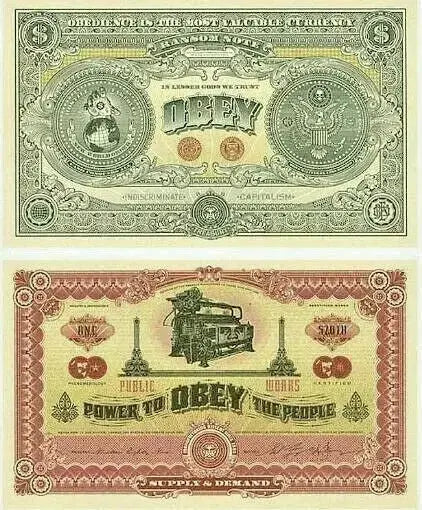
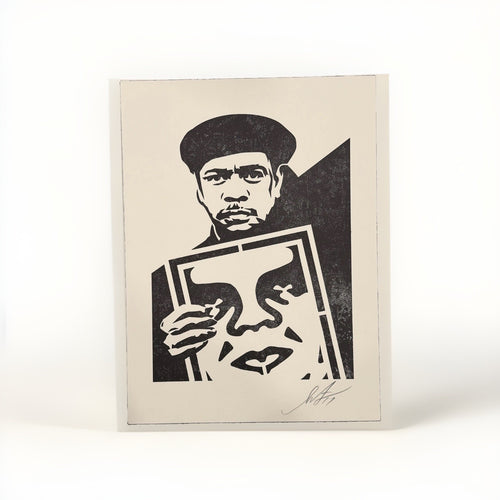
Shepard Fairey is the clearest case study for this question, because his output deliberately spans both worlds. He releases hand-signed, numbered screenprints in defined editions, and he has also put many images into the world as more affordable, widely distributed formats. That range is by design — part of the OBEY ethos of accessible art — and it means the signed-versus-unsigned gap is very real within his own catalog.
For Fairey, the practical guidance is:
- Hand-signed, numbered screenprints are the collector benchmark and carry the premium.
- Unsigned or open formats of the same image are more accessible and trade lower, but can still be genuinely desirable — especially for iconic images or as an entry point.
- Crucially, Fairey editions are typically bought on provenance and dealer trust. There is no artist-run certificate program for Fairey prints; authenticity rests on documented history and a reputable source rather than a COA from the artist.
If you are focused on Fairey specifically, our Shepard Fairey collection and the dedicated Shepard Fairey buyer's guide lay out edition norms and what to verify before you buy.
Other artists: unsigned open editions with real merit
Some artists issue unsigned open editions as an intentional, respected part of their practice — affordable, image-forward releases meant to reach a wide audience. In those cases, "unsigned" is not a downgrade or a red flag; it is simply the format the artist chose. The value question shifts from "is it signed?" to "is it authentic, in good condition, and from a reputable source?" For a broad view across artists and formats, browse the full catalog at all works.
When unsigned is still desirable — or even the right buy
Unsigned does not mean unworthy. There are several situations where an unsigned print is a smart purchase:
- Entry point. Unsigned or open editions let a new collector own an image they love at an accessible price, then trade up to a signed impression later.
- The image only exists unsigned. If the artist never released a signed version, the unsigned form is the collectible, and pricing reflects that.
- Display over investment. If the goal is to live with the art rather than resell it, an unsigned version delivers the same visual impact for less.
- Scarce unsigned runs. Occasionally an unsigned edition is itself limited and sought-after, narrowing the gap with the signed version.
The mistake is not buying unsigned; the mistake is paying a signed-tier price for an unsigned or plate-signed print because the listing blurred the distinction. Knowing exactly which tier you are buying is what protects you.
How signature authenticity is verified — by artist
A signature is only worth its premium if it is genuine, and forged or misrepresented signatures are the main risk in this category. Verification is artist-specific, and mixing up the correct chain for each artist is a common and costly error. Here is the accurate landscape for the artists we handle:
| Artist / category | How authenticity is established |
|---|---|
| Shepard Fairey | No artist-issued COA or authentication service. Buy on documented provenance and dealer trust ("silent" authentication). |
| DEATH NYC | Comes with a Certificate of Authenticity and a gold seal. |
| KAWS & BE@RBRICK | Verified via TrueCOA. |
| Andy Warhol works | Verified via TrueCOA. |
| Signed music memorabilia | Third-party authentication via Beckett, JSA, or PSA. |
| Space / Apollo memorabilia | Provenance plus recognized specialists (for example, Zarelli-level provenance work). |
Two rules keep you safe. First, never assume one artist's process applies to another — a "COA" that would be right for DEATH NYC is not how a Fairey print is authenticated, and third-party sports/music authenticators do not vouch for fine-art screenprints. Second, treat provenance and a reputable source as the foundation under every signature; the mark on the sheet is corroborating evidence, not a standalone guarantee. Our buyer's guides cover the correct chain for each artist in detail.
Practical steps before you pay a signed-print premium
- Confirm the signature is hand-applied in pencil, not plate-printed.
- Match the edition number and size to the artist's documented release for that image.
- Verify authenticity via the correct method for that specific artist (see table above).
- Ask for provenance — where the piece has been and how it came to market.
- Inspect condition, since a premium signature does not offset a damaged sheet.
- Buy from a reputable, transparent source that documents all of the above.
Frequently asked questions
How much does a signature add to the value of a print?
A hand-signed, numbered print consistently sells for more than an unsigned or plate-signed version of the same image, but the premium is a range, not a fixed number. It is largest when the signed edition is small and the unsigned version was mass-produced, and smallest when the unsigned version is itself scarce or is the only form the image was released in. Condition and provenance can outweigh the signature entirely, so the reliable way to gauge the premium is to compare recent sales of the signed and unsigned versions of that exact image in similar condition.
What is the difference between a hand-signed and a plate-signed print?
A hand-signed print carries the artist's signature applied by hand, usually in pencil, in the margin of that specific sheet. A plate-signed print has the signature printed as part of the image, so it appears identically on every copy and does not endorse any individual impression. Hand-signed is the collecting benchmark; plate-signed is decorative and worth less.
Is an unsigned print ever worth buying?
Yes. Unsigned or open editions are a legitimate, often intentional format that offers an accessible entry point, the same visual impact for display, and occasionally genuine scarcity. Some images were only ever released unsigned, in which case the unsigned version is the collectible. The key is to know you are buying an unsigned print and to pay an unsigned-tier price for it.
Does the edition number matter as much as the signature?
They answer different questions and are strongest together. The signature shows the artist approved the sheet; the number documents where it sits in a defined, limited edition. A hand-signed and numbered print is the most valuable configuration. A number without a hand signature documents scarcity but lacks the artist's personal endorsement, and a signature without a number lacks documented scarcity.
How do I verify a print signature is authentic?
Verification is artist-specific. Shepard Fairey prints are bought on documented provenance and dealer trust with no artist COA; DEATH NYC pieces come with a COA and gold seal; KAWS and BE@RBRICK use TrueCOA; Warhol works use TrueCOA; signed music is authenticated by Beckett, JSA, or PSA; and space memorabilia rests on provenance and recognized specialists. Never apply one artist's chain to another, and treat a reputable source and clear provenance as the foundation under any signature.
Why is a hand-signed print more desirable than an open edition?
A hand-signed impression is evidence that the artist personally reviewed and approved that exact sheet, and signed editions are typically limited with a documented total. An open edition usually has no hand signature and no fixed size, so it is more accessible but less scarce. That difference in scarcity and personal endorsement is what the market rewards with a premium.
Buy & authenticate with confidence
The signature premium is real, but it is only worth paying when you can confirm exactly what you are buying: a hand-applied pencil signature, a documented edition, honest condition, and the correct authentication chain for that artist. If you are collecting Fairey, start with our Shepard Fairey collection and the Shepard Fairey buyer's guide. For the framework that applies across every artist and format, the Collector's Hub, our full buyer's guides, and Financial Insights will help you weigh signed against unsigned with clear eyes — and buy the print, not just the pen stroke.