Understanding the distinctions between Shepard Fairey's print editions, including standard numbered prints, Artist Proofs (APs), and Hand-Painted Multiples (HPMs), is fundamental for any collector. These designations are not merely technical labels; they represent different facets of the printmaking process and can significantly influence a work's rarity, uniqueness, and ultimately, its market perception. A comprehensive understanding requires more than just knowing the edition number; it demands consideration of the print's title, format, production year, and a robust chain of documentation.
Understanding Edition Types in Shepard Fairey's Oeuvre
Shepard Fairey, through his OBEY Giant studio, has produced a vast and diverse body of print work, utilizing various printing techniques such as screenprinting, lithography, and offset printing. Each print is typically part of an edition, which refers to a predetermined number of identical impressions pulled from the same matrix (screen, plate, or digital file). The way these editions are designated provides crucial information about their origin and quantity.
The primary categories of editions encountered in Fairey's work include:
- Open Editions: These prints are produced in an unlimited quantity, meaning there is no predetermined cap on the number of impressions. They are often more accessible and serve to widely disseminate Fairey's imagery.
- Numbered Limited Editions: The most common type, these prints are produced in a finite, stated quantity (e.g., 1/300, 2/300, up to 300/300). Each print is hand-numbered and often signed by the artist.
- Artist Proofs (APs): A small subset of prints reserved for the artist, typically outside the main numbered edition.
- Printer Proofs (PPs): Similar to APs, but reserved for the printmakers involved in the production.
- Hors Commerce (HC): French for 'not for sale,' these proofs were historically used for exhibition or as reference copies, also outside the main edition.
- Hand-Painted Multiples (HPMs): A distinctive category where each print from a limited edition is uniquely hand-embellished by Fairey, making each impression a unique work within a series.
Each of these designations carries implications for a print's availability and its position within the broader market. Collectors must look beyond the surface designation to understand the full context of a print's creation.
The Nuance of Numbered Limited Editions
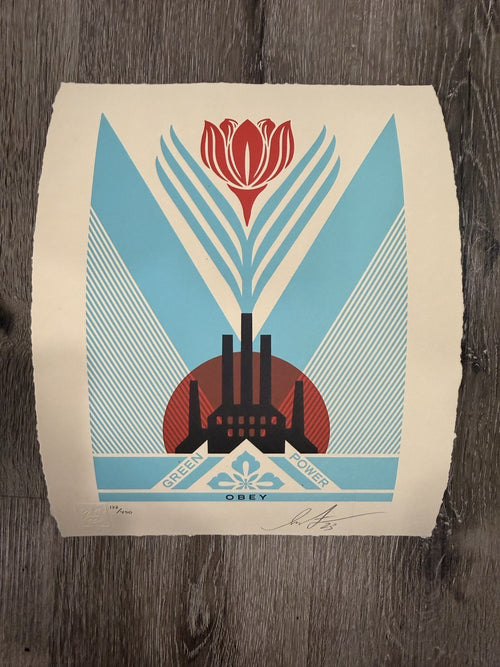
For many collectors, the numbered limited edition is the standard. A print marked '15/450' clearly indicates it is the fifteenth impression from an edition of 450. However, relying solely on this number for evaluation can be misleading. The perceived value and significance of a numbered edition print are intrinsically linked to several other factors:
Firstly, the title and imagery are paramount. Iconic images or those tied to significant cultural moments often command greater interest regardless of edition size. Secondly, the format and medium play a vital role. A large-format screenprint on high-quality paper may be perceived differently from a smaller offset lithograph, even if both are from similarly sized editions. Thirdly, the year of release can indicate historical significance or a particular period in Fairey's artistic evolution. Early works, for instance, might carry a different weight. Finally, and crucially, documentation and provenance are essential. A print, regardless of its number, is only as strong as its verifiable history. Without clear release documentation and a coherent provenance chain, even a low edition number holds diminished confidence for serious collectors.
It is a common misconception that a lower number within an edition automatically equates to higher value or quality. In printmaking, all impressions within a limited edition are intended to be identical in quality and are pulled sequentially. The number simply tracks its position in the sequence, not its inherent superiority. Therefore, when assessing a numbered print, collectors should always consider the totality of its attributes rather than isolating the edition number alone.
Delving into Artist Proofs (APs) and Other Special Designations
Artist Proofs (APs) represent a fascinating segment of Shepard Fairey's print output. These prints are traditionally pulled outside the main numbered edition and are reserved for the artist's personal use, archival purposes, or as gifts. While physically identical to the main edition prints in terms of imagery and quality, their designation as 'AP' distinguishes them. Typically, the number of APs is a small percentage of the main edition, often around 10-20%, making them rarer in terms of sheer quantity.
Other special designations include Printer Proofs (PPs), reserved for the printmakers, and Hors Commerce (HC) prints, historically used for display or reference. Like APs, PPs and HCs are also outside the main numbered edition and are generally fewer in number. The market perception of these proofs can vary. While their rarity might appeal to some collectors, it is important to understand that an AP is not inherently 'better' or necessarily more valuable than a print from the main numbered edition. Their value, like all prints, is subject to market demand, the specific image, condition, and the overall context of the release.
Collectors should exercise caution when evaluating APs, PPs, or HCs. The absence of a main edition number does not elevate a print's status automatically. Instead, the focus should remain on the artwork itself, its condition, and its verifiable history. The allure of an AP often lies in its direct connection to the artist's personal allocation, but this is a nuance rather than a universal value multiplier. Reviewing sold comparables for specific APs versus their main edition counterparts is always advisable to gauge current market interest.
Hand-Painted Multiples (HPMs): A Unique Category
Hand-Painted Multiples (HPMs) occupy a distinct and highly sought-after category within Shepard Fairey's print lexicon. Unlike standard limited editions where each print is identical, HPMs begin as a print (often a screenprint) that Fairey then individually hand-embellishes with paint, stencils, or other mixed media. This process transforms each impression into a unique work of art, blurring the lines between print and original painting.
The appeal of HPMs lies in their individuality. While they share a common underlying print, the hand-applied elements ensure that no two HPMs are exactly alike. This direct artistic intervention by Fairey adds a layer of originality and personal touch that collectors often highly prize. Consequently, HPMs typically command different market attention compared to standard prints. Their unique nature means that even within an edition of HPMs, variations in embellishment can lead to differing market values for individual pieces. For collectors seeking a work that combines the reproducibility of printmaking with the unique qualities of an original artwork, HPMs offer a compelling option.
The Critical Role of Provenance and Documentation
Regardless of edition type – be it an open edition, a numbered print, an AP, or an HPM – the bedrock of confident collecting is robust provenance and verifiable documentation. A print's authenticity hinges on a coherent provenance chain, which is a documented history of ownership from the artist or publisher to the current possessor. This chain, combined with original release documentation, such as purchase receipts or certificates of authenticity issued by the original publisher, provides critical reassurance.
“In the realm of fine art collecting, especially with prolific artists like Shepard Fairey, diligence in verifying a print's history and authenticity is not merely a recommendation but a fundamental requirement. The market rewards transparency and verifiable records.”
It is imperative to understand that a signature alone, while a desirable feature, does not authenticate a print. Forgers can mimic signatures. True authentication relies on a multi-faceted approach that includes a thorough physical inspection of the print for its paper, inks, and printing characteristics, alongside the aforementioned documentation. Gauntlet Gallery strongly advises collectors to familiarize themselves with the nuances of authentication. For further guidance, please consult our resource on How to Spot a Fake Shepard Fairey Print.
FAQ: Collecting Shepard Fairey Editions
Are Artist Proofs (APs) always more valuable than numbered editions?
Not necessarily. While APs are typically rarer due to their smaller quantity, their market value is not automatically higher than prints from the main numbered edition. Value depends on factors such as the specific image's demand, the print's condition, the overall edition size, and current market trends. Some iconic images from the main edition might command higher prices than less popular APs. It is always wise to review sold comparables for the specific artwork in question.
How do I know if a Shepard Fairey print is authentic?
Authenticating a Shepard Fairey print requires a coherent provenance chain, thorough release documentation (such as original purchase receipts or publisher-issued certificates), and a detailed physical inspection of the print itself. A signature, while important, is not sufficient on its own. Gauntlet Gallery emphasizes the importance of verifying these elements to ensure the legitimacy of your acquisition. Our Shepard Fairey Buyer's Guide offers further insights into making informed purchases.
What does "open edition" mean for a Fairey print?
An open edition print by Shepard Fairey signifies that there is no predetermined limit to the number of impressions that can be produced. Unlike limited editions, which have a fixed quantity, open editions can be printed indefinitely, often making them more accessible and affordable. While they lack the rarity of limited editions, open editions still offer collectors an opportunity to own authentic artwork by Fairey, often featuring iconic imagery that contributes to the widespread dissemination of his artistic message.
The Gauntlet Gallery's Shepard Fairey Print & Fine-Art Index meticulously documents 2,623 OBEY Giant works, spanning diverse themes from collaborations and pop culture to civil rights and environmental advocacy. This extensive index provides valuable context for understanding the breadth of Fairey's career and the specific details of many releases. While market ranges are recorded for about 29% of these works, it is crucial to remember that these are historical data points and current market values can vary significantly based on condition, demand, and other factors. Collectors should always review sold comparables and seek expert advice when making acquisition decisions. Our Shepard Fairey Price Guide offers qualitative insights into market dynamics.
| Edition Type | Quantity | Uniqueness | Typical Market Perception |
|---|---|---|---|
| Open Edition | Unlimited | Standard print | Accessible, generally lower entry point |
| Numbered Limited Edition | Fixed (e.g., /450) | Standard print | Common collector's choice, value tied to image/rarity |
| Artist Proof (AP) | Small (e.g., 10-20% of main edition) | Standard print (artist's allocation) | Rarer, sometimes higher demand, but not always more valuable |
| Printer Proof (PP) | Very Small | Standard print (printer's allocation) | Similar to APs in rarity and perception |
| Hors Commerce (HC) | Very Small | Standard print (for reference/exhibition) | Similar to APs/PPs in rarity and perception |
| Hand-Painted Multiple (HPM) | Fixed (e.g., /50) | Unique hand-embellishments | Highly sought-after, bridging print and original art |
Key factors influencing a Shepard Fairey print's market value include:
- Print's physical condition (pristine, minor flaws, damage)
- Rarity of the specific image or edition type
- Iconic status or historical significance of the imagery
- Completeness and clarity of provenance and documentation
- Current collector demand and trends for the artist's work
Gauntlet Gallery: Your Partner in Collecting Shepard Fairey
At Gauntlet Gallery, we are dedicated to fostering informed and confident collecting. Understanding the nuances of Shepard Fairey's print editions is a cornerstone of building a meaningful collection. We invite you to explore our curated selection of authentic Shepard Fairey prints, where you can apply the knowledge gained from this guide to make discerning choices. Our expertise and commitment to transparency ensure that you can acquire works with confidence, knowing their context and significance. Discover the depth and breadth of Fairey's artistic vision through our collection today.
Explore our full range of Shepard Fairey prints and fine art.