Shepard Fairey — Bob Marley (2014)
Two men who used mass culture to carry a message.
One made posters. The other made records.
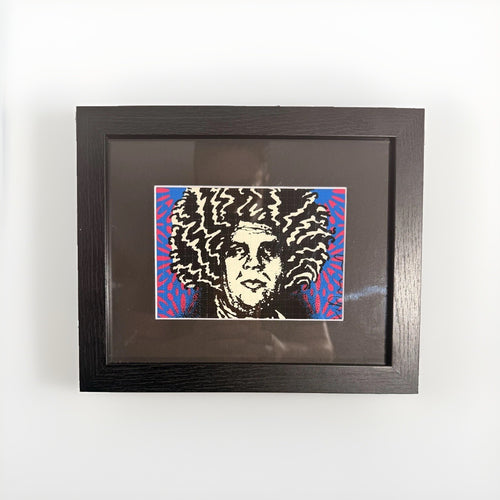
Fairey's Bob Marley portrait folds the reggae icon into the pantheon of cultural figures the artist has memorialized. This example is a hand-signed and numbered screen print on cream Speckletone paper from 2014, framed and ready to hang. This is the full story of the work: what it depicts, why the pairing of subject and style fits, how it reached the market, and what to know before you buy.
View this piece at Gauntlet Gallery →
What you are actually looking at
Fairey's Bob Marley honors one of the twentieth century's most potent voices for peace, resistance, and spiritual conviction. The reggae icon is rendered in Fairey's signature high-contrast style, folded into the group of artists and activists whose message aligns with the OBEY project's calls for unity and justice.
The portrait is built from Fairey's characteristic ornamental patterning and radiant motifs, framing Marley's face like a devotional image. That devotional treatment is deliberate. Fairey doesn't just depict Marley; he canonizes him — the rosettes and radiant lines that surround the face are the same visual grammar Fairey uses to signal aspiration and reverence throughout his work.
A natural pairing of subject and style
Some Fairey portraits feel like assignments. This one feels inevitable.
Both artist and sitter used mass culture as a vehicle for a message meant to outlast the moment. Marley took reggae — a regional Jamaican form — and turned it into a global language of unity and resistance. Fairey took the poster — the disposable furniture of propaganda — and turned it into a global language of dissent and hope. Put Marley's face inside Fairey's frame and the two projects rhyme. Each man built something popular and reproducible in service of a message that refused to stay small.
That rhyme is why the portrait reads as more than a celebrity likeness. It's a meeting of two people who understood that the medium of the many could carry the ideals of the few.
Shepard Fairey, in one paragraph
Shepard Fairey (b. 1970) is one of the most influential American artists of his generation. He emerged from the 1990s skateboarding and street-art scene with his OBEY Giant campaign — an experiment in propaganda and public space that grew into a global visual language. In 2008 his Barack Obama "Hope" portrait became one of the most recognizable political images in modern history. His work is held by the Museum of Modern Art, the Victoria & Albert Museum, LACMA, and the Smithsonian. Editions release through his OBEY studio and routinely sell out and trade on the secondary market.
Why the music subject widens the audience
Fairey's music portraits do something specific to demand: they cross-collect.
A pure OBEY political print appeals mainly to Fairey and street-art collectors. A Bob Marley portrait appeals to those collectors and to music-memorabilia buyers, reggae fans, and people who simply want Marley on the wall. The subject widens the buyer pool well beyond the street-art world. That broad appeal is a quiet driver of the image's demand — it draws from more than one collecting market at once.
It also makes the piece an unusually approachable entry into Fairey for someone who came to it through the music rather than the art. The Marley connection is the door; the Fairey signature is what's on the other side.
The edition and how it reached the market
This is a 2014 screen print on cream Speckletone paper, hand-signed and numbered in pencil by Shepard Fairey. The Speckletone stock — a warm, flecked cream paper Fairey favors — is part of the visual character, giving the high-contrast image a tactile, hand-made ground. This example is framed and ready to hang.
A note for due diligence: the specific dimensions aren't stated in the product data for this example, so we won't assert a size. What defines the sheet is documented and plain — a hand-signed and numbered 2014 screen print on Speckletone, framed. If exact dimensions matter to your decision, confirm them against the specific example.
Authentication: what actually backs a Fairey
Read this carefully, because it's the point collectors most often get wrong.
Shepard Fairey does not issue an artist certificate of authenticity, and there is no third-party authentication board for his work — no Fairey equivalent of Banksy's Pest Control. That is how the entire Fairey market operates, not a gap in this print.
Authenticity for a signed Fairey rests on three things: the pencil signature and numbering, the physical characteristics of the edition (the cream Speckletone stock, the screen-print process, the color count), and provenance. This release is documented in the Gauntlet Gallery Shepard Fairey reference archive, part of that provenance. Be skeptical of any "third-party authentication" claim or a certificate implying an official board signed off — no such board exists for his prints.
Condition: what to check, and why photographs matter
Condition drives value on paper works. This example is described as Very Good, and it is framed. For a framed screen print, the things worth examining are the brightness of the Speckletone stock, the crispness of the high-contrast image, any visible handling in the margins, and the state of the frame and glazing.
One practical note on framed pieces: because the work is behind glazing, some areas may not be fully visible in standard photos. The listing photographs form part of the condition description, and if you're buying toward the higher end of this image's range, it's reasonable to ask for additional images of any area the framing obscures. We never assert a grade beyond what the photographs support.
What the market says
Now the numbers — restrained, because this is context, not a promise.
Across recent signed-and-numbered 2014 Bob Marley screen-print comparables, observed asking and sold figures span a wide roughly $300 to $825, with a median near $310; outlier examples reach higher. That wide band reflects significant variation in condition, edition position, framing, and sales venue.
Hold onto the caveats. These figures are directional secondary-market data, not an appraisal. Value on any specific sale varies with condition, documentation, whether the piece is framed, and where the transaction happens. And market data ages — the range above reflects data reviewed as of 2026. The honest summary: this is a cross-collected image with a genuine, active secondary market, and no one — including us — can promise where it goes next.
Who this piece is for
A few kinds of collector tend to want this print. The Fairey collector assembling his portrait pantheon of cultural figures. The music collector who wants a serious, artist-signed Marley portrait rather than mass-market merchandise. And the ready-to-hang buyer who values that this example arrives framed and needs nothing more to go on the wall.
If you're none of those and simply love Marley or love the image, that's a valid reason too.
Frequently asked questions
Is it signed and numbered? Yes — hand-signed and numbered in pencil by Shepard Fairey.
What is the medium? Screen print on cream Speckletone paper, from 2014.
Is it framed? Yes — this example is framed and ready to hang.
What size is it? The specific dimensions aren't stated in the available data for this example; confirm the size against the specific piece if that detail drives your decision.
Does it come with a certificate? Fairey issues no artist COA and there is no third-party board for his prints. Authenticity rests on the signature, the numbering, the documented screen-print characteristics, and provenance.
What condition is it in? Graded Very Good. The photographs form part of the condition description and show the actual piece you will receive.
The bottom line
Fairey's Bob Marley is a natural meeting of subject and style: two figures who used the popular medium to carry a lasting message, rendered as a devotional portrait in high-contrast. As a signed, numbered 2014 screen print on Speckletone — framed and ready to hang — it's an approachable, cross-collected pick that draws from more than one market at once.
If it's the piece for you, the individual example — its number, its condition, its framing — is where the decision lives.