Updated 2026-07-11
An evidence-first collector guide to the official GUTS alternative-artwork picture disc, with condition, framing, and comparable-sale methods.
Updated July 11, 2026 · By Gauntlet Gallery Research
Quick answer: Olivia Rodrigo’s official GUTS picture disc is a 12-inch record with different artwork on sides A and B. The official store describes it as an exclusive alternative-artwork edition; it is not described there as signed, numbered, or limited to a stated pressing. Buy the exact object shown, preserve its original packaging, and do not infer scarcity from the word “exclusive.”
Identify the exact GUTS edition

The safest way to identify the record is to start with the seller’s photographs, then compare them with the official GUTS picture-disc listing. The official page calls it an “exclusive alternative artwork 12" picture disc” and states that sides A and B use different artwork.
That description establishes the format and artwork relationship. It does not establish that every copy is numbered, signed, a first pressing, or restricted to a published quantity. A resale listing should therefore distinguish four separate claims:
- Official: released through an authorized artist or label channel.
- Exclusive: sold through a particular channel or promotion.
- Limited: manufactured or offered under a stated constraint.
- Numbered: individually marked within a declared edition.
Only repeat a limitation or pressing quantity when the original product page, label documentation, or another primary record states it. “Sold out” and “rare” are market observations, not edition specifications.
Check the record, sleeve, and package as separate components

A complete inspection should document the disc, outer packaging, any clear sleeve, hype stickers, barcode, inserts, and frame. Ask for front-and-back images of every component outside the display if that can be done without damage.
Look for:
- matching artwork on both sides of the record;
- the correct title, artist, label, catalog, and barcode information where present;
- splits, creases, ring wear, scuffs, warping, and manufacturing marks;
- whether a seller-added frame or backing conceals the original packaging;
- whether adhesive, tape, mounting tabs, or pressure points touch the record;
- whether “sealed” means factory sealed or later placed in a protective sleeve.
A framed example may be visually complete while still missing packaging or inserts. Conversely, a sleeve with minor shelf wear may be more desirable to a format collector than a pristine display that permanently alters the record.
Do not confuse a picture disc with a signed edition

The official product page does not describe this GUTS picture disc as autographed. A signature on a sleeve, insert, frame mat, or record is a second collectible attribute that requires its own evidence.
For any claimed autograph:
- Identify exactly what was signed.
- Determine whether the signed component originally belonged with this record.
- Verify any PSA, JSA, or Beckett certification number on the authenticator’s own site.
- Match the signer, item type, label, and available certification image.
- Preserve the purchase record and seller’s photographs.
PSA’s certification page warns that database verification alone does not eliminate risk because genuine certification numbers can be copied. The number, physical label, item description, and object must agree.
Evaluate condition without harming the artwork

Picture discs are records, but many buyers treat them primarily as visual collectibles. Condition vocabulary should still be precise. Describe the disc’s visual state separately from playback. “Unplayed” is not the same as “mint,” and a sealed copy cannot be honestly play-graded.
Photograph the disc under diffuse and angled light. Diffuse light shows overall color and artwork; angled light reveals scuffs, sleeve marks, fingerprints, and warping. Do not clean a collectible picture disc with an untested fluid. If playback matters, use clean, correctly adjusted equipment and disclose the test.
The Library of Congress care guide recommends handling grooved discs by their edges and label areas, storing them vertically, keeping them away from direct or intense light, and maintaining a clean, stable environment.
Frame and display it reversibly

The strongest display allows removal without residue, abrasion, or pressure. Because each side has different artwork, decide whether the frame will show one side, allow rotation, or display a second copy. Never place adhesive directly on the disc, original sleeve, or hype sticker.
Use inert, conservation-appropriate materials; keep the record away from glazing; avoid direct sunlight and high-heat lamps; and support the frame from the structure rather than the record. Retain every removed component in a labeled archival enclosure. An attractive display should not erase the evidence needed to identify the edition later.
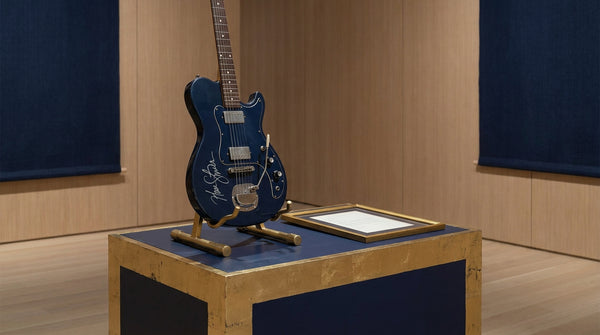
AI-created editorial illustrations in this guide are diagrams, not images of a particular record and not authentication evidence.
Price it from exact comparables

Do not compare the picture disc with a signed Olivia Rodrigo item, a standard black LP, a color variant, or a deluxe two-LP set without adjustment. The closest comparable matches the format, artwork, completeness, condition, and sales channel.
Record the sale date, currency, item price, buyer’s premium, shipping, and whether the transaction actually completed. Ignore unsold asking prices when calculating a market range. A frame may add convenience and shipping cost, but it does not automatically add its retail cost to the collectible.
The official store currently groups several distinct GUTS formats in its GUTS music collection, which is a useful reminder that format and variant must be identified before comparing prices.
Buyer checklist

Before purchasing, confirm:
- the seller shows the correct A- and B-side artwork;
- the title, format, packaging, and barcode details are documented;
- no unsupported signed, numbered, or pressing-size claim appears in the listing;
- condition is described separately for disc, packaging, and frame;
- the mounting method is reversible and does not touch the playing surface;
- completed sales use the same edition and similar condition;
- shipping protects the disc from movement, heat, pressure, and frame breakage;
- the seller offers a written return policy for material misdescription.
The best purchase is not the copy with the loudest rarity claim. It is the copy whose identity, condition, completeness, and presentation can be verified without guesswork.
Frequently asked questions
Is the official GUTS picture disc signed?
The official product page cited in this guide describes an exclusive alternative-artwork 12-inch picture disc with different artwork on its two sides. It does not describe the pictured product as signed. A seller claiming an autograph must provide separate evidence for that exact signed component.
Does “exclusive” mean the pressing was limited?
Not necessarily. “Exclusive” identifies a sales channel or offer; “limited” indicates a stated constraint; “numbered” means individual copies carry numbers. Unless an official product record states a pressing quantity, do not convert exclusive or sold-out status into an edition number.
Can a sealed picture disc be called mint?
Sealed can describe package state, but the disc cannot be fully inspected or play-graded through packaging. Shrink can conceal warping, sleeve scuffs, label issues, or manufacturing defects. Describe it as sealed and separately note visible packaging condition.
Should I play a collectible picture disc?
That depends on the buyer’s priorities. Playback introduces handling, and sound quality cannot be assumed from appearance. If the record is played, use clean equipment, handle it by the edge and label areas, and disclose the result. A visual display buyer may reasonably leave it unplayed.
Does framing increase value?
Framing can increase convenience and visual appeal, but a frame’s retail cost does not automatically transfer to the record. Permanent adhesive or pressure may reduce collector value. A reversible frame that retains all original components is the most defensible presentation.
What photographs should a remote buyer request?
Ask for both disc sides, packaging front and back, barcode and labels, edge profile, angled-light surface images, frame rear, mounts, and all included materials. When an autograph is claimed, add close-ups of the signature, certification label, and the complete signed component.
What should the resale listing call the item?
Lead with artist, album, 12-inch picture-disc format, official alternative-artwork status, condition, packaging, and display. Add “signed,” “numbered,” or “limited to” only when the exact copy and source support those words. That title remains useful even if store availability later changes.
For insurance and future transfer, keep the product-page capture, acquisition invoice, component photographs, and condition record together. A short, complete file is more useful than a long narrative that cannot be tied to the object.
Methodology and disclosure
This guide prioritizes official artist-store descriptions, authenticator databases, and institutional preservation guidance. Gauntlet Gallery’s inventory is used only to identify the product area and is not evidence of edition size or market value. No price estimate is presented because this draft does not include a dated, reproducible completed-sale dataset.
Gauntlet Gallery provides the live framed-picture-disc context that prompted this buyer guide; all edition claims still trace to the official source above.
Editorial image disclosure: Illustrations on this page were generated with Nano Banana for explanatory use. They are not authentication evidence, provenance records, or reproductions of any specific collectible.