How Medicom Toy Releases & Lotteries Actually Work
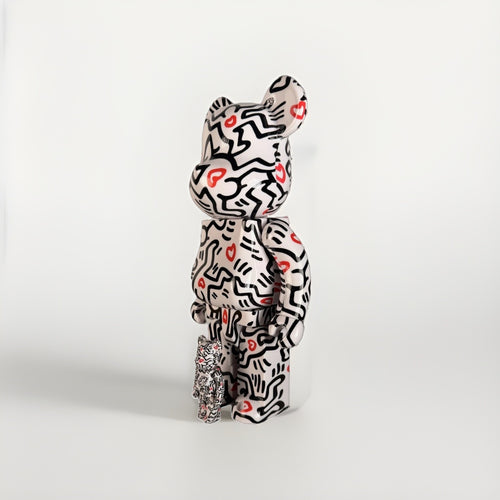
Medicom Toy releases its BE@RBRICK figures through a small number of repeatable methods: open general-retail runs sold first-come-first-served, limited exclusives and brand collaborations, and demand-managed online lotteries (often called ballots or raffles) where you register for the chance to buy rather than buy outright. Because supply is deliberately capped and demand for popular collaborations far exceeds it, many sought-after figures never sit on a shelf at retail — they are allocated by lottery and then trade on the secondary market. Understanding which method a given release uses, and how the lottery mechanics generally function, is the difference between paying retail and chasing an authenticated piece afterward.
This guide explains how Medicom Toy release methods and lotteries work, why demand outstrips supply so consistently, and how collectors buy authentically after a drop has closed — including where an authenticated secondary source like Gauntlet Gallery fits in.
The main Medicom Toy / BE@RBRICK release types
Medicom Toy, the Japanese company behind BE@RBRICK (and KUBRICK before it), uses a handful of distinct distribution methods. Most releases fall into one of the categories below, and the method chosen usually signals how scarce — and how contested — a figure will be.
1. General retail (standard series)
The recurring "Series" BE@RBRICK sets — sold in blind boxes at 100% scale with an assortment of designs, plus regular 400% and 1000% figures — are the most widely available. These move through Medicom's own stores, its online shop, and a network of authorized retailers and select toy and lifestyle shops. General-retail pieces are typically the easiest to buy at or near list price because production is broader and distribution is wider. Even here, though, specific chase figures within a blind-box series (rarer "secret" designs) can be scarce by design.
2. Exclusives and collaborations
The releases collectors chase hardest are usually collaborations: BE@RBRICK figures co-created with artists, fashion houses, musicians, films, and brands. Because a collaboration is tied to a partner and often to a specific moment (an exhibition, a product launch, an anniversary), the run is limited and frequently one-time. Store exclusives and event exclusives work similarly — the piece is available only through a particular retailer, region, pop-up, or event window. Scarcity here is structural: once the window closes, no more are made.
3. Online lotteries / ballots (raffles)
When Medicom or a retail partner expects demand to overwhelm supply, they commonly move a release to a lottery — also called a ballot or raffle. Instead of racing to check out first, you register during an application window for the right to purchase. Winners are drawn and notified, then complete payment; everyone else is declined. Lotteries are used precisely because they are fairer than a pure server-crushing rush and they discourage bots from sweeping stock in seconds. They are the default mechanism for the most hyped collaborations.
4. Regional and store-specific channels
Medicom operates and partners across regions, and availability is not uniform worldwide. A figure sold through a Japan-based lottery may never be offered directly in other markets, or may appear through a different regional partner under different terms, timing, and pricing. This regional fragmentation is one of the biggest reasons a collector outside Japan often cannot buy a given BE@RBRICK at retail at all — and why the secondary market exists.
A note on scale: 100%, 400%, and 1000%
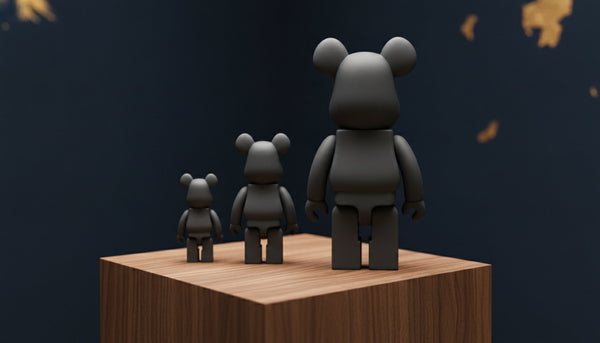
Medicom sizes BE@RBRICK figures in percentages of the baseline 100% figure (roughly the height of a small palm-sized toy). The common tiers are 100% (small, often sold in blind-box series or as a paired set), 400% (a substantial desk-sized figure, one of the most collected formats), and 1000% (a large display centerpiece that stands well over two feet tall). The same collaboration is frequently offered across multiple scales, and the larger the scale, the smaller and pricier the run tends to be. Which scale a figure comes in materially affects both how it was released — a 1000% grail is far more likely to be lottery-allocated than an open-retail 100% blind box — and what it commands later on the secondary market. When you're buying after a drop, always confirm you're comparing the same collaboration at the same scale, because prices are not interchangeable across sizes.
How a Medicom lottery / ballot generally works
Specific rules, dates, and entry limits vary by release and by the retailer running the draw, so treat the following as the general shape of the process rather than fixed rules for any one drop. Always read the official terms for the specific lottery you are entering.
- Announcement. Medicom or an authorized retailer announces the figure, the price, the scale (100%/400%/1000%), and that allocation will be by lottery rather than open sale.
- Application window. A defined period opens during which eligible buyers register their intent to purchase. Registration usually requires an account and valid payment/shipping details. Entering does not guarantee anything — it enters you into the draw.
- Eligibility and limits. Lotteries commonly restrict entries to one per person or per account, may limit quantity to one unit, and can restrict shipping regions. Duplicate or suspicious entries are typically disqualified.
- The draw. After the window closes, winners are selected. The method is generally a randomized selection among valid entrants — think of it as everyone's valid application going into one pool and a capped number being pulled.
- Notification and payment. Winners are notified and must complete purchase within a stated window. Missing that window usually forfeits the allocation.
- Fulfillment. Won pieces ship (or are collected in-store, for event/store exclusives) according to the retailer's terms.
Accuracy note: the odds of winning any specific BE@RBRICK lottery are not published in a way that can be stated as a fixed number — they depend on how many people apply versus how many units are allocated, which changes with every release. For a highly hyped collaboration, effective odds can be very low simply because tens of thousands of collectors may pursue a run of a few thousand or fewer. Treat any "X% chance" claim you see as speculation, not fact.
Why lotteries instead of first-come-first-served?
- Bot resistance. A registration window plus a random draw blunts the automated checkout scripts that would otherwise clear a "buy now" drop in seconds.
- Fairness and reach. A collector on a slow connection has the same shot as one on a fast one, which spreads allocation more evenly across a genuine fanbase.
- Server stability. Spreading entries across a window avoids the traffic spikes that crash a simultaneous open sale.
Practical tips for entering a lottery
None of these improves your statistical odds in a fairly run random draw, but each one keeps a valid application from being disqualified or a win from being forfeited — which is where a surprising number of collectors lose out:
- Register early and completely. Have your account, verified payment method, and shipping address ready before the window opens so a rushed, incomplete entry isn't rejected.
- Follow the one-entry rule. Duplicate accounts or multiple entries are a common reason for disqualification. Enter once, cleanly.
- Confirm regional eligibility. Check that the lottery ships to your region before you enter; some draws are restricted to the release market only.
- Watch the payment window. If you win, you typically have a limited time to pay. Miss it and the allocation is usually released to someone else.
- Use official channels only. Enter through Medicom's own store or a genuinely authorized retailer. "Guaranteed win" services and off-platform entries are how people get scammed.
Why demand consistently outstrips supply
BE@RBRICK scarcity is not an accident of logistics — it is built into how the product line is designed and marketed. Several forces compound:
- Deliberately limited runs. Collaborations and exclusives are produced in capped quantities tied to a partner or moment, then discontinued. Rarity is the point.
- Cross-audience appeal. BE@RBRICK sits at the intersection of art, streetwear, music, and design. A single figure can attract art collectors, sneaker and streetwear buyers, and fans of the collaborating brand or artist all at once.
- Iconic, collectible form. The consistent bear silhouette makes the line endlessly collectible across designs and scales, and the large 1000% figures function as display centerpieces that command attention (and price).
- Global demand, fragmented supply. Worldwide interest meets region-specific releases, so most collectors are structurally locked out of buying a given figure at retail.
The predictable result: for the most desirable figures, the retail lottery is a narrow gate, and the majority of collectors acquire the piece afterward on the secondary market. That is normal for this category — not a sign of a bad buy — provided the piece is authentic and fairly priced.
The role of hype cycles and resale
Because access is gated, a portion of every hyped lottery is entered by buyers who intend to resell rather than keep. That resale layer is part of why sought-after figures appear on the secondary market within hours of a drop, sometimes above list price. For a collector, the practical takeaway is not to moralize about resellers but to plan around them: if you genuinely want a specific figure and don't win the draw, the secondary market is not a fallback, it's simply the market. What matters is buying that secondary piece from a source that has done the authentication and condition work for you, so you're paying market price for a verified figure rather than gambling on an unknown seller.
Primary market vs. secondary market
Understanding the two markets clarifies where and how you'll actually buy.
| Primary market (the drop) | Secondary market (after the drop) | |
|---|---|---|
| Where | Medicom stores/online shop, authorized retailers, official lotteries and event exclusives | Specialist dealers and galleries, collector marketplaces, auctions, resellers |
| Price | Retail list price | Market price — can be above or, for softer figures, at/below retail |
| Access | Limited by lottery odds, region, and timing; often one per person | Open to anyone, anytime, worldwide — no draw to win |
| Main risk | Not winning the allocation; missing the window | Authenticity and condition — the reason to buy from a vetted source |
Neither market is "better" — they solve different problems. The primary market is the only place to pay strict retail, but it gates you behind a lottery and a region. The secondary market removes the gate and lets you buy the exact figure you want on your timeline; the trade-off is that you must manage authenticity and condition, which is precisely where a reputable dealer earns its keep.
How to buy authentically after a drop
If you missed the lottery — or simply want to acquire a figure released before you started collecting — the secondary market is your route. Buying well comes down to sourcing and verification.
Buy from specialist dealers and galleries
A specialist dealer curates, inspects, and stands behind what they sell. For BE@RBRICK specifically, that means confirming the figure matches the exact collaboration, scale, and finish it claims to be, that packaging and any inserts are correct, and that condition is described honestly. An authenticated secondary source removes the guesswork that makes open peer-to-peer marketplaces risky for high-value figures. You can browse authenticated BE@RBRICK figures in our BE@RBRICK collection, and our full catalog of authenticated art and collectibles covers the broader category.
Verify authentication the right way for the category
Authentication expectations differ by artist and product line, and you should never assume one artist's paperwork applies to another. For BE@RBRICK and KAWS figures, verification via TrueCOA is the relevant standard on higher-value pieces. Our BE@RBRICK buyer's guide walks through what to check on a specific figure, and the broader library of collecting buyer's guides covers other artists and categories, each with its own correct authentication chain.
Judge condition and completeness
- The figure: paint, gloss, and finish should match the release; look for scuffs, yellowing, or stress marks, especially on larger 1000% pieces.
- Packaging: original box and any inserts add value and help confirm the release; note any damage honestly.
- Provenance: a clear ownership and sourcing trail from a reputable dealer is worth more than a bargain from an unknown seller.
Understand value before you pay
Secondary prices for BE@RBRICK vary widely by collaboration, scale, edition size, and condition — there is no single "right" price across the line, and figures can appreciate, hold, or soften over time. Rather than anchoring to a headline number, use market context to sanity-check what a specific figure should cost today. Our Financial Insights resource is built for exactly this kind of market context, and the Collector's Hub pulls together the tools and guides that help you buy with a plan rather than on impulse.
Frequently asked questions
How do Medicom Toy release methods and lotteries work?
Medicom Toy releases BE@RBRICK figures through general retail (first-come-first-served at authorized shops and its own store), limited exclusives and collaborations, and online lotteries. In a lottery, you register during an application window for the chance to buy, winners are drawn randomly from valid entrants, and only winners get to purchase. Lotteries are used when demand is expected to exceed supply, because they are fairer and more bot-resistant than an open rush.
What is a BE@RBRICK lottery or ballot?
It is a demand-management method where a retailer or Medicom accepts registrations during a set window, then randomly selects a capped number of winners who are allowed to buy the figure. Entering does not guarantee a purchase — it enters you into the draw. Rules such as one entry per person, quantity limits, and shipping-region restrictions vary by release, so always read the official terms for that specific drop.
What are the odds of winning a BE@RBRICK lottery?
There is no fixed, published odds figure. Your chance depends on how many people apply versus how many units are allocated, and that ratio changes with every release. For heavily hyped collaborations, effective odds can be very low simply because far more collectors apply than there are figures. Treat any specific percentage you see as an estimate, not an official statistic.
Why is it so hard to buy a BE@RBRICK at retail?
Supply is deliberately capped for collaborations and exclusives, demand spans art, streetwear, music, and design audiences at once, and releases are often region-specific. So even a well-run lottery leaves most applicants empty-handed, and collectors outside the release region frequently can't buy at retail at all. The secondary market exists to close that gap.
How do I buy a BE@RBRICK safely on the secondary market?
Buy from a specialist dealer or gallery that inspects and stands behind its pieces, confirm the correct authentication for the category (TrueCOA for BE@RBRICK and KAWS), and check the figure's finish, packaging, and provenance. An authenticated secondary source removes the authenticity guesswork that makes open peer-to-peer marketplaces risky for higher-value figures.
Do all BE@RBRICK figures come with a certificate of authenticity?
No. Authentication practice varies by product line and value. Higher-value BE@RBRICK and KAWS pieces are commonly verified through systems such as TrueCOA, while everyday general-retail figures are validated by packaging, provenance, and dealer trust. Never assume one artist's authentication chain applies to another — check the correct standard for the specific piece.
Buy & authenticate with confidence
Medicom's lottery-driven model means most collectors acquire the BE@RBRICK they want after the drop, on the secondary market — which is completely normal, as long as the piece is authentic and fairly priced. Start with our authenticated BE@RBRICK collection, use the BE@RBRICK buyer's guide to verify the specific figure, and lean on Financial Insights and the Collector's Hub to buy with market context and a plan. As an authenticated secondary source, Gauntlet Gallery exists to get you the exact figure you missed at retail — inspected, verified, and honestly described.