AI-generated conceptual editorial illustration created with Nano Banana. Imagined visual elements explain the essay; they do not document actual releases or gallery inventory.
In this essay
- Pooh brings a history of illustration and animation
- The Pooh and Piglet pack shows how much color can accomplish
- ORIGINAL changes the face and the shirt's smaller details
- Pile fabric changes what surrounds the facial marks
- The ORIGINAL costume is another named Pooh treatment
- Stitch makes an inviting body carry sharper facial shapes
- The Stitch costumes preserve the grin and introduce a wink
- Angel reorganizes a related face through pink and purple
- Lots-O begins as a toy within the story
- Royal Selangor makes fur an explicitly imitated texture
- Three approaches preserve different parts of the character
A small black eye, a rounded nose and a red shirt can make a rigid-looking bear seem gentle before any textured covering is involved. Add a yellow pile-fabric exterior and the same character invites a different kind of attention. Give that character a lustrous, fur-like surface through a gilt treatment and softness becomes something represented through texture and light. Winnie the Pooh's BE@RBRICK releases make these three approaches unusually clear.
Stitch, Angel and Lots-O complicate the comparison. Stitch combines a friendly-looking blue body with pointed teeth and a conspicuous grin. Angel rearranges a related expressive face within pink and purple regions. Lots-O begins as a fictional plush toy, so a collectible bearing his image represents an object that was already a toy within a story. Looking across them reveals how a soft character identity can survive different faces, surfaces and manufactured bodies.
The distinction matters because “soft” can describe several things at once: the impression of a color and contour, a documented covering, or an association carried by the character. These releases are most interesting when those meanings are connected to particular details. A quiet face and a dense covering can both support recognition, but they do different work.
Pooh brings a history of illustration and animation
Disney's 2026 centennial account identifies the anniversary with the 1926 publication of A.A. Milne's original Winnie-the-Pooh book. It also discusses the character's later animation history and the subtle expressions through which animators develop his personality. Book history and animated appearance provide related starting points, while the selected BE@RBRICK titles identify the particular versions being offered.
That distinction is visible within the Pooh group. Some references have a strong yellow-and-red arrangement and a clearly smiling face. ORIGINAL versions use a paler body and smaller facial marks. The character stays recognizable, but the amount of information devoted to expression changes. The adaptation can depend on the familiar clothing and color relationship while allowing a different kind of face to occupy the bear's broad head.
Pooh also has an unusually close relationship with the platform's existing subject. A bear character is moving onto another bear-shaped body. Yet recognition still requires decisions: the proportions, hand shapes and muzzle belong to BE@RBRICK, while the face and shirt identify Pooh. Their shared animal association makes the adaptation feel natural without making the two silhouettes identical.
The shirt is particularly important in maintaining that distinction. Red interrupts a yellow or pale-yellow body at the upper torso, giving the eye a familiar clothing boundary. It is a compact piece of character information, large enough to read before the smaller facial marks. The body can therefore participate in recognition even when the head remains visually restrained.
The Pooh and Piglet pack shows how much color can accomplish
The Winnie the Pooh and Piglet 2PACK announcement specified November 2009 and approximately 70 millimeters for each figure. The title establishes two named characters in one pack. The supplied Pooh reference shows a solid yellow body, dark oval eyes, fine curved eyebrows, a dark nose and an open smile. Red across the upper torso and sleeves represents his cropped shirt.

At this scale, the red-and-yellow division does much of the immediate work. A viewer can register a yellow bear in a red top before examining the exact expression. The face then supplies a more personal reading through the curved brows and smile. The character image operates at two levels: broad color regions establish identity, and smaller dark marks give that identity a particular demeanor.
The red sleeve regions are as useful as the larger chest area. They connect the shirt across separate torso and arm components, allowing the eye to understand one garment around an articulated body. Below that red interruption, yellow continues through the lower torso and legs. The shirt looks cropped because its color stops, leaving the rest of the character's body available beneath it.
This is softness suggested through an image. Rounded features, warm color and a smiling face can create an inviting appearance without a photographed surface needing to look shaggy. The interest is not that the design somehow simulates every property of a plush bear. It preserves a group of cues that make the character feel familiar on a different kind of manufactured form.
The small Pooh face also shows how curves can reinforce one another without becoming identical. Brows arc over the eyes, the nose occupies a rounded central region and the smile bends beneath it. Each contributes a different part of the expression. Their separation leaves yellow visible between the dark marks, so the face does not become one dense patch. The apparent gentleness comes partly from that spacing, as well as from the shapes themselves.
ORIGINAL changes the face and the shirt's smaller details
The Pooh ORIGINAL 100% and 400% pairing was announced for December 2025 release and shipping plans, with approximate heights of 70 and 280 millimeters. MEDICOM explicitly identifies it as an original-work version. Its reference uses a pale cream-yellow body, small dark dot eyes and a central dark nose. The red top includes fine drawn details and a circular central element.

Compared with the more open smile of the 2009 reference, the smaller facial marks leave more of the head as an unbroken pale region. The effect is a different balance between expression and quiet surface. A face can feel distinctive without filling the available muzzle with a large mouth. Small eyes and nose establish a compact center within the much broader bear head.
The shirt adds finer information around that quiet face. Drawn lines distinguish parts of the red area, while the central circular detail provides a small point of attention on the torso. Red remains the main costume field, but it is no longer understood only as a flat block. A few local marks can make the clothing image more articulated without covering the entire figure in pattern.
The two-size configuration makes another comparison possible. One design is repeated at approximately 70 and 280 millimeters, giving its smaller marks different amounts of physical room. The larger figure can make the shirt's linework easier to examine, while the smaller one still carries the broad pale-body/red-top relationship. Both scales depend on the same hierarchy of large fields and concentrated details.
Pile fabric changes what surrounds the facial marks
The Pooh COSTUME PILE FABRIC 400% announcement specified September 2024 release and shipping plans and approximately 280 millimeters. The title and Japanese description explicitly identify pile fabric. The reference shows yellow texture across the bear, with dark curved brows, small eyes, a smooth-looking dark nose and a smiling muzzle. A cropped red short-sleeved shirt occupies the upper torso.

The face now has to remain clear within a more locally varied exterior. The yellow area is no longer encountered only as a broad color field; it also contains many small variations of light and shadow. Dark eyes and brows remain readable because their compact shapes stand out within that surrounding texture. The nose supplies a stronger central form beneath them.
This makes the scale of the marks important in another way. A very fine line could become less prominent beside a visually busy covering. The clear dark facial elements establish points that the eye can locate quickly, while the texture supplies a different kind of detail around them. Expression and surface do not compete equally everywhere. The face remains the place where small bounded shapes have the greatest identifying force.
The shirt preserves a larger boundary within the textured body. Red crosses the chest and upper arms, then stops before the yellow lower regions. The familiar garment remains legible even as the surrounding character exterior changes. This is why the covering adds to the image rather than replacing the need for a recognizable arrangement. Yellow, red, nose, eyes and brows still have specific locations and roles.
The short sleeves provide another useful scale of boundary. Their edges establish where a shirt stops on an arm, while the larger red chest area establishes where clothing sits on the body. The viewer can read one garment through several separated regions. Yellow remaining below and beside red helps distinguish the wearer from the outfit, even when both contribute to the same complete collectible. Costume recognition depends on those gaps as well as the colored areas.
The ORIGINAL costume is another named Pooh treatment
The Pooh COSTUME ORIGINAL 400% notice specified August 2026 release and shipping plans and approximately 280 millimeters. Its reference shows a pale-yellow textured body, small dark eyes and brows, a dark nose and a cropped red top with a central red circular fastening detail. The complete name distinguishes it from both the 2025 ORIGINAL pairing and the earlier PILE FABRIC project.
The pale body and small eyes maintain the restrained quality apparent in the other ORIGINAL reference, while the covering makes the surrounding surface more active. The red top remains a conspicuous interruption across the middle. At its center, the circular detail gives the garment a small organizing point, contrasting with the much larger curved head above it. The figure balances a quiet facial system with a more visibly textured exterior.
Putting the two ORIGINAL references together is useful because it keeps the character treatment relatively consistent while the surface changes. The comparison can begin with the small eyes, central nose and red top, then consider how texture alters the empty-looking regions around them. A covering does not have to invent another face. It changes the setting in which the existing face is read.
Stitch makes an inviting body carry sharper facial shapes
The Stitch 400% announcement specified July 2018 and approximately 280 millimeters. It names Lilo & Stitch as the character context. The reference combines light and mid-blue regions, large eyes, a dark-blue nose and a broad open mouth showing pointed white teeth and a pink tongue. Pink inner-ear areas and a lighter belly add further divisions.
Stitch's face is much busier than Pooh's. Eyes, nose and mouth each occupy a substantial region, with the mouth stretching across much of the lower face. Teeth introduce repeated points within that broad opening. The contrast between rounded body and sharp internal shapes creates part of the character's energy: a soft-looking outline can carry a mischievous or unruly expression.
The blue palette helps keep that busy face connected to the rest of the body. Lighter eye surrounds and belly areas distinguish regions without making them appear unrelated. Pink provides a more localized accent at the ears and within the mouth. The design can therefore sustain several facial details while using a smaller group of body colors to keep the whole figure coherent.
The belly's relative simplicity is important. It gives the eye a quieter region below the face, with a tuft-like graphic linking it to the character image. Toe marks provide smaller accents near the lower edge. Recognition is concentrated above, then distributed more sparingly through the body. The complete image need not carry the face's density across every limb to remain particular to Stitch.
The teeth offer a precise counterpoint to the rounded nose. Several small white points line a broad dark mouth, making repetition visible inside an otherwise expansive facial region. The nose reads as one larger shape, while the mouth contains a group of smaller ones. Together they give the face different levels of detail. The design can remain inviting through its colors and overall proportions while retaining the sharp forms that make Stitch distinctive.
The Stitch costumes preserve the grin and introduce a wink
The November 2025 notices documented separate 400% and 1000% Stitch Costume figures, approximately 280 and 700 millimeters. Both identify Lilo & Stitch: The Series. Disney's official series entry dates that animated program to 2003 and identifies Stitch as Experiment 626. The named series context belongs to these releases rather than an assumed live-action version.
The references show a blue textured exterior around a face with one open eye and one wink, a prominent dark-blue nose and a wide grin containing pointed teeth. Pink remains at the ears, while a pale-blue chest area supplies another major color region. The expressive asymmetry gives the face a different arrangement from the earlier two-eyed reference.
The wink also changes how much detail each side of the face contains. The open eye establishes a dark focal shape; the wink uses a smaller curved mark. A large nose bridges the two, and the broad mouth remains active below. The surface can be visibly textured while the expression still depends on an unequal arrangement of clearly bounded features.
Angel reorganizes a related face through pink and purple
The Angel Costume 400% announcement specified February 2026 release and shipping plans and approximately 280 millimeters. It also names Lilo & Stitch: The Series. The reference shows a lavender-pink textured covering, one open eye and one wink, purple nose details and a broad smile. A lighter pink torso region contains an inverted pale chevron-like motif.
Angel makes a particularly useful comparison with the Stitch Costume 400% because the stated format is the same and several expressive elements are related. The palette changes how those elements sit within the head. Purple nose details remain within a narrower family of pink and lavender tones, while the blue-looking inner mouth creates a more distinct local contrast. A shared expressive structure can support another named character through its surrounding colors and specific details.
The chest gives the comparison another point beyond the face. A pale region establishes a larger field beneath the busy expression, but Angel's chevron-like mark introduces a directional shape within it. Foot-pad accents then repeat purple lower down. The result distributes recognition through head, torso and extremities, allowing the character to remain distinct even within a related costume approach.
Lots-O begins as a toy within the story
The January 2023 announcements documented separate Lots-O Costume 400% and 1000% figures, approximately 280 and 700 millimeters. Both name Toy Story 3 and credit costume production to Megumi Miki of Margaret Bear. That is a specific making credit, attached to these two projects rather than a general statement about every Disney costume figure.
Pixar's own character description presents Lotso as a large pink-and-white plush bear with a purple nose and a strawberry scent. Those properties belong to the fictional toy being described. They explain the importance of the character's plush identity without establishing that the BE@RBRICK has a scent or shares every care instruction in the story's playful product-style description.
In the collectible references, a magenta textured exterior surrounds cream-colored areas at the inner ears, muzzle and belly. Rounded eyes and dark arched brows frame a broad purple nose. The 400% reference adds a curved smile with white teeth and a pink tongue. The muzzle is a particularly important pale field because it separates the central nose and mouth from the stronger surrounding color.
Compared with Pooh, Lots-O gives the nose much greater visual weight. Pooh's smaller dark feature can sit quietly within yellow; the broad purple form becomes one of the main events within Lots-O's face. Cream-colored muzzle areas help hold that prominence in balance. The face has room for a large central feature because other colors define the region around it.
The belly repeats the cream of the muzzle farther down, connecting two major pale regions through a magenta body. This gives the figure a recognizable rhythm even before its smaller facial details are inspected. Its plush association is carried by both the textured-looking exterior and the distribution of character colors. The adaptation represents a fictional toy through another toy form without needing the two bodies to be identical.
The cream inner ears play a related framing role near the top. They break the magenta exterior into smaller regions without introducing another dominant color family. Across the full figure, pale ear interiors, muzzle and belly become separated stations within the stronger ground. A viewer can connect those stations while still giving the face priority. This organization helps the character stay legible when the surrounding texture supplies considerable local detail of its own.
Royal Selangor makes fur an explicitly imitated texture
The Royal Selangor Winnie the Pooh 400% announcement specified April 2026 and approximately 280 millimeters, naming the character's hundredth anniversary. Royal Selangor's own listing for the collaboration gives a height of 27.5 centimeters. Keeping the two stated measurements visible preserves their slightly different level of description within the same named format.
The maker describes a gilt textured finish intended to imitate Pooh's soft fur and places the collaboration within its pewter craftsmanship. Its account also identifies the red shirt and an expression of surprise. This provides a particularly clear third approach to softness: the surface represents fur through a worked texture and lustrous appearance, rather than through the same yellow pile-fabric exterior named in the other project.
The reference shows an overall golden-looking fur pattern, dark brow and eye accents, a rounded dark nose, an open mouth and a textured red shirt. Small changes across the surface can catch light while the larger character features remain clear. The red top continues to divide the upper body from the regions around it, preserving an immediately familiar piece of Pooh's identity.
The comparison with pile fabric is revealing because both surfaces can produce many local variations in light. Their documented treatments differ, and their appearance invites a different reading. Yellow texture can participate in the image of a familiar plush-like character exterior. Gilt texture makes the representation of fur conspicuous through sheen. Softness remains the subject, while the means of suggesting it changes.
The hundredth-anniversary wording adds another layer of specificity. Disney identifies 1926 as the original book milestone; the collectible's 2026 announcement is a later commemorative project. The gilt treatment belongs to this particular object, while the century belongs to the character's publishing history. Their meeting gives the familiar bear a new surface without turning that surface into evidence about how the earliest Pooh toys were made.
Three approaches preserve different parts of the character
The comparisons return to three connected ways of suggesting softness. A graphic image can use rounded features, warm colors and a simple costume boundary. A documented covering can surround those same features with another visible surface. A worked fur-like texture can represent a soft character through a lustrous treatment. The character's expression and color arrangement determine how each approach is understood.
Pooh's relatively quiet face makes small eyes, brows and shirt details consequential. Stitch's grin and pointed teeth create energy within a rounded blue body. Angel changes a related expressive arrangement through pink, purple and chest markings. Lots-O's pale muzzle and broad purple nose maintain the identity of a fictional plush bear. Soft-looking characters do not all need the same expression, nor does texture make their differences disappear.
The BE@RBRICK master index keeps the exact names and configurations attached to these examples. Look back from those details to the faces and body regions: a red top stopping at yellow, a grin beneath a dark nose, a cream muzzle inside magenta, a golden fur pattern around small eyes. Each is a particular solution to making a familiar character feel present within another bear-shaped object.
BE@RBRICK master index: This index is in beta and may contain errors, missing information, or display issues. We’re continuing to review and improve it.
Continue exploring
Browse the BEARBRICK essay library or continue with these related studies.
- Costume BE@RBRICKs: How Fabric Changes Character Translation
- Toy Story BE@RBRICK: Woody, Buzz, and the Toy-Within-a-Toy Problem
- Gremlins and Aardman BE@RBRICK: Texture, Ears, and Stop-Motion Character Design
Primary release and background sources
- Disney celebrates100years ofWinnie thePooh
- Winnie the Pooh & Piglet 2PACK set
- BE@RBRICK Winnie the Pooh (ORIGINAL Ver.) 100% & 400%
- BE@RBRICK Winnie the Pooh COSTUME Ver.(PILE FABRIC) 400%
- BE@RBRICK Winnie the Pooh COSTUME Ver.(ORIGINAL) 400%
- BE@RBRICK STITCH 400%
- BE@RBRICK STITCH COSTUME Ver. 400%
- BE@RBRICK STITCH COSTUME Ver. 1000%
- DisneyAtoZ:Lilo&StitchTheSeries
- BE@RBRICK ANGEL COSTUME Ver. 400%
- BE@RBRICK Lots-O COSTUME Ver. 400%
- BE@RBRICK Lots-O COSTUME Ver. 1000%
- PixarToyStory3characters:Lotso
- BE@RBRICK ROYAL SELANGOR Winnie the Pooh 400%
- RoyalSelangorWinniethePoohBEARBRICK400%,ES8207A
Shop BE@RBRICK
Explore current pieces available from the gallery.
-

BE@RBRICK Shepard Fairey Make Art Not War 400% + 100% Set
$225.00 USD
-

BE@RBRICK The Doors Strange Days 400% + 100% Set
$203.00 USD
-

BE@RBRICK Emotionally Unavailable Gradient Heart 400% + 100% Set
$299.00 USD
-

BE@RBRICK Oasis Noel Gallagher — Knebworth 1996 400% + 100% Set
$110.00 USD
-

BE@RBRICK PAC-MAN × GRAFFLEX × 9090 × S.H.I.P&crew 400% + 100% Set
$110.00 USD
-
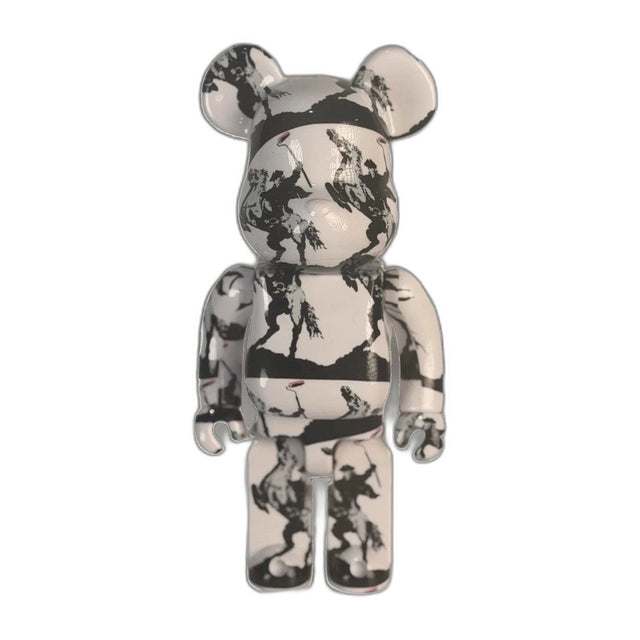
BE@RBRICK Brandalism Highwayman 400% Medicom Toy Sync 2022
$228.85 USD


Browse the collection for current listings.