AI-generated conceptual editorial illustration created with Nano Banana. Imagined visual elements explain the essay; they do not document actual releases or gallery inventory.
In this essay
- The Smurfs' comic-book background
- The Astrosmurf: a bear carrying illustrations
- The larger Astrosmurf and the shape of a story surface
- SMURF 400%: the bear becomes the character
- BLACK SMURF 400%: a different expression and palette
- Minions: individual names within a shared character family
- Overalls, gloves, and the bear's divisions
- Kevin at 400% and 1000%
- Stuart from the back
- Costume versions and visible texture
- Character, story, and shared form
The Smurfs and Minions belong to different comic worlds, yet their BE@RBRICK adaptations raise a shared design question: how can small characters remain distinct when they occupy the same bear body? Blue skin, a white cap, yellow coloring, goggles, and overalls provide recognizable starting points. The more revealing differences appear in how those elements are arranged. One eye and two eyes divide two Minions immediately. A smiling blue face and a sharply drawn dark face give separate Smurf releases different expressions. A comic-themed Astrosmurf goes further, carrying illustrated scenes across the bear instead of simply turning the bear into one character.
The documented releases therefore support more than a comparison of blue and yellow figures. They show several relationships between character and object: a bear presented as a character, a bear carrying a story's artwork, two named characters sold in one pack, and separately announced Costume versions. Keeping those relationships precise allows each project to retain its identity. The same sculpture can support a surprising range of comic personalities and narrative references without making every figure a member of one imagined complete character set.
The Smurfs' comic-book background
The official Smurfs site dates their first appearance to October 23, 1958, in a Johan and Peewit adventure published in the Belgian magazine Spirou. It identifies Peyo's role in building the characters' world. This history matters to a figure carrying comic illustrations because the Smurfs' visual identity includes both characters and published stories. A collectible can adapt a recognizable blue figure, but it can also select images from the storytelling tradition around that figure. Those are related yet different design approaches. Official Smurfs history.
Papercutz's own Smurfs catalog lists The Astrosmurf as one of its book titles and identifies Peyo as Pierre Culliford, the writer and artist behind the Smurfs and Johan and Peewit. The publisher listing provides context for the title used by MEDICOM. It does not establish that the toy includes a book or reproduces every page of an edition. The relevant connection is between a named comic work and the illustrations selected for a three-dimensional object. Papercutz's primary Smurfs catalog.
This distinction becomes clear when comparing a character face with a scene. A face can be mapped onto the bear's eyes, nose, and mouth. A scene has its own figures, setting, and internal scale, which may occupy the bear's forehead or torso without corresponding to the bear's anatomy. The object then carries another picture within its body. The viewer can recognize the platform and read the illustrated material at the same time, moving between sculpture and printed narrative imagery.
The Astrosmurf: a bear carrying illustrations
The Astrosmurf 100% and 400% pair was scheduled for May 2023 at approximately 70 and 280 mm. Its release image uses a light blue ground overlaid with comic-like illustrations: a rocket and helmeted Smurf around the head, additional character imagery on the torso, and another helmeted figure lower on the leg. The Smurfs title appears across the chest. The bearer of the imagery is the bear, while the illustrated Smurfs remain smaller figures within that surface. The Astrosmurf pair.

The head is particularly revealing. It does not simply become a Smurf's face with the bear muzzle substituted for a nose. Instead, the head provides a large curved area for a scene containing its own character. This produces two scales of looking: the large bear head and the smaller illustrated figure on it. The viewer has to shift between them. The adaptation is closer to wrapping an illustrated world around an object than to making a conventional character portrait.
The rocket contributes another kind of shape within that world. Its direction and color can draw the eye across an area that would otherwise be understood as forehead or cheek. The bear's physical features remain underneath, but the printed scene has its own spatial organization. That slight mismatch is part of the design's interest. The viewer can see the sculpture's rounded anatomy and the illustration's independent arrangement without requiring them to align perfectly.
The chest title helps anchor the imagery as one named project. Illustrations distributed across several body parts might otherwise be encountered as isolated scenes. A prominent logotype supplies a point of recognition between them. It gives the viewer a clear connection to the Smurfs while the other regions reward closer inspection. This combines direct identification with more detailed narrative-looking material, allowing the object to function at several viewing distances.
The lower-leg illustration extends that experience beyond the obvious head-and-chest zones. A small scene near a shin asks the viewer to keep looking downward and around the figure. The body becomes a route through several images rather than a single front-facing emblem. This does not make the toy a complete readable comic book. Its distinctive effect comes from selected story imagery occupying unexpected physical regions on a familiar sculpture.
The larger Astrosmurf and the shape of a story surface
The separate Astrosmurf 1000% announcement specifies approximately 700 mm and the same May 2023 schedule. Its release image expands the cyan-blue field, helmeted character, rocket, and other illustrated scenes over the large head and body. The size gives the different images more physical separation. A viewer can encounter the bear as a whole blue object and then approach individual regions as smaller illustrated compositions. The Astrosmurf 1000%.
The joints and separate limbs also interrupt the illustrated field. A scene or shape meets a physical boundary that does not belong to the original rectangular page. The resulting object has a different kind of continuity. Related colors and subject matter connect the body regions even where a picture cannot be seen as one flat uninterrupted panel. This is a particular challenge of adapting comics to BE@RBRICK, and it distinguishes Astrosmurf from the more anatomically mapped character figures that follow.
The illustrated helmet creates an additional boundary inside the bear head. It frames the smaller character's face while the bear's ears and muzzle frame the entire printed scene. The viewer encounters several nested shapes rather than one direct portrait. This is a useful way to understand the design without needing to identify every panel's original page location. The visual interest is already present in the relationship between a character drawn inside a scene and a sculpture carrying that scene on its own head.
SMURF 400%: the bear becomes the character
The separately named SMURF 400% was scheduled for December 2025 at approximately 280 mm. In its release image, light blue occupies the head, torso, and arms, while a white cap-like region and white waist and legs establish the familiar character colors. The face has brows, a curved nose treatment, and an open smile. Clear-looking bear ears flank the white head area. Here, the printed features correspond to the bear's own face and body rather than forming smaller scenes within them. SMURF 400%.

The white cap region is especially important because the underlying sculpture still has round ears. The design must suggest a recognizable head covering without replacing the platform's whole outline. Dividing the surface between white cap imagery, blue face, and clear-looking ear areas allows several readings to coexist. The viewer can recognize the bear's silhouette while seeing a Smurf appearance organized inside it. The character is established through relationships of color and feature placement rather than through a fully rebuilt head.
The white lower region supplies another broad anchor. Together with the cap, it frames the blue body and gives the figure a clear top-and-bottom organization. The smiling face provides a more specific expression within that large color arrangement. This hierarchy helps the figure remain legible quickly: broad blue and white fields establish the character family, while facial lines establish the particular attitude shown in the release image.
The official title is simply SMURF. It should remain that title when discussing this release rather than being assigned another character's name from an unrelated checklist or language version. The visual analysis does not require such a substitution. The page and image already provide a specific object to discuss: a named 400% release with a smiling blue-and-white character treatment and its own scheduled date.
BLACK SMURF 400%: a different expression and palette
The BLACK SMURF 400% was scheduled for March 2026 at approximately 280 mm. Its release image uses a dark face and body with white cap, waist, and leg regions. Sharply angled pale eyes, red pupils, brow lines, and a gritted-looking mouth give the face a forceful expression. The shared platform makes it directly comparable with the blue SMURF design, while the exact release name identifies the project without importing another territory's naming conventions. BLACK SMURF 400%.

The face changes the figure's attitude more strongly than body color alone would. Angled eye shapes and tense brow lines direct attention inward, while the gritted mouth adds a compressed horizontal feature below. The arrangement differs markedly from the open smile and gentler curves of the blue version. Both faces occupy the same bear muzzle and head, so the comparison isolates the work performed by the drawn features.
White regions still provide continuity between the designs. A pale cap area above and pale lower body below frame a darker or blue central character region. This repeated structure allows the two releases to remain related even while their expressions diverge. The adaptation preserves a character-family framework and changes the information within it. That is a more precise comparison than treating the figures as simple color swaps with no effect on personality.
The comparison between the two Smurf faces also shows how small line changes can affect a broad color arrangement. A curved brow can open a face, while sharply descending lines can make the same head feel tense. An open mouth provides one kind of expression; a compressed row of pale teeth provides another. These differences do not require a new sculpted nose or a different ear position. The graphic face supplies much of the personality while the white upper and lower regions preserve the shared character framework.
Minions: individual names within a shared character family
Illumination's official Minions page names Kevin, Stuart, and Bob as separate characters and describes Kevin's leadership and Stuart's rebellious, aspiring-musician character. Its Rise of Gru page specifically identifies Stuart as one-eyed. These primary profiles provide background for keeping the names distinct. They do not mean that every product titled Minions includes all three characters or depicts the same film appearance. The manufacturer title and package description still determine which figures belong to a particular release. Official Minions profiles; Official Stuart profile.
MEDICOM's Stuart and Kevin 2Pack was scheduled for June 2020, with each figure approximately 70 mm, and identifies Despicable Me 3 as its context. The release image shows Stuart with a single central goggle eye and Kevin with two goggle eyes. Both share yellow head and arm regions, blue overall-like clothing graphics, dark hands, and dark footwear. The package joins two individually named characters rather than one character at two sizes. Stuart and Kevin 2Pack.
This is an important contrast with the Astrosmurf pair. A 100% and 400% offering repeats one named design at different sizes. The Stuart and Kevin 2Pack places two different characters at the same stated height. Those structures create different visual comparisons. One invites looking at how a design scales; the other invites looking at how two characters remain distinguishable within nearly identical proportions and a shared palette.
The goggles provide the most immediate distinction. A single circular frame creates one central facial focus. Two frames establish a paired arrangement and introduce a bridge-like relationship across the face. The number and spacing of eyes therefore reorganize the same bear head. The designs do not need to preserve every difference in the characters' original bodily proportions to remain distinct. The face supplies a concentrated set of identifying signals.
Overalls, gloves, and the bear's divisions
The yellow and blue regions establish a strong shared framework. Yellow suggests the character's exposed body, while blue defines the overall-like garment across the torso and legs. Dark hands and footwear create clear ends to the limbs. This mapping works naturally with the platform's separate components. The body can be read as dressed through color and drawn seams even when its anatomy remains recognizably that of BE@RBRICK.
Small overall details add another scale of recognition. Buttons, straps, a chest emblem, and seam-like lines organize the blue field into clothing rather than leaving it as an undifferentiated lower-body color. These marks are secondary to the yellow-and-blue arrangement but reward close inspection. The adaptation depends on both scales: broad color establishes a Minion-like family appearance, while goggles, mouth, and garment details distinguish and refine the named character.
The clear-looking ear edges help negotiate the platform's unusual head shape. Rounded bear ears are not the central identifying feature of the Minions, yet they remain part of the sculpture. Leaving those regions visually less dominant allows the yellow head and goggles to hold attention. The bear silhouette is not fully hidden, but the character's face can establish its own organization within it. This is another solution to the problem seen in the Smurf cap designs.
Kevin at 400% and 1000%
The separately announced Kevin 400% was scheduled for June 2020 at approximately 280 mm. Its release image shows paired silver-colored goggle frames, half-lidded eyes, a slight frown, yellow head and arms, and printed blue overalls. The larger facial area makes the relation between eyelids, pupils, and mouth easier to inspect than in the small two-pack image. The character remains Kevin even though the package structure and physical scale have changed. Kevin 400%.
The separate Kevin 1000% page specifies approximately 700 mm and the same June 2020 schedule. Its image expands the goggle strap, overall buttons, chest emblem, and major color regions. The large form gives the character a substantial physical presence, while the restrained mouth and lids still supply its particular expression. The design shows how a small comic character can occupy a much larger object without requiring a more complex narrative scene. Kevin 1000%.
The eye treatment remains a useful point of comparison with Stuart. The two-eye arrangement can feel broader across the head, while a single central eye concentrates attention around one circular region. Those differences survive the platform's standardized face proportions. Looking at the goggles as shapes first, then the lids and mouth inside them, makes the adaptation's hierarchy clear. Large frame geometry establishes the face before smaller expression marks refine it.
Stuart from the back
The Stuart 1000% announcement also lists approximately 700 mm and June 2020. A rear view in the release images emphasizes hair-like marks on the head, a dark goggle strap, overall straps, buttons, seam details, and dark footwear. This view provides a useful reminder that a character design occupies more than its face. The back can carry information that supports the same identity without repeating the eye graphic. Stuart 1000% rear reference.
The goggle strap is especially revealing from behind. At the front, a goggle frame surrounds an eye and establishes a facial identifier. At the back, the strap becomes a broad horizontal band across the head. The two views give different parts of one accessory a role in the design. This makes the head coherent as a rounded object rather than a face image applied only to a front panel.
The overall straps and buttons perform a related function on the body. They help continue the clothing reading across the back, giving the blue region a constructed garment organization. A seam-like line can describe a boundary or join without changing the sculpture itself. This is a distinctive strength of the rear image: it shows how supporting details sustain a character identity when the principal facial sign is out of view.
Costume versions and visible texture
The Stuart Costume 400% and 1000% announcements specify approximately 280 and 700 mm, scheduled for November 2024, with November 30 named for direct-store release. Their images show textured-looking yellow coverings, blue overall-like garments, one goggle eye, dark hands, and dark feet. Costume is part of the official version name. The visible texture changes the character's presentation while keeping the identifying eye and color arrangement clear. Stuart Costume 400%; Stuart Costume 1000%.
The change of surface is particularly apparent on the head and arms. A smooth printed character region and a textured covering can create different impressions even when they share the same yellow hue. The costume images give clothing and body covering more physical presence within the bear form.
Kevin's Costume pages specify approximately 280 and 700 mm. They retain an original May 2025 schedule in their headings while also naming June 28, 2025 for direct-store release. Those statements should be preserved as an initial schedule and a later specified launch date on the same pages. The images show paired goggles, half-lidded eyes, a downturned mouth, textured-looking yellow areas, and blue overall-like clothing. Kevin Costume 400%; Kevin Costume 1000%.
Stuart and Kevin remain visually distinct within the Costume format for the same reason they do in the earlier designs: the face is organized differently. One eye creates a central focus; two eyes create a paired field. The mouth and lids then refine the expression within each arrangement. Surface texture adds another layer, but it does not replace the character-specific information. The new format preserves a recognizable relationship between face, yellow body regions, and blue garment.
The overall bib provides a useful point of continuity across the Minion formats. It sits in the same central torso region where a shirt emblem might appear, but its straps and adjoining blue areas establish it as part of clothing. The eye can move from the goggles down to this central patch and then along the garment toward the legs. That route helps organize a body whose proportions are different from the screen character's. Clothing becomes a framework linking head and lower body, rather than a decorative detail added after recognition.
Character, story, and shared form
The Smurf and Minion examples reveal three different uses of the platform. The named SMURF and BLACK SMURF figures present character appearances through face and body colors. Astrosmurf carries illustrations from a named comic world across the head and limbs. Stuart and Kevin establish individual identities through eyes, goggles, and clothing details, then revisit those identities in Costume versions. These approaches can coexist within a collection without being treated as one uniform kind of adaptation.
The common bear form makes the differences particularly easy to study. A white cap region and clear-looking ears solve one head-mapping problem; a goggle strap and yellow face solve another. A comic scene ignores the bear's facial anatomy to create a picture within a picture. The separate official titles, size formats, and sources can be followed through the BE@RBRICK Index. What persists across them is the ability of a standardized body to hold both small comic personalities and a larger illustrated world.
BE@RBRICK master index: This index is in beta and may contain errors, missing information, or display issues. We’re continuing to review and improve it.
Continue exploring
Browse the BEARBRICK essay library or continue with these related studies.
- Two-Character BE@RBRICK Packs: How Pairing Becomes Part of the Design
- Sesame Street BE@RBRICK Beyond the Crossover: Fur, Color, and Character Identity
- Costume BE@RBRICKs: How Fabric Changes Character Translation
Primary release and background sources
- Celebrating65Years ofSmurfiness — TheSmurfs
- The Smurfs — Papercutz
- BE@RBRICK The Smurfs 「The Astrosmurf」 100% & 400%
- BE@RBRICK The Smurfs 「The Astrosmurf」1000%
- BE@RBRICK SMURF 400%
- BE@RBRICK BLACK SMURF 400%
- Minions — Illumination
- Minions:TheRiseofGru — Illumination
- BE@RBRICK STUART & KEVIN 2PACK
- BE@RBRICK KEVIN 400%
- BE@RBRICK KEVIN 1000%
- BE@RBRICK STUART 1000%
- BE@RBRICK STUART Costume Ver. 400%
- BE@RBRICK STUART Costume Ver. 1000%
- BE@RBRICK KEVIN COSTUME Ver. 400%
- BE@RBRICK KEVIN COSTUME Ver. 1000%
Shop BE@RBRICK
Explore current pieces available from the gallery.
-

BE@RBRICK Shepard Fairey Make Art Not War 400% + 100% Set
$225.00 USD
-

BE@RBRICK The Doors Strange Days 400% + 100% Set
$203.00 USD
-

BE@RBRICK Emotionally Unavailable Gradient Heart 400% + 100% Set
$299.00 USD
-

BE@RBRICK Oasis Noel Gallagher — Knebworth 1996 400% + 100% Set
$110.00 USD
-

BE@RBRICK PAC-MAN × GRAFFLEX × 9090 × S.H.I.P&crew 400% + 100% Set
$110.00 USD
-
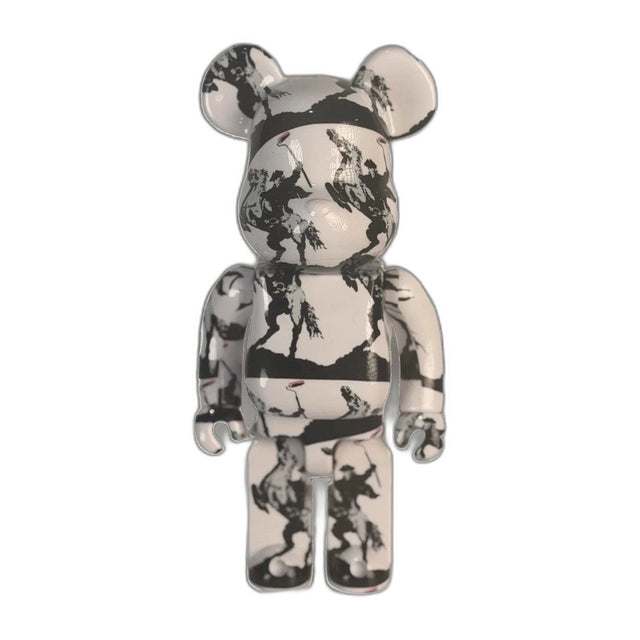
BE@RBRICK Brandalism Highwayman 400% Medicom Toy Sync 2022
$228.85 USD


Browse the collection for current listings.