AI-generated conceptual editorial illustration created with Nano Banana. Imagined visual elements explain the essay; they do not document actual releases or gallery inventory.
In this essay
- A version name identifies a design context
- The 2008 Batman and Joker pair uses broad costume fields
- Damage becomes another layer on a familiar suit
- Begins Suit remains an announced future release
- Harley's animated and Hush versions share a vocabulary
- The Suicide Squad clothing system works differently
- Hush gives Catwoman and Joker different routes to identity
- Phantasm uses concealment and a mask
- A character name can also enter fashion and promotional objects
- The bear makes costume decisions visible
Batman-related BE@RBRICK designs are best understood through their versions before their colors. A blue cowl, a black suit, a red-and-black jester outfit, or a purple jacket can belong to several different visual traditions. Comic stories, animated programs, live-action films, and fashion collaborations organize those familiar elements differently. The manufacturer's exact title and source credit establish the context in which the graphics should be read.
The bear makes this comparison unusually revealing. Its outline remains broadly familiar while a cowl, mask, collar, jacket, or armor pattern gives the same regions new meanings. Batman's own figures provide several examples, while Harley Quinn, Joker, Catwoman, and Phantasm demonstrate how the surrounding Gotham cast uses related problems of costume translation. The important differences concern how the graphics create a character on a fixed body, rather than a retelling of the stories in which those characters appear.
A version name identifies a design context
DC's account of Batman in the 2000s identifies Hush as a story by writer Jeph Loeb and artist Jim Lee. It also places Christopher Nolan's Batman Begins within the character's live-action history. Those are different creative settings, with different ways of representing bodies, clothing, and equipment. A release labeled BATMAN: HUSH and one labeled BEGINS SUIT should therefore be approached as specific interpretations within the wider Batman world. DC's historical account supplies this background.
The Animated Series label requires care too. In a discussion of animation-based action figures, DC distinguishes the original program, which debuted in 1992, from the redesigned characters of The New Batman Adventures in 1997. That history shows why a broad animation connection does not automatically settle every design question. The exact product image and title remain important when comparing a particular collectible. DC's animation-to-figure article makes the distinction.
On the bear, these contexts become visible through a relatively small set of decisions. The face may be exposed, masked, or reduced to a graphic symbol. The torso may carry a flat emblem, a tailored outfit, or armor-like panels. Color can divide costume regions or create an all-over pattern. Each decision gives the platform's existing anatomy another explanation.
The ears are a recurring challenge. Batman's pointed cowl ears, Harley's jester shapes, and Catwoman's feline features do not naturally share the bear's rounded silhouette. A design can incorporate them through printed outlines, color changes, or clear-looking outer regions. The receiving platform remains recognizable while the image supplies another set of character-specific edges.
The 2008 Batman and Joker pair uses broad costume fields
The BATMAN & JOKER BE@RBRICK announcement scheduled for late May 2008 explicitly describes a two-figure set, each approximately 70 mm. In the image, Batman combines a light blue cowl and limb regions with gray body areas, a yellow chest emblem, and a utility belt. Joker provides a strong contrast through green hair, a pale face, and a purple suit. The manufacturer's 2008 pair page establishes the set and approximate sizes.

Batman's arrangement relies on large, legible fields. The cowl identifies the head, gray regions establish the suit's body, and blue on the forearms and lower legs gives the limbs a costume structure. The yellow chest oval and belt provide bright accents near the center. The character can be recognized without every region containing intricate detail.
The belt is particularly effective because it coincides with an existing division between torso and lower body. The platform provides a natural place for that costume boundary. The graphic can therefore make the bear appear dressed while preserving the visibility of its jointed construction. Anatomy and illustration cooperate rather than competing for the same area.
Joker uses another route to recognition. The head carries a facial expression and hair image, while the torso supplies a recognizable suit-and-vest arrangement. His clothing is comparatively human in its structure, so the rounded bear body becomes a support for tailoring cues. The pair contrasts a masked emblem-bearing hero with a face-and-jacket-based character.
The contrast is useful at the small format because each figure has a clear hierarchy. Batman's chest symbol and cowl provide strong identifiers. Joker's pale face, green hair, and purple clothing establish another coordinated system. The set joins two graphic approaches on the same platform without requiring them to use identical amounts or kinds of facial information.
Damage becomes another layer on a familiar suit
The Superman HEAT VISION and Batman DAMAGE two-pack belongs to a different release context. The official announcement describes a movie-ticket package tied to Batman v Superman: Dawn of Justice, with reservations beginning February 1, 2016 and a planned figure handover on July 21, 2016. Each figure is listed at approximately 70 mm. The package's identity is therefore more specific than a generic Superman-and-Batman pairing. The official ticket-and-figure announcement documents that arrangement.

In the release image, Batman's gray suit contains distressed-looking marks and a damaged-looking dark chest emblem, with a gold-colored belt below. The cowl still establishes the head, but the suit surface carries information about condition within the represented image. The costume is recognizable and visibly altered at the same time.
This introduces a distinction between the base costume and a graphic state applied to it. The viewer first needs enough stable information to identify Batman. The disturbed emblem and surrounding marks can then be read as damage within that fictional presentation. A small figure can communicate the idea through selected surface details without reproducing the physical event that caused it.
The companion Superman's heat-vision eyes provide a parallel idea: a familiar character receives an additional named visual state. The two-pack makes those qualifiers central to its identity. Its exact title therefore tells the viewer which differences to examine, giving small facial or surface changes more significance than they would have in an unqualified character listing.
Begins Suit remains an announced future release
As of November 7, 2026, the BATMAN BEGINS SUIT 400% is an announcement for planned release and shipping in March 2027. MEDICOM TOY lists approximately 280 mm and explicitly places the version within The Dark Knight Trilogy. It should be discussed as an announced design at this date, rather than as an already released object. The Begins Suit announcement supplies the schedule and version name.

DC's film page identifies Batman Begins as the 2005 film directed by Christopher Nolan, with Christian Bale among its cast. That establishes the broad screen context without requiring a plot summary to explain the figure. The manufacturer's suit qualifier then narrows the collectible's identity within that film-related world. DC's official film page provides the background.
In the announced image, the black body is organized through armor-like panel graphics, a chest bat emblem, and a gold-colored utility belt. The cowl includes a pale eye treatment, while pointed ear imagery meets the rounded bear ears. Compared with the 2008 blue-and-gray figure, the image gives more emphasis to the impression of equipment and segmented protective structure.
Harley's animated and Hush versions share a vocabulary
The HARLEY QUINN Animated Series 100% and 400% pair was announced for November 2020 at approximately 70 and 280 mm. Its image combines red-and-black costume divisions, diamond motifs, a pale face, and white collar and wrist details. Jester-cowl shapes are mapped across the head and ears. The manufacturer explicitly identifies the animation-based version. The Animated Series pair announcement establishes that context.
The costume makes effective use of the bear's paired anatomy. Red and black can be allocated to opposite regions, while contrasting diamond marks establish local accents. The two arms and legs become participants in a controlled color arrangement. The underlying symmetry of the platform gives the alternating fields a stable structure.
The white collar provides another important boundary. It separates the pale face from the more strongly divided costume beneath, helping the head remain expressive and legible. Wrist trim performs a similar task on a smaller scale. Costume details are therefore not simply decorative additions; they help define where one visual region ends and another begins.
The HARLEY QUINN BATMAN: HUSH 400% was separately announced for December 2025 at approximately 280 mm. Its image retains the red-and-black, diamond, and jester vocabulary, with a domino-mask face and white scalloped collar. The similar broad elements do not erase its distinct Hush title or turn it into the 2020 animation product. The Hush announcement documents the separate release.
The useful comparison asks how the shared elements are drawn and proportioned. A mask can change the amount of pale face visible around the eyes. A smile can alter the expression without changing the jester palette. Collar shapes and the treatment of the cowl can give another emphasis to the same familiar costume components. These local decisions matter within an otherwise related visual system.
The two releases demonstrate why color alone is a weak classifier. Both can be described broadly as red and black, yet the exact named context remains important to understanding the figure. Version identification gives the comparison a defined subject, allowing the viewer to examine the treatment of a shared vocabulary rather than assuming every similar palette names the same design.
The Suicide Squad clothing system works differently
The Harley Quinn 400% scheduled for September 2016 and the separately listed 1000% scheduled for February 2017 carry Suicide Squad rights notices. Their approximate heights are 280 and 700 mm. The release images show blonde hair, contrasting red-and-blue areas, cosmetic-like facial accents, a jacket and shirt arrangement, and light footwear. This is a different clothing system from the jester designs. The 400% page and the 1000% page establish the film-linked products.
The head contributes more individually placed details. Hair graphics, eye-area color, an eyebrow shape, a small cheek motif, and a smile work together to establish the face. The bear's ears can carry the contrasting colors associated with the hairstyle. The design uses them as extensions of the head image rather than treating them as printed jester points.
The torso also has a layered apparel structure. A jacket frames a shirt with lettering, while a belt-like region and differently patterned legs extend the outfit downward. The character is assembled through an accumulation of clothing and styling cues. The picture does not rely primarily on one emblem or a regular diamond field.
This changes the rhythm of attention. The jester costume offers large controlled color divisions and repeated motifs. The film-linked outfit gives the eye several smaller incidents to locate, with the head, shirt, jacket, waist, and legs each contributing a different kind of information. The same platform can support a more uniform costume or a more assembled wardrobe.
The separate size announcements also preserve the release history. The 400% and 1000% were not presented on these pages as a jointly sold mixed-size set. Their similar imagery supports a visual comparison across scale, while the dates and individual listings identify distinct objects within that comparison.
Hush gives Catwoman and Joker different routes to identity
The CATWOMAN BATMAN: HUSH 400% announcement lists approximately 280 mm and a planned January 2026 release and shipping schedule. The image uses a dark catsuit, pale contour lines, a goggle-like face treatment, and red lips. Pointed feline-ear imagery sits within the rounded outer bear-ear regions. The official Catwoman page establishes the version and format.
Her costume is relatively continuous compared with Harley's alternating red-and-black fields. Fine lines divide a dark surface into suit regions, while the head and a circular zipper-pull-like chest detail supply conspicuous accents. The design can suggest a close-fitting outfit through contour drawing instead of many large color changes.
The THE JOKER BATMAN: HUSH 400% was separately announced for February 2026, also at approximately 280 mm. In its image, green hair and brows, a pale face, and a wide grin combine with a purple suit, colored vest, bow tie, and lapel flower. The character is established through face and tailoring details. The Hush Joker page provides the separate release evidence.
The Joker's suit is a useful counterpart to Catwoman's catsuit because it describes a different relationship to the body. Lapels and a vest establish layered clothing around the torso. The catsuit's lines describe a more continuous exterior. Both use small marks to explain clothing, but they ask the viewer to imagine different kinds of structure.
The Hush label connects these figures through a named creative context while allowing their costumes to remain distinct. Shared provenance does not require a shared palette, expression, or garment type. The platform's continuity lets the viewer compare how different character designs use the same head and torso to very different effect.
Phantasm uses concealment and a mask
The PHANTASM Animated Series 100% and 400% pair was announced for December 2024 at approximately 70 and 280 mm. The manufacturer also specifies a December 14 launch through its directly operated shops. The image combines a gray hood-like head treatment, a pale skull-like mask, dark limbs, and a lighter right forearm and hand region. The official Phantasm announcement documents this animation-labeled release.
The pale mask is the dominant point of recognition. Narrow eye slits and vertical mouth lines give it a different expression from an exposed smiling face or a cowl around human-like eyes. The surrounding gray region frames that mask as something enclosed. The bear's head becomes a support for layers of concealment.
The upper torso extends the hood-and-robe impression through printed shading. Dark limbs provide a relatively quiet lower structure, while the contrasting arm region introduces an asymmetry. The design concentrates much of its identity near the head and upper body instead of distributing equal detail across every part.
This makes an instructive comparison with Batman's cowl. Both use a dark surrounding region to define a face-related field, but the resulting impression differs. Batman's cowl can reveal an area of the lower face; Phantasm's mask supplies another surface in front of the character. The difference can be conveyed graphically even when both occupy the same broad sculpted head.
A character name can also enter fashion and promotional objects
The November 2011 BATMAN 100% announcement identifies an approximately 70 mm figure included with Batman underwear. Its release image uses an unusual white head, heart-shaped pink eyes, a black body, and bright emblem, belt, hand, and foot accents. The page establishes a Batman-related apparel package without naming a particular comic or film costume version. The official apparel-inclusion page documents that separate context.
The Harley Quinn × MCM pair announced for February 2025 supplies another kind of fashion relationship. Its image combines red-and-black diamond patterning with monogram emblems and reflective-looking red accents. The manufacturer carries a Joker: Folie à Deux rights notice, while the visible treatment is strongly organized through a fashion pattern. The MCM collaboration announcement identifies the specific project.
These examples broaden the meaning of a character-related figure without replacing the more specific costume comparisons. A promotional apparel object and a monogram collaboration can use the Batman world through different design conventions. Their exact release contexts explain why a familiar character name does not always promise the same kind of screen- or comic-costume translation.
The bear makes costume decisions visible
The Hush connection has a further significance beyond a story title. In its 2022 anniversary discussion, DC explains that Jim Lee's imagery from the book has been used regularly on licensed products. The article also identifies Scott Williams and Alex Sinclair among Lee's collaborators on the work. This places the comic's visual world within a continuing history of image adaptation. The BE@RBRICK titles can be understood against that background without assigning a particular figure to an unverified individual panel. DC's historical Hush discussion supplies that context.
A comic offers a sequence of viewpoints, gestures, and changes of scale. A figure's front has to establish character through a more concentrated arrangement. Catwoman's goggle-like head treatment, Harley's mask and color divisions, and Joker's grin and tailoring each provide a compact solution. The design does not need to carry the whole narrative in order to preserve a recognizable relationship with its named source. Its task is to select and organize enough visual information for the character to remain legible on another body.
The change of medium also alters the place of shading. A printed contour can suggest a seam, a dark region can imply a fold or a garment boundary, and a pale area can separate a face from a surrounding mask. Those conventions remain graphic even when the object itself is three-dimensional. The viewer is reading a volume and a drawing together, which is part of the particular character of the platform.
Phantasm has a related screen context in DC's official listing for Batman: Mask of the Phantasm, the 1993 film directed by Eric Radomski and Bruce Timm. That background can help locate the character within Batman's animation history while leaving the manufacturer's exact Animated Series version name intact. A film title and a collectible's naming convention provide related pieces of context rather than requiring one to replace the other. DC's official film listing documents the screen work.
The hood and mask are especially adaptable to the rounded head because they establish large enclosed fields. A pale mask can remain legible within a darker surround even after the proportions have changed substantially. Joker's expression depends more on individual facial features, while Harley's jester treatment uses strong color divisions around a pale face. Each character offers a different answer to the same practical problem: how to retain an identifiable image when the receiving head has its own unmistakable shape.
Looking at these solutions together reveals why a costume comparison should move beyond the central emblem. The belt may establish a waist, the collar may divide face and torso, the hair may recruit the ears, and a hood may enclose the head. Those relationships can remain meaningful even where a viewer cannot read the smallest lettering or ornament. The major boundaries organize recognition first; smaller details then specify which version or outfit is being presented.
The most useful distinction is between a costume's broad vocabulary and its specific version. Red and black can signal Harley's familiar visual world, but animation and Hush remain separate named contexts. A black cowl and gold-colored belt can signal Batman, while a Begins Suit title establishes a narrower design subject. The qualifier directs attention toward the details that make the comparison meaningful.
The yellow chest oval offers a particularly compact example of continuity. In the 2008 Batman image it sits within a blue-and-gray costume; in the unusual 2011 apparel-associated image it helps retain a Batman connection despite a much less conventional head treatment. An emblem can therefore anchor identity while other regions change dramatically. Its importance is relational: the same small sign has a different amount of work to do depending on how closely the rest of the body follows a familiar costume.
Readers can follow the exact named releases through the BE@RBRICK Index, keeping the March 2027 Begins Suit schedule in view as a future announcement at this essay's date. The figures reward that specificity. Their common outline does not erase the creative differences among comics, animation, film, and fashion; it gives those differences a shared surface on which to become visible.
BE@RBRICK master index: This index is in beta and may contain errors, missing information, or display issues. We’re continuing to review and improve it.
Continue exploring
Browse the BEARBRICK essay library or continue with these related studies.
- Superman, Wonder Woman, and DC BE@RBRICK: Emblems as Character Architecture
- Spider-Man BE@RBRICK: Web Patterns, Eye Shapes, and the Meaning of a Suit Version
- Ultraman BE@RBRICK: Silver Bodies, Color Timers, and Named Heroes
Primary release and background sources
- Batman, a History of Heroics:The2000s
- Batman:The Animated Series:From Animation to Action Figures
- BATMAN & JOKER BE@RBRICK
- BE@RBRICK SUPERMAN(TM)(HEAT VISION Ver.) & BATMAN(TM)(DAMAGE Ver.) 2PACK
- BE@RBRICK BATMAN BEGINS SUIT 400%
- Batman Begins(2005)
- BE@RBRICK HARLEY QUINN (BATMAN The Animated Series Ver.) 100% & 400%
- BE@RBRICK HARLEY QUINN (BATMAN: HUSH Ver.) 400%
- BE@RBRICK HARLEY QUINN 400%
- BE@RBRICK HARLEY QUINN 1000%
- BE@RBRICK CATWOMAN(BATMAN: HUSH Ver.) 400%
- BE@RBRICK THE JOKER (BATMAN: HUSH Ver.) 400%
- BE@RBRICK PHANTASM (BATMAN The Animated Series Ver.) 100% & 400%
- BE@RBRICK BATMAN
- BE@RBRICK HARLEY QUINN×MCM 100% & 400%
- Batman:Hush is Twenty Years Old...And Has Never Looked Better
- Batman:Mask Of The Phantasm(1993)
Shop BE@RBRICK
Explore current pieces available from the gallery.
-

BE@RBRICK Shepard Fairey Make Art Not War 400% + 100% Set
$225.00 USD
-

BE@RBRICK The Doors Strange Days 400% + 100% Set
$203.00 USD
-

BE@RBRICK Emotionally Unavailable Gradient Heart 400% + 100% Set
$299.00 USD
-

BE@RBRICK Oasis Noel Gallagher — Knebworth 1996 400% + 100% Set
$110.00 USD
-

BE@RBRICK PAC-MAN × GRAFFLEX × 9090 × S.H.I.P&crew 400% + 100% Set
$110.00 USD
-
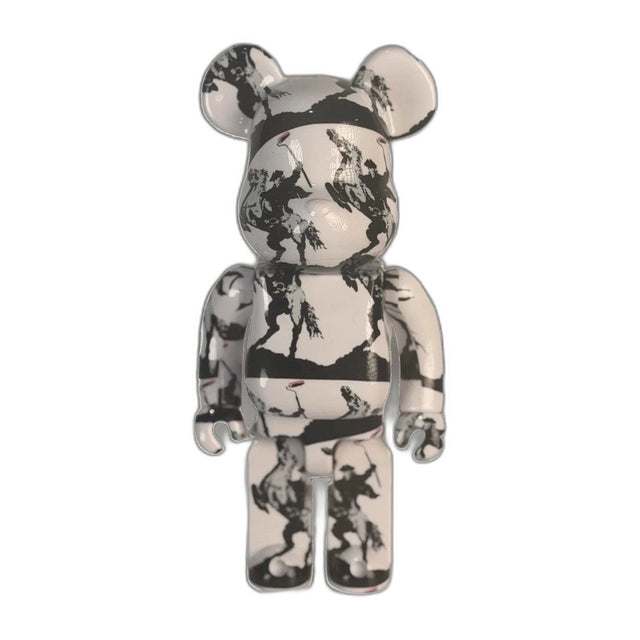
BE@RBRICK Brandalism Highwayman 400% Medicom Toy Sync 2022
$228.85 USD


Browse the collection for current listings.