AI-generated conceptual editorial illustration created with Nano Banana. Imagined visual elements explain the essay; they do not document actual releases or gallery inventory.
In this essay
- A design practice built through association
- Black and pale linework describe a complete outfit
- Glasses, butterflies, and stars create another character
- Color can separate layers of an illustrated wardrobe
- A doll-like face does not require a soft body
- The 50% promotional charm compresses the vocabulary
- Pecola brings a recognizable face and a decorated dress
- Atmos spreads the butterfly graphic across the whole bear
- The photographer collaboration adds a second image language
- Reading clothing through a fixed silhouette
Anna Sui's BE@RBRICK designs often begin by making a hard, rounded figure look dressed. A collar can sit just below the neck joint, a belt can organize the waist, and patterned legs can suggest stockings or boots. The same head can carry button-like eyes, sweeping hair graphics, glasses, a decorative cap, or a character's expression. These details do more than cover a bear with ornament. They give its standardized anatomy another visual explanation, transforming the platform into a small fashion character.
The documented releases also show several ways that this fashion language can meet a partner. A Fujiya collaboration places Pecola in an illustrated outfit. An atmos project spreads butterfly graphics across the entire body. The M/mika ninagawa collaboration adds a photographic image field beneath white decorative drawing. The most useful thread through these objects is the organization of ornament: where detail gathers, how it suggests clothing, and how it shares space with another identity.
A design practice built through association
The Museum of Arts and Design's account of its 2019–2020 retrospective describes Anna Sui's work through research across vintage styles, graphic design, decorative arts, film, and other cultural material. It traces a practice that builds complete visual worlds through garments, accessories, spaces, and collaborators. The historical exhibition included sketches, mood boards, runway material, and furnishings as well as clothing. That context provides a useful way to consider the figures: as small compositions in which several references can be brought together. It does not establish that a particular BE@RBRICK appeared in the exhibition. The museum's retrospective announcement documents this broader practice.
A complete look depends on relationships among details. A collar suggests one kind of outfit, a belt another structural division, and a shoe another endpoint. On a figure, those clues have to work within a body whose proportions are already set. The designer cannot rely on the long fall of a fabric skirt or the shape of a real sleeve. Printed signs must carry some of the information that clothing would otherwise communicate through cut and movement.
This makes the bear an interesting constraint. Its head is large, its torso compact, and its limbs clearly segmented. A printed outfit can acknowledge those divisions or run across them. A bracelet-like band can turn an arm joint into a point of ornament. A boot graphic can explain why the lower leg changes color. The most convincing effects come from decisions about where one visual region ends and another begins.
The figures also keep their toy-like character. Button-style eyes and stitched-looking outlines can suggest a doll or stuffed creature while remaining graphic treatments on the published objects. That suggestion introduces another layer between fashion illustration and the bear's physical form. The result can look dressed, decorated, and personified at the same time.
Black and pale linework describe a complete outfit
The June 11, 2008 Anna Sui BE@RBRICK is listed at approximately 70 mm and credited as designed by Anna Sui. The release image shows a black figure with pale linework describing a collar, buttoned front, small decorative chest motif, belt, cuffs, and leg seams. The ears have a dotted border, and the face carries circular eye graphics with the name below. A large amount of clothing information is conveyed through drawing rather than through additional sculpted garments. The official 2008 page establishes the date, size, and design credit.

The belt is especially effective because the platform already has a waist division. Its printed buckle and repeated small forms give that structural area an apparel meaning. The figure's jointed anatomy becomes part of an outfit rather than a competing system. The linework helps the viewer move from the collar down through the center front to the waist, then toward the legs.
The small chest ornament provides a different scale of detail. It can be read after the larger collar and belt have established the general look. That layered reading gives the compact figure more than one level of visual interest. The first impression is a dressed black bear; closer inspection finds the smaller decorative marks and the careful use of dotted edges.
The November 2020 Anna Sui BLACK 1000% is separately documented at approximately 700 mm, with a planned presentation at 2G OSAKA. In the image, a related arrangement of collar, front closures, ornamental chest detail, belt, cuffs, and ear borders is rendered in gold-colored graphics on black. The larger format makes these relationships physically more expansive without requiring the whole body to become an all-over image. The BLACK 1000% announcement identifies that specific release.

Gold-colored drawing on black also changes the atmosphere of the outfit. Fine borders and ornamental shapes can appear more pronounced as decoration, while the dark ground keeps the overall silhouette coherent. The published appearance supports a comparison of palette and graphic density. It does not require treating the gold-colored areas as a statement about precious-metal content or inferring fabric from the illustrated seams.
Glasses, butterflies, and stars create another character
The Anna Sui 100% scheduled for April 27, 2011 was associated with the Anna Sui Home fifteenth-anniversary special event at Isetan Shinjuku. The manufacturer lists an approximate height of 70 mm. Its image shows white cat-eye glasses on a black head, a pale patterned outfit, wrist details, and repeated motifs across the body. The head's large eyewear shape creates a very different expression from the circular button-like eyes of the 2008 design. The 2011 event release page supplies the documented context.
Glasses are a particularly efficient device on this platform because they occupy the region where viewers expect eyes while retaining the bear's sculpted face. Their shape can imply a look or attitude without adding a realistic portrait. The name below occupies another expressive region, the muzzle, so typography and eyewear share the work of establishing the face.
The body's motifs then make the outfit more animated. Butterflies, stars, dots, dice-like wrist graphics, and heart borders appear at different scales. Some are isolated signs; others establish repeated edges. The difference matters. A single star can act as a focal accent, while a row of hearts can behave like trim around a garment. Ornament contributes to structure instead of simply filling empty areas.
The manufacturer separately lists a 2012 100% scheduled for April 30 and a 400% scheduled for May 2, at approximately 70 and 280 mm. The smaller page places its release at Isetan Shinjuku's Restyle Plus, while the larger page connects it with the Anna Sui Travel event. The images show the familiar glasses and patterned clothing language. Their separate dates and listings make them distinct documented releases even where the broad visual approach is closely related. The 2012 100% page and the 400% event page preserve that distinction.
At the larger scale, the edges around the eyewear and the repeated borders have more room to be inspected. At the smaller scale, the contrast between black and white can establish the overall character quickly. Both rely on a hierarchy of large shapes and small motifs. The outfit is not one undifferentiated pattern: the head, torso, wrists, and lower legs perform different visual roles.
Color can separate layers of an illustrated wardrobe
The May 2013 Anna Sui 100% BLACK / BLUE announcement specifies two variants, each approximately 70 mm. The release image places a black-based character with warm red accents beside a blue-based one. Their illustrated clothing and facial treatments share a broadly doll-like language, yet their palettes create different relationships among hair, headwear, outerwear, and legs. The page lists the variants individually rather than defining the two pictured examples as one mixed-color set. The official BLACK / BLUE page documents that arrangement.

The black-based image uses a pale decorative headpiece above red hair graphics, then returns to pale and dark divisions in the clothing. That high-contrast sequence makes the head especially active. The blue example builds its relationships within a narrower family of cool tones, allowing darker lines to define the outfit. The same broad idea of a dressed character can consequently feel more contrast-driven or more tonally continuous.
The RED & BEIGE releases scheduled for December 2020 provide another useful comparison. Separate 400% and 1000% pages list approximate heights of 280 and 700 mm. In the images, a pale shirt and headwear contrast with black outerwear, red hair, a warm-colored tie, patterned lower legs, and vivid boots. The front is organized like an outfit assembled from several layers, with each layer carrying a different kind of detail. The 400% announcement and the 1000% announcement establish the two formats.
The printed outerwear is important because its opening frames the shirt and tie. The dark side areas become a border around a lighter central field. Lapels, pocket shapes, and small insignia give the outer layer additional definition, while the narrow tie supplies a strong vertical accent. The torso appears more complex than its underlying shape because the drawing establishes several overlapping apparel regions.
The lower legs use a different visual language, with a mesh-like graphic above the bright boot regions. A close grid contrasts with the larger shapes of the jacket and headwear. That change of scale prevents every part of the outfit from competing in the same way. The figure rewards a sequence of attention: large color divisions first, then clothing layers, then the smaller patterned details.
In the RED & BEIGE images, the tie's guitar-like silhouette introduces a small object within a familiar clothing element. The viewer can first read the narrow warm-colored form as a tie, then notice the instrument shape inside it. That double reading adds a music-related visual reference without turning the whole bear into a literal musician portrait. The detail functions at the scale of an accessory, where a relatively small sign can influence the character of the outfit.
The same design also exploits the difference between sharp apparel geometry and the rounded bear. Pointed lapels and the long tie direct attention down the middle of the torso, while curving eye graphics and ear shapes keep the head unmistakably toy-like. The costume does not conceal every trace of its support. Its angles are effective partly because the viewer can see the softer outline beneath them. The larger RED & BEIGE image provides a clear view of these relationships.
A doll-like face does not require a soft body
The circular eyes visible on several designs resemble sewn buttons, while dotted or stitched-looking edges trace the muzzle and ears. These graphics encourage the viewer to imagine a constructed character. Yet the effect can arise from illustration alone. The distinction is productive because it lets the figure evoke a doll's personality while keeping the familiar BE@RBRICK head and joints visible.
The ear borders are a particularly clear example. A dotted line follows a rounded outer region, giving a simple molded form the visual suggestion of an edge that has been worked or joined. On the black designs, that pale border is legible without becoming the dominant mark. On the more colorful designs, it can participate in a larger relationship among headwear, hair, and face.
The face therefore links two kinds of design information. The button-like eyes make the character seem toy-like; the glasses, hairstyle, or cap make it seem styled. Those readings can coexist. Anna Sui's figures often gain their specificity from that combination, presenting a wardrobe and a personality without needing a conventional human face.
The 50% promotional charm compresses the vocabulary
The Anna Sui 50% announcement identifies an approximate height of 35 mm and a promotional distribution beginning February 23, 2011. It connects the object with the fifteenth-anniversary spring fair and purchases of Anna Sui products through the named participating shops and online channels. The image shows a lavender bear with a black name treatment, a circular petal-like chest ornament, and an attached metal-tone link and clasp above the head. The official 50% page documents that small promotional format.
The scale changes how much information can be given equal emphasis. A compact chest medallion and a name on the head can establish a clear identity without the many clothing details seen on the larger designs. The lavender ground helps the object read as one continuous color field, while the dark printed elements provide two small points of recognition.
The clasp also changes the relationship between the figure and its surrounding space. A standing figure presents an upright front supported by its feet. An attached charm can be imagined suspended from the top of the head. In the published image, the hardware occupies a conspicuous area above the silhouette and becomes part of the object's visual presentation.
This small release is therefore more than an incomplete version of a larger dressed character. Its reduced graphic vocabulary suits a different scale and encounter. The medallion acts as a compact decorative sign, the palette supplies immediate coherence, and the attachment places the bear within the visual world of accessories. The design makes its choices through compression.
Pecola brings a recognizable face and a decorated dress
The Anna Sui × Pecola 100% and 400% release scheduled for January 2021 is explicitly described by MEDICOM TOY as a two-figure set, approximately 70 and 280 mm. The page identifies the Fujiya relationship and carries its copyright notice. The image gives the bear a pale face, pink hair, sideward-looking eyes, an extended red tongue, and a dark outfit with purple and white ornament. Character recognition occupies the head while decorative fashion occupies the body. The manufacturer's Pecola announcement establishes the collaboration and set structure.
The face works differently from the button-eyed figures. Its glance and tongue supply a specific expression, so the head is less dependent on accessory-like graphics to establish a character. The hair and ribbons then link that expression with the palette of the outfit. Pink, purple, black, and pale areas organize several distinct levels of recognition.
The torso contains a small furniture-like illustration and a field of spoon motifs. These are unusual details to place within an outfit because they introduce objects into the clothing image itself. The bear carries a character, the character appears dressed, and the dress carries still smaller illustrations. The composition builds interest through these nested scales.
The white collar and cuff areas provide a structural counterweight to the smaller ornament. They tell the viewer where the garment's boundaries lie. Purple near the hem and feet then supplies a low anchor, helping the dark body retain a clear ending. The decorative elements are dense enough to invite inspection, but the major apparel divisions keep the figure from dissolving into an unstructured pattern.
This collaboration demonstrates a different way of sharing authorship from an all-over graphic crossover. The licensed character's face and the fashion-like outfit occupy complementary regions. One does not have to erase the other. The standardized bear form provides enough separation between head and torso for both to remain legible, while the coordinated palette joins them into one design.
Atmos spreads the butterfly graphic across the whole bear
The atmos × Anna Sui pair announced for September 2023 is listed at approximately 70 and 280 mm. Anna Sui's own collaboration page identifies the butterfly graphic as coming from its 2020FW collection and describes the project as a collaboration with atmos pink and MEDICOM TOY. This is a specific link between a fashion collection's graphic language and the bear, rather than an inference from the appearance of butterflies alone. The manufacturer announcement and Anna Sui's release statement support that connection.
In the published image, pink and yellow butterfly linework extends across the head, torso, arms, and legs. The pattern is not confined within an illustrated jacket or dress. It addresses the bear's whole exterior as a continuous field. Large dark lettering occupies the face, while the chest contains a circular clear-looking region with atmos wording and visible elements behind it.
The butterfly graphic changes role through repetition. An individual butterfly can be a small decorative motif within a garment, as in the earlier black-and-white examples. Repeated across the entire figure, it becomes an environment for the form. The viewer registers color and line density first, then separates particular wings or body shapes within the field.
The circular chest region introduces an interruption in that density. It creates a defined area with a different visual character from the surrounding linework, giving the eye another stopping point. The published front is sufficient to describe this effect. It does not, by itself, establish a mechanism, a count of internal elements, or how every unseen part of the body is constructed.
The comparison with the Pecola dress is especially productive. The dress gives motifs a garment-shaped frame. The atmos collaboration allows the pattern to extend beyond an apparel outline, using the bear itself as the frame. Both are decorative, but their organization differs. One decorates a represented outfit; the other makes pattern the dominant exterior identity of the figure.
The photographer collaboration adds a second image language
The Anna Sui × M/mika ninagawa 1000% was announced for December 2020 at approximately 700 mm. Its page identifies a MEDICOM TOY PLUS exclusive and names both collaborating identities. In the release image, saturated floral imagery is overlaid with pale drawing that suggests ruffles, buttons, trim, and other decorative clothing details. The relationship between photographic imagery and graphic overlay distinguishes it from the nonphotographic outfit-led examples discussed above. The official collaboration page establishes the title, format, and release context.
The brief comparison is enough to identify the additional layer of authorship. A floral image field provides one kind of visual information; the pale outfit drawing supplies another. The figure does not ask the viewer to choose between them. Its surface brings them into the same space, allowing a photograph-like field to coexist with the graphic conventions used elsewhere to suggest clothing.
The contrast clarifies Anna Sui's recurring contribution across this group. Decorative borders, costume-like organization, doll-like faces, and motifs can be rearranged around different partners. They remain available whether the underlying image is a dark ground, a character dress, a repeated butterfly field, or highly saturated floral imagery. The broader photographic practice is a separate subject; here it helps define how the fashion vocabulary can share the bear's surface.
Reading clothing through a fixed silhouette
Across the releases, several recurring locations do particular work. The neck area can introduce a collar. The central torso can carry a closure, tie, ornament, or window. The waist can become a belt or a garment boundary. The wrists can carry small bands, and the lower legs can alternate patterned regions with boots. These are not mandatory assignments, but the figures show how readily the platform can support them.
The head has an equally rich range. It can be styled through eyewear, hair, and headwear; personified through button-like eyes; occupied by a licensed character; or absorbed into an all-over pattern. Because the head is visually large, each of these choices has a strong effect on the whole object. A small change in the face can redirect the reading of otherwise familiar body ornament.
Scale then changes the amount of room available for these relationships. A 35 mm promotional charm concentrates identity in a few marks. A 70 mm figure can present a complete small outfit. The 280 and 700 mm formats give borders, layered clothing graphics, and pattern fields a larger physical presence. The documented releases demonstrate several approaches to using that space rather than one simple rule that greater size requires greater graphic density.
Anna Sui's BE@RBRICK archive is most revealing when viewed through these concrete design decisions. Its decorative richness comes from the relationships among motifs, clothing signs, facial expression, and partner imagery. Readers can use the BE@RBRICK Index to locate the named releases and compare those decisions across formats. The familiar bear becomes a useful constant against which a changing wardrobe of graphic ideas can be seen.
BE@RBRICK master index: This index is in beta and may contain errors, missing information, or display issues. We’re continuing to review and improve it.
Continue exploring
Browse the BEARBRICK essay library or continue with these related studies.
- Mika Ninagawa BE@RBRICK: Photography, Flowers, and High-Color Surfaces
- The BE@RBRICK Body as an All-Over Image: Seams, Crops, and Curved Surfaces
- Costume BE@RBRICKs: How Fabric Changes Character Translation
Primary release and background sources
- Museum of Arts and Design Presents Major Retrospective of American Fashion Designer Anna Sui
- BE@RBRICK ANNA SUI
- BE@RBRICK ANNA SUI BLACK 1000%
- BE@RBRICK ANNA SUI 100%
- BE@RBRICK ANNA SUI 100%
- BE@RBRICK ANNA SUI 400%
- BE@RBRICK ANNA SUI 100% BLACK / BLUE
- BE@RBRICK ANNA SUI RED & BEIGE 400%
- BE@RBRICK ANNA SUI RED & BEIGE 1000%
- BE@RBRICK ANNA SUI 50%
- BE@RBRICK ANNA SUI × Pekola 100% & 400%
- BE@RBRICK atmos × ANNA SUI 100% & 400%
- MEDICOM TOY BE@RBRICK atmos x ANNA SUI 100% & 400%
- ANNA SUI × M/mika ninagawa BE@RBRICK 1000%
Shop BE@RBRICK
Explore current pieces available from the gallery.
-

BE@RBRICK Shepard Fairey Make Art Not War 400% + 100% Set
$225.00 USD
-

BE@RBRICK The Doors Strange Days 400% + 100% Set
$203.00 USD
-

BE@RBRICK Emotionally Unavailable Gradient Heart 400% + 100% Set
$299.00 USD
-

BE@RBRICK Oasis Noel Gallagher — Knebworth 1996 400% + 100% Set
$110.00 USD
-

BE@RBRICK PAC-MAN × GRAFFLEX × 9090 × S.H.I.P&crew 400% + 100% Set
$110.00 USD
-
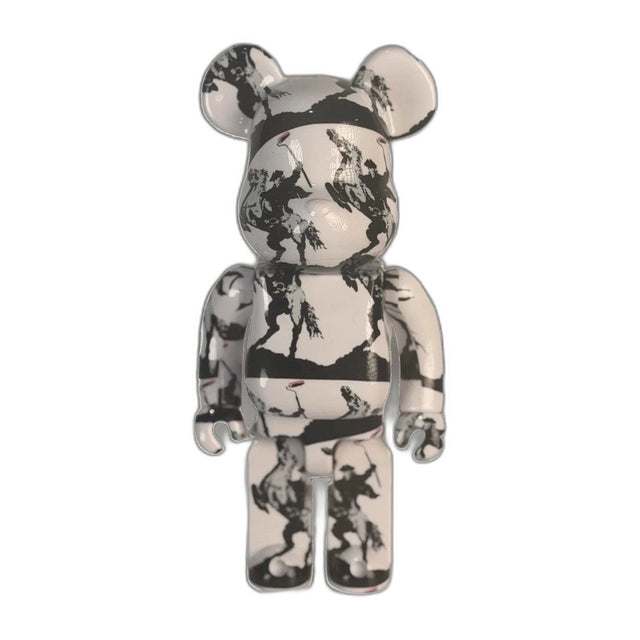
BE@RBRICK Brandalism Highwayman 400% Medicom Toy Sync 2022
$228.85 USD


Browse the collection for current listings.