What Drives Mr. Brainwash Print Values: Motifs, Editions & Demand
You can buy authentic Mr. Brainwash artwork online from established, authentication-first galleries such as Gauntlet Gallery's Mr. Brainwash collection, where every piece is vetted for provenance and studio paperwork before it is listed. The safest online purchases are hand-signed, numbered prints and originals that ship with a Mr. Brainwash studio Certificate of Authenticity, backed by a clear ownership trail and a dealer who stands behind the sale. Once you know where to buy, the harder question is what makes one Mr. Brainwash print worth a few hundred dollars and another worth many thousands.
Mr. Brainwash — the studio name of Thierry Guetta, the figure at the center of Banksy's film Exit Through the Gift Shop — produces a market that confuses collectors because it looks chaotic on the surface. Prices for what appear to be similar images can vary wildly. The variation is not random. It is driven by a small set of legible factors: the motif, the edition structure, whether the work is hand-finished, condition, provenance, and the shifting tide of demand. This guide breaks those factors down so you can read a listing the way a dealer does and understand why the number on the price tag is what it is.
The Short Answer: Six Levers That Set the Price
Before we go deep, here is the framework. Almost every Mr. Brainwash price is a product of six forces working together. When you evaluate a piece, run it against all six rather than fixating on one.
- Motif and image — how iconic and how in-demand the subject is.
- Edition structure — original vs. limited signed/numbered print vs. open edition, and the size of the run.
- Hand-finishing — whether the artist added unique paint, spray, or collage to that specific sheet.
- Condition — the physical state of the paper, ink, and any hand-applied elements.
- Provenance and paperwork — the studio COA, purchase history, and chain of custody.
- Demand and timing — where the broader street-art market and this artist sit in the cycle.
The rest of this article takes each lever in turn, then shows how they interact. We speak in principles and relative ranges rather than fixed prices, because Mr. Brainwash values move with the market and because any specific number is out of date the moment it is written. For a structured method of pricing a specific sheet, pair this with our companion piece on how to price a Mr. Brainwash print using comps, editions, and condition.
Lever One: Motif and Image
Mr. Brainwash built his visual language on appropriation and pop-cultural collage. His most recognizable motifs recur across many works, and the strength of the underlying image is the single biggest driver of desirability. Collectors do not buy a print in the abstract; they buy a specific picture, and some pictures carry far more cultural gravity than others.
A few families of imagery consistently pull the strongest demand:
- Homages to icons — reworkings of Warhol, Basquiat, Banksy, and other art-world figures, which appeal to buyers who already collect in that lineage.
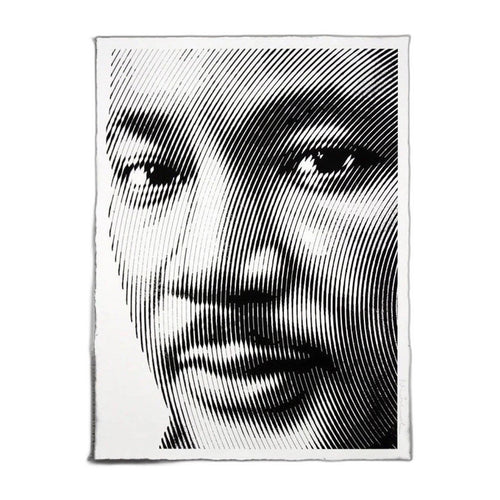
- Music and celebrity portraits — instantly readable faces that photograph well and sell a wall in a single glance.
- Signature symbols — hearts, spray-paint gestures, the "Life Is Beautiful" refrain, and other recurring marks that have become shorthand for the brand.
- Cultural mash-ups — cartoon characters, currency, and consumer imagery recombined in the collage style that defines his studio output.
Two prints can share the same edition size and the same year and still diverge in price purely because one image is more sought-after. When you see a wide gap between two otherwise similar works, motif is usually the explanation. A portrait of a beloved musician who has since passed away, for example, can command a premium that a generic pop mash-up never will, simply because demand for that face is deeper and more emotionally durable.
The practical takeaway: judge the image first. If a motif leaves you cold, it will likely leave the next buyer cold too, and thin resale demand is the quiet enemy of value. To see how the strongest images translate into shoppable inventory, browse the current Mr. Brainwash collection and note which subjects recur among the pieces galleries choose to carry.
Lever Two: Edition Structure
Nothing separates Mr. Brainwash values more sharply than what you are actually buying. The studio produces work across a spectrum, and the format sits at the heart of the price. Understanding this spectrum protects you from paying original-level money for an open-edition poster — or from overlooking a genuine bargain.
| Format | What it is | Relative value driver |
|---|---|---|
| Original / unique work | A one-of-a-kind painting or mixed-media piece, often large-scale | Highest tier; scarcity is absolute (edition of one) |
| Hand-finished multiple (HPM-style) | A print base with unique hand-applied paint, spray, or collage | Premium over a plain print; each sheet is one-of-a-kind |
| Signed & numbered limited print | A limited run, hand-signed and numbered, usually with studio COA | Mid-tier; value scales inversely with edition size |
| Signed, unnumbered print | Signed but without an edition number | Below numbered editions; harder to place within a run |
| Open edition / poster | Unlimited or large print run, often unsigned | Entry tier; decorative value, limited resale upside |
Two rules follow from this table. First, scarcity compounds: a smaller numbered edition of the same image will, all else equal, outperform a larger one, and an original will outperform any print of the same subject. Second, the label matters less than the reality. Terms like "limited edition" are used loosely across the poster market, so verify the actual run size and confirm hand-signing and numbering rather than trusting a marketing phrase. For a full breakdown of these categories and how to tell them apart in a listing, read Mr. Brainwash originals vs prints vs open editions: what you're buying.
Why edition size matters more than it looks
Collectors often underestimate how strongly edition size bends value. An edition of 50 and an edition of 500 of the same image are not "roughly comparable prints." They are two different assets. The smaller run has structural scarcity — there are simply fewer sheets that can ever come to market — which supports both the initial price and the resale floor. When you compare two listings, the numerator on the fraction (your specific number, like 12 of 50) is largely a matter of taste; the denominator (the total run) is a matter of economics.
Lever Three: Hand-Finishing and Uniqueness
Mr. Brainwash's studio frequently releases prints that are then individually embellished — sprayed, splattered, hand-painted, or collaged — so that no two sheets are identical. These hand-finished multiples occupy a valuable middle ground between a plain edition print and a true original. Because each one is unique, they resist the direct comp comparison that keeps ordinary edition prints anchored to a market price, and that uniqueness typically supports a premium.
When you evaluate a hand-finished piece, look at:
- Extent of the hand-work — a few accents read differently from an all-over intervention that transforms the sheet.
- Quality of the intervention — does the hand-finishing enhance the image or fight it?
- Documentation — hand-finished status should be reflected in the studio paperwork and the listing description.
The caution here is symmetrical: because hand-finishing is where uniqueness lives, it is also where misdescription can creep in. Confirm through the studio COA and the seller's documentation that any "hand-embellished" claim is genuine and not a plain print described optimistically. A reputable gallery will state plainly which elements are printed and which are hand-applied.
Lever Four: Condition
Works on paper are fragile, and condition can move a Mr. Brainwash value by a wide margin. Because much of his output is large-format and often unframed at the point of sale, it is especially exposed to handling damage. Condition is the lever most within a seller's control and the one buyers most often overlook until it is too late.
The condition factors that matter most:
- Paper integrity — creases, tears, soft corners, and edge wear all subtract value; large sheets crease easily in transit.
- Surface and ink — fading from light exposure, scuffing, and abrasion to hand-applied paint.
- Foxing and staining — moisture spots, mat burn, and discoloration from poor storage or acidic framing.
- Restoration — professional conservation can stabilize a piece, but undisclosed restoration is a red flag.
- Framing history — acid-free, UV-protective framing preserves value; cheap framing can actively damage a sheet.
For a limited numbered print, condition determines where your specific sheet lands relative to the comparable sales for that edition. A crisp, well-stored example sits at the top of its range; a creased or faded one sits well below, and may be hard to resell at all. For unique originals and hand-finished pieces, condition is even more decisive because there is no identical replacement — damage to a one-of-a-kind work is permanent. Always ask for high-resolution images in raking light and, where the value justifies it, a formal condition report before you buy.
Lever Five: Provenance and Paperwork
Provenance — the documented history of who owned a work and how it moved to market — is both an authentication tool and a value driver. For Mr. Brainwash specifically, the studio issues Certificates of Authenticity, and these are often associated with a thumbprint or studio mark. We describe this in general terms deliberately: the exact format of studio COAs has varied over the years, so the presence of paperwork should be verified with the studio's documentation rather than assumed to match any single template.
Strong provenance does several things for value at once:
- It removes authentication risk, which buyers pay a premium to avoid.
- It supports resale, because the next buyer inherits the same clean trail.
- It anchors the piece in the market, connecting it to a purchase date, gallery, or event.
Conversely, a work with no COA, no purchase history, and no clear ownership trail carries a discount — sometimes a steep one — because the buyer is absorbing the risk that the studio cannot help resolve later. The paperwork is not a formality; it is part of what you are buying. This is where a dealer's own authentication standard matters. Gauntlet Gallery backs applicable pieces with its house program, TrueCOA, which layers a verifiable digital record on top of the artist's own documentation. That house standard is not a substitute for the studio's authentication — it is an additional, checkable layer that travels with the piece.
To understand how a serious buyer assembles and checks a paper trail, and why it protects resale value, spend time with the Collector's Hub, which lays out the trust and authentication standards applied across the gallery.
Lever Six: Demand, Timing, and the Market Cycle
The final lever is the one no single piece controls: the state of demand. Mr. Brainwash sits within the broader street-art and pop-art market, and that market moves in cycles driven by attention, exhibitions, media, and the general appetite for contemporary editions. A motif that is quiet for years can surge when the artist mounts a major show or when a celebrity connection puts a face back in the news.
Practical implications for value:
- Timing affects both buying and selling. Buying into a hype spike and selling into a lull is the classic way to lose money on an otherwise sound piece.
- Liquidity varies by tier. Iconic images in small editions change hands readily; obscure motifs in large runs can sit.
- Broader tastes shift. The health of the whole street-art category — Fairey, Invader, Banksy, KAWS, and their peers — influences where collector dollars flow, and Mr. Brainwash rises and falls partly with that tide.
None of this means you should try to time the market perfectly; it means you should recognize that any single price is a snapshot within a moving system. The most durable values cluster where the other five levers are all strong — iconic motif, small edition or unique work, clean condition, solid paperwork — because those pieces hold up best when demand cools. For a wider view of how price tiers work across street art generally, the gallery's financial insights resources put Mr. Brainwash in context alongside the rest of the category.
Understanding the Mr. Brainwash Brand and Why It Divides Collectors
To read this market clearly, it helps to understand why Mr. Brainwash provokes such strong reactions — because those reactions feed directly into demand. Thierry Guetta emerged from Banksy's 2010 documentary as a lightning rod: critics dismissed the work as derivative pastiche, while a large and enthusiastic collector base embraced its accessibility, scale, and unabashed pop energy. That split is not incidental to the market; it is the market. The skepticism keeps some serious contemporary buyers away, which can moderate top-end prices, while the popular enthusiasm creates deep, resilient demand for the strongest images.
For a collector, the practical consequence is that Mr. Brainwash rewards selectivity more than most artists. A discerning buyer who concentrates on the best motifs, smallest editions, and cleanest examples is buying into the durable core of the demand curve, not the froth around it. The froth — mass posters, generic mash-ups, works marketed harder than they are made — is where casual buyers overpay and where resale disappointment lives. Knowing which side of that line a given piece falls on is the single most useful skill in this market, and it is a skill that comes from applying the six levers consistently rather than reacting to a strong image or an aggressive listing.
How Mr. Brainwash Compares to His Street-Art Peers
Value never exists in isolation, and it is useful to situate Mr. Brainwash against the artists collectors most often buy alongside him. His editions tend to be more loosely structured than the tightly documented print programs of some peers, which is precisely why format verification matters so much here. The comparison also clarifies where his value comes from.
| Consideration | Mr. Brainwash | Typical street-art peers |
|---|---|---|
| Edition documentation | Studio COA (often with thumbprint or mark); format has varied over time | Often standardized numbering and, for some, dedicated authentication bodies |
| Output volume | High and varied, spanning originals to open editions | Ranges widely; some artists run tightly limited programs |
| Hand-finishing frequency | Common; embellished multiples are a core part of the output | Present for many (e.g. HPM prints) but often more tightly defined |
| Price entry point | Wide, from affordable posters to high-value originals | Varies by artist and demand tier |
The takeaway is not that one artist is "better" than another, but that Mr. Brainwash's looser edition structure places more of the authentication and format burden on the buyer. That is a reason to lean harder on provenance and on dealers who verify it, not a reason to avoid the artist. Collectors building a mixed street-art wall often pair his bold, large-format images with tighter-edition names; the gallery's broader pop-art collection shows how those pieces sit together, and the Collector's Hub explains the authentication standard applied across all of them.
How the Levers Interact: Reading a Real Listing
In practice, value is never one lever — it is the product of all six, and the interaction is where judgment comes in. Consider two hypothetical listings for the same iconic portrait:
- Listing A: signed and numbered from an edition of 50, hand-embellished with spray accents, pristine condition, studio COA present, sold originally through a known gallery. Every lever points up. This is a top-of-range piece and will resell readily.
- Listing B: the same image but an open-edition poster, unsigned, with a soft crease and no paperwork. Several levers point down. It has decorative value and an entry price, but limited resale upside.
Same picture, very different assets. The image alone told you almost nothing; the edition structure, hand-finishing, condition, and paperwork told you everything. This is exactly why a scan of the motif is only step one. When a price seems surprisingly high or surprisingly low, walk the six levers and the explanation almost always reveals itself.
A quick self-check before you buy
- Is the motif one you — and the next buyer — would genuinely want?
- What exactly is the format: original, hand-finished, numbered print, or open edition? What is the run size?
- Is any hand-finishing real and documented, or is a plain print described optimistically?
- What is the true condition, verified with detailed images or a condition report?
- Does the piece carry a studio COA and a clean ownership trail?
- Where does the market sit right now, and are you comfortable holding through a lull?
Where Value Is Most and Least Durable
Pulling the levers together, some generalizations hold reliably. Value tends to be most durable in unique originals and small-edition, hand-finished works of iconic subjects in excellent condition with full paperwork. These pieces have structural scarcity, emotional pull, and clean authentication all at once, so they hold up best when demand softens and appreciate most when it returns.
Value tends to be least durable in large open editions of generic motifs, unsigned posters, and works with condition problems or missing documentation. These can be perfectly enjoyable to own as decor, and there is nothing wrong with buying them for that reason — but they should be priced and understood as decorative objects, not as pieces with meaningful resale upside.
The middle ground — signed, numbered prints of good images in sound condition — is where most collectors spend their time, and where careful comparison pays off. Within that band, edition size, condition, and paperwork are the tiebreakers that separate a strong buy from an ordinary one.
Buying Safely Online
Because Mr. Brainwash is widely reproduced and heavily marketed, the online market carries more noise than most. Protect yourself with a few habits:
- Buy from authentication-first sellers. Favor galleries and dealers who vet provenance and state clearly what documentation accompanies each piece.
- Insist on paperwork. A studio COA and a clear ownership history should be present or explained before you commit.
- Verify the format. Confirm whether a piece is an original, hand-finished, a numbered print, or an open edition — do not rely on the word "limited" alone.
- Scrutinize condition. Ask for raking-light images and, at higher price points, a formal condition report.
- Compare before you commit. Use recent comparable sales to sanity-check the asking price for that edition.
For the fuller trade-offs between purchase channels — auction houses, galleries, and open resale marketplaces, with their different fees and risks — read our companion guide on buying Mr. Brainwash: auction vs gallery vs resale. And when you are ready to look at vetted inventory, the Mr. Brainwash collection and the broader Mr. Brainwash buyer's guide are the two best places to start.
Conclusion
Mr. Brainwash print values only look chaotic. Underneath, they follow a legible logic: a strong motif, a scarce edition or unique format, genuine hand-finishing, excellent condition, clean provenance, and favorable demand all compound to lift value — and the absence of any one of them pulls it back down. Learn to run a listing against those six levers and you will stop being surprised by prices and start understanding them. Buy where the levers align, insist on the paperwork, verify the format and condition, and you will build a collection that holds its value rather than one that merely fills a wall.