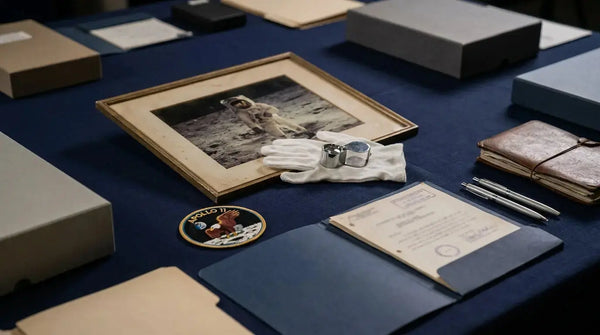
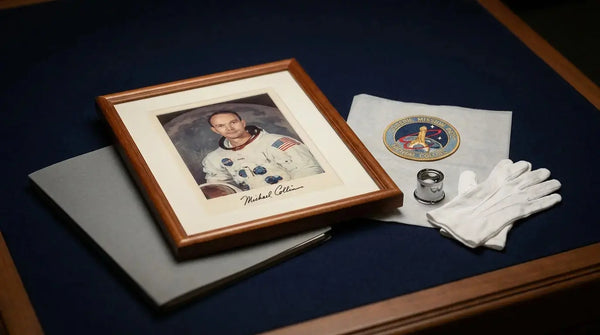
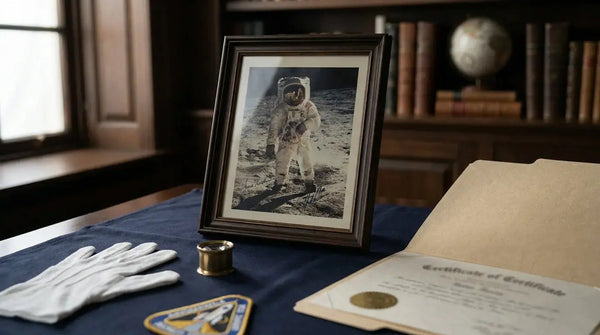
For a Neil Armstrong signature, match the named authenticator’s opinion and identifier to the actual object, signature and provenance. Compare dated completed sales for the same object type, condition and signing format; neither two preferred issuers nor a fixed authentication premium establishes value.
Why Neil Armstrong Signatures Occupy a Category of Their Own
There are few autographs in the entire collectibles market — across sports, entertainment, politics, and history — that carry the weight of Neil Armstrong's name. On July 20, 1969, Armstrong became the first human being to set foot on the Moon. That singular fact defines his legacy and anchors an autograph market that is structurally unlike almost any other.
Armstrong stopped signing publicly around 1994. He passed away on August 25, 2012. Those two dates together define the hard ceiling on authenticated supply. Every genuine hand-signed Armstrong piece that exists in the world today already existed in 2012. The market has absorbed that supply steadily in the years since, with the finest examples migrating into permanent institutional and private collections. What remains in active circulation grows rarer and more valuable with each passing year.
The pattern is consistent: documented, authenticated Armstrong material appreciates. Undocumented material — regardless of seller assurances — carries risk that no collector should accept in this category. Compare like-for-like signed objects or artifacts with matching mission association, signer, condition, authentication and provenance; a category-wide rate or median mixes different objects.
The Forgery Problem Is Severe and Ongoing
Armstrong material requires careful signature and provenance research. An unscoped online forgery estimate does not measure the risk of a particular object; inspect the actual signature, supporting documents and any named specialist’s opinion.
The forgery landscape has two primary components:
Autopen Items Mistaken for Hand-Signed
In the years following Apollo 11, Armstrong received overwhelming fan mail volume. His office used an autopen — a mechanical device that traces a template of a signature — to respond to a portion of this correspondence. Autopen examples are mechanically reproduced and carry no collector value. They are not forged in the traditional sense, but they are not hand-signed, and they have circulated in the market for decades, sometimes unknowingly and sometimes not.
PSA and JSA examiners are trained to distinguish autopen traces from genuine hand-signed examples. The mechanical consistency of autopen strokes — perfect repeatability with no pressure variation — is detectable under examination. This is one of the primary services authentication provides in this category.
Hand-Forged Examples
The current generation of skilled hand forgers has studied Armstrong's signature extensively. Well-executed modern forgeries are convincing to casual examination. They require professional comparison against known exemplars across multiple time periods and careful examination of pen pressure, ink characteristics, and substrate. This is work that PSA and JSA are equipped to do — and that private buyers are not.
The rule is absolute: never purchase a Neil Armstrong signature without a PSA or JSA certificate. The market premium for authenticated pieces reflects the certainty they provide, not simply prestige.
Signature Characteristics: What a Genuine Armstrong Looks Like
Understanding signature characteristics is valuable context, even for buyers who correctly require authentication. Armstrong typically signed as "Neil A. Armstrong" — the middle initial with a period is a consistent marker and a key authentication reference point across his signing career.
He most commonly used black or blue ballpoint pen. The signature shows a confident, moderately flowing hand. Natural variation exists between his NASA-era signings (mid-1960s through early 1970s), his post-NASA public life signings (1970s–1993), and the relatively rare examples from his final years. Authentication services cross-reference these time-period exemplars to verify consistency.
Common forgery tells — though again, professional examination is required — include inconsistent pen pressure, hesitation marks within strokes, and incorrect letterform proportions in the "Neil" first name and the "Armstrong" descent.
Authentication Standards: PSA and JSA
Two authentication bodies are accepted as standards for Neil Armstrong autographs at the highest levels of the market:
PSA (Professional Sports Authenticator) — The largest and most widely recognized authentication service in the collectibles industry. PSA offers both certification (with encapsulation in a tamper-evident slab and a numeric grade from 1–10) and LOA (Letter of Authenticity without encapsulation). PSA-graded Armstrong pieces command the highest premiums at major auction, particularly at grades of 8 and above.
JSA (James Spence Authentication) — Equally respected in the space memorabilia and historical autograph community. JSA full LOA is the standard for dealer transactions and private sales. JSA sticker authentication (without a full LOA) is lower-tier and less commanding at auction; always prefer the full LOA format for Armstrong material.
This premium reflects genuine market utility — the authentication removes the dominant source of risk in this category.
Current Market Values: What Authenticated Armstrong Signatures Are Worth
Prices below reflect authenticated examples with PSA or JSA certification. Ungraded examples trade at substantial discounts and carry significant risk.
| Item Type | Condition / Notes | Authenticated Value Range |
|---|---|---|
| Signed 8x10 Photograph | PSA grade 8+, subject-dependent (Moon walk, Apollo 11 crew) | $1,500 – $4,000 |
| Signed Documents & First Day Covers | Official NASA covers, government documents, JSA or PSA LOA | $800 – $2,500 |
| Signed Books | Inscribed or uninscribed, JSA full LOA preferred | $600 – $1,800 |
| Signed Mission Patches & Flags | Apollo 11 patches, American flags; provenance critical | $2,000 – $8,000+ |
| Signed Crew Items (Armstrong + Aldrin + Collins) | Complete Apollo 11 crew; maximum premium category | $8,000 – $25,000+ |
| Signed Lithographs & Limited Edition Prints | Official NASA or artist-authorized editions, PSA/JSA | $1,200 – $3,500 |
Premium Drivers That Push Values Higher
Within each category, several factors consistently command premiums above the ranges above:
- Uninscribed examples — Armstrong frequently inscribed pieces ("To John, Best Wishes..."). Uninscribed pieces appeal to a broader collector base and trade 15–30% higher.
- Apollo 11 mission-specific imagery — Photographs depicting the Moon landing itself, EVA activity, or the lunar module command significantly higher prices than generic astronaut portraits.
- Clean provenance chains — Documented TTM (through-the-mail) correspondence chains with original envelopes, or event provenance from documented signing sessions, add substantial confidence and value.
- Complete Apollo 11 crew signatures — Items signed by Armstrong, Aldrin, and Collins together represent the pinnacle of the category and trade in a market segment of their own.
Buying with Confidence: What to Demand Before Purchase
Gauntlet Gallery's acquisition standards for Armstrong material are non-negotiable. Every piece in our space memorabilia collection has been reviewed against the following criteria:
- PSA or JSA full certification required — Not sticker-only, not dealer COA, not photo-matched. PSA slab or JSA full LOA.
- Provenance documentation where available — Original envelopes, event programs, or signing session records materially strengthen a piece's position.
- Autopen screening — Specific examination of stroke consistency and repeatability markers before acquisition consideration.
If you are evaluating a piece outside a gallery context, apply the same standard. Walk away from any Armstrong autograph offered without PSA or JSA documentation — the forgery rate in this category makes that a sound rule with no exceptions.
The Long-Term Investment Case
Armstrong's place in human history is not subject to revision. The Apollo 11 mission of July 1969 was one of the most consequential events of the twentieth century, and Armstrong's role as the first person to set foot on the Moon is a permanent historical fact. That permanence anchors demand in a way that entertainment or sports autographs cannot match.
Supply is structurally constrained and declining. Armstrong stopped signing in 1994 and passed in 2012. The total authenticated inventory available to collectors shrinks annually as the best examples are absorbed into permanent collections. New supply — genuine authenticated supply — does not enter the market.
For collectors with a 10-year horizon and a disciplined authentication standard, this category has historically rewarded patience.
Gauntlet Gallery specializes in authenticated space memorabilia with full PSA and JSA documentation. Browse our current space collection — including signed astronaut photographs, mission items, and crew-signed Apollo pieces — at gauntlet.gallery/collections/space-memorabilia .
Shop Apollo 11
Explore current pieces available from the gallery.
-
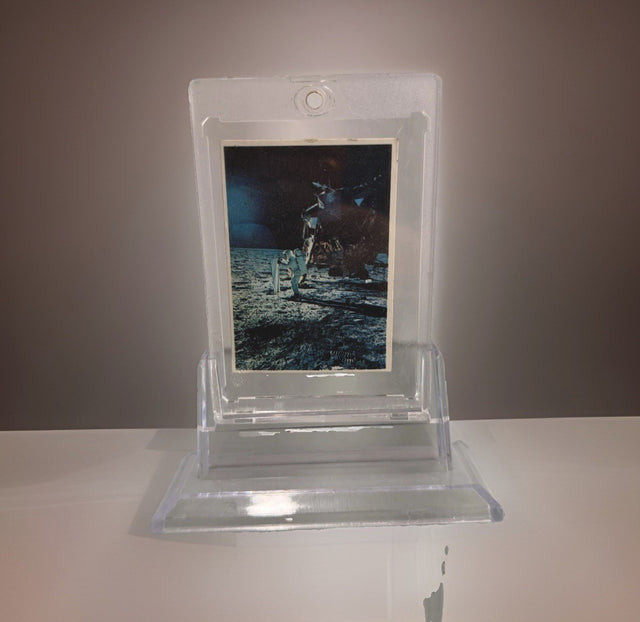
1969 Space Candy Buzz Aldrin Apollo 11 On The Moon Card #19 Taylor-Reed Display
$59.00 USD
-
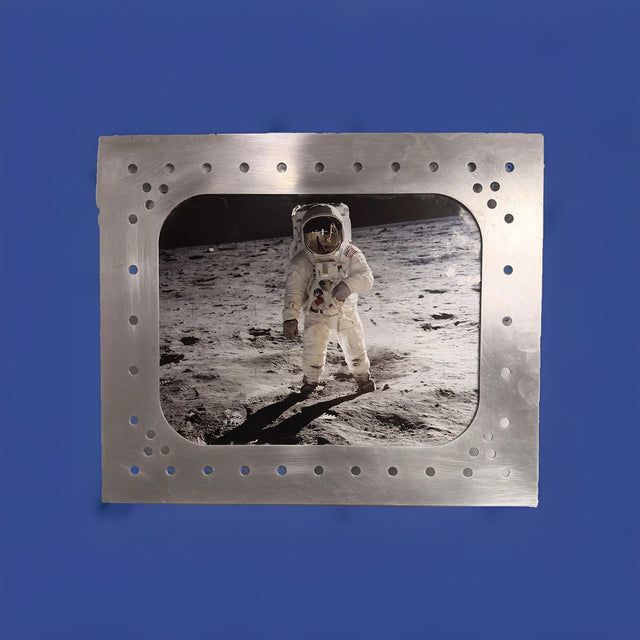
Apollo 11 Astronaut on the Moon NASA Photo Riveted Aluminum Spacecraft Frame
$89.00 USD
-
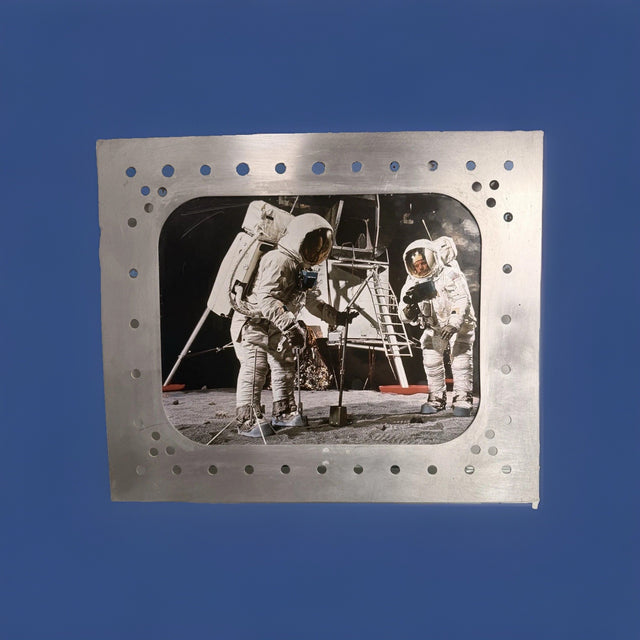
Apollo Astronauts on the Moon NASA Photo Riveted Aluminum Spacecraft Frame
$89.00 USD
-

Gene Kranz Signed Apollo 11 Moon Card PSA/DNA NASA Flight Director Autograph
$150.00 USD
-

Buzz Aldrin Apollo 11 Tranquility Framed Autograph - Zarelli Space COA
$350.00 USD
-
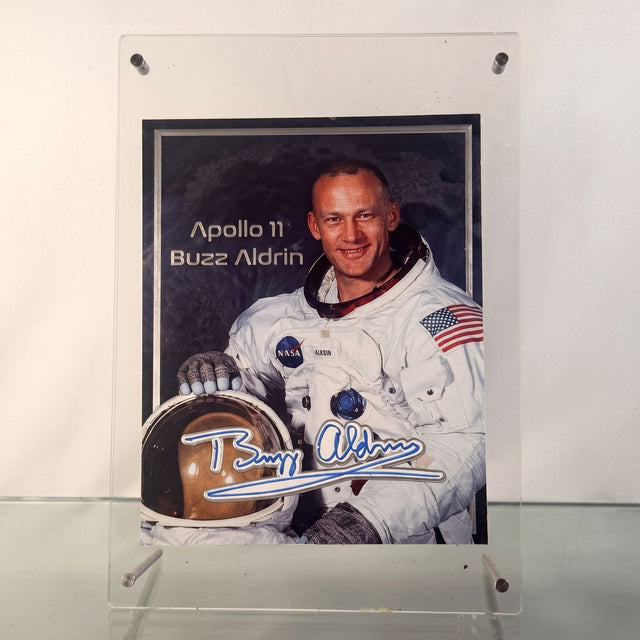
Buzz Aldrin Signed Apollo 11 NASA Double-Sided Photo JSA Authenticated Display
$450.00 USD


Browse the collection for current listings.