Bowl of the Night (one) Signed by Robert Farquhar: Collector Guide, Rarity & Value
A first-edition copy of Bowl of the Night (one), hand-signed by NASA mission designer Robert W. Farquhar, represents one of the rarest intersections of space history and literary memorabilia available to collectors today. Farquhar—the engineer who invented the concept of halo orbits and masterminded the first spacecraft to orbit and land on an asteroid—signed this item in excellent condition, making it a singular artifact tied to a man whose contributions to deep-space exploration remain underrecognized outside specialist circles. In a market where Armstrong and Aldrin signatures command five-figure premiums, Farquhar-signed material occupies a historically undervalued and rapidly closing window for serious collectors.
About Robert Farquhar
Robert W. Farquhar (1932–2015) spent more than four decades at NASA reshaping what was thought possible in orbital mechanics. His most enduring theoretical contribution came early in his career when he proved—mathematically and then in practice—that a spacecraft could be placed in a stable “halo orbit” around the Earth-Moon L1 Lagrange point, using lunar gravity to hold a position no single celestial body could provide on its own. That insight, which he developed for his doctoral dissertation and later formalized through missions, created an entirely new class of spacecraft trajectories still in active use today for missions including the James Webb Space Telescope.
His operational legacy is equally striking. As flight director for ISEE-3/ICE, he engineered the first spacecraft to perform a cometary flyby when he redirected the already-launched satellite on a gravity-assist journey through the Earth-Moon system and out to Comet Giacobini-Zinner in 1985—a feat widely considered the most audacious orbital improvisation in NASA history. He then led the NEAR Shoemaker mission, which became the first spacecraft to orbit a minor planet (433 Eros) and later made the first controlled landing on an asteroid in 2001. His fingerprints are also on CONTOUR, the comet nucleus tour mission, and dozens of lesser-known trajectory studies that shaped planetary science. To hold a Farquhar signature is to hold a piece of the mind that first taught spacecraft to surf the gravity wells of the solar system.
About This Specific Item
Bowl of the Night (one) is a short story in which a man, exploring his late grandfather’s house, encounters supernatural elements and uncovers a mysterious bowl with extraordinary powers. The title carries a resonance that is difficult to separate from Farquhar’s biography: the night sky—the bowl above us—was the canvas on which Farquhar spent his entire professional life drawing invisible arcs between worlds. Whether the thematic overlap was intentional at the time of signing or simply a collector’s happy coincidence, it deepens the cultural weight of this item considerably.
As a signed literary piece rather than a purely photographic or mission artifact, this item occupies a niche within space memorabilia collecting. It combines two collector markets—signed first editions and NASA autographs—in a way that remains genuinely uncommon. Items signed by mission designers (as distinct from astronauts) rarely surface at major auction houses, and when they do, they attract specialist bidders from the history-of-science community rather than the broader celebrity autograph market. The excellent condition of this copy preserves both the physical integrity of the text and the clarity of Farquhar’s signature, which was consistently rendered in a firm, legible hand.
Rarity and Scarcity
Robert Farquhar’s death in 2015 fixed the supply of his authenticated signatures permanently. Unlike living signers—who can be approached at conventions, institutional events, or through private signings—Farquhar’s output is now a closed set. His career was spent in engineering institutions rather than public-facing science communication, which means he attended far fewer signing events than astronauts of comparable historical stature. PSA and JSA population reports for Farquhar-signed material reflect this: authenticated examples are rare, and signed literary items rather than technical documents or standard NASA photographs are rarer still.
Farquhar’s authenticated pool is a fraction of that figure. As interest in the history of orbital mechanics and deep-space mission design has grown alongside renewed public engagement with NASA’s Artemis program and commercial lunar exploration, the collector community for mission-designer signatures has begun to catch up to the material’s historical importance. Compare authenticated examples with the same signer, format, inscription, condition and documentation. Include fees and other acquisition costs rather than assuming a return rate.
Authentication and What to Look For
Every piece in Gauntlet Gallery’s space memorabilia inventory is authenticated through PSA (Professional Sports Authenticator) or JSA (James Spence Authentication), the two recognized gold standards for autograph verification in the collector market. A PSA or JSA certificate accompanies this item, documenting the specific characteristics of Farquhar’s signature that authenticators use to confirm provenance: letterform consistency, pen pressure profile, and baseline behavior across a reference population of verified exemplars.
Farquhar’s signature from his later career—the period from which most collector-market examples originate—features a confident, compressed cursive with a distinctive capital R and a long descending stroke on the final letter of his surname. Buyers should be cautious of any Farquhar-signed item offered without third-party authentication, as the niche market for his material has attracted the same forgery pressures that affect more prominent NASA autographs. The PSA or JSA hologram and matching certificate number are the definitive indicators of authenticity.
Value Context
Mission-designer autographs occupy a specialist tier within the broader space memorabilia market. At Heritage Auctions, RR Auction, and Bonhams Space History sales, signed items from flight controllers, mission designers, and NASA engineers of Farquhar’s generation have realized between $200 and $1,500 depending on the item type, condition, and the prominence of the specific mission referenced.
A Farquhar-signed literary item such as this one sits at a crossroads that the auction record has not yet fully priced: it combines the scarcity of mission-designer autographs with the premium that signed first editions command in rare-book markets. Condition has an outsized effect on value in this category. The excellent condition of this copy ensures that neither the physical object nor the signature quality introduces any downward pressure on realized price. For current pricing on this specific item, contact Gauntlet Gallery directly—pricing in this niche moves with auction results and is best confirmed against the most current comparable sales data.
Frequently Asked Questions
Q: Is this Robert Farquhar signature authenticated?
Yes. This item carries third-party authentication from PSA or JSA. Both organizations maintain extensive reference databases of Farquhar’s signature characteristics and issue a numbered certificate and hologram that can be independently verified. Gauntlet Gallery does not list space memorabilia without independent authentication.
Q: How rare is a Robert Farquhar signed Bowl of the Night (one)?
Extremely rare. Farquhar passed away in 2015, permanently closing the supply of new signatures. His career was spent in engineering environments rather than public signing events, so his total authenticated output is far smaller than that of astronauts of comparable historical importance. PSA and JSA population reports confirm that Farquhar-signed literary items are among the scarcest categories within space memorabilia.
Q: What is this item worth?
Mission-designer autographs have realized between $200 and $1,500 at Heritage Auctions, RR Auction, and Bonhams, depending on item type, condition, and mission association. This signed literary piece in excellent condition sits at a premium within that range. Contact Gauntlet Gallery for current pricing based on the most recent comparable sales data.
Q: Where can I buy authenticated Robert Farquhar memorabilia?
Gauntlet Gallery specializes in authenticated space memorabilia with every item independently authenticated through PSA or JSA. Browse the current collection at gauntlet.gallery/collections/space-memorabilia or contact the gallery directly for inquiries on this specific piece.
Browse authenticated space memorabilia at gauntlet.gallery/collections/space-memorabilia
Shop Space memorabilia
Explore current pieces available from the gallery.
-
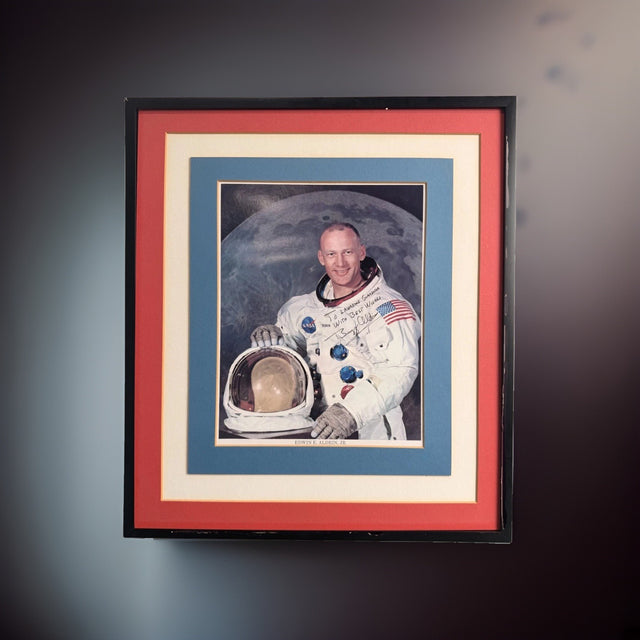
Buzz Aldrin Signed NASA 8x10 Color Photo Personalized Framed JSA LOA
$899.00 USD
-
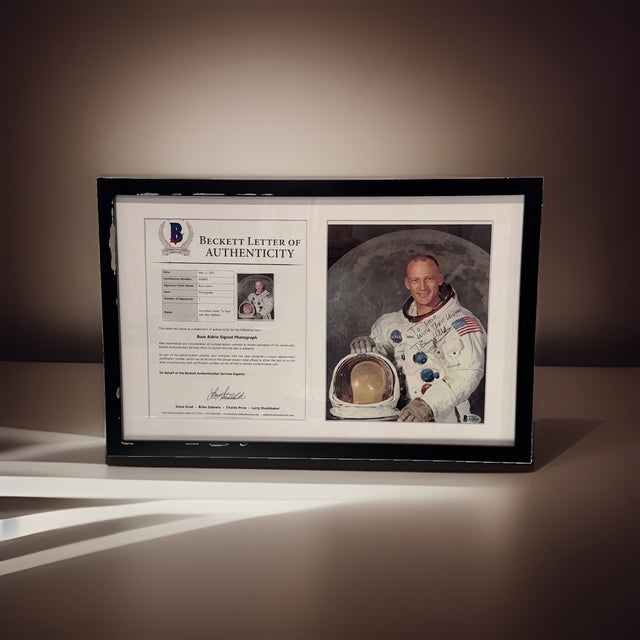
Buzz Aldrin Signed Inscribed Astronaut Photo Framed Beckett LOA A42843
$999.00 USD
-
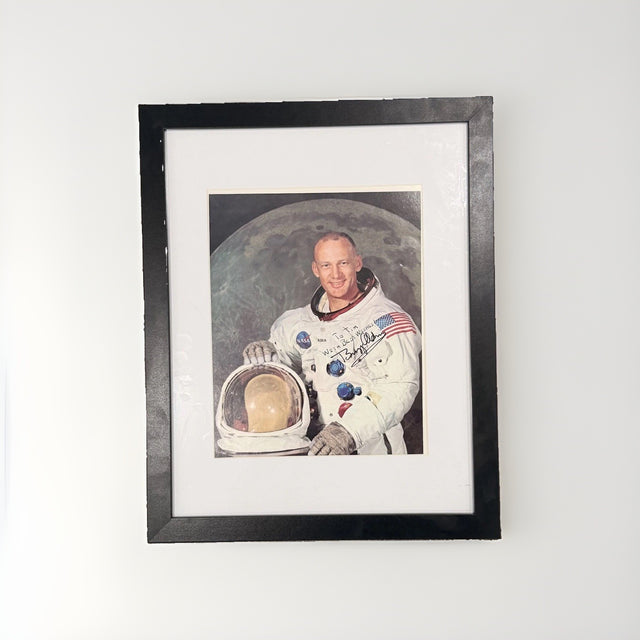
Buzz Aldrin Signed NASA Astronaut Portrait Inscribed To Tim Framed
$850.00 USD
-
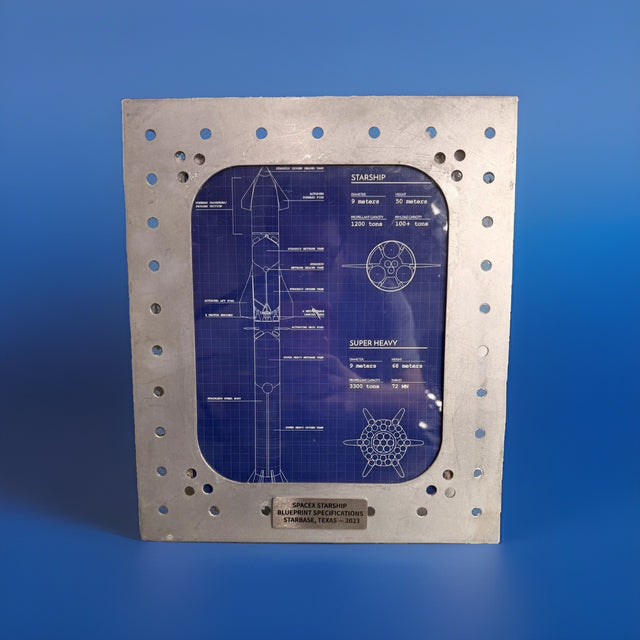
SpaceX Starship Super Heavy Blueprint Metal Display Panel Spacecraft Frame
$59.00 USD
-
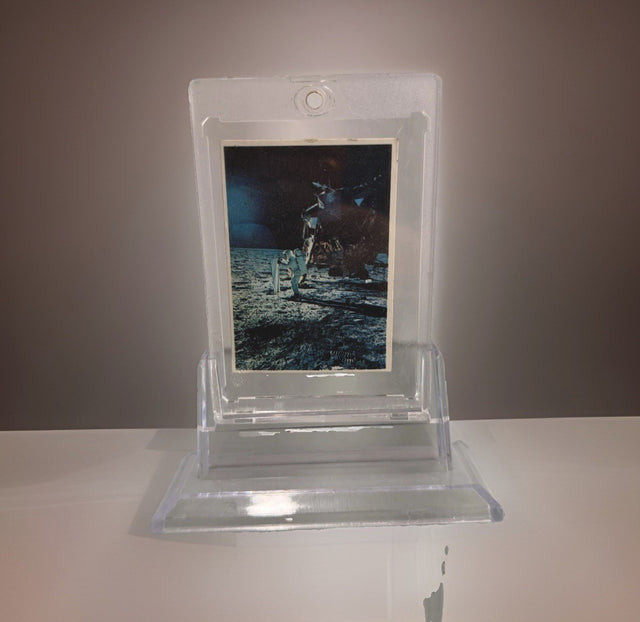
1969 Space Candy Buzz Aldrin Apollo 11 On The Moon Card #19 Taylor-Reed Display
$59.00 USD
-
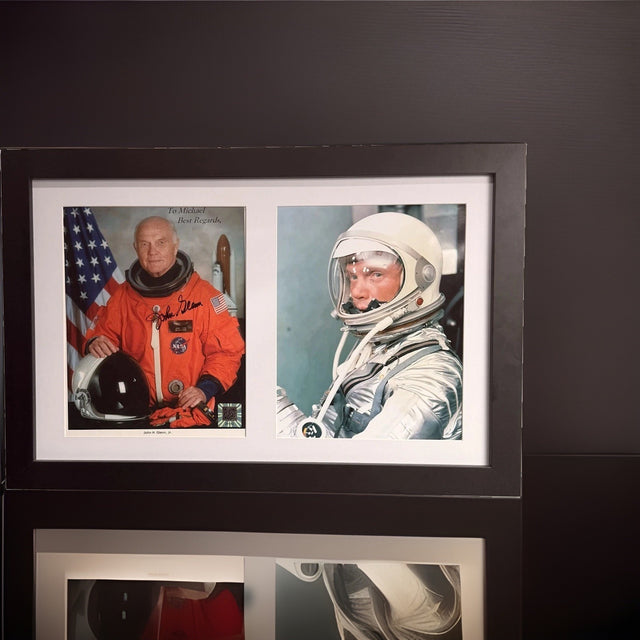
John Glenn Signed Autographed NASA Photo Display JSA Mercury Astronaut Framed
$199.00 USD
Browse the collection for current listings.