The most-collected name in the data

Across a master database of more than 250,000 collectible sales spanning dozens of artists, one name appears more than any other: KAWS. With 87,889 raw records — and 56,381 after cleaning to the $90 analytics floor — Brian Donnelly’s KAWS is, by sheer transaction volume, the most heavily traded artist in the entire dataset, outpacing even Shepard Fairey.1 That volume alone tells you something: KAWS is not a niche fine-art name but a global collecting phenomenon, traded constantly across vinyl figures, prints, and the occasional seven-figure painting.
But volume is not value, and the most important thing to understand about the KAWS market is that it is fundamentally a figure market, not a print market — which makes it behave differently from the Fairey and Banksy print worlds it’s so often lumped with. The median KAWS sale is $400, the middle 50% runs from $200 to $850, and the ceiling in this dataset is a single $1,070,065 result.2 This guide breaks down what your money buys across that range, franchise by franchise, format by format.
As always, this is historical market description, not investment advice or an appraisal of any specific object.3
A note on method
The methodology matches our other market studies. We draw from the master sales database, isolate KAWS, drop sub-$90 listings (overwhelmingly stickers, keychains, and mass-market noise) and sentinel scrape prices, and analyze with robust statistics — medians and percentiles rather than means, because collectible prices are log-normal and a handful of high results distort any average.4 In the KAWS market this distortion is severe: the mean sale ($1,330) is more than three times the median ($400), inflated by a thin tier of paintings and rare figures. The median is the honest center.5
The headline distribution
Across 56,381 cleaned KAWS sales:
| Statistic | Value |
|---|---|
| Median sale | $400 |
| Geometric mean | $463 |
| Arithmetic mean | $1,330 |
| 25th percentile | $200 |
| 75th percentile | $850 |
| 90th percentile | $2,017 |
| 99th percentile | $10,000 |
| Maximum | $1,070,065 |
Table 1 — KAWS price distribution, all cleaned sales ≥ $90.6
The shape is instructive. Half of all KAWS sales fall below $400, and the middle 50% sits between $200 and $850 — squarely the open-edition vinyl figure and accessible print range. The 90th percentile at ~$2,000 marks the entry to serious collector territory (early figures, screenprints, complete sets). The 99th percentile leaps to $10,000, and the maximum to over a million — the realm of unique paintings and the rarest objects.7
Compared to the street-art print markets, KAWS sits higher at the median ($400 vs Fairey’s $268) but with a similar fat-tailed structure. The difference is what’s being traded: where Fairey’s market is editioned paper, KAWS’s is dominated by three-dimensional vinyl.
A figure market, not a print market

This is the single most important structural fact about collecting KAWS. Break the market down by item type:
| Item type | Sales | Median |
|---|---|---|
| Figures (vinyl/Companion) | 24,338 | $410 |
| “Other” (mixed collectibles) | 27,138 | $400 |
| Prints | 1,479 | $650 |
| Fine-art prints | 354 | $1,500 |
| Posters | 799 | $219 |
| Original art | 178 | $361 |
Table 2 — KAWS market by item type.8
Vinyl figures are the heart of the KAWS market — 24,338 recorded figure sales at a $410 median, dwarfing the 1,479 prints. This is what separates KAWS from Fairey and Banksy: his most collected objects are not works on paper but mass-produced designer toys — Companions, BFFs, and their kin, made in collaboration with Medicom Toy and others. A KAWS collection is, more often than not, a shelf of figures rather than a wall of prints.
That said, paper carries the premium when it appears. Prints clear a $650 median, and fine-art prints and screenprints command far more — screenprints alone show a ~$2,006 median, five times the figure median.9 The hierarchy is clear: open-edition figures form the accessible base, while limited screenprints and fine-art prints occupy the upper-mid tier, and unique paintings define the apex.
The core franchises
Unlike a print artist whose market is organized by individual images, KAWS’s market is organized by recurring characters and series. The most-traded franchises:
| Franchise | Sales | Median |
|---|---|---|
| Companion | 9,398 | $470 |
| Holiday | 3,451 | $550 |
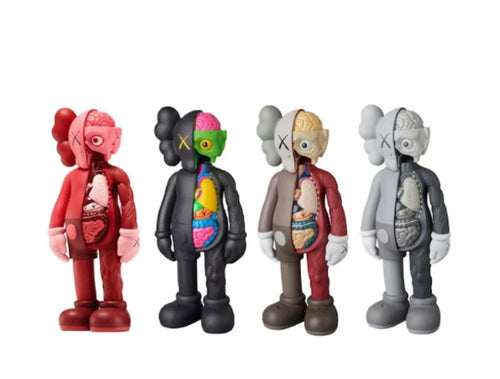
| “Fake” / Flayed | 3,336 | $370 |
| What Party | 3,262 | $425 |
| BFF | 2,556 | $375 |
| Dissected | 2,009 | $375 |
| KAWS 100 (Medicom 100%) | 1,299 | $430 |
| Separated | 1,066 | $450 |
| Chum | 1,039 | $375 |
| Sesame Street | 770 | $202 |
Table 3 — Most-traded KAWS franchises by sale count.10
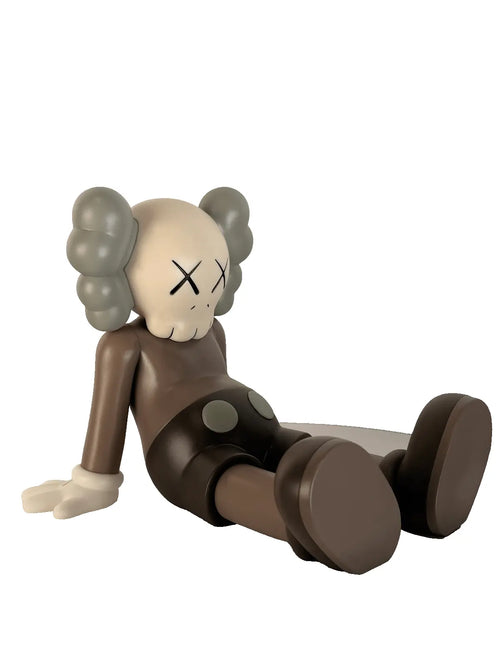
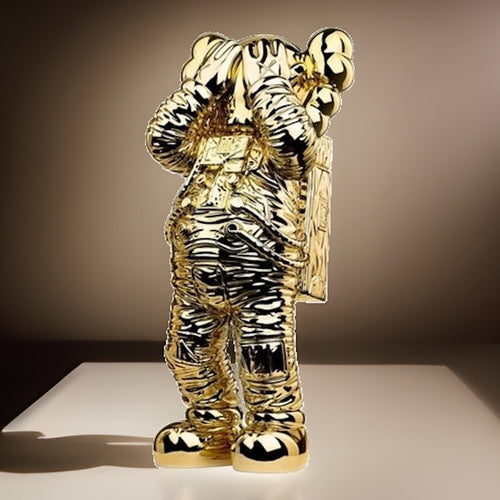
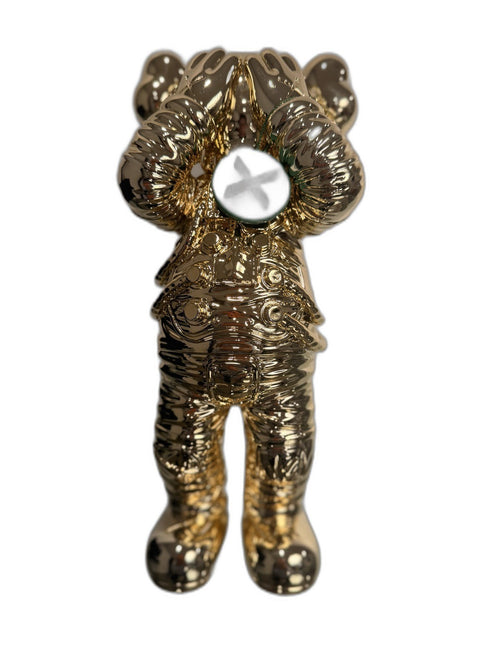
The Companion — the gloved, X-eyed figure that is KAWS’s signature character — is the franchise core, with 9,398 sales at a $470 median. Holiday (the large-scale floating Companion series) commands the highest median of the high-volume franchises at $550, reflecting its event-driven, often-large-format releases.11 The accessible end includes Sesame Street collaborations ($202) and certain Supreme crossovers, while the higher medians cluster around the most iconic forms.
For a collector, this franchise structure is the map: you are not hunting a specific print so much as choosing a character (Companion, BFF, Chum), a series (Holiday, Dissected, Separated), and a colorway — and pricing against that franchise’s established market.
The signed premium — rare and large
Signature behaves differently in the KAWS market than in the print world, because most KAWS objects — mass-produced figures — are unsigned by nature. Only 966 of the cleaned sales are signed, versus 45,424 unsigned.12 But when signature appears, the premium is dramatic:
- Signed: $1,000 median
- Unsigned: $375 median
A signed KAWS clears roughly 2.7x an unsigned one.13 The reason is selection: signatures appear primarily on prints, fine-art editions, and special pieces — the higher tiers of the market — rather than on open-edition vinyl. So the signed premium is partly a signal of which kind of object you’re holding (paper/limited rather than open vinyl) as much as the signature itself. Either way, “signed KAWS” denotes the upper market, and the data prices it accordingly.
The apex: paintings and the million-dollar ceiling
At the very top, the KAWS market leaves collectibles behind and becomes fine art. The dataset’s maximum — $1,070,065 — reflects a unique KAWS painting, the format where his auction records live.14 The 99th percentile at $10,000 marks the floor of the serious fine-art and rare-figure tier: complete vintage sets, early OriginalFake-era pieces, large-format Holiday companions, and signed screenprint editions.
As with any fat-tailed market, these figures are thin and case-by-case — a handful of sales, not a stable median. The lesson mirrors our other studies: one extraordinary painting result is a ceiling, not a comp for the Companion on your shelf. The accessible market most collectors transact in lives at the $200–$850 core, not the million-dollar apex.15
Authentication: the counterfeit problem and how KAWS is verified

No discussion of the KAWS market is complete without authentication, because KAWS is among the most heavily counterfeited names in collecting. The data itself reflects this: an entire 3,336-record cluster in the dataset is associated with “fake”/flayed-style material, and the popularity that drives KAWS’s volume also drives a flood of replicas, bootlegs, and misrepresented pieces.16
Authenticity for KAWS rests on a layered chain:
- Original Medicom Toy packaging — the box, with correct branding, fonts, and finish. Counterfeits routinely get the box subtly wrong.
- The base production stamp — series number and markings on the figure’s foot, cross-referenced to the documented release.
- Holograms and, on recent releases, NFC/blockchain pairing — newer KAWS and Medicom pieces increasingly ship with chip-based verification.
- Colorway and release-record reconciliation — matching the exact figure, color, and edition to known release records.
At Gauntlet Gallery, KAWS and BE@RBRICK pieces are verified through OneCOA with NFC-chip pairing where deployed, plus original packaging, hologram, and Medicom release-record reconciliation for pre-OneCOA pieces.17 The practical takeaway for any buyer: with KAWS, the box and the base markings are not optional details — they are the authentication, and a “deal” on a loose figure with no packaging or provenance is exactly where the counterfeit risk concentrates.
The KAWS price cycle: peak, cooldown, and where it sits now
KAWS is the clearest example in the entire dataset of a collectible market that cycled — and understanding that cycle is essential to reading any KAWS comp in context.
| Year | Sales | Median |
|---|---|---|
| 2016 | 151 | $550 |
| 2017 | 264 | $650 |
| 2018 | 298 | $550 |
| 2019 | 228 | $673 |
| 2020 | 104 | $520 |
| 2021 | 293 | $480 |
| 2022 | 304 | $325 |
| 2023 | 219 | $300 |
| 2024 | 221 | $300 |
Table 4 — KAWS median by sale year (representative cohort).31
The arc is unmistakable: KAWS peaked in 2017–2019, with medians in the $550–$673 range during the height of the streetwear-meets-art hype cycle, then corrected sharply through 2022–2024, with the median roughly halving to $300.32 This is the signature of a market that ran hot on hype — the era of hour-long Companion sellouts and resale frenzies — and then normalized as supply caught up and speculative demand cooled.
For a collector, this cycle carries three lessons. First, a KAWS comp’s date matters enormously: a 2019-era price is a peak-cycle number, not a current one, and pricing today’s purchase against 2019 will overpay. Second, the correction created entry points: figures that traded at peak frenzy are now available well below their 2019 highs, which is opportunity for a buyer who believes in the long-term name. Third, KAWS taught the market a humility lesson — even the most-collected name on earth is not immune to a 50% median drawdown when hype unwinds. Buy the character you love at a price the current cycle supports, not the price the last cycle printed.33
BE@RBRICK: the companion collectible market
KAWS lives alongside a closely related collectible: BE@RBRICK, the bear-shaped figure produced by Medicom Toy and frequently issued in collaboration with KAWS and other artists. In the dataset, BE@RBRICK shows a median of about $405 with a mean of $564 and a ceiling around $3,290 — a market structurally similar to the KAWS figure tier, and one that shares the same Medicom production, packaging, and authentication ecosystem.34
The two markets are siblings. A KAWS BE@RBRICK collaboration sits at the intersection — KAWS’s character cachet on Medicom’s bear form — and the highest BE@RBRICK values cluster around artist collaborations, larger percentages (the 400% and 1000% sizes), and sealed condition. The same buying disciplines apply: price by collaboration and size, treat original Medicom packaging as both value and authentication, and verify against the release record.35
For the designer-figure collector, KAWS and BE@RBRICK are best understood as one connected ecosystem rather than two separate markets — which is exactly why Gauntlet Gallery groups them under a single “designer figurines” category with a shared authentication approach.36
Condition and the value of the box

In the print world, condition means the state of the paper. In the figure world, condition means something more specific and more decisive: the box.
A KAWS figure’s value is heavily tied to whether it remains sealed in its original Medicom packaging, with that packaging intact and undamaged. An opened figure is worth less than a sealed one; a figure with a damaged or missing box can drop a full tier in value; and a “loose” figure with no box at all is both worth materially less and far harder to authenticate. This is the opposite of intuition for collectors coming from fine art, where the object is everything and the packaging is incidental. With KAWS, the packaging is part of the object.37
This has two practical consequences. For buyers, never treat the box as an afterthought — a sealed, mint-box figure and a loose one are different products at different prices, and the box is your first authentication checkpoint. For sellers, preserving and presenting the packaging is a value lever: photograph the sealed box, document its condition, and never discard it. In a market where so much value rides on the packaging, the box is, quite literally, money.
Buying KAWS by budget tier
Like any deep market, KAWS rewards matching budget to objective:
- Under $300 — the accessible base. Open-edition figures, Sesame Street and other broad collaborations, posters, and accessible colorways. A real, recognizable KAWS for a few hundred dollars; prioritize the character you love and the box condition.38
- $300–$850 — the core. The heart of the Companion/BFF/Chum market and accessible prints. Deep liquidity, the broadest selection, and the franchise-and-colorway pricing game in full effect.39
- $850–$2,000 — the upper-mid. Sought-after colorways, larger Holiday figures, complete sets, and standard prints. Scarcer, with condition and packaging mattering more to realized price.40
- $2,000–$10,000 — scarcity and screenprints. Limited screenprints (~$2,006 median), rare early figures, OriginalFake-era pieces, and signed editions. Documentation and condition become primary.
- Over $10,000 — the apex. Fine-art prints, the rarest figures, and unique paintings up to the million-dollar ceiling. A thin, case-by-case, fine-art game.
The pattern mirrors our other budget studies: most collectors should live in the accessible-to-core range, where KAWS is deep, liquid, and recognizable, and treat the apex as a separate activity.
How to buy KAWS by the numbers
Pulling it together into a buyer’s framework:
- Decide figure or paper. Figures are the accessible, liquid core (~$400–$470); prints and especially screenprints carry multiples ($650–$2,000+). Know which market you’re entering.18
- Price by franchise and colorway, not “KAWS.” A Companion ($470), a Holiday ($550), and a Sesame Street piece ($202) are different markets. Pull the specific franchise’s median.19
- Treat packaging as value. Original Medicom box, intact, with correct markings, is a material part of the price — and the front line of authentication.20
- Verify before you pay. Base stamp, hologram/NFC where applicable, and release-record match. Counterfeits cluster on loose, undocumented figures.21
- Respect the tail. Above the 90th percentile (~$2,000), the market thins into screenprints, rare figures, and fine art; the million-dollar paintings are a separate game entirely.22
Do this and you price KAWS the way the market actually works — by character, format, colorway, and condition of packaging — rather than treating “a KAWS” as a single thing.
Frequently asked questions
What does a typical KAWS piece sell for? The median cleaned KAWS sale is $400, with the middle 50% between $200 and $850 — the open-edition vinyl figure and accessible print range. Higher tiers (screenprints, fine-art prints, rare figures) run into the low thousands, and unique paintings reach seven figures.23
Are KAWS figures or prints more valuable? Per piece, paper tends to carry the premium: prints clear a $650 median and screenprints ~$2,006, versus ~$410 for figures. But figures are the volume heart of the market and the most liquid, accessible entry point.24
What’s the most collected KAWS character? The Companion — the gloved, X-eyed figure — with 9,398 recorded sales at a $470 median. Holiday, BFF, Chum, and Dissected round out the core franchises.25
Why are KAWS fakes such a problem? KAWS’s mass popularity makes him a prime counterfeit target; the data shows a large cluster of “fake”/replica-associated material. Authentication rests on original Medicom packaging, base stamps, holograms/NFC where present, and release-record reconciliation.26
How does Gauntlet Gallery authenticate KAWS? Via OneCOA with NFC-chip pairing where deployed, plus original packaging, hologram, and Medicom release-record reconciliation for pre-OneCOA pieces — the box and base markings are central to verification.27
The bottom line
KAWS is the most-traded name in the data and a fundamentally different market from the street-art print world: a figure-driven, franchise-organized collectible economy with a $400 median, a paper-and-screenprint upper tier, and a thin million-dollar fine-art apex. Collect it by character and colorway, treat original Medicom packaging as both value and authentication, and verify rigorously — because the same popularity that makes KAWS the most-collected name also makes it among the most-faked. Price the franchise and the format, not the name, and the KAWS market becomes as legible as any in collecting.
Caveats and limitations
- Fat tail. The mean ($1,330) is over 3x the median; paintings and rare figures inflate it. Lead with the median.28
- Item-type classification. “Other” (27,138) blends figures and mixed collectibles; figure economics dominate the accessible market regardless.29
- Data sourcing + not advice. Aggregated marketplace-and-auction data (WorthPoint-dominant); read as the accessible secondary market. Historical and descriptive only; not an appraisal, prediction, or investment advice.30
Footnotes
Data current as of the master sales database analyzed June 2026. Every figure is drawn from recorded secondary-market sales. Browse authenticated KAWS & BE@RBRICK at gauntlet.gallery, see our Designer Figures FAQ and KAWS × BE@RBRICK Buyer’s Guide, and learn how to spot a fake.
-
Master sales database; KAWS = 87,889 raw records, 56,381 after the $90 floor and sentinel exclusion — the highest-volume artist in the dataset. ↩
-
KAWS cleaned: median $400, p25 $200, p75 $850, maximum $1,070,065. ↩
-
Informational only; not investment advice or an appraisal. ↩
-
Robust statistics on log-normal price data; $90 floor and sentinel (999/9,999/99,999) exclusion. ↩
-
KAWS mean $1,330 vs median $400 — a >3x gap from the high tail. ↩
-
KAWS distribution: geometric mean $463, p90 $2,017, p99 $10,000. ↩
-
Distribution interpretation: $200–$850 core (vinyl/accessible print), p90 ~$2,000, apex >$1M. ↩
-
KAWS by item_type: figures 24,338 ($410); other 27,138 ($400); prints 1,479 ($650); fine-art prints 354 ($1,500); posters 799 ($219); original art 178 ($361). ↩
-
KAWS by medium: Figure $420; Print $499; Screenprint $2,006; Poster $200. ↩
-
KAWS top franchises by canonical_work count. ↩
-
Companion 9,398 ($470); Holiday 3,451 ($550); Sesame Street 770 ($202). ↩
-
Signed n=966 vs unsigned n=45,424 in the cleaned set. ↩
-
Signed median $1,000 vs unsigned $375 ≈ 2.7x (largely a selection effect — signatures appear on prints/limited pieces). ↩
-
Maximum $1,070,065 corresponds to a unique KAWS painting. ↩
-
Apex (>$10k, p99) is thin and case-by-case; accessible market is $200–$850. ↩
-
A ~3,336-record “fake”/flayed-associated cluster appears in the dataset; KAWS is heavily counterfeited. ↩
-
Gauntlet Gallery authentication for KAWS/BE@RBRICK: OneCOA + NFC where deployed; packaging, hologram, Medicom release-record reconciliation for pre-OneCOA pieces. ↩
-
Figure vs paper market distinction. ↩
-
Price by franchise/colorway; per-franchise medians vary widely. ↩
-
Original Medicom packaging as value and authentication. ↩
-
Verification: base stamp, hologram/NFC, release-record match; counterfeits cluster on loose/undocumented figures. ↩
-
Tail above p90 (~$2,000) thins into screenprints/rare figures/fine art. ↩
-
Typical KAWS: $400 median, $200–$850 middle 50%. ↩
-
Paper premium (prints $650, screenprints ~$2,006) vs figures (~$410); figures more liquid. ↩
-
Companion most-collected (9,398, $470 median). ↩
-
Counterfeit risk and authentication chain. ↩
-
Gauntlet Gallery KAWS authentication method. ↩
-
Mean >3x median from the high tail. ↩
-
“Other” blends figures/collectibles; figure economics dominate. ↩
-
WorthPoint-dominant aggregated data; informational only, not advice. ↩
-
KAWS median by sale year (representative cohort): 2017 $650, 2019 $673, 2022 $325, 2023–24 $300. ↩
-
Peak 2017–2019 ($550–$673); correction through 2022–2024 (~$300) — roughly a halving of the median. ↩
-
Interpretation: comp date matters; the correction created entry points; even the top name drew down ~50% when hype unwound. ↩
-
BE@RBRICK (Bearbrick) in the dataset: ~252 cleaned sales, median ~$405, mean ~$564, max ~$3,290. ↩
-
BE@RBRICK value clusters: artist collaborations, larger percentages (400%/1000%), sealed condition; same Medicom packaging/authentication ecosystem. ↩
-
Gauntlet Gallery groups KAWS and BE@RBRICK under one “designer figurines” category with shared authentication. ↩
-
Condition for figures is dominated by original sealed Medicom packaging; loose/no-box figures drop a value tier and are harder to authenticate. ↩
-
KAWS budget tier <$300: accessible figures, broad collaborations, posters. ↩
-
KAWS budget tier $300–$850: Companion/BFF/Chum core and accessible prints. ↩
-
KAWS budget tier $850–$2,000: sought colorways, larger Holiday figures, sets, standard prints. ↩