The Number Nobody Tells You Before You Bid

You win the lot. The hammer drops. The room applauds, or the browser tab refreshes, and there it is — your winning bid, bold and official on the screen.
Then the invoice arrives.
And the number is nothing like what you bid.
This happens to new collectors constantly. Not because the auction house did anything wrong. Not because the catalog was misleading. It happens because buyer's premium is one of those foundational market mechanics that experienced collectors treat as obvious background noise, and nobody ever bothers to explain it clearly to someone walking in for the first time.
We're going to fix that right now.
This is everything you need to know about buyer's premium before you place a single bid — at Sotheby's, Christie's, Phillips, Heritage, or anywhere else on the secondary market.
What Buyer's Premium Actually Is
When an auction house sells a work, there are two parties paying fees: the seller and the buyer.
The seller pays a seller's commission, negotiated privately, often reduced or waived entirely for significant consignors. That's their deal. You don't see it. It doesn't affect your invoice.
The buyer pays a buyer's premium. This is a percentage added on top of the hammer price — the number the auctioneer calls when the gavel falls. It goes directly to the auction house. It is not part of what the seller receives. It is a separate, additional fee charged to you for the privilege of winning.
The hammer price is what you bid. The final price is what you pay.
Why do so many new collectors miss this completely?
Because the bidding increment feels like the transaction. The auctioneer calls numbers, you raise your paddle, the hammer falls at your number. Every instinct in the room tells you that number is the price. It is not. It is the starting point for your invoice.
The Basic Math
Buyer's premium is not a flat fee. It is tiered, and it scales with the hammer price. Major houses use a descending percentage structure: a higher rate on the first portion of the hammer, a lower rate on everything above that threshold.
As a general framework (and you should always verify current rates with the specific house before bidding):
- Use dated completed sales for the same artist, release, format and condition, recording the venue, currency and fees. Asking prices and broad archive totals do not establish a realized sale price or future return.
- The middle tier drops that rate meaningfully, often to the high teens or low twenties
- The top tier, covering hammer prices above a high threshold, drops again, sometimes to 12-14%
These brackets and percentages shift. Houses adjust them. Always read the conditions of sale for the specific auction you are entering.
But let's make the math concrete. On a $40,000 hammer, that's a $10,000 premium. Your invoice is $50,000 before tax.
That is not a rounding error. That is a material number.
Every Major House Does This Differently

The structure is consistent across the industry. The specific rates are not.
Sotheby's, Christie's, and Phillips each publish their buyer's premium schedules in the conditions of sale for every auction. Heritage Auctions publishes theirs as well. The numbers are not hidden — but they are buried in legal-language footnotes that most first-time bidders scroll past without reading.
Online-only platforms and specialist auction houses add another layer of variation. Some secondary-market platforms charge flat premiums. Some charge tiered rates that differ significantly from the major houses. Some auction houses running lower-value lots charge higher percentage premiums because the economics only work at volume with high margin.
Is there a "standard" buyer's premium?
There is a general range that major houses cluster around, but no binding standard. It is a fee the house sets. It is legal. It is disclosed. And it is almost never negotiable for individual buyers, especially not for collectors who are not significant institutional clients.
Online Bidding and the Extra Layer
Bidding through a third-party platform — Invaluable, LiveAuctioneers, Bidsquare — often adds a surcharge on top of the auction house's own buyer's premium.
Read that again.
You might pay the auction house's premium and an additional online platform fee. Some platforms charge 3-5% on top of whatever the house charges. Others have moved to subscription or different structures. The point is: the platform you use to place the bid may not be a neutral conduit. It may be an additional cost center.
Always verify whether the platform you are using adds its own fee before you bid a single dollar.
Taxes Make It Worse — Or At Least More Complicated
Sales tax, VAT, import duties. These are jurisdiction-specific and buyer-specific, and they land on top of the hammer plus premium.
In the United States, sales tax applicability depends on your state, the auction house's nexus in that state, and sometimes whether the work physically ships to your state. New York auctions selling to New York buyers — especially if the work is taken into New York — have historically triggered sales tax. Rules have evolved significantly following Supreme Court decisions around online commerce.
For international buyers purchasing from U.S. auctions, VAT and import duties in the destination country can be significant, particularly in the EU and UK post-Brexit.
Why doesn't anyone talk about this at the auction?
Because it varies by buyer. The house cannot announce it mid-sale. But it is documented in the conditions of sale, and you are responsible for understanding your own tax exposure before you bid.
Work with a tax advisor who understands art transactions if you are making purchases at a level where this materially affects your budget.
The Estimate Problem

Auction estimates are published for every lot. They represent the house's pre-sale judgment about where bidding will land. They are useful as a rough orientation. They are not prices.
Here is what new collectors frequently miss: estimates do not include buyer's premium.
An estimate of $20,000-$30,000 means the house expects the hammer to fall somewhere in that range. It does not mean the winning buyer will pay $20,000-$30,000. The winning buyer will pay the hammer price plus premium. If the hammer falls at the high estimate of $30,000 and the applicable premium is 25%, the buyer pays $37,500 before tax.
At higher tiers where multiple premium brackets apply, the math becomes more complex. The calculation is still your responsibility.
The "Passed" Lot and the Reserve
Connected to estimates: reserves. Most lots have a reserve price, the confidential minimum below which the consignor is not obligated to sell. By convention, the reserve is typically set at or below the low estimate.
If bidding does not reach the reserve, the lot is "passed" or "bought in." The consignor retains the work. The house may charge the consignor a buy-in fee. You, as an unsuccessful bidder, pay nothing.
But understanding reserves matters for strategy. If you see a lot where bidding stalls just below the low estimate, it may be near the reserve. A single increment can sometimes unlock a lot that the house was about to pass. Is it worth the extra increment to potentially secure a work at a price well below where the room expected? Sometimes yes. Sometimes the bidding stalls because everyone else in the room knows something about the work that you don't. That's why provenance research and condition scrutiny matter before you arrive at the sale.
How to Build a Real Budget Before You Bid
The professional approach is simple. Calculate your all-in number before the hammer falls, not after.
-
Identify the premium schedule
- Download the conditions of sale from the specific auction house
- Note the tier thresholds and percentage rates
- Note whether there are any additional online platform fees if you are bidding remotely
-
Set your maximum hammer price first
- This is the number where you stop bidding
- It is not your all-in budget — it is the number that, after premium and estimated tax, stays within your all-in budget
- Work backwards: if you want to spend no more than $50,000 all-in, and you expect 25% premium plus applicable tax, your maximum hammer price is well below $50,000
-
Calculate your ceiling in total cost terms
- Apply the relevant premium tier (or tiers, if your hammer ceiling spans a bracket boundary)
- Add estimated tax for your jurisdiction
- Add any shipping, crating, or insurance costs you can reasonably project
-
Write the number down before the sale starts
- Auction rooms create psychological pressure. Online auctions create the illusion that "one more bid" is easy and low-commitment.
- Your pre-sale ceiling is the one rational number in an environment designed to produce irrational behavior
- Honor it
Experienced collectors don't calculate their maximum bid at the auction. They walk in knowing exactly where they stop, in hammer price terms, because they already know what that translates to in total cost.
What the Auction House Is Actually Selling You

The buyer's premium is not just a fee. It is worth pausing on what it theoretically represents.
A reputable major auction house provides: provenance research and disclosure, condition reporting, physical inspection access, specialist expertise across the relevant category, legal transfer of title, payment processing and secure funds handling, and reputational accountability if something goes wrong.
That is a real service. It is not free to provide. The premium is how the house monetizes the buyer's side of the transaction.
The question collectors should ask is not "why is there a premium?" but rather "is the quality of this sale worth the premium rate being charged?"
A major house running a category-specialist sale with rigorous provenance standards is a different value proposition than a regional house running a mixed-lot auction with minimal scholarship. Both charge premiums. The quality of what you are buying — not just the lot itself, but the integrity of the process — should factor into where you choose to buy.
Authentication and the Premium-Quality Question
This is where buyer's premium intersects directly with authentication risk.
Premium auction houses conduct pre-sale authentication review for the categories where it matters. For street art and contemporary works, that means checking against known artist records, flagging works that appear inconsistent with known editions, and in some cases reaching out to authentication bodies directly.
For Banksy, the only legitimate authentication body is Pest Control. Any auction house selling Banksy works should be disclosing Pest Control status explicitly. Works without Pest Control documentation are selling on provenance and visual assessment alone, which carries meaningful risk regardless of how reputable the auction house is.
For Warhol, the former Authentication Board no longer exists. Research the specific work’s provenance, publisher and catalogue references, and any qualified independent opinion. A TrueCOA record supplied for a particular gallery item may organize that evidence; it is not an official successor to the Board.
For music and sports memorabilia, FBI Operation Bullpen in the late 1990s and early 2000s demonstrated at prosecutorial scale how pervasive forgery was in this category. The standard authentication bodies — Beckett (BAS), JSA, and PSA/DNA — exist in significant part because of the market failures that operation exposed. Within Beckett, the Roger Epperson REAL tier represents specialist-level scrutiny for music signatures specifically. If you are buying music memorabilia at auction, understanding the difference between JSA Basic (a witnessed signature) and a full JSA LOA (letter of authenticity representing forensic analysis) is not optional knowledge. It is the foundation of the purchase.
Sometimes yes. Sometimes the premium is paying for the chandeliers. Know the difference.
Private Sale vs. Auction: The Premium Comparison
This is a question serious collectors ask frequently and relatively few editorial sources address directly.
Buying a work through a gallery or private sale typically involves no buyer's premium. The price is the price. The gallery has built its margin into the retail price, but there is no additional percentage charged on top of the transaction price.
This does not automatically make private sale cheaper. Gallery retail pricing reflects the gallery's costs, expertise, program, and margin. A gallery specializing in a high-demand artist may price works above where comparable pieces would hammer at auction. Or below. It depends on the moment, the market, and the gallery's relationship with the artist or estate.
The structural advantage of private sale is price clarity. What you see is what you pay, plus applicable tax. No premium calculation required.
The structural advantage of auction is market discovery and competition. When multiple serious buyers pursue the same lot, the price reflects real-time market consensus. For sellers, that can mean higher realized prices than a private negotiation would produce. For buyers, it means you are competing on a transparent field rather than negotiating in information asymmetry.
Both channels have legitimate roles. Understanding buyer's premium is part of understanding when auction makes sense for you versus when private acquisition is the cleaner path.
Red Flags
Know these before you bid on anything.
- The premium schedule is not published or not findable before the sale. Legitimate auction houses publish conditions of sale in advance. If you cannot find the premium rate before the sale opens, ask directly. If the house cannot or will not provide it clearly, walk away.
- The estimate seems too good relative to comparable recent results. Artificially low estimates can drive competitive bidding far above where you planned to go. The estimate is the house's marketing tool, not a price ceiling. Never assume you are getting a deal because the estimate is low.
- Online platform fees are disclosed only at checkout. Some platforms surface their surcharge only after you have won a lot. This is poor practice. Research the platform's fee structure before you register to bid, not after you win.
- Authentication documentation is vague or absent for categories where it is standard. This is not a buyer's premium issue per se, but it compounds the premium problem.
- Condition reports are not available or are excessively hedged. "Condition consistent with age" is not a condition report. If the house will not provide a specific written condition report, or will not allow in-person inspection before the sale, the premium is not buying you the due diligence it should.
- The house cannot tell you where the lot is physically located or when it will ship. Logistical clarity is part of what premium auction services should provide. If post-sale logistics are unclear before the sale, project costs and timelines become unpredictable.
- Currency conversion fees for international buyers are not disclosed. For international transactions, currency conversion and wire transfer fees add to the total cost. Legitimate houses disclose accepted payment methods and associated costs in the conditions of sale.
Bottom Line
Buyer's premium is not a hidden fee. It is a disclosed, standard, legal, and universal cost of participating in auction markets.
It is also the single most common source of sticker shock for new collectors, because the bidding experience is engineered around hammer price and nothing in the room reinforces the actual all-in cost until the invoice arrives.
The solution is not to avoid auctions. Auctions are efficient, transparent markets with genuine advantages for buyers who know what they are doing. The solution is to do the math before you raise your paddle.
Know the premium schedule. Know your tax exposure. Know the platform surcharge if you are bidding online. Set your maximum hammer price by working backwards from your all-in budget. Write it down. Respect it when the room heats up.
And do the same authentication due diligence you would do on any acquisition. Premium rates do not correlate with authentication rigor. A 25% buyer's premium does not guarantee the work is what the catalog says it is. That research is yours to do, regardless of where you buy.
The collectors who thrive in auction markets are the ones who treat every sale as a business transaction first. The excitement is real. The competition is real. The art is real.
So is the invoice.
FAQ: Buyer's Premium and Auction Fees
What is buyer's premium and is it negotiable?
Buyer's premium is a percentage fee charged by the auction house to the winning bidder, calculated on the hammer price. It is separate from the seller's commission and goes directly to the house. For individual collectors, it is essentially non-negotiable. Major institutional buyers with long-standing relationships may have different arrangements, but standard buyers pay the published rate. Always.
Does buyer's premium apply to the estimate or the hammer price?
The hammer price. Always the hammer price — the number at which the auctioneer called the lot sold. The estimate is a pre-sale guidance figure only. It does not determine your premium. If the lot sells above estimate, you pay premium on the actual hammer price, not on the estimate.
Why do Sotheby's and Christie's use tiered premium structures?
Tiered structures allow the house to charge a higher percentage on lower-value lots (where margin per transaction is thinner relative to the overhead of running a specialist sale) while remaining competitive on high-value lots where buyers are sophisticated and price-sensitive. A flat premium rate would either be too punishing for high-value buyers or insufficient revenue on lower-value work. Tiering balances the economics across a diverse catalog.
If I bid online through LiveAuctioneers or Invaluable, do I pay extra?
Potentially yes. Third-party bidding platforms often charge their own surcharge on top of the auction house's buyer's premium. This can be several percentage points on top of whatever the house charges. Before you register on any platform, read their fee disclosure carefully. Calculate total cost at your expected hammer price using the combined rate, not the house rate alone.
How does buyer's premium affect how I should think about estimates?
Add it immediately. When you see an estimate range, mentally apply the applicable premium rate to get a realistic sense of what buying that lot will actually cost. A work estimated at $15,000-$20,000 does not cost $15,000-$20,000 to win. It costs that range plus premium plus applicable tax. If you are working from a fixed acquisition budget, estimates are a guide to whether a lot is even in your range — and that guide only works if you factor in the premium from the start.
Does the auction house guarantee authentication for the works it sells?
Major houses conduct pre-sale review and make representations about the works they offer, but the scope of those representations varies by house, by category, and by lot. For street art, contemporary editions, and memorabilia specifically, authentication standards require knowing the right bodies. For Banksy, Pest Control is the only legitimate authenticator. For music memorabilia, the appropriate tier within Beckett (BAS), JSA, or PSA/DNA depends on the specific piece. The conditions of sale for any auction define the house's liability for attribution. Read them. The buyer's premium does not buy you an unconditional guarantee.
What is the difference between hammer price, lot price, and total price?
Hammer price: the number the auctioneer calls when the lot is sold. This is the bid that won. Lot price: sometimes used interchangeably with hammer price, sometimes used loosely to mean the all-in total — verify which meaning is being used in any context where you encounter it. Total price (or buyer's total): hammer price plus buyer's premium plus any applicable taxes, platform surcharges, or other fees. This is what you actually pay. When comparing auction results to private sale prices or to what a gallery charges, always make sure you are comparing total prices, not hammer prices.
Should I factor buyer's premium into my assessment of whether a work is a good value?
Absolutely. The all-in cost is the cost. If comparable works are available through private sale or gallery at a total cost below the auction all-in, that comparison is valid and relevant. Auction efficiency has real advantages — market-validated pricing, competitive discovery, legal clarity of title transfer — but those advantages do not make premium irrelevant to value assessment. Every purchase decision should be made on total cost, not hammer price alone. The collectors who treat hammer price as the price tend to be the ones who feel burned when the invoice lands. Do the math first.
Available at Gauntlet Gallery
Explore current pieces available from the gallery.
-

1963 Farquhar Earth in Space Transparent Celestial Globe 16" Compass VTG
$699.00 USD
-

1967 Beatles Richard Avedon STERN Original Posters Set of 4 Linen Backed Copy
$999.00 USD
-
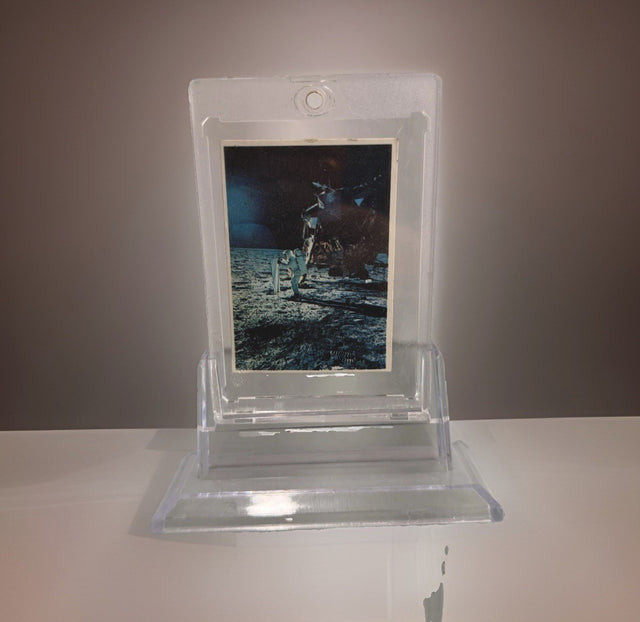
1969 Space Candy Buzz Aldrin Apollo 11 On The Moon Card #19 Taylor-Reed Display
$59.00 USD
-

1980 Polo Player Green Pink Chalk Pastel Bears Andy Warhol Signature AS-IS
$399.00 USD
-

After Andy Warhol Moon Landing Line Drawing 5/50 w/ Astronaut Autographs As-Is
$175.00 USD
-

After John Lennon "I Do" Framed Print, Marked A/P Unverified
$99.00 USD


Browse the collection for current listings.