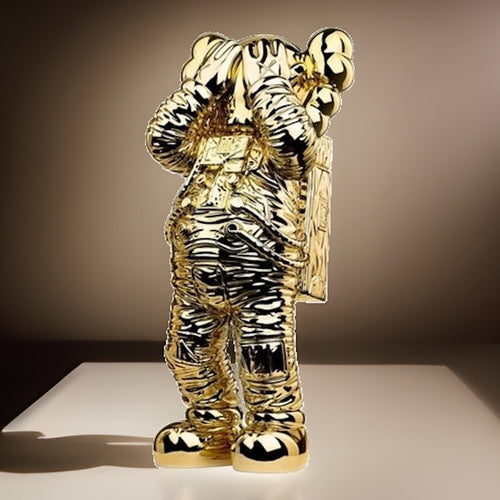
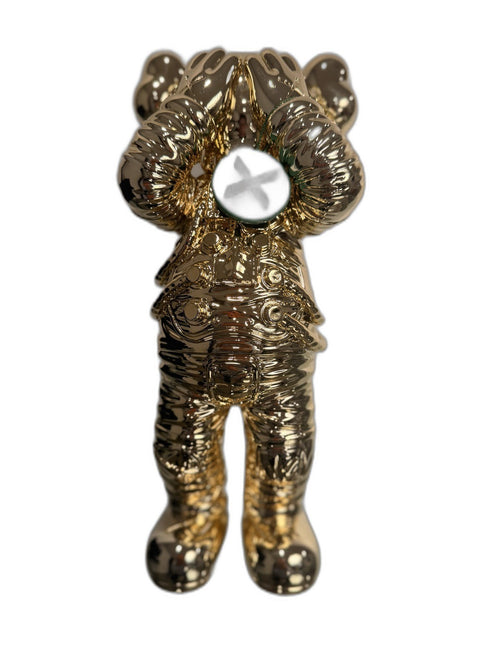
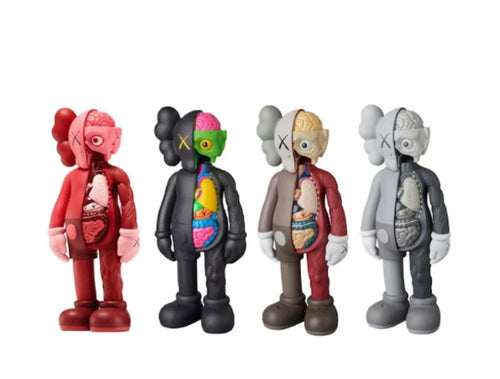
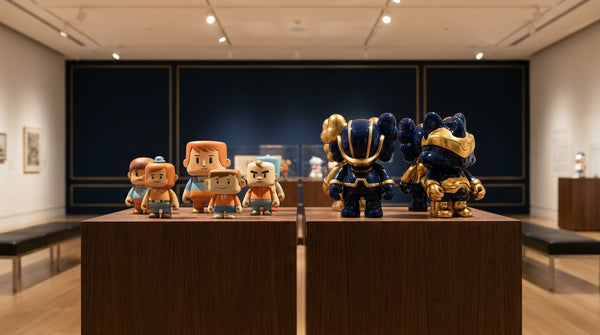
Did KAWS outperform Bitcoin? No — Bitcoin's 2010–2025 returns are a once-in-a-generation outlier no traditional asset class matched, including blue-chip contemporary art. But top-tier KAWS works delivered documented secondary-market appreciation in the multi-hundred to four-figure percentage range, placing the artist among the strongest-performing alternative assets of the decade.
The Comparison Most Collectors Get Wrong
When clients ask Gauntlet Gallery whether KAWS belongs in a portfolio next to crypto, the framing itself is usually off. Bitcoin and KAWS are both speculative cultural assets that emerged from sub-cultures (cypherpunk and street art respectively) and crossed into institutional acceptance during the same fifteen-year window. But they behave nothing alike in a portfolio.
Gauntlet Gallery has been tracking street art and contemporary collectibles since our founding in 2012. Our internal database of 160,000+ comparable sales across the secondary market gives us one of the more granular views of KAWS price behavior available outside of the major auction houses. Below is what that data actually shows when laid against Bitcoin's same-period chart.
KAWS vs Bitcoin: 2010–2025 Asset Class Comparison
| Attribute | Bitcoin | KAWS (top-tier works) |
|---|---|---|
| 2010 entry price | Sub-$1 per coin (early 2010) | Hundreds to low thousands USD for prints; early Companion figures sub-$500 |
| 2025 peak documented range | Multi-thousand-dollar range, with cycle highs into five and six figures | Record $14.7M for The KAWS Album at Sotheby's Hong Kong, April 2019; top prints/figures trade in the documented secondary market at multiples of original retail |
| Approximate return profile | Extreme outlier — multi-thousand-x for earliest holders | Documented 10x–1,000x range for top performers held since release |
| Liquidity | 24/7 global exchanges, instant settlement | Illiquid — auction cycles, private sale, marketplace listings |
| Volatility | High; 50–80% drawdowns historically | High at the work level; smoother at the cohort level |
| Storage / custody | Self-custody wallet or exchange | Physical storage, insurance, condition risk |
| Authentication risk | Cryptographic — near zero if self-custodied | High — estimated 40–60% fake rate on open marketplaces |
| Collector base | Tech-native, global, anonymous | Design, fashion, contemporary art collectors; named |
Why Bitcoin Is the Wrong Benchmark
Bitcoin's 2010–2025 return is not a fair comparable for any asset, traditional or alternative. The earliest holders bought a monetary experiment for fractions of a cent and watched it become a sovereign-grade reserve asset. That is a one-time, network-effect outcome. Comparing it to KAWS — or to S&P 500 returns, or to gold, or to Manhattan real estate — produces the same conclusion: Bitcoin wins on raw appreciation.
The honest question is not "did KAWS beat Bitcoin." The honest question is which asset behaves the way you need it to behave inside a portfolio.
Store of Value vs Cultural Object
Bitcoin is a store-of-value thesis. Its price is a function of monetary policy, adoption curves, and network security. It does not hang on a wall. It does not appreciate because culture moves toward it — it appreciates because capital flows into the network.
KAWS is a cultural object. Brian Donnelly, born 1974 in Jersey City, NJ, built a body of work that reads simultaneously as fine art, designer toy, and fashion artifact. His pieces appreciate because cultural relevance compounds: museum shows, fashion collaborations, celebrity collectors, and a generation of buyers who grew up with Companion as a recognizable figure. That is a different appreciation engine entirely.
When Each Asset Makes Sense in a Portfolio
Bitcoin makes sense when you want:
- Maximum liquidity in an alternative position
- Exposure to monetary regime change
- A position you can size precisely and rebalance daily
- Zero physical storage or authentication overhead
KAWS (and blue-chip contemporary art) makes sense when you want:
- Tangible cultural assets that double as collectible enjoyment
- Lower correlation to crypto and equities at the cohort level
- Exposure to a fifteen-year institutional validation trend — auction houses, museum editions, fashion collaborations
- An asset where authentication and provenance create a defensible moat for serious collectors
The Authentication Asymmetry Most Comparisons Skip
The single largest hidden cost in KAWS investing is authentication. The Dior collaboration era, the OriginalFake closure in 2013, and the AllRightsReserved Hong Kong drops each created enormous forgery incentives. Counterfeits surface within 72 hours of major releases. Open marketplaces show fake rates that Gauntlet Gallery's internal analysis puts in the 40–60% range across the broader category.
Bitcoin has no authentication problem. If you hold the keys, you hold the asset. KAWS requires verified provenance, condition reports, and in many cases physical inspection. That overhead is real, and it is why serious collectors work through specialists rather than open marketplaces.
For a deeper look at what authenticated KAWS collecting actually looks like, see our KAWS collector guide.
The Verdict
Bitcoin won the raw-return comparison from 2010 to 2025. Almost everything did, against Bitcoin. But KAWS delivered the strongest performance of any contemporary designer-toy artist in the same window and earned formal placement at Phillips, Sotheby's, and Christie's. The April 2019 sale of The KAWS Album for $14.7M at Sotheby's Hong Kong was the institutional moment that locked in the category.
The two assets do not compete for the same role. Bitcoin is the liquid, programmable, store-of-value play. KAWS is the tangible, culturally compounding, authentication-gated play. A portfolio with serious alternative exposure increasingly holds both.
Ready to explore authenticated KAWS works backed by our 160,000+ comparable sales database? Browse the full Gauntlet Gallery collection.