The Collab That Broke the Market: KAWS x Dior 2019

There was a before and an after.
Before KAWS x Dior, designer toy collectors and luxury fashion collectors lived in separate zip codes. They shared almost no overlap in vocabulary, in buying habits, or in the auction rooms they haunted. Then Kim Jones walked a collection down the runway at Paris Men's Fashion Week in June 2019 and collapsed that distance almost overnight.
We're not being dramatic. The secondary market data, the authentication complexity that followed, and the pricing floors that got reset in the months after that show — these are documented, traceable shifts. If you buy or sell KAWS work today and you don't understand what happened with Dior, you're navigating without a map.
This is the map.
What Actually Happened in June 2019
Kim Jones was appointed Artistic Director of Dior Men in 2018. His first major cultural statement wasn't a fabric choice or a silhouette decision. It was a collaborator: Brian Donnelly, known universally as KAWS.
The Spring/Summer 2019 Dior Men's collection debuted in Paris with KAWS's BFF character rendered at monumental scale. The runway backdrop featured an oversized BFF figure. The garments themselves carried KAWS iconography — the XX eyes, the softened cartoon anatomy — integrated into Dior tailoring. Not printed on a T-shirt and called a collab. Actually woven into the identity of the collection.
Jones understood something that the sneaker and streetwear world had already figured out: KAWS wasn't just a collectible artist. He was a cultural signal. Wearing KAWS meant something specific. It said you followed the secondary market, that you understood scarcity, that you were tapped into a conversation that ran parallel to — and sometimes above — the traditional fine art world.
Dior brought that signal into a house that had been dressing heads of state since 1947.
What do you think happened to the floor price on every KAWS figure in a collector's vitrine the morning after that runway?The Companion and BFF: Pre-Dior vs. Post-Dior Pricing Dynamics

To understand the pricing shift, you need a baseline.
KAWS figures — particularly the Companion and BFF series — had been appreciating steadily through the mid-2010s. Medicom Toy collaborations, KAWSONE drops, limited retail runs: collectors who paid attention were already seeing strong secondary multiples. A piece acquired at release price and held for two or three years was reliably worth more. This was understood.
But the Dior moment was a category-level revaluation, not a product-level one.
The distinction matters. A product-level appreciation means a specific colorway or edition goes up because it was rare or desirable. A category-level revaluation means the entire asset class gets repriced because a new audience has entered the market and they're bidding from a different wealth bracket.
Dior collectors — and by extension, the broader luxury goods secondary market — looked at KAWS work through a different lens. They weren't comparing a BFF vinyl to a competing figure from a different artist. They were comparing it to a Dior accessory, a limited run handbag, a grail sneaker from a luxury collab. The comparison set changed. And when the comparison set changes, the price ceiling moves.
The Dior x KAWS BFF Plush
The collaboration produced physical objects beyond the runway garments. The Dior x KAWS BFF plush — produced in a limited run, released through Dior retail channels and select events — became one of the most discussed pieces in the secondary toy market almost immediately.
This wasn't a BE@RBRICK. It wasn't a Medicom vinyl. It was a soft goods object bearing the Dior logo and KAWS iconography simultaneously. Two authentication worlds collided in a single product, and the secondary market didn't have an established playbook for it.
If you bought a Dior x KAWS plush at retail and sold it eighteen months later, how do you prove it's authentic to a buyer who's never touched a designer toy in their life?That question drove a significant portion of the authentication conversation that followed. And it still matters today.
Authentication in the Post-Dior Market: Why It Got Complicated
KAWS authentication has a defined framework. For primary market vinyl figures and plush objects, the authentication anchors are:
- Original Medicom packaging — intact, unaltered box with Medicom release-specific hologram where applicable
- Foot stamp and markings — the molded copyright stamp (© KAWS plus the production year) must match the documented specifications for that edition
- Release record verification — cross-referencing the specific edition number or colorway against known Medicom or KAWSONE drop records
- Earlier pieces — rely on original packaging integrity, hologram condition, and a clean, traceable provenance chain back to original retail or documented secondary purchase
The Dior x KAWS pieces introduce a parallel authentication layer: the Dior provenance chain. Dior retail objects carry their own authentication markers — house receipts, dust bags, labeling conventions, serial structures. A buyer who knows Dior but doesn't know KAWS, or vice versa, is half-blind in the verification process.
This created a market gap that counterfeiters filled quickly.
The Counterfeit Problem Post-Dior
The Dior x KAWS BFF plush in particular became a high-value target for reproduction. The reasons are straightforward: high secondary market demand, a buyer pool that included people unfamiliar with the KAWS side of authentication, and a product category (plush goods) where the physical tells are harder to read than in rigid vinyl.
There is no single third-party authentication service that has established dominance in KAWS x Dior physical goods the way PSA/DNA, JSA, or BAS have in autograph authentication. The PSA certification process for trading cards is well-established, and PSA's own documentation warns collectors to use their online verification tools to confirm any PSA-labeled item matches their database — warnings that exist precisely because fake PSA slabs are a documented problem. The analog in the designer toy space is the proliferation of convincing-looking packaging reproductions.
For KAWS vinyl, the Medicom hologram, foot stamp, and release record remain the most reliable physical anchors. For the Dior x KAWS objects specifically, the provenance chain back to Dior retail is the strongest signal. A piece with a verifiable Dior purchase receipt from a known Dior point of sale, combined with intact Dior labeling and KAWS-consistent production quality, is in a different authentication position than a piece sourced from a third party with no paper trail.
This is not a hypothetical concern. The FBI's Operation Bullpen, which ran through the late 1990s and early 2000s and resulted in over two dozen convictions, established the pattern definitively for the broader collectibles market: when a category's prices spike rapidly, sophisticated forgery infrastructure follows within eighteen to thirty-six months. The KAWS secondary market post-2019 followed this pattern.
Does the person selling you that Dior x KAWS BFF plush understand what they're actually holding, or are they flipping something they bought from someone who didn't know either?How This Collab Repriced Adjacent KAWS Categories

The Dior effect wasn't contained to Dior x KAWS pieces. It radiated outward.
Original Companion Figures
Collectors who had been sitting on early Companion figures — particularly grey and brown colorways from significant early Medicom runs — watched the floor move under their feet in 2019 and 2020. The luxury crossover audience that entered the KAWS market through Dior wasn't looking for the newest drop. They were doing what luxury collectors always do: they were looking for the foundational, historically significant objects in the artist's catalog.
This is the same dynamic that drives demand for early Andy Warhol screen prints when a major Warhol retrospective lands. The KAWS market didn't face that specific disruption, but the Dior collab created its own kind of structural pressure. For a KAWS or BE@RBRICK purchase, check the individual listing for release-specific packaging, production marks, condition and provenance. Manufacturer NFC is relevant only on releases that include it; a certificate alone does not establish authenticity.
KAWS x BE@RBRICK
The Medicom BE@RBRICK collaborations with KAWS had always commanded strong premiums. Post-Dior, these pieces attracted a new category of buyer: the luxury goods collector who understood BE@RBRICK as a format because of its adjacency to the Medicom ecosystem, but who now had KAWS cross-referenced in their mind as a Dior artist.
Authentication for KAWS x BE@RBRICK follows the established framework: original Medicom packaging with intact hologram, the molded foot stamp and copyright markings, and release record verification against documented Medicom production. Earlier pieces rely on provenance chain and packaging integrity. None of this changed because of Dior — but the urgency of understanding it increased significantly as new buyers entered the market without a collector's baseline knowledge.
Fine Art and Print Market
KAWS's gallery and print work — always priced at a different tier than the toy market — also saw meaningful recalibration. The Dior collab functioned as a legitimizing signal for institutional buyers who had been aware of KAWS but hadn't yet repositioned him in their mental hierarchy from "designer toy artist" to "artist whose work belongs in a serious collection."
This is a soft influence, harder to trace than secondary vinyl market data. But anyone active in the print and contemporary art secondary market in 2019 and 2020 felt it.
Kim Jones and the Art-Fashion Interface: Why This Particular Collaboration Held
Not every fashion x art collaboration produces lasting market impact. Most don't. A brand puts an artist's image on a T-shirt, calls it a limited edition, and the "collaboration" functions as a marketing event with no secondary market tail.
The Dior x KAWS collaboration worked differently for several specific reasons.
Creative Directorial Authority
Kim Jones had the title and the institutional authority to make this a collection-defining statement, not a licensing footnote. The KAWS iconography wasn't applied to Dior. It was integrated into the creative DNA of a full runway collection. That distinction is visible in the objects themselves and it's legible to anyone who looks at the garments, the set design, and the accessories with a clear eye.
KAWS's Pre-Existing Market Infrastructure
The KAWS secondary market was already mature and liquid before Dior. There was an established collector base, a developed resale ecosystem, and a price history. Dior introduced a new demand cohort into a market that already had functioning infrastructure — not a speculative market that was being inflated from scratch. That combination — new money meeting established infrastructure — is what produces durable price floors rather than spikes followed by corrections.
The Bidirectional Signal
The collaboration sent a signal in both directions simultaneously. To the streetwear and designer toy world: KAWS is now validated at the level of a historic luxury house. To the luxury fashion world: there is a living artist in the designer toy and street art space whose cultural weight is worth Dior's association.
Both signals were durable. Both influenced buying behavior for years after the runway show.
What Changed for Dealers and Secondary Market Operators

Speaking plainly: the post-Dior KAWS market created new professional demands.
Dealers who had been operating primarily in the street art and designer toy space suddenly needed working knowledge of luxury goods authentication. Dealers from the luxury goods world who wanted to transact in KAWS x Dior pieces needed to understand Medicom packaging, holograms, and the specific tells of genuine KAWS production quality.
The buyers who got burned in the post-Dior market — and some did — were almost always people operating with one-sided expertise. They knew their world but not the other one. The counterfeit problem exploited exactly that gap.
Reputable gallery operations responded by deepening their authentication process. Not just checking boxes on a provenance checklist, but actually building the dual-domain knowledge required to verify these pieces confidently. That's the baseline for anyone serious in this market now.
Red Flags: KAWS x Dior in the Secondary Market
If you're buying or considering a KAWS x Dior piece — particularly the BFF plush — these are the signals that should stop you cold.
- No Dior retail provenance documentation. A piece this significant, released through Dior channels, should have a paper trail. If the seller can't produce any documentation of original purchase — receipt, Dior authentication card, event documentation — treat it as unverified until proven otherwise.
- Packaging inconsistencies. Dior's production standards are among the most exacting in luxury goods. Any irregularity in labeling font, label placement, dust bag quality, or box construction is a hard stop. Compare against documented authentic examples before proceeding.
- KAWS-side production quality issues. The figure or plush itself should reflect KAWS's known production standards. Facial expression inconsistencies, color registration problems, uneven finishing on XX eyes — these are tells. If you don't have enough reference points to judge this yourself, you need someone who does before you buy.
- Seller unfamiliarity with both authentication domains. A seller who can talk fluently about the Dior side but goes vague on the KAWS side, or vice versa, is a risk. The piece sits at the intersection of both worlds. Your seller should too.
- Price that seems low relative to documented secondary market comparables. This is not a category where bargains come from nowhere. If a price seems dramatically below the market, the most likely explanation is a problem with the piece, not a sophisticated seller who undervalued their inventory.
- Sourcing from markets with documented high fake-to-authentic ratios. Certain online platforms and certain regional markets have documented concentrations of counterfeit luxury goods and designer toys. Sourcing from those channels without independent expert verification is a risk that doesn't diminish because the price is right or the photos look good.
- Missing or incorrect hologram and foot stamp. For KAWS vinyl and figures, a missing Medicom hologram or a foot stamp that does not match the documented release is disqualifying. Period.
Bottom Line
The KAWS x Dior 2019 collaboration is one of the most structurally significant events in the recent history of designer toy pricing. Not because it was the biggest drop or the flashiest product. Because it broke down a wall between two collector ecosystems and forced a category-level repricing that held.
The pieces produced by that collaboration — and the broader KAWS market that was revalued in its wake — now operate in a more complex authentication environment than existed before June 2019. That complexity isn't going away. The buyers who entered through the Dior door are still in the market. The counterfeit pressure that followed the price spike is still present.
Buying KAWS in this environment requires dual-domain expertise: you need the KAWS side and the Dior side, the Medicom authentication framework and the luxury goods provenance chain. If you're not there yet on one side or the other, you need a dealer or authentication resource that is.
At Gauntlet Gallery, we do not transact in pieces where the authentication chain has gaps. On KAWS secondary market pieces, that means original Medicom packaging integrity, hologram and foot stamp verification, release record confirmation, and — for Dior x KAWS objects specifically — verifiable retail provenance on the Dior side as well. That standard exists because of exactly what 2019 demonstrated: when a category gets repriced overnight, the authentication stakes get repriced with it.
Know what you're holding. Know how to prove it. Everything else is noise.
FAQ: KAWS x Dior 2019 — Collector Questions Answered
1. What physical objects came out of the KAWS x Dior 2019 collaboration?
The collaboration produced runway garments, accessories, and limited physical collectibles — most notably the Dior x KAWS BFF plush figure, which became the most actively traded secondary market object from the collab. There were also branded accessories and packaging produced for the collection. The garments themselves are a separate secondary market with their own authentication considerations rooted primarily in the Dior side of the house.
2. How do I authenticate a Dior x KAWS BFF plush?
Authentication requires working both sides simultaneously. On the Dior side: intact Dior labeling, consistent with Dior's known production standards for the period, with retail provenance documentation where possible. On the KAWS side: production quality consistent with genuine KAWS output — correct facial expression geometry, clean color registration, quality finishing on the XX eyes and other iconographic elements. No single third-party service has established dominant authority specifically for Dior x KAWS plush in the way PSA/DNA or BAS have for autographs. Expert hands-on review, combined with provenance documentation, is the most reliable path.
3. Did KAWS figure prices actually hold after the Dior collab, or was it a temporary spike?
The repricing demonstrated more durability than a typical hype spike for reasons we've covered above: new money entered a liquid, established market with functioning infrastructure. That's structurally different from a speculative bubble. That said, secondary markets fluctuate, and individual editions perform differently. The category-level floor move was real and durable. Specific edition performance depends on edition-specific factors: rarity, condition, provenance, and current demand from both collector communities.
4. For KAWS vinyl figures unrelated to Dior, does the post-2019 authentication framework change anything?
The framework itself didn't change — Medicom packaging integrity, hologram and foot stamp verification, release record verification, provenance chain for earlier pieces. What changed is the sophistication and volume of counterfeits in circulation, and the broader range of buyers who are now transacting in the KAWS secondary market without deep collector-side knowledge. The framework is the same. The urgency of applying it correctly increased.
5. Is KAWS x BE@RBRICK authentication different from standard KAWS figure authentication?
The principles are consistent. Original Medicom packaging with intact hologram; the molded foot stamp and copyright markings; release record verification against Medicom's documented production for that edition. BE@RBRICK as a format has its own collector community and its own secondary market dynamics, but for KAWS x BE@RBRICK pieces specifically, the KAWS authentication anchors apply in full. Earlier releases rely on packaging integrity and a clean provenance chain. The hybrid nature of a KAWS x BE@RBRICK piece doesn't create a hybrid authentication framework — it just means you need competency in both.
6. Does Gauntlet Gallery claim Pest Control authentication for Banksy works, and how does that relate to KAWS authentication?
Gauntlet Gallery does not claim Pest Control authentication for Banksy works. Pest Control is the artist-controlled authentication body for Banksy, and any claim of Pest Control certification should be verified directly through Pest Control's own processes. This is worth raising in a KAWS context because it illustrates a broader principle: artist-controlled or artist-adjacent authentication bodies are the primary authority for their respective artists. For KAWS, that means the Medicom and KAWSONE ecosystem is the foundation. For Banksy, it's Pest Control. Conflating these frameworks, or accepting third-party claims in place of the appropriate primary authority, is how authentication errors happen.
7. What should I look for in a dealer selling KAWS x Dior secondary market pieces?
Dual-domain competency. The dealer should be able to speak fluently and specifically about both the KAWS authentication side and the Dior provenance side without vagueness or deflection. They should be able to explain what documentation they have for a piece's retail origin, what their process was for evaluating the KAWS production quality, and what they would do if any element of their verification came up uncertain. A dealer who is confident on one side and hand-wavy on the other is not equipped for this specific category. Transact accordingly.
8. How does the KAWS x Dior collab compare to other art-fashion collaborations in terms of market impact?
It's in a category with very few peers in terms of durable secondary market impact. Most art-fashion collaborations function as brand marketing events: the artist gets visibility, the brand gets cultural currency, a limited product gets released, and secondary market activity peaks and then fades within a defined window. The KAWS x Dior collaboration produced a structural repricing of a broader category that held and influenced subsequent buying behavior across multiple collector communities. The closest comparable dynamics in other markets involve cases where a legitimizing institutional signal — a major museum show, a historic auction result, a significant cultural association — introduces a new demand cohort into an established market. The Dior runway was that signal for KAWS at a scale that very few artists in any category have experienced in real time.
Shop KAWS
Explore current pieces available from the gallery.
-
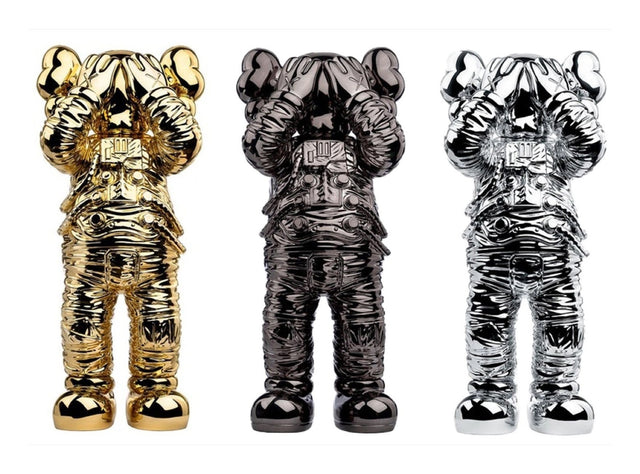
KAWS Holiday Space Set of 3 Gold Black Silver Companion Astronaut Figure Rare
$2,900.00 USD
-
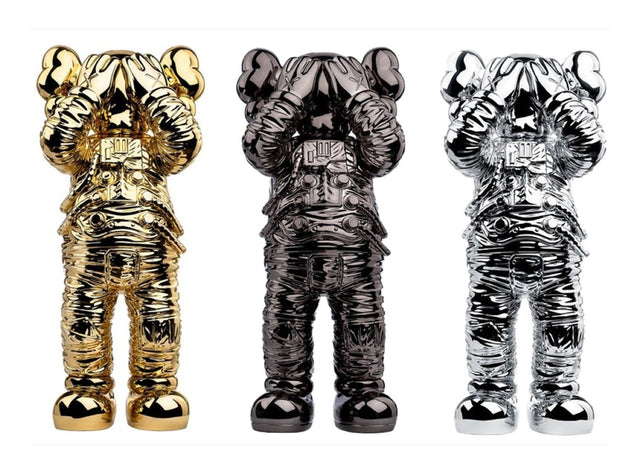
KAWS Holiday Space Set of 3 Gold Black Silver Companion Astronaut Figure
$2,900.00 USD
-
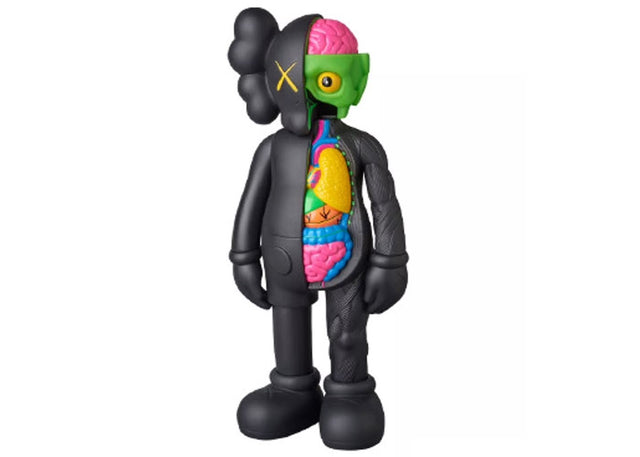
KAWS Companion Flayed Open Edition Black Medicom Toy Dissected Sealed New Figure
$599.00 USD
-
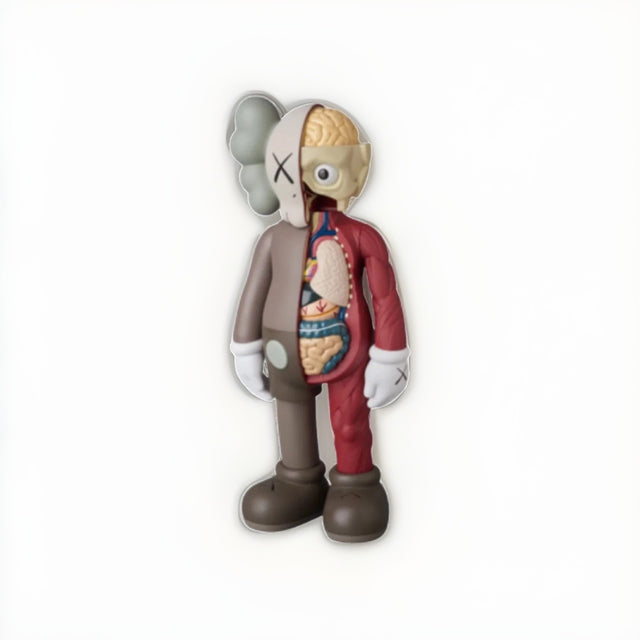
KAWS Companion Flayed Open Edition Brown Medicom Toy Dissected Sealed New Figure
$349.00 USD
-
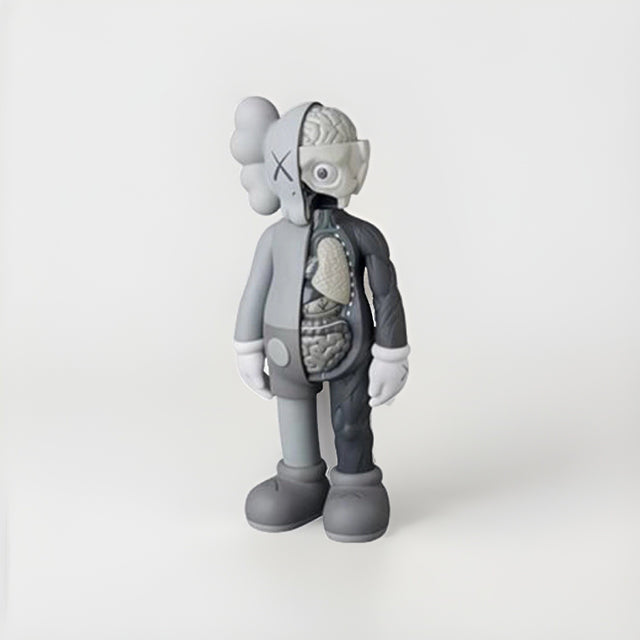
KAWS Companion Flayed Open Edition Grey Medicom Toy Dissected Sealed New Figure
$349.00 USD
Browse the collection for current listings.