BE@RBRICK Karimoku Wood Editions: A Furniture-Grade Asset Class

There is a moment in every serious collector's journey when a toy stops being a toy.
When the material, the craft, the sourcing, and the cultural weight combine into something that belongs in a different conversation entirely. Not the display case conversation. The acquisition conversation.
Karimoku BE@RBRICKs are that moment.
These are not painted resin figures with a wood-grain sticker. They are CNC-milled and hand-finished solid Japanese oak and walnut, produced through a genuine manufacturing partnership between Medicom Toy and Karimoku — one of Japan's most respected furniture makers, with a production history stretching back to the mid-twentieth century. The same joinery philosophy that goes into a Karimoku dining table goes into these figures. That is not marketing language. That is the product of understanding what Karimoku actually does for a living.
If you collect BE@RBRICKs seriously, you already know the Karimoku collaborations sit at the top of the secondary market tier. If you're just arriving at this corner of the category, this is the article you needed before you spent money on the wrong thing.
Let's go through all of it.
Who Is Karimoku, and Why Does It Matter Here
Karimoku was founded in Aichi Prefecture, Japan, in 1940. They are not a novelty manufacturer. They are not a lifestyle brand doing furniture as a side hustle. Karimoku produces high-end residential and contract furniture distributed through dedicated showrooms, sold at price points that make serious furniture collectors pay attention.
Their modern design sub-label, Karimoku New Standard, brought them into the international design conversation — collaborating with designers including Scholten & Baijings and Common Works, placing pieces in institutions, and building credibility with a design press that does not extend goodwill casually.
So when Medicom Toy approached Karimoku for a BE@RBRICK collaboration, the resulting object carried institutional weight on both sides of the equation.
This is not Medicom licensing a wood finish to a third-party factory. This is a genuine material partnership. The wood is sourced and processed through Karimoku's actual production infrastructure. The finishing is done to furniture-grade standards. When you hold a Karimoku BE@RBRICK, you feel the difference before you see it.
Does that matter to the secondary market?
It matters enormously. Provenance of manufacture is one of the primary drivers of long-term value in the collectibles category. The Karimoku name on the box is not just a collaboration credit. It is a material guarantee.
The Production Reality: What "Wood BE@RBRICK" Actually Means

Let's be precise about what you are buying, because the secondary market has a problem with vague descriptions.
The Manufacturing Process
Karimoku BE@RBRICKs are produced from solid hardwood — primarily Japanese oak and walnut, though specific releases have used other species. The figures are CNC-milled from solid stock, not laminated, not veneered, not resin with wood content. This distinction is foundational to the value proposition.
The joinery at the figure's moveable points is engineered to the tolerances Karimoku applies to furniture. The grain is considered in orientation during milling. The finishing — oils, waxes, or natural lacquers depending on the specific release — is applied by hand to furniture-grade standards.
The result is an object that ages. It patinas. It responds to its environment the way fine wood does. That is a feature, not a flaw. Collectors who understand wood know this immediately.
The Size Question
Karimoku BE@RBRICKs have been produced at the 100% and 400% scales, with 1000% releases representing the apex of the collaboration's ambition. The 1000% figure in solid hardwood is genuinely monumental — an object that occupies a room the way sculpture does.
What does it cost to produce a 1000% solid hardwood figure at furniture-grade finishing standards?
More than most BE@RBRICK releases. Significantly more. That production reality is reflected in the retail price point and amplified in the secondary market. The material cost alone distinguishes these from the broader BE@RBRICK catalog in ways that are not subjective.
Editions and Variants
Releases have included natural oak, smoked oak, walnut, and finish-variant editions. Some releases have incorporated Karimoku's signature joinery details as visible design elements. Limited batch quantities are standard — these are not mass production runs. Specific edition sizes vary by release and should be confirmed through Medicom's official release records and Karimoku's documentation where available.
Authentication Framework: What You Actually Need
This is where the article earns its keep. The Karimoku BE@RBRICK secondary market has authentication requirements that differ from standard BE@RBRICK protocol, and getting this wrong is expensive.
The Authentication Framework
There is no chip or certificate shortcut for Karimoku BE@RBRICKs. Authentication rests on the physical documentation package — original packaging, hologram seal, molded markings, and Medicom's release records — read together as a chain. Check, cross-reference, confirm.
Because the authentication burden sits on physical documentation and provenance chain, this is where collectors need to be disciplined.
What the Physical Package Must Include
-
Original Karimoku x Medicom Toy packaging
- Both brand marks present on box
- Production information in Japanese with material specification
- Box condition matters for value but not for authentication per se
-
Hologram seal or authenticity marker specific to the release
- Placement and format vary by release; know the specific release documentation before buying
- Aftermarket reproductions of hologram seals exist — this is not theoretical
-
Medicom release record confirmation
- Cross-reference the specific release against Medicom's catalog
- Edition numbering where applicable must match documentation
-
Provenance chain documentation
- Original purchase receipt or Karimoku / authorized retailer documentation where available
- For secondary market acquisitions: chain of custody documentation from prior owners
-
Molded markings verification
- BE@RBRICK logotype and Medicom copyright markings must be crisp and match the documented release
- Soft, smudged, or wrong-year markings are a disqualifying finding
The wood itself provides a secondary authentication layer that does not exist with resin figures. Authentic Karimoku BE@RBRICKs have a material consistency, grain quality, and finishing standard that experienced hands can assess. Reproductions in lower-grade wood or with factory finishing are perceptibly different. This is not a substitute for documentation, but it is a meaningful additional check.
Third-Party Grading for Karimoku BE@RBRICKs
PSA grading is used in the BE@RBRICK category broadly. For Karimoku editions, a PSA encapsulated grade with the label citing the specific Karimoku release adds market liquidity and buyer confidence. However — and this is important — PSA's authentication-verification warnings apply. PSA grades condition and confirms the item matches known authentic examples. It does not replace the physical documentation package or release-record verification. Use PSA grading as a liquidity tool and condition record. Do not treat it as your primary authentication framework.
Beckett (BAS) has expanded its collectibles coverage, but the primary BE@RBRICK authentication infrastructure remains the physical documentation package described above. BAS is not currently the lead authenticator in this specific category the way it dominates music and sports memorabilia.
The Market Position: Where Karimoku Sits in the BE@RBRICK Hierarchy

The BE@RBRICK secondary market has a clear stratification that experienced collectors understand intuitively.
At the base, you have the general collaboration releases — brand partnerships, artist editions, licensed characters. These trade actively and form the liquid core of the market. Solid performers, well-understood pricing, accessible entry points.
Above that, you have the artist-driven limited editions where cultural weight and scarcity drive premiums. Significant works, real money.
At the apex, you have material and manufacturing differentiation editions. Karimoku lives here. The premium is not arbitrary. It is a function of production cost, genuine scarcity, material permanence, and cross-category collector appeal.
The Cross-Category Collector Effect
This is the dynamic that makes Karimoku BE@RBRICKs particularly interesting from a market perspective.
Standard BE@RBRICKs attract toy collectors, streetwear collectors, and pop culture collectors. That is a deep pool.
Karimoku BE@RBRICKs attract all of those buyers plus design collectors, furniture collectors, material culture collectors, and the significant overlap between Japanese craft appreciation and contemporary art collecting. That expanded buyer pool matters at the point of resale. It creates demand from directions that do not normally converge on a single object.
When was the last time a figure competed for the same collector dollar as a Nakashima studio piece?
Karimoku BE@RBRICKs do not directly compete with studio furniture. But they speak to the same sensibility. The collector who understands why furniture-grade hardwood joinery matters is a different buyer than the one chasing a licensed character print run. Both show up for Karimoku BE@RBRICKs.
The 1000% Tier as Sculpture
The 1000% scale changes the conversation completely. At this scale, in solid hardwood, the Karimoku BE@RBRICK is not functioning as a figure in a display case. It is functioning as a sculptural object in a room. It has presence, weight, and material authority that photographs do not fully capture.
Serious collectors and interior design clients both understand this. Which means the acquisition conversation for a 1000% Karimoku happens in rooms that would not normally intersect with the BE@RBRICK catalog.
That is not a small thing. Access to a broader acquisition audience is a structural market advantage.
Karimoku x Medicom vs. Other Wood or Material Variant BE@RBRICKs
The market has seen other material variant BE@RBRICKs — ceramic editions, metal editions, collaborations that incorporate non-standard materials. It is worth understanding where Karimoku sits relative to these.
| Material / Edition Type | Manufacturing Partnership | Material Permanence | Cross-Category Collector Appeal |
|---|---|---|---|
| Standard resin collaboration | Medicom in-house | Moderate (UV, impact sensitivity) | Core BE@RBRICK collector base |
| Ceramic / porcelain editions | Varies by partner | High (fragile but chemically stable) | Ceramics collectors, design collectors |
| Metal editions | Varies by partner | Very high | Limited specialist appeal |
| Karimoku solid hardwood | Karimoku (furniture-grade infrastructure) | Very high (ages with character) | Design, furniture, craft, contemporary art, core BE@RBRICK |
The Karimoku column wins on cross-category appeal and on the institutional weight of the manufacturing partner. Those two factors are the market drivers that matter most for long-term secondary market performance.
Caring for a Karimoku BE@RBRICK

This section matters because improper care destroys value. Wood is not resin. The maintenance requirements are different and the damage from neglect or improper handling is often irreversible.
Environment
-
Humidity control is non-negotiable
- Solid hardwood responds to humidity fluctuations. Extreme dryness causes checking (small surface cracks). Excessive humidity causes swelling and potential joint movement.
- A stable relative humidity in the range appropriate for fine furniture — consistent, not perfect — is the goal.
- This is not complicated if you are already maintaining a collection environment for paper, photographs, or textiles. The humidity standards overlap.
-
UV exposure accelerates color change
- Oak and walnut both shift significantly under UV. Museum glass or UV-filtering acrylic display cases are the correct solution if you are displaying near windows or under track lighting.
- Some collectors intentionally allow the patina to develop. That is a legitimate choice. An uneven patina from inconsistent exposure is not.
-
Temperature stability
- Dramatic temperature swings stress wood. A climate-controlled collection environment is ideal. Residential conditions with normal HVAC are generally adequate if the humidity is managed.
Handling
- Handle with clean, dry hands. Skin oils transfer to finished wood surfaces.
- The moveable joints are engineered for display adjustment, not repeated repositioning. Find a position you want and leave it.
- Do not apply furniture polish, wax, or wood conditioner products without knowing the specific finish on your release. Oil-finished pieces and lacquered pieces require different care protocols. When in doubt, do not apply anything.
Storage
If storing rather than displaying, archival tissue wrapping in the original packaging in a climate-controlled environment is the correct approach. Do not use standard bubble wrap directly against the wood surface for extended storage — the plastic can interact with certain finishes over time.
Original packaging should be stored separately from the figure if the packaging is part of your value documentation. A box with humidity damage is a value problem at point of sale.
Buying in the Secondary Market: The Discipline Required
Karimoku BE@RBRICKs command prices that attract fakes and misrepresentations. This is not a warning specific to this category — it applies to everything at sufficient value. But the wood material creates specific deception vectors worth understanding.
What Deceptive Sellers Do
The most common misrepresentations in this segment:
- Standard BE@RBRICK figures with aftermarket wood-look finishes presented as Karimoku pieces
- Lower-grade wood reproductions — the figure form is correct but the material is not Karimoku-production hardwood
- Genuine Karimoku figures with missing or replaced authentication documentation
- Mixed-documentation offerings — authentic figure with non-original box, or vice versa
- Photographic misrepresentation where grain and finish quality are obscured by lighting or resolution
None of these are hypothetical. Each pattern appears in the secondary market with regularity at this price tier.
The Due Diligence Protocol
-
Request high-resolution photography of:
- All six faces of the figure
- Joint areas at high magnification
- All authentication markings and holograms
- All packaging faces and interior
- Any included documentation
- Verify molded markings against documented examples before completing any transaction
- Cross-reference the specific release against Medicom and Karimoku release records
- Request provenance chain documentation and treat gaps in the chain as negotiating leverage at minimum, disqualifying factors at maximum
- Work with dealers who specialize in the category rather than general marketplace listings where authentication due diligence is minimal
Red Flags
Stop. Before you move forward on any Karimoku BE@RBRICK acquisition, run this list.
- The price is significantly below known secondary market range. There is no such thing as a deal on a genuine Karimoku BE@RBRICK that cannot be explained by condition issues or provenance gaps. Both of those explanations require their own scrutiny.
- Missing original packaging. The box is part of the authenticated object at this tier. A figure without original Karimoku x Medicom packaging is a value-impaired offering.
- Molded markings soft, smudged, or inconsistent with the documented release. Any explanation for off-spec markings is a disqualifying red flag. Do not rationalize this one.
- The seller cannot identify the specific release. Karimoku BE@RBRICK releases are specific and documented. A seller who cannot tell you exactly which release they are offering has not done the work to authenticate what they are selling.
- Photography is low-resolution, artificially lit, or obscures joinery and finish detail. Good photography of a genuine piece is in the seller's interest. Obscured photography protects the seller, not the buyer.
- Provenance chain begins with "purchased from an auction lot" or similar opacity. This is not automatically disqualifying but requires significantly more due diligence before proceeding.
- The grain and finish quality look inconsistent or factory-cheap in available photography. Karimoku finishing standards are perceptibly high. Trust your eye if something looks off, and get hands-on access before committing.
- Hologram seal placement or format does not match the known documentation for the specific release. Know what authentic looks like before you examine what you are being offered.
Bottom Line
The Karimoku BE@RBRICK collaboration is the most defensible acquisition in the BE@RBRICK category for collectors who think about what they own in terms of material permanence, manufacturing integrity, and cross-market appeal.
It is not the most liquid segment of the market. The 1000% figures in particular sell to a smaller pool of buyers than a flagship branded collaboration at 400%. But the buyers it attracts are serious, they are capitalized, and they are coming from directions that do not normally converge on collectible figures.
That is a structural advantage for long-term value.
The authentication requirements are clear. The care requirements are manageable for any collector already maintaining a quality collection environment. The red flags are specific and avoidable with discipline.
What you cannot afford to be, in this segment, is casual. Casual gets you a beautiful-looking wood figure that is not what you paid for. Disciplined gets you one of the most compelling material objects in the contemporary collectibles market — an object that earns the word furniture-grade because it was made by people who actually build furniture.
The Karimoku BE@RBRICK is not a toy that grew up. It was never a toy. It was always an object that understood what it was going to become.
FAQ: Karimoku BE@RBRICK
Q: Are all Karimoku BE@RBRICKs made from solid hardwood, or are some veneered or laminated?
A: Genuine Karimoku BE@RBRICKs are solid hardwood, not veneered or laminated. This is the foundational material distinction that separates them from figures with applied wood-look finishes or lower-grade wood production. Verify material specification in the original documentation for the specific release you are considering. If the documentation does not clearly specify solid hardwood, treat that as an information gap requiring clarification.
Q: Which wood species have been used across Karimoku BE@RBRICK releases?
A: Japanese oak and walnut have been the primary species across releases. Specific editions have featured smoked or natural finish variants within those species. The species and finish are part of the release specification and should be confirmed against Medicom's official release records for any acquisition. Do not rely on seller descriptions alone for this specification.
Q: Is there a chip or digital certificate that authenticates Karimoku BE@RBRICK releases?
A: No. Karimoku BE@RBRICK authentication relies on physical documentation, original packaging, hologram seals, molded markings, and provenance chain. Know which release you are acquiring and verify the applicable documentation for that specific release before completing a transaction.
Q: Can I use furniture care products on my Karimoku BE@RBRICK?
A: This depends entirely on the specific finish applied to your release. Oil-finished pieces, wax-finished pieces, and lacquered pieces each require different care protocols. Applying the wrong product can damage the finish irreversibly. Unless you have confirmed documentation of the finish type and appropriate care instructions from Karimoku or a qualified conservator, the safest approach is to apply nothing and maintain the piece in a stable environment. When in doubt, do nothing.
Q: Is PSA grading appropriate for Karimoku BE@RBRICKs, and what does it add?
A: PSA grading adds market liquidity and a documented condition record, which are meaningful for resale. However, as PSA's own certification-verification warnings indicate, PSA grades condition against known authentic examples — it is not a substitute for the complete physical documentation package that constitutes proper authentication for this category. Use PSA grading as a liquidity and condition tool, not as your primary authentication framework.
Q: How should I display a Karimoku BE@RBRICK 1000% given its size and material?
A: At 1000% scale in solid hardwood, the piece functions as sculptural furniture rather than a display-case collectible. The display environment should be treated accordingly: stable relative humidity, UV-filtered or indirect light, a stable support surface rated for the figure's weight. The aesthetic context matters too — these objects reward placement in considered interiors where their material presence can be read properly. They are not display-case pieces and should not be treated as such.
Q: What makes Karimoku BE@RBRICKs a better long-term hold than standard limited collaboration BE@RBRICKs?
A: The structural argument for Karimoku as a long-term hold rests on three factors. First, material permanence — solid hardwood does not yellow, become brittle, or degrade the way resin does under imperfect conditions. Second, manufacturing provenance — the Karimoku institutional name carries weight that is independent of the BE@RBRICK category's trend cycles. Third, cross-category buyer pool — design collectors, furniture collectors, and material culture collectors provide demand from directions that do not apply to standard resin editions. None of these factors guarantee appreciation, and no specific return timeline should be assumed, but they represent genuine structural advantages over standard release dynamics.
Q: Where is the best place to buy a genuine Karimoku BE@RBRICK in the secondary market?
A: Specialist dealers with documented category expertise and verifiable authentication protocols. This is not the category for general marketplace listings where authentication due diligence is buyer-dependent and seller accountability is limited. At the price points Karimoku BE@RBRICKs command, the value of working with a dealer who can verify the documentation package, confirm the release records, and stand behind the authentication is not an optional premium — it is the cost of acquiring correctly. General platforms can be monitored for pricing intelligence, but acquisition should flow through verified specialist channels.
Shop BE@RBRICK
Explore current pieces available from the gallery.
-
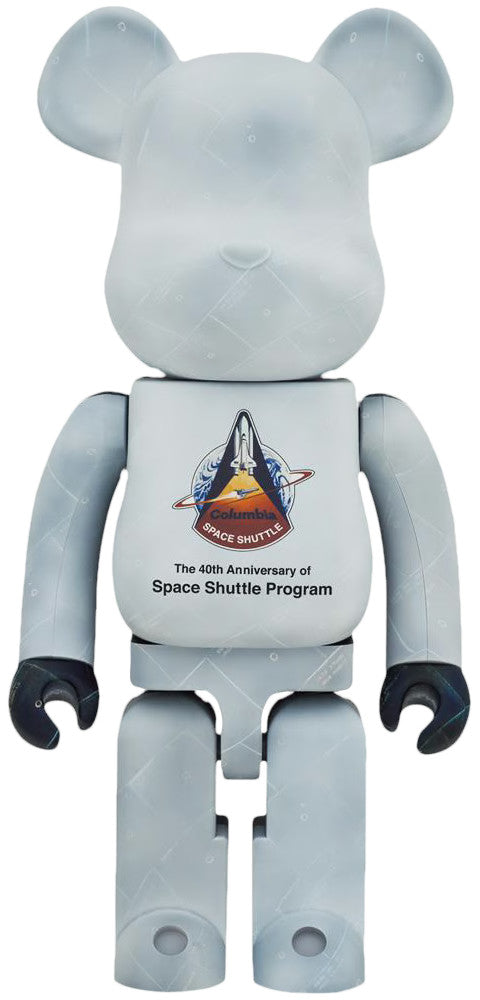
BE@RBRICK NASA Space Shuttle 40th Anniversary 1000% Medicom Toy Bearbrick
$600.00 USD
-
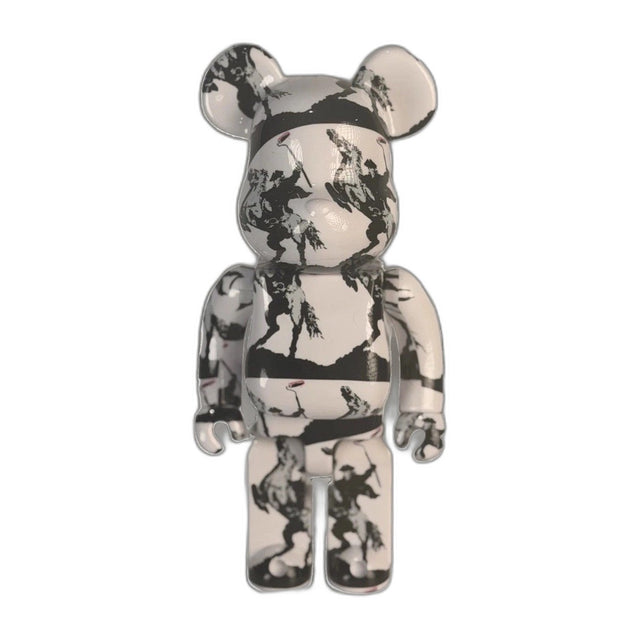
BE@RBRICK Brandalism Sync Banksy Medicom Toy Art Figure du-al.io Authenticated
$199.00 USD
-
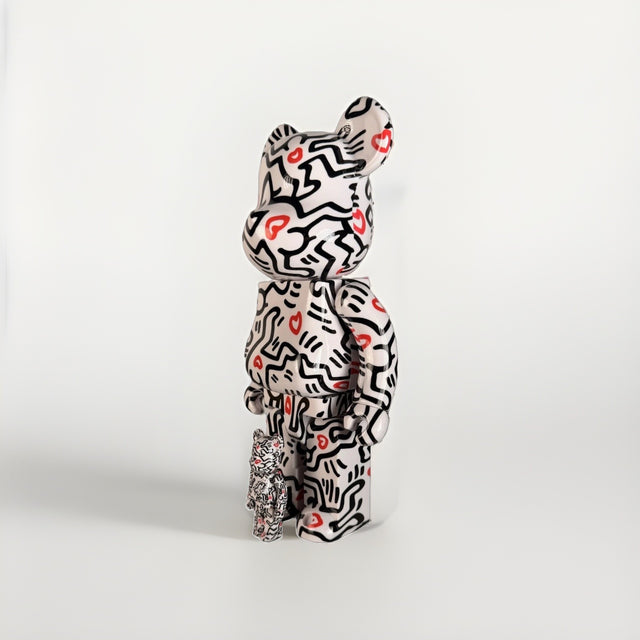
BE@RBRICK Keith Haring 400% + 100% Set Medicom Toy Bearbrick Foundation Art New
$199.00 USD
-
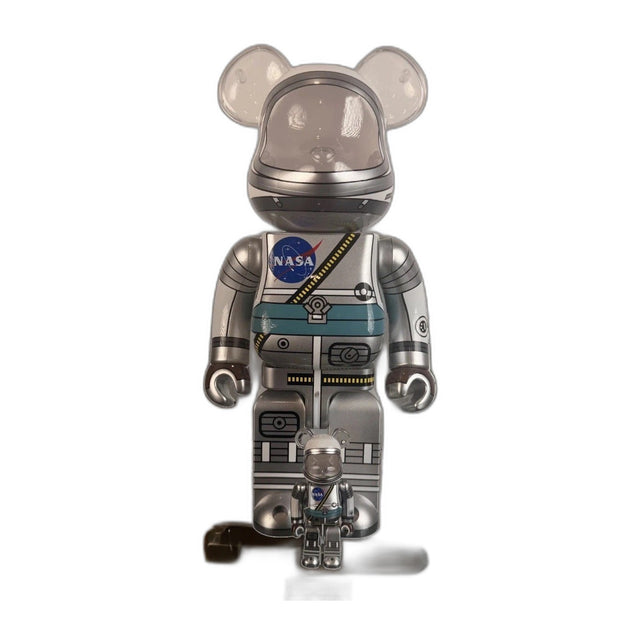
Bearbrick BE@RBRICK Mercury Astronaut 400% 100% Set NASA Medicom Toy Sealed New
$225.00 USD
-
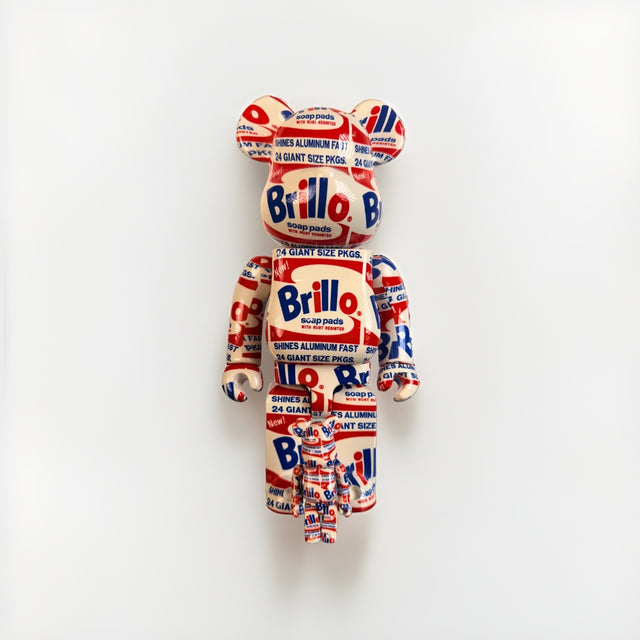
Bearbrick BE@RBRICK Andy Warhol Brillo 400% 100% Set Original 2020 Medicom New
$275.00 USD
Browse the collection for current listings.