The Covers That Went to the Moon Because NASA Wouldn't Insure the Crew

July 1969. Three men are about to ride a controlled explosion to the surface of another world.
NASA had no life insurance policy for Neil Armstrong, Buzz Aldrin, and Michael Collins. No commercial carrier would touch it. The premiums would have been absurd, the actuarial math impossible. So the crew did what any resourceful human being does when the system fails them: they improvised.
They signed envelopes.
Hundreds of them. In the days before launch, during quarantine, the three astronauts signed philatelic covers — stamped envelopes with cachets commemorating the mission — and gave them to a friend. If they didn't come back, those covers would be sold. The proceeds would go to their families.
They came back. The covers passed into history anyway.
What you're looking at when you hold an Apollo 11 insurance cover isn't just a signed envelope. It's a contingency plan. A hedge against dying on the moon. The most human artifact of the most inhuman journey ever attempted.
That story is why these pieces command serious prices at auction. It's also why the forgery problem is significant, the provenance chain matters enormously, and the authentication process requires genuine expertise. This article walks you through all of it.
What Is a Philatelic Cover, and Why Did Astronauts Use Them?
A philatelic cover is, at its simplest, a stamped envelope treated as a collectible. The stamp is postmarked on a specific date, the envelope often carries a printed or hand-illustrated cachet commemorating an event, and the whole thing is preserved as a document of that moment in time.
Philatelists had been chasing space-related covers since the early 1960s. NASA understood this. Postal arrangements were made to allow covers to fly on missions — or to be postmarked at launch facilities on flight days — giving collectors something tangible from an otherwise intangible event.
The crew-signed versions are a different category entirely.
Armstrong, Aldrin, and Collins understood exactly what they were doing. They were creating negotiable instruments against their own deaths. The covers were signed before the mission, delivered to a contact who agreed to distribute them to family members if the crew didn't return. Each crew member reportedly signed several hundred covers. The distribution was controlled. The numbers were not infinite.
That controlled scarcity, combined with the story behind the signing and the historic nature of the mission itself, is the foundation of the market.
The Difference Between an Insurance Cover and a Regular Signed Cover
This distinction matters more than most buyers realize.
Signed Apollo 11 covers exist in several categories:
- Insurance covers (pre-mission, quarantine-signed) — Signed during the days immediately before launch while the crew was in quarantine. These are the originals. The story attaches specifically to these.
- Flown covers (mission-carried, post-flight signed) — Covers that actually traveled on the mission, signed after splashdown. Different provenance, different value proposition.
- Post-mission signed covers (neither flown nor insurance) — Covers signed at shows, via mail, or through dealer arrangements after the fact. Legitimate, but not the same artifact.
- Posthumous covers (single or dual signed) — With Armstrong's death in 2012, any cover bearing his signature in a three-signature configuration now requires particularly careful scrutiny.
When a seller says "insurance cover," they should be able to tell you specifically that the piece was signed pre-mission during quarantine and distributed through the original arrangement. Vague claims about "signed before the flight" are not the same thing.
If the seller can't distinguish between these categories, why would you trust their authentication claims?
The Provenance Chain: Where Did This Cover Come From?

Provenance is the word that separates serious collecting from expensive gambling.
The original insurance covers were distributed through a specific channel. The crew member designated a friend — a common contact — who held the covers and was responsible for distributing them to families if needed. When the crew returned safely, those covers were eventually released and began entering the collector market over subsequent decades.
Strong provenance for an Apollo 11 insurance cover typically includes:
-
Documentation of the original distribution chain
- Letters, receipts, or affidavits connecting the piece to the original holding arrangement
- Family estate documentation if the piece came through a crew member's family
-
Auction or dealer records
- Lot descriptions from reputable auction houses that explicitly identify the piece as an insurance cover
- Pre-sale authentication documentation referenced in catalog entries
-
Authentication letters from recognized specialists
- This is where the specific authenticator tier matters enormously (see below)
-
Physical characteristics consistent with known examples
- Cachet design matching documented pre-mission covers
- Postmark date and location consistent with the mission timeline
- Stamp and envelope materials consistent with the period
The absence of provenance documentation doesn't automatically make a piece fake. Some legitimate covers have thin paper trails. But thin provenance should be reflected in price. If you're paying insurance-cover money for provenance-light material, you're taking a risk the seller isn't disclosing.
Authentication: Who Signs Off on This, and Does It Matter?
The space memorabilia authentication world is smaller and more specialized than the sports or music markets. That specialization matters because the signatures involved are not common, the forgery incentives are high, and the wrong authenticator can give you a worthless opinion.
The Three Primary Houses
For space memorabilia, the recognized authentication tier runs through three houses: PSA/DNA, JSA (James Spence Authentication), and Beckett Authentication Services (BAS).
All three operate signature examination services. All three will certify space memorabilia. None of the three is automatically sufficient on its own for a high-value Apollo piece without additional context.
Here's why that caveat matters:
PSA, JSA, and BAS evaluate signatures against their reference databases. Their examiners are trained forensic document specialists or experienced authenticators. But the Apollo astronaut signature pool is specific, the aging of signatures across a fifty-plus-year career is significant, and the context of when a signature was created matters as much as whether it's genuine.
A legitimate Armstrong signature from 1985 looks different from one signed in the days before launch in 1969 under the specific conditions of quarantine. An authenticator who doesn't know that distinction may still call the signature genuine — and be correct about authenticity while missing the point entirely about what category of piece this is.
The Zarelli Letter
For premium Apollo material, the market recognizes a specialist-tier opinion above the general authentication houses: the Zarelli specialist letter.
Charles Zarelli has been the acknowledged deep expert in NASA and space program autographs for decades. A Zarelli opinion letter accompanying a major Apollo piece is the equivalent of a connoisseurship report from a category specialist. It doesn't replace PSA, JSA, or BAS certification — it layers on top of it.
For an Apollo 11 insurance cover in the upper tier of the market, the documentation stack should include:
- Certification from at least one (ideally two) of the primary houses
- A Zarelli specialist letter addressing the insurance cover provenance specifically
- Supporting provenance documentation as described above
Would you buy a significant Warhol with only one opinion and no provenance? Why would you approach a piece with this story differently?
The PSA Certification-Verification Warning
PSA certification is not self-proving. PSA themselves issue warnings about the difference between a legitimate certified item and a fraudulent PSA slab or certificate.
Every PSA-certified piece carries a certification number. That number is verifiable at PSA's online registry. Before completing any purchase of a PSA-certified space memorabilia piece, verify the cert number against the PSA registry and confirm that the description in the registry matches the physical item in front of you — including the specific item description, the grade if applicable, and the signer list.
Fake PSA slabs exist in this market. They are not common, but they are not theoretical. The verification step takes two minutes and eliminates a specific category of fraud.
Apply the same verification process to Beckett and JSA certifications through their respective verification portals.
The Forgery Problem: Why This Market Has Real Risk

The space memorabilia market is not immune to the forgery epidemic that has affected sports and entertainment memorabilia. It has its own history of fraud, and the Apollo category specifically has attracted sophisticated forgery operations because the prices are high and the legitimate reference examples are not always easy for buyers to access.
FBI Operation Bullpen and Its Relevance Here
FBI Operation Bullpen, the landmark investigation that broke up major sports and entertainment autograph forgery rings in the late 1990s and early 2000s, demonstrated something important beyond its direct targets: the infrastructure of forgery — signed items produced at volume by forgers, laundered through corrupt authenticators or outright fake authentication, and sold through dealers and shows — was not limited to any single collecting category.
The lessons of Operation Bullpen apply directly to the space memorabilia market:
- Volume forgery operations target high-value, high-demand signatures first
- Corrupt or incompetent authentication is the mechanism that moves forged material into the legitimate market
- Provenance claims can be fabricated as easily as signatures
- The buyer is the last line of defense
Armstrong's signature is particularly high-risk. It was one of the most sought-after in any collecting category during his lifetime. After his death in 2012, genuine examples stopped being created while demand continued to grow. That gap between supply and demand is exactly the condition that drives forgery production.
The Specific Risks in the Insurance Cover Category
Beyond simple signature forgery, the insurance cover category has specific vulnerabilities:
- Upgraded covers — A legitimately signed cover by one or two crew members with a forged third signature added later
- Misrepresented category — A genuine post-mission signed cover represented as a quarantine-signed insurance cover to command a premium
- Period forgeries — Forgeries produced on correct-period materials that predate modern authentication techniques
- Provenance fabrication — Invented paper trails designed to support the insurance cover narrative without genuine connection to the original distribution
None of these risks are reasons to avoid the category. They are reasons to do the work before writing a check.
What a Legitimate Example Looks Like: Physical Characteristics
Understanding the physical characteristics of documented insurance covers gives you a baseline for comparison. No article can substitute for handling known genuine examples — but this framework helps.
The Cachet
Multiple cachet makers produced covers for the Apollo 11 mission. The most commonly encountered insurance covers use cachets from specific makers active at the time of the mission. The cachet design should be documented against known examples from established collections or auction records.
Key questions about the cachet:
- Is the printing consistent with period offset or hand-illustration techniques?
- Does the design match documented examples from reputable published references on space philately?
- Are there signs of later printing or reproduction of a period design?
The Stamp and Postmark
The stamp should be a genuine period issue appropriate to the cover's claimed date. The postmark should reflect a location and date consistent with the mission timeline or the specific quarantine period signing narrative.
Postmarks on insurance covers signed during quarantine typically reflect the launch-adjacent dates and the Kennedy Space Center or nearby postal locations. A postmark inconsistent with this timeline should prompt questions.
The Signatures
Armstrong, Aldrin, and Collins each had distinct signature styles. All three evolved over their lifetimes. The quarantine-period signatures have documented reference examples in institutional collections and published auction records.
General characteristics to note (without substituting this for expert examination):
- Armstrong's pre-mission signature tends to be more deliberate than his later increasingly abbreviated versions
- Aldrin's signature is relatively consistent but spacing and pressure characteristics are documentable against known examples
- Collins's signature evolution is well-documented across his long post-mission signing career
The placement of signatures on the cover face — relative to the cachet, to each other, to the address area — often follows patterns visible in documented genuine examples. Anomalous placement is not proof of forgery but is worth noting.
The Paper and Envelope
Period envelopes have specific paper stock characteristics. Ultraviolet examination can reveal later additions to the envelope or inconsistencies in aging that suggest alteration. A reputable authentication house will conduct this examination as part of their process.
Ask whether UV examination was conducted. If the authenticator can't confirm this, treat the opinion accordingly.
The Market: Where These Pieces Trade and What Drives Value

Apollo 11 insurance covers trade through the major auction houses with established space memorabilia departments, through specialist dealers, and occasionally through the broader memorabilia market. The specialist auction channels consistently produce the most defensible prices and the most thoroughly documented lots.
Value in this category is driven by several factors:
| Factor | Impact on Value | Notes |
|---|---|---|
| All three signatures present | Significant premium over single or dual signed | Armstrong signature drives the largest individual premium |
| Documented insurance cover provenance | Premium over generic signed covers | Requires specific documentation, not just seller narrative |
| Quality of authentication | Material impact on realized price | Multi-house + Zarelli letter tier commands best prices |
| Provenance documentation depth | Increasing importance as market matures | Thin provenance increasingly reflects in price |
| Condition of the cover | Moderate impact within authenticated category | Handling and storage history visible in paper and signature integrity |
| Cachet maker and design | Collector preference variation | Some cachets command collector premiums from philatelist crossover buyers |
The single most important value driver, in a market where genuine pieces exist alongside sophisticated fakes, is the quality and completeness of the authentication and provenance documentation.
The market has learned to price documentation quality. Compare like-for-like signed objects or artifacts with matching mission association, signer, condition, authentication and provenance; a category-wide rate or median mixes different objects.
Is the seller pricing the piece, or pricing the story attached to it without the documentation to support the story?
Red Flags
Before you complete a purchase of any Apollo 11 insurance cover, run through this checklist. Any of these flags warrants either additional investigation or walking away.
-
Single authenticator, no provenance documentation
- One opinion letter without supporting provenance chain is not sufficient for premium insurance cover pricing
-
Unverified PSA, JSA, or Beckett certification numbers
- Always verify cert numbers against the issuing house's online registry before completing purchase
-
Seller cannot distinguish insurance cover from post-mission signed cover
- This distinction is fundamental; inability to address it is disqualifying
-
Provenance narrative with no documentation
- "Came from a collector who knew someone at NASA" is a story, not provenance
-
Price significantly below comparable authenticated examples at specialist auction
- The market prices genuine well-documented examples at consistent levels; large discounts signal documentation problems
-
No UV or materials examination referenced in authentication
- Period authenticity of the physical cover is as important as the signatures
-
Armstrong signature that looks identical to post-2000 examples
- His signature evolved significantly; a quarantine-period example should reflect period characteristics
-
Seller pressure to decide before you can conduct independent verification
- This is a universal red flag in all collecting categories. Legitimate sellers at this price tier understand due diligence.
-
Authentication from houses or individuals not recognized in the specialist space memorabilia market
- A generic autograph authenticator without specific space memorabilia expertise is not the same as a recognized specialist opinion
-
Cover with all three signatures where Aldrin or Collins signatures appear inconsistent with documented period examples
- Forgers focus on Armstrong; the other signatures are sometimes done carelessly and are detectable on careful examination
Bottom Line
The Apollo 11 insurance cover is one of the genuinely extraordinary artifacts in the American collecting landscape.
Not because it's rare in the way a unique object is rare. Hundreds were signed. Genuine examples trade regularly. The category has an active, if specialized, market.
It's extraordinary because of what it represents: three human beings, about to do something no one had ever done, making a practical arrangement for the possibility that they wouldn't come back. They used the tools available to them. They signed envelopes.
That story is real. The pieces that carry it are real. But the market around them has real risks, and those risks require real work to navigate.
Authentication through recognized specialist channels. Provenance documentation that connects the physical piece to the original distribution chain. Verification of every certification number. A Zarelli letter for anything at the upper tier of the market.
Do that work, and you're engaging with one of the most compelling artifacts of the twentieth century on legitimate terms.
Skip that work, and you're buying a story someone else invented for a piece that may or may not have any connection to July 1969.
The covers went to the moon because the crew might not come back. Make sure yours actually went.
Frequently Asked Questions
How many Apollo 11 insurance covers were signed?
The commonly cited figure is that each crew member signed several hundred covers, but the exact number is not definitively documented in public records. What is documented is that the signing was a controlled event during the quarantine period before launch, that a specific individual held the covers on behalf of the families, and that the distribution was deliberate. The total number across all three crew members likely runs into the low thousands, but "insurance cover" is a category with a defined origin, not a defined count.
Does an insurance cover need to have been postmarked before the mission to be genuine?
Not necessarily. The defining characteristic of an insurance cover is the pre-mission quarantine signing and the specific distribution arrangement, not the postmark date. Some covers in this category were postmarked at or near the launch date; others carry different postmark dates depending on the specific cover and how it moved through the postal system. What matters is the documented chain of custody from the quarantine signing through the holding arrangement, not a specific postmark date.
Is a cover with only Armstrong's signature worth considering, or is the three-signature configuration essential?
Single-signed Armstrong covers are legitimate collecting targets in their own right, particularly given that his signature stopped being created after his death in 2012. But a single-signed cover — unless it has exceptional provenance directly tied to the insurance cover arrangement — is a different artifact from the three-signature insurance cover. The three-signature configuration is what most collectors mean when they reference "the insurance cover," and the premium for that configuration reflects both rarity and the completeness of the artifact.
What's the difference between a Zarelli specialist letter and certification from PSA or JSA?
PSA, JSA, and Beckett are forensic signature authentication services. They examine the signature against reference databases and render an opinion on whether the signature is genuine. A Zarelli letter is a connoisseurship opinion from a category specialist who brings deep contextual knowledge of the NASA autograph market, mission-specific signing patterns, and the specific provenance characteristics of Apollo program material. They serve different functions and are most valuable in combination. For significant pieces, treat them as complementary rather than interchangeable.
Can I get an Apollo 11 insurance cover re-authenticated if it has only one prior certification?
Yes, and for pieces at the upper tier of the market, this is often worth doing. Submitting to a second recognized house and, if the piece's value supports it, seeking a Zarelli specialist letter are standard steps for upgrading the documentation stack on a piece. The cost of additional authentication is almost always justified by the impact on marketability and realized price at resale. An authenticator who discourages additional review is a red flag in itself.
Are there published references for Apollo philatelic covers that I can use as comparison material?
Yes. Space philately has a documented collector community with published references, and major auction houses with established space memorabilia departments have produced catalogs with detailed lot descriptions and photography that serve as de facto reference material. The Michael Larrimore reference works on NASA philatelic covers are recognized in the specialist community. Institutional collections including those at the Smithsonian National Air and Space Museum provide additional reference context. Your authenticator should be familiar with these resources.
How do I evaluate a seller who claims the cover "came directly from the Aldrin family" or similar?
Family provenance claims are among the most valuable and most frequently abused in the space memorabilia market. A genuine family provenance claim should be supported by documentation: a letter or affidavit from the family member, estate sale records, or a verifiable chain of sale from a family-authorized source. "The seller says it came from the family" without documentation is not provenance. If the claim is genuine, the documentation exists. If it doesn't, treat the provenance claim as unverified regardless of how confidently it's stated.
Does Gauntlet Gallery offer Apollo 11 insurance covers?
Gauntlet Gallery works with space memorabilia through the authentication framework described in this article — primary house certification, specialist opinion where the piece warrants it, and provenance documentation that we verify independently before offering any piece. We don't list space memorabilia at premiums the documentation can't support, and we don't represent provenance claims we can't substantiate. If you're looking for specific Apollo material, contact us directly and we'll tell you honestly what we have, what's in the pipeline, and what documentation accompanies it.
Shop Apollo 11
Explore current pieces available from the gallery.
-
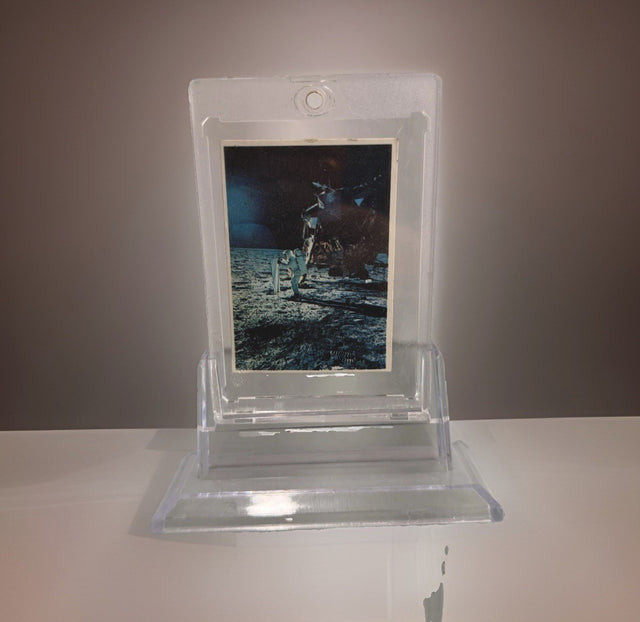
1969 Space Candy Buzz Aldrin Apollo 11 On The Moon Card #19 Taylor-Reed Display
$59.00 USD
-
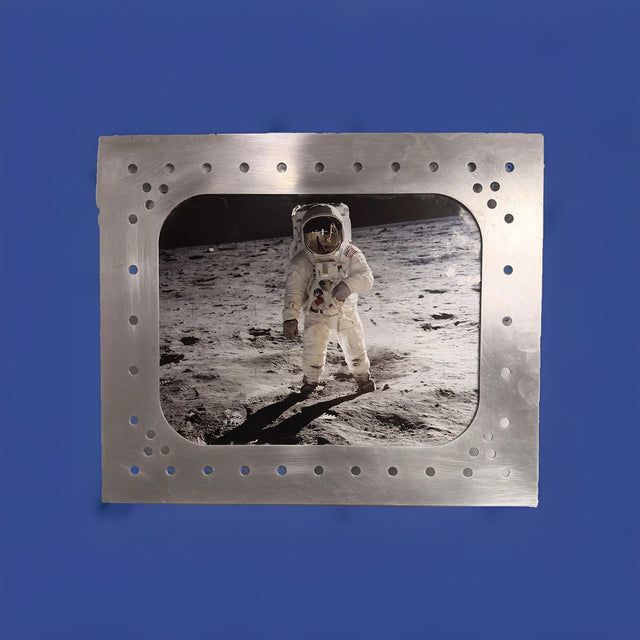
Apollo 11 Astronaut on the Moon NASA Photo Riveted Aluminum Spacecraft Frame
$89.00 USD
-
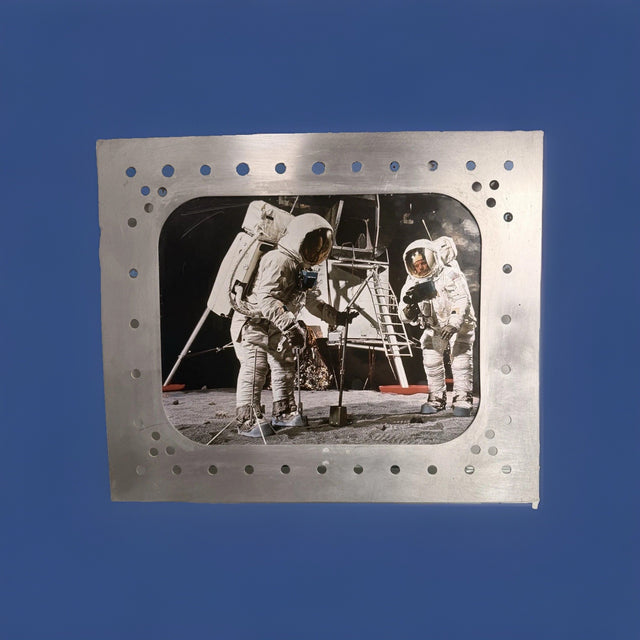
Apollo Astronauts on the Moon NASA Photo Riveted Aluminum Spacecraft Frame
$89.00 USD
-

Gene Kranz Signed Apollo 11 Moon Card PSA/DNA NASA Flight Director Autograph
$150.00 USD
-

Buzz Aldrin Apollo 11 Tranquility Framed Autograph - Zarelli Space COA
$350.00 USD
-
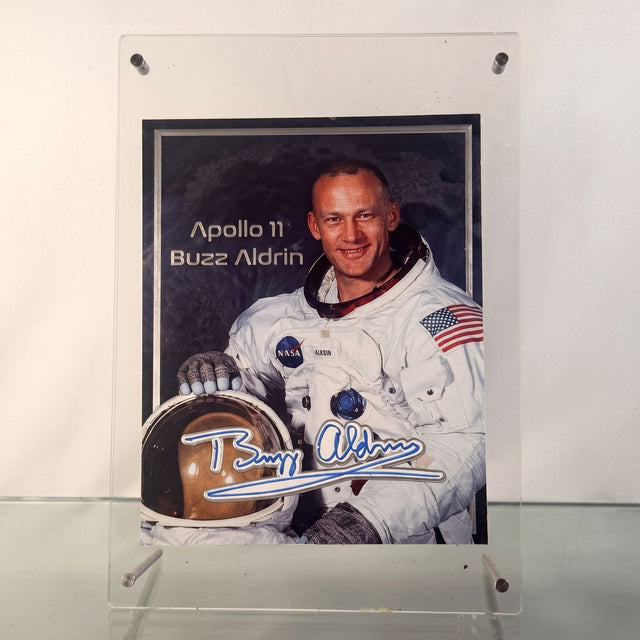
Buzz Aldrin Signed Apollo 11 NASA Double-Sided Photo JSA Authenticated Display
$450.00 USD


Browse the collection for current listings.