Signed music memorabilia sits in a dangerous part of the collector market.
It is emotional. It is visual. It is easy to display. It connects a collector directly to an artist, album, tour, venue, or moment in cultural history.
It is also heavily forged.
A signed guitar can look incredible on a wall. A signed vinyl record can feel like a direct link to the album that changed your life. A signed concert poster can carry the energy of a specific night, city, and era. But none of that matters if the signature is wrong.
In music memorabilia, the autograph is often the asset. The guitar, record, photo, or poster may provide the stage, but the signature is what creates the premium. That means the buyer's first job is not to ask, "Do I like this piece?"
The first question is sharper:
Can I trust this autograph?
This guide explains how serious collectors evaluate signed music memorabilia before buying — and how to avoid the common traps that turn a great-looking piece into expensive wall decor.
The First Rule: Authentication Comes Before Emotion

Collectors do not usually get burned because they are careless.
They get burned because the piece hits them emotionally before they slow down and inspect it rationally.
A favorite artist. A great photo. A beautiful guitar. A limited tour poster. A framed display with a glossy plaque. The listing looks clean, the seller sounds confident, and the price feels just low enough to be exciting.
That is exactly where mistakes happen.
The FBI's Operation Bullpen investigation exposed large-scale fraud in the sports and celebrity memorabilia market, including forged autographs and fake certificates. The FBI noted that while exact forgery percentages are impossible to determine, industry experts have conceded that more than half of the most sought-after athlete and celebrity autographed memorabilia may be forged. The FBI's buyer advice was blunt: get signatures in person where possible, use witnessed signing programs, question provenance aggressively, get a receipt and money-back guarantee, and use professional authenticators.
That warning applies directly to music memorabilia.
The names change — Hendrix, Cobain, Bowie, Prince, Swift, Springsteen, McCartney, Madonna, Billie Joe Armstrong, Stevie Nicks, Taylor Hawkins, Tupac, Amy Winehouse — but the risk structure is the same. High demand plus limited supply creates an incentive for fraud.
A collector should never buy the story before verifying the signature.
COA Is Not a Magic Word
A Certificate of Authenticity can be valuable.
It can also be meaningless.
The most important question is not whether a piece "has a COA." The real question is: who issued it, what exactly did they authenticate, and can the certification be verified?
In signed music memorabilia, the strongest third-party authentication usually comes from established autograph authentication companies such as Beckett Authentication Services, James Spence Authentication, PSA/DNA, Roger Epperson/REAL for music-specific material, or other category-appropriate specialists. Beckett states that its autograph-authentication process includes analysis of ink, autograph structure, exemplar comparison, and, when needed, tools such as a Pro-Scope or video spectral comparator; its certified items can be verified through an online database using the certification number. PSA similarly describes its autograph process as including ink analysis, autograph-structure analysis, object evaluation, side-by-side comparison, and public certification verification.
But even a valid certification number does not eliminate all risk.
PSA's own certification-verification page warns that database verification does not eliminate risk because criminals may counterfeit inserts or documents using real certification numbers taken from public sources. PSA also says its database confirms data tied to a certification number, but does not guarantee that a random online listing using that number is the genuine PSA-authenticated item.
That is the key lesson.
A COA is evidence. It is not a substitute for due diligence.
The Buyer's Authentication Checklist

Before buying any signed music piece, use this checklist.
1. Verify the Certification Number
Do not rely on a seller's screenshot. Go directly to the authenticator's site and verify the number yourself.
The certificate should match the object type, signer, and description. A certification number for "signed photograph" should not be used to sell a signed guitar. A cert for "album flat" should not be quietly attached to a vinyl jacket. A cert for one artist should not be used to imply full-band authentication.
For higher-value pieces, look for a full Letter of Authenticity, not just a sticker or basic card. JSA describes its Letter of Authenticity as including an inset image of the item and additional data such as number of signatures, manufacturer, writing implement, and item type or model.
A sticker is better than nothing. A full LOA with item-specific imagery and matching details is stronger.
2. Match the COA to the Exact Physical Object
A valid COA attached to the wrong object is a classic problem.
The buyer should compare:
- Certificate number
- Hologram or sticker number
- Item description
- Signer name
- Number of signatures
- Object type
- Photograph or LOA image
- Placement of the autograph
- Any visible defects or identifying marks
For guitars, look carefully at the headstock, pickguard, body shape, color, hardware, sticker placement, and any unique marks. For signed vinyl, compare corner wear, label details, sleeve condition, and autograph placement. For signed photos, compare the exact image crop and signature location.
A real cert attached to a swapped object is still a bad purchase.
3. Understand the Difference Between Authentication Types
Not all authentication is equal.
Witnessed authentication means a representative or authorized party observed the signature being applied. This is generally stronger than post-signing review.
Third-party authentication means an expert reviewed the autograph after the fact and gave an opinion based on signature analysis, exemplars, ink, object type, and other factors.
Online opinion or quick opinion can be useful before bidding, but it is not the same as full physical inspection.
Seller-issued COA means the seller is authenticating their own item. Sometimes that is acceptable if the seller is highly established and offers a lifetime money-back guarantee. Often, it is weak.
Printed, autopen, stamped, or facsimile signatures are not the same as hand-signed autographs. They may be official merchandise, but they should not be priced like genuine hand-signed memorabilia.
When meaningful money is involved, the safest hierarchy is simple:
Witnessed signing or strong provenance first. Full third-party LOA second. Basic certification third. Seller-only COA last.
4. Research the Seller, Not Just the Signature
A great autograph from a bad seller is still a risk.
Before buying, check:
- How long the seller has been operating
- Whether they specialize in music memorabilia or sell everything under the sun
- Return policy
- Authenticity guarantee
- Whether the guarantee is lifetime or short-term
- Whether the guarantee offers a refund or only store credit
- Whether they provide receipts and documentation
- Whether they have a pattern of selling improbable high-value signatures
- Whether the same "rare" artist appears in unlimited supply
Roger Epperson, a long-running music autograph specialist, has warned collectors to read authenticity guarantees carefully and look for clear money-back language, not vague claims. His point is practical: a guarantee that does not explain what happens if the item fails authentication may not protect the buyer when it matters.
The best sellers do not hide behind vague language.
They document the item, explain the source, show the certificate, describe the condition, provide clear photos, and stand behind the sale.
5. Compare the Signature to Known Examples
A buyer should not pretend to be a forensic examiner. That is how confidence turns into comedy.
But basic comparison still matters.
Look for natural variation. Real signatures usually show rhythm, speed, pressure changes, and small inconsistencies. Forgeries often look slow, hesitant, overly careful, or strangely uniform. Some are too perfect because the forger is copying a reference image. Others are too wild because the forger only knows the general shape.
Pay attention to:
- Pen pressure
- Line speed
- Starts and stops
- Hesitation marks
- Ink pooling
- Letter formation
- Signature era
- Placement
- Scale
- Whether all signatures on a multi-signed item appear to have the same hand pressure or spacing
For deceased artists, era matters. A Jimi Hendrix autograph on a modern guitar body needs a very strong explanation. A Kurt Cobain signature on a later-manufactured item should raise immediate alarms. An autograph allegedly signed in Sharpie before Sharpies were widely used in that context deserves scrutiny.
The object has to make sense for the signer's life, timeline, habits, and opportunities.
6. Check the Substrate
The substrate is the object being signed.
In music memorabilia, substrate matters because different objects carry different risk.
A signed album released during the artist's active career may have a plausible signing context. A signed modern reissue from an artist who died decades earlier does not. A signed tour poster from a specific show should match the date, venue, printing style, and paper stock. A signed guitar should be evaluated not only for the autograph, but also for whether the instrument itself makes sense.
Common music substrates include:
- Guitars
- Vinyl records
- CD booklets and inserts
- Concert posters
- Drumheads
- Setlists
- Photographs
- Tour programs
- Tickets
- Handwritten lyrics
- Stage-used equipment
Each has its own risk profile.
Signed guitars are visually powerful but often risky because unsigned guitars are easy to buy, sign, and frame. Signed vinyl can be strong when the album matters and the signature placement is natural. Signed photos are common and often affordable, but heavily forged. Handwritten lyrics can be extraordinary, but require deep authentication and provenance. Setlists are emotionally appealing, but the story must be verifiable.
The more expensive the piece, the more the substrate must be interrogated.
Red Flags That Should Slow You Down
Some red flags do not automatically mean "fake."
They do mean "pause."
Be cautious when you see:
- A high-value artist at a suspiciously low price
- A seller who refuses to provide close-up photos
- A COA with no searchable certification number
- A seller-issued COA from an unknown company
- A certificate number that does not match the item
- A "signed" item where the ink looks printed into the image
- Multiple rare deceased artists from the same seller
- Identical-looking signatures across many listings
- No return policy
- No written authenticity guarantee
- A story that sounds cinematic but has no paperwork
- A framed piece where the autograph cannot be inspected clearly
- A seller pushing urgency instead of documentation
- A "private collection" claim with no chain of ownership
- A band-signed item where only one signature is authenticated
The FBI's advice still holds up: if the price looks too good to be true, the "treasure" is probably a forgery.
That line should be printed on every collector's wallet.
Signed Guitars: Beautiful, Displayable, and High-Risk
Signed guitars are among the most dramatic music collectibles. They have scale, presence, and immediate visual impact. A signed guitar can anchor a room in a way that a signed photo rarely can.
But signed guitars are also one of the easiest categories to manipulate.
An unsigned guitar can be purchased cheaply. A fake signature can be added. A custom display can create a premium feel. A vague plaque can imply provenance. A weak COA can make the whole package look more legitimate than it is.
When evaluating a signed guitar, ask:
- Who signed it?
- Was it signed on the body, pickguard, or headstock?
- Is the signature clear and well-placed?
- Does the guitar model make sense for the artist?
- Is the instrument itself vintage, artist-used, artist-style, or purely display-grade?
- Does the authentication cover the signature only, or the object's history as well?
- Is there a full LOA?
- Are there photos of the signing?
- Does the COA image match the exact guitar?
- Is the guitar framed in a way that prevents inspection?
Most signed guitars are valuable because of the autograph and display quality, not because of the underlying instrument. That is fine, as long as the listing is honest.
A signed display guitar should not be marketed as stage-used unless there is strong documentation proving use.
Signed Vinyl: Album Importance Matters

Signed vinyl can be one of the strongest music memorabilia formats because it ties the autograph to a specific artistic work.
A signed copy of a culturally important album usually carries more collector weight than a generic signed photo. The album gives the signature context.
But vinyl buyers need to examine:
- Album title
- Pressing or reissue status
- Sleeve condition
- Signature contrast
- Placement
- Whether the signature is on the jacket, insert, label, or record
- Whether all band members signed
- Whether the album was available during the signer's lifetime
- Whether the autograph matches the artist's era
- Whether the certificate identifies the exact album
Condition matters heavily. Corner dings, ring wear, fading, water damage, seam splits, and poor framing can all affect value.
For vinyl, the best pieces usually combine three things:
Important album.
Strong autograph.
Clean documentation.
Miss one of those, and the value changes.
Signed Photos and Posters: Common Does Not Mean Safe
Signed photos and posters are accessible, displayable, and popular with new collectors.
They are also widely forged because the base materials are easy to reproduce.
For signed photos, look for high-resolution close-ups of the ink. Try to determine whether the signature sits on top of the photo surface or appears printed as part of the image. For posters, inspect paper type, print edition, event details, and whether the poster is original, later reprint, or decorative reproduction.
A signed poster from a landmark tour or venue can be highly collectible. A mass-produced poster with a weak autograph and no authentication is mostly a wall decoration.
No shame in wall decoration. Just do not pay investment-grade money for it.
Multi-Signed Items Require Multi-Signature Discipline
Band-signed items can be exceptional.
They can also be authentication traps.
A guitar signed by all members of a band is not automatically authenticated because one signature is good. Each signature matters. In some cases, the rarest or deceased member is the entire value driver.
For example, with legacy bands, one member's signature may be common while another's is extremely rare. A full-band piece can trade at a major premium only if all signatures are right.
Before buying multi-signed music memorabilia, confirm:
- How many signatures are present
- Whether each signature is identified
- Whether the authentication covers all signatures
- Whether any signature was added later
- Whether the piece was signed at one event or across multiple encounters
- Whether the rarest signature has the strongest support
- Whether the COA specifies full-band authentication or only selected names
A weak signature from the rarest member can compromise the entire piece.
Provenance: The Story Needs Receipts

Provenance means the ownership and documentation history behind the object.
In music memorabilia, provenance can include:
- Original purchase receipt
- Auction record
- Letter from a reputable dealer
- Photograph of the signing
- Event documentation
- Tour or venue connection
- Estate documentation
- Prior collection history
- Authentication paperwork
- Correspondence with a recognized expert
- Chain-of-custody notes
A good story helps. A documented story helps much more.
"Obtained backstage by a friend" is not provenance by itself. "Obtained backstage by a friend, with dated photographs, event pass, original note, and matching authentication record" is stronger.
Collectors should be polite but relentless: where did this come from, and how can that be verified?
Price: Cheap Can Be Expensive
The cheapest listing is often cheap for a reason.
In signed music memorabilia, pricing should reflect:
- Artist importance
- Rarity of the signer
- Whether the artist is living or deceased
- Object type
- Album, tour, or event significance
- Signature quality
- Condition
- Authentication strength
- Provenance
- Display quality
- Recent comparable sales
- Market demand
A $400 signed guitar from a major deceased artist should trigger suspicion. A $2,000 signed album with no authentication may be less attractive than a $1,200 signed photo with a strong LOA. A $10,000 item with weak provenance may be riskier than a $5,000 item with clean documentation.
The real price is not the number on the listing.
The real price is:
purchase price + authentication risk + condition risk + resale risk + time spent verifying the item.
That is why experienced collectors often pay more for properly documented pieces. They are not just buying the object. They are buying reduced uncertainty.
Where Gauntlet Gallery Fits
Gauntlet Gallery's approach to signed music memorabilia is built around authentication-first collecting.
Gauntlet focuses on authenticated cultural objects, including signed music, street art, designer figures, space collectibles, and related memorabilia. The gallery states that every piece ships with category-appropriate third-party authentication, including names such as Beckett, JSA, PSA/DNA, Zarelli, and TrueCOA, depending on the object type.
For signed music specifically, Gauntlet's model emphasizes curated, verified, display-ready pieces rather than endless raw listings. Its signed music category highlights guitars, drumheads, vinyl, and tour-related pieces with Beckett, JSA, and PSA/DNA verification.
That distinction matters.
On an open marketplace, the buyer often has to act as detective, authenticator, pricing analyst, condition reviewer, and shipping-risk manager. With a curated gallery model, more of that work happens before the piece is offered.
That does not mean every collectible is an investment. Markets move. Taste changes. Demand can rise or fall. But authentication, provenance, condition disclosure, and category expertise create a stronger foundation for buying confidently.
In music memorabilia, confidence is not a luxury.
It is the product.
The Smart Buyer's Final Test
Before buying a signed music collectible, ask yourself these ten questions:
- Is the autograph authenticated by a credible third party?
- Does the certification number verify directly with the authenticator?
- Does the COA match the exact object being sold?
- Is the seller reputable and reachable?
- Is there a clear return policy or authenticity guarantee?
- Does the signature look natural compared with known examples?
- Does the object make sense for the artist, era, and signing context?
- Is the condition clearly documented?
- Is the price supported by comparable sales?
- Would I still feel comfortable owning this if I had to resell it later?
If the answer is "no" or "I don't know" on several of those, slow down.
The market will always produce another listing. It will not always refund a bad decision.
Bottom Line
Signed music memorabilia can be one of the most rewarding collecting categories in the world.
It combines art, sound, memory, performance, fandom, design, and cultural history. A great signed piece is more than an autograph. It is a physical connection to the music that shaped people's lives.
But the market rewards discipline.
Buy the artist you love.
Buy the object that moves you.
Buy the piece you want to see every day.
Just make sure the signature is real before your heart starts bidding against your brain.
Because in signed music memorabilia, the best collectors do not chase autographs.
They chase authenticated meaning.
FAQ
Is signed music memorabilia a good collectible category?
Yes, but only when authentication, condition, provenance, and artist significance are strong. The best signed music pieces combine emotional appeal with credible documentation. Weakly authenticated pieces are much harder to value or resell.
What is the safest way to buy a signed guitar?
The safest signed guitars come with credible third-party authentication, preferably a full Letter of Authenticity with item-specific details or images. Buyers should verify the certificate number directly, confirm that the COA matches the exact guitar, and make sure the seller offers a written authenticity guarantee.
Are Beckett, JSA, and PSA/DNA good for music autographs?
Beckett, JSA, and PSA/DNA are among the most recognized third-party autograph authenticators in the memorabilia market. Each evaluates autographs differently, but all are commonly used for signed music items such as guitars, photos, albums, posters, drumheads, and related collectibles.
Is a COA enough to prove an autograph is real?
No. A COA is only as strong as the company or expert that issued it, and it must match the exact item being sold. Buyers should verify the certificate number, inspect the object, review seller reputation, and look for provenance. PSA specifically warns that certification-number verification does not eliminate all risk.
What are the biggest red flags when buying signed music memorabilia?
Major red flags include prices that seem too low, unknown seller-issued COAs, unverifiable certification numbers, poor photos, vague provenance, no return policy, identical-looking signatures across listings, and sellers who pressure buyers instead of providing documentation.
Is witnessed authentication better than third-party authentication?
Generally, yes. Witnessed authentication means the signature was observed as it happened. Third-party authentication is still valuable, but it is usually an expert opinion after the fact. For expensive items, witnessed authentication, strong provenance, or a full LOA is preferable.
Should I buy unauthenticated music autographs?
Only with extreme caution. Unauthenticated autographs may be fine for low-cost personal collecting, but they carry higher risk and are harder to resell. For meaningful purchases, buyers should require recognized authentication or be prepared to submit the item themselves before treating it as valuable.
Shop Music memorabilia
Explore current pieces available from the gallery.
-
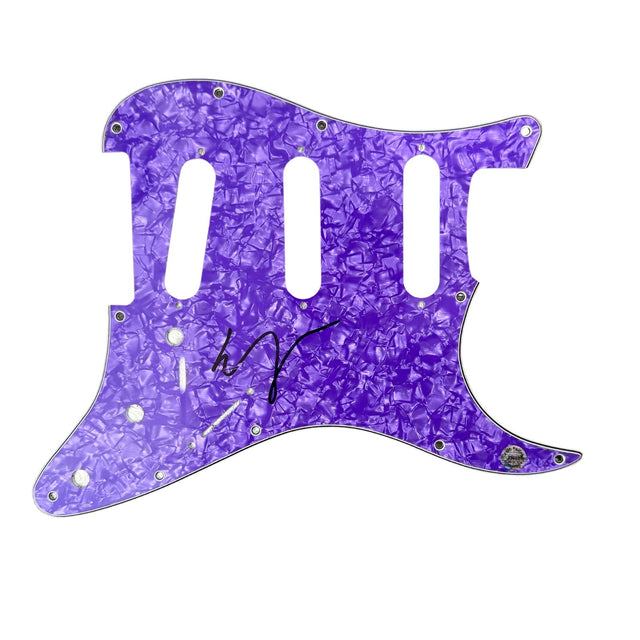
Vampire Weekend Ezra Koenig Signed Guitar Pickguard Autograph Hologram COA
$100.00 USD
-
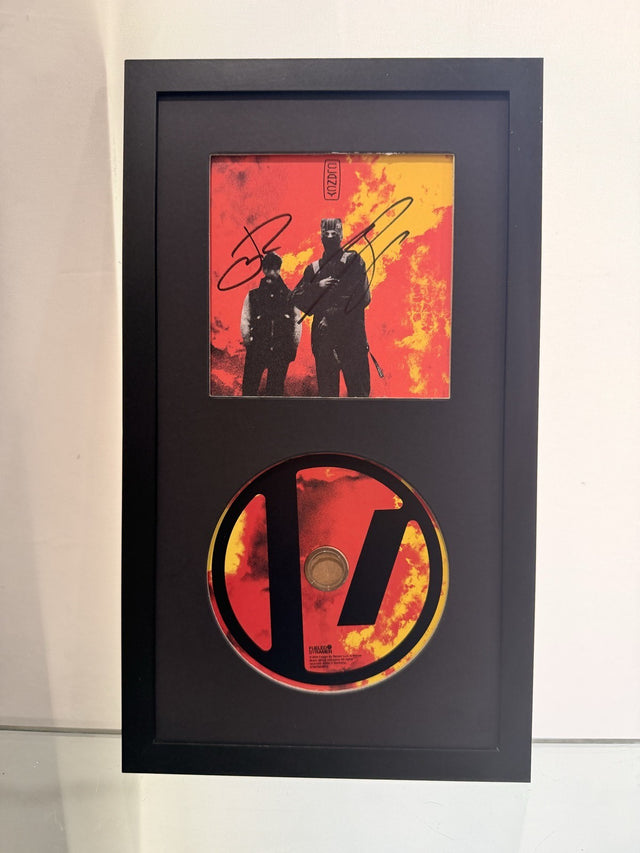
Twenty One Pilots Signed Clancy CD Framed Display Tyler Joseph Josh Dun Auto
$199.00 USD
-
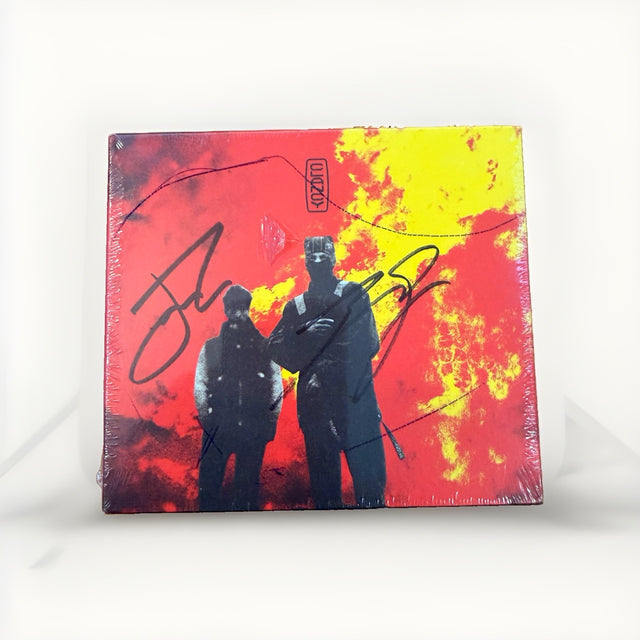
Twenty One Pilots Clancy Signed CD Tyler Joseph Josh Dun Sealed Unopened 2024
$189.00 USD
-
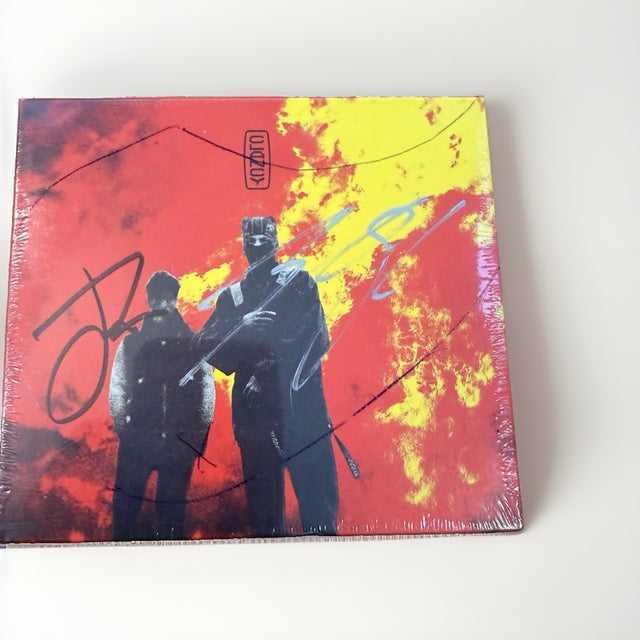
Twenty One Pilots Clancy Signed CD Sealed Tyler Joseph Josh Dun Silver Autograph
$189.00 USD
-
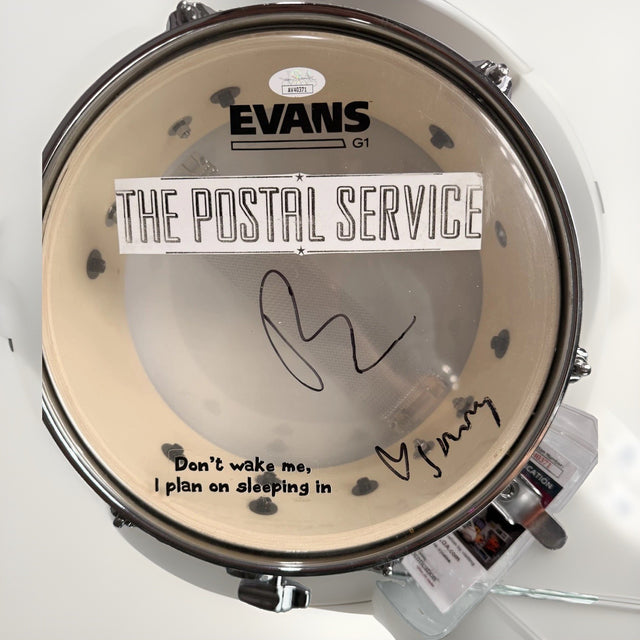
The Postal Service Dual Signed Evans M-80 Drumhead JSA A40371
$499.00 USD
-
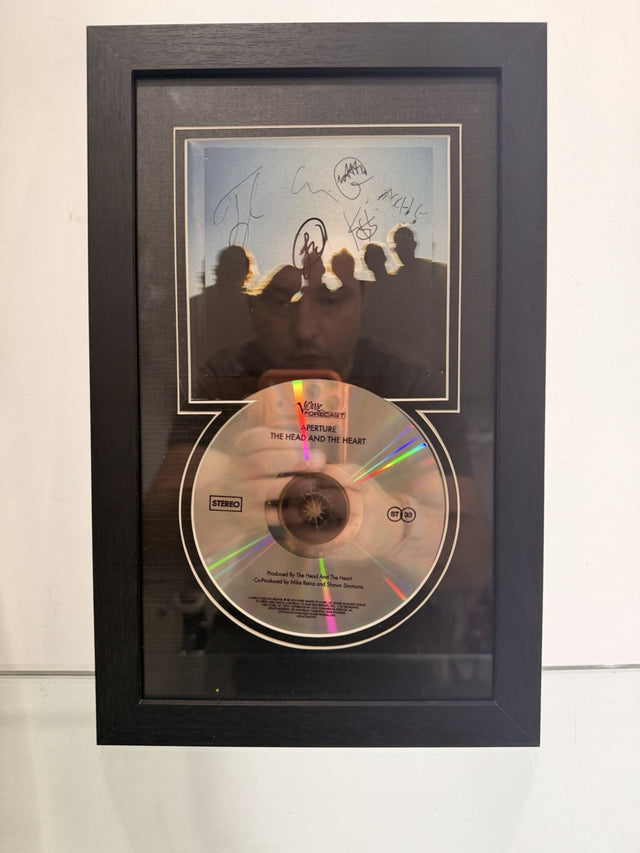
The Head and the Heart Band Signed Framed 'aperture' CD COVER ALBUM
$65.00 USD
Browse the collection for current listings.