Most art-collecting glossaries are written by marketers and read like ad copy. This one is written by a dealer, for collectors, and every term in it is one you will encounter in a real listing, a real auction catalog, a real condition report, or a real authentication letter. If you can't quickly say what HPM means, what a Bon à Tirer is, why a 1st-state print and a 2nd-state print are priced differently, or what an unmounted versus mounted COA implies for resale — this is the document to keep open.
One ground rule before we start. Authentication is category-specific. The chain that makes a Banksy real is not the chain that makes a Warhol real, and neither is the chain that makes a flown Apollo cover real. We will name each chain by name, and we will be explicit about which chain Gauntlet Gallery does and does not work with.
Category 1: Curation and Sourcing

Curation. The act of selecting works for inclusion in a dealer's inventory. The opposite of curation is aggregation.
Market Test. A filter that measures whether an artist's work has a documented resale market — recent comparable sales at recognized venues, a stable price floor, and active demand from multiple buyer pools.
Curatorial Gate. The set of criteria a piece must clear before a dealer will list it. At Gauntlet Gallery: condition, provenance, authentication appropriate to the category, edition position, narrative significance, and a competitive comp band.
Auction Pedigree. Documented prior sale at a recognized auction house — Sotheby's, Christie's, Phillips, Bonhams, Heritage, RR Auction, and the regional equivalents.
Consignment. An arrangement in which a dealer or auction house sells a piece on behalf of its owner, taking a percentage of the sale.
Inventory vs Brokerage. An inventory dealer owns the piece outright before selling. A brokerage dealer facilitates a sale between a third-party owner and a buyer.
Hand-Selected. A claim that each piece in inventory passed a dealer's personal review. Almost universal in marketing copy, and almost meaningless without methodology behind it.
Category 2: Authentication
Certificate of Authenticity (COA). A structured document tying a specific piece to an authenticator. Names the piece, the edition position, the medium, the dimensions, the signing/issuing party, and the date. A COA is only as strong as the party who issued it.
Letter of Authenticity (LOA). A full authentication letter from a recognized body. In music and space, LOAs from Beckett (BAS), JSA, PSA/DNA, and Zarelli determine resale value.
Opinion (encapsulated). A quick-look authentication, typically sealed in a tamper-evident holder with a serial-number certification. Lower tier than a full LOA.
Pest Control. The sole Banksy authentication body. Gauntlet Gallery does not claim Pest Control authentication. When you see a Banksy offered without Pest Control documentation, that absence is the entire story.
TrueCOA. Documentation framework Gauntlet Gallery uses for certain Warhol works and select contemporary pieces. Combines a printed certificate with structured digital metadata and a verifiable record.
Beckett (BAS). Beckett Authentication Services. Dominant chain for music autographs, with Roger Epperson's REAL program acting as the music-specialist tier.
JSA (James Spence Authentication). Peer of BAS. Particularly strong on witnessed signings.
PSA/DNA. Autograph arm of PSA, historically dominant in sports and strong on signed albums.
Zarelli. Specialist authenticator for space memorabilia. Steve Zarelli's letters are the de facto standard for Mercury, Gemini, Apollo, Shuttle, and Soyuz-era signed material.
Provenance. The documented chain of ownership from artist forward to the current piece.
Catalogue Raisonné. The scholarly, comprehensive, illustrated catalog of an artist's known work.
Authentication Board. An artist-authorized body charged with adjudicating authenticity. The Warhol board, for instance, ceased operations in 2012.
Self-signed COA. A document issued by the seller attesting that the piece is real. It is not authentication. It is a sales document.
Fairey, specifically. Shepard Fairey works do not carry an artist-issued COA. Authentication rests on the signature, the numbered edition position, the visual and material match to known editions, and the provenance trail.
Death NYC, specifically. Death NYC pieces carry an artist-signed COA with the recognized gold seal. The COA, the seal, and the signature together form the authentication chain.
Category 3: Edition Designations
The most consistently misunderstood vocabulary in printmaking. Use dated completed sales for the same artist, release, format and condition, recording the venue, currency and fees. Asking prices and broad archive totals do not establish a realized sale price or future return.
Edition. The total numbered run of a print.
Edition Number. The specific position of a piece within the run, written as a fraction. "42/150" means the 42nd impression of an edition of 150.
AP (Artist's Proof / épreuve d'artiste / E.A.). A proof retained by or for the artist, typically representing 10-15% of the main edition size.
HC (Hors Commerce). Literally "outside commerce." Proofs not originally intended for sale, often used for promotion, exhibition, or gift.
PP (Printer's Proof). Proofs given to the printer or printshop as part of the production arrangement. PPs are the smallest sub-edition in most editions.
BAT (Bon à Tirer). "Good to pull." The single artist-approved proof that establishes the visual and material standard for the entire edition. There is only one BAT per edition.
HPM (Hand-Painted Multiple). An edition print that the artist has hand-painted with unique variations after printing. Each HPM is technically one-of-a-kind. HPMs typically command 2-5x the main edition.
EV (Edition Variée). An edition with intentional variations between impressions — different color runs, different paper, different annotations.
State. A stage in the development of a print plate. A "1st state" impression is pulled from the plate in its first finished condition; a "2nd state" is pulled after modification.
Cancellation Proof. An impression pulled after the printing plate has been deliberately defaced — usually by scoring or drilling — to prevent further printing.
AC (Artist's Copy). An impression the artist retained outside the formal numbered edition.
TP (Trial Proof). An early impression pulled before the edition was finalized, used to test color, registration, or composition.
Working Proof. An artist-annotated impression used during the development of the edition.
Posthumous Edition. An edition pulled after the artist's death. Generally lower tier.
Lifetime Edition. An edition pulled during the artist's lifetime. The default higher-tier classification.
Open Edition / Unlimited. A print with no edition cap. Lowest collector tier.
Closed Edition. A capped, numbered, complete edition.
Category 4: Print Techniques and Mediums

Screenprint / Silkscreen / Serigraph. Three names for the same process — ink pushed through a fine mesh stencil onto the substrate. The default technique for Fairey, Warhol, and most of the Pop and Street canon.
Lithograph. Chemical printing from a flat stone or metal plate. Softer, more painterly feel than screenprinting.
Etching. A metal plate incised with lines, inked, and pressed onto paper. Has a characteristic plate mark.
Drypoint. A plate scratched directly with a sharp tool, without acid.
Aquatint. A tonal etching process for areas of tone rather than line.
Woodcut / Wood Engraving. Relief printing from a carved wood block.
Linocut. Relief printing from carved linoleum.
Mezzotint. A tonal intaglio process capable of extraordinary tonal range.
Giclée. High-resolution inkjet printing on archival paper. Legitimate when the artist supervises the edition and uses archival pigment inks, but sits below traditional print techniques in collector hierarchy.
Archival Paper. Paper rated for long-term preservation — acid-free, lignin-free, often cotton rag.
Pigment vs Dye Inks. Pigment inks are archival; dye inks are not.
Category 5: Condition Terminology
Condition is the single largest variable price input on most prints. Two impressions of the same edition in different conditions can trade at a 4-5x spread.
Mint. Pristine. No defects, no handling marks, no toning, no foxing.
Near Mint / Excellent. Minor issues only.
Very Good. Typical wear for the age and category, no significant defects.
Good. Visible wear, some minor defects.
Fair / Poor. Significant damage.
Foxing. Brown or red-brown spotting on paper caused by fungal activity or iron contamination.
Toning. Yellowing or darkening of the paper with age.
Tear. A physical tear in the paper.
Crease. A bent paper memory line.
Mat Burn. A discoloration line where acidic mat board sat against the print over time.
UV Damage. Light-induced fading and color shift. Largely irreversible.
Restoration. Post-creation repair. Must be disclosed.
Conservation. Stabilization to prevent further damage.
Hinged. The standard archival method of mounting a print to a backing.
Floated. A mounting style in which the entire print, including margins, is visible inside the frame.
Plate Tone. Intentional ink residue left on non-image areas of an intaglio plate.
Category 6: Provenance and Documentation
Provenance Chain. The ordered list of ownership transfers from the artist to the current owner.
Bill of Sale. The original purchase documentation.
Exhibition History. Documented public showings — gallery exhibitions, museum loans.
Publication. Appearance of the specific piece in a monograph or catalogue raisonné.
Estate Provenance. The piece came from a documented artist or collector estate.
Verbal Provenance. Claimed but undocumented. Significantly weaker than documented provenance.
Chain of Custody. Documented physical possession transfers.
Notarized Affidavit. A legally formalized provenance statement.
Insurance Appraisal. An independent valuation prepared for insurance purposes. Not an authentication.
Category 7: Market and Pricing Terminology

Comp / Comparable. A recent sale of a similar piece used as a pricing reference.
Median Price. The middle value of comparable sales.
Hammer Price. The price at which the auctioneer's hammer falls. Excludes buyer's premium.
Buyer's Premium.
Reserve. The minimum acceptable hammer price set by the consignor.
Bought In / Passed In. A lot that did not meet its reserve and did not sell.
Estimate. The auction house's pre-sale price prediction.
Sell-Through. The percentage of lots that actually sold in a given sale.
Realized Price. The actual final price including buyer's premium.
Best Offer. An explicit invitation to negotiate.
BIN (Buy It Now). Immediate-purchase listings without an auction component.
Auction Tier. Major houses (Sotheby's, Christie's, Phillips, Bonhams), specialty houses (Heritage, RR Auction), regional houses, and online-only platforms.
Liquidity. The ease of selling a piece at near-fair-value.
Scarcity Premium. The price paid above the floor because supply is constrained.
Artist Premium. The price reflecting general demand for the artist's work.
Category 8: Designer Toys
Bearbrick. Medicom Toy's bear-shaped collectible figure.
Percent (100% / 400% / 1000%). The BE@RBRICK sizing scale. 100% is approximately 7cm, 400% is approximately 28cm, and 1000% is approximately 70cm.
Karimoku. The Japanese furniture maker that partners with Medicom on wood BE@RBRICK editions.
DSMG. Dover Street Market Ginza, a frequent KAWS drop venue.
AllRightsReserved. The Hong Kong-based coordination partner that handles much of KAWS's release logistics.
OriginalFake. KAWS's retail concept that operated from 2006 to 2013.
Companion. The defining KAWS character.
NFC Pairing. A near-field communication chip embedded in or attached to a piece, readable by a standard phone; used on select releases such as KAWS:HOLIDAY editions from 2022 onward.
Sealed Box. Original packaging unopened.
Loose. The figure outside of its box.
Category 9: Space Memorabilia
Robbins Medallion. Serial-numbered sterling silver mission medallions struck for and carried by NASA crews.
PPK (Personal Preference Kit). The small allotment of personal items each astronaut was permitted to carry into space.
Flown vs Unflown. The single largest price variable in space collecting.
Cargo Documentation. NASA mission manifests and stowage lists.
Lunar Surface vs CSM vs LM Flown. A hierarchy of flown items.
Crew-Signed. Signed by multiple crew members from a given mission.
Insurance Cover. A pre-launch signed philatelic cover, prepared during the Apollo era as insurance for astronaut families.
Recovery-Day Postmark. A cover postmarked on the date of splashdown.
Goodwill Disc. The silicon disc carrying messages from world leaders left on the lunar surface during Apollo 11.
Category 10: Music Memorabilia

Witnessed LOA. A JSA letter for a signing physically observed by a JSA representative.
Encapsulated Opinion. A BAS quick-look authentication.
Roger Epperson REAL. The BAS music-specialist authentication program.
Drumhead. A signed percussion drumhead.
Setlist. A hand-written song order from a specific performance.
Tour Used. An item carried on a documented tour and used by the artist.
Stage Played. An instrument or piece of equipment used by the artist during actual performance.
Edition Designation Comparison
| Designation | Typical Quantity | Premium vs Main Edition |
|---|---|---|
| Main Edition (numbered) | Edition size | Baseline |
| AP (Artist's Proof) | 10-15% of main edition | +20% to +50% |
| HC (Hors Commerce) | Small, artist-dependent | +10% to +40% |
| PP (Printer's Proof) | Very small, often 1-5 | +20% to +60% |
| BAT (Bon à Tirer) | Exactly one per edition | Significant premium |
| HPM (Hand-Painted Multiple) | Edition size | +100% to +400% |
| TP (Trial Proof) | Small, edition-specific | Variable |
| Cancellation Proof | One or few | Significant premium |
| Open Edition | Unlimited | Substantially lower |
| Posthumous Edition | Edition size | Substantially lower |
How These Terms Show Up at Gauntlet Gallery
Fairey. No artist-issued COA. Authentication rests on signature, numbering, edition match, and provenance.
Death NYC. Artist-signed COA with the recognized gold seal.
KAWS and BE@RBRICK. Packaging, hologram, and markings checked against Medicom release records, with TrueCOA documentation where applicable.
Warhol. TrueCOA documentation framework, combined with provenance research.
Music. Authentication from BAS, JSA, or PSA, often in combination.
Space. Authentication from BAS, JSA, or PSA on the autograph layer plus Zarelli on the space-specialist layer.
Banksy. Pest Control is the sole recognized authentication body. Gauntlet Gallery does not claim Pest Control authentication.
Closing: Why the Vocabulary Matters
Every transaction in the secondary market uses this vocabulary. Auction catalogs use it. Authentication letters use it. Insurance appraisals use it. The vocabulary is not pretentious decoration; it is the working language of an information-dense market, and using it correctly is how collectors avoid paying retail for non-retail-quality work, recognize quality when they see it, and communicate intent clearly to the dealers, auction specialists, and conservators they work with.
Learn the vocabulary once. Use it forever. Every category in this glossary contains money, history, and meaning — but only if you can read it. The vocabulary is the foundation; everything else in collecting is built on top of it.
Available at Gauntlet Gallery
Explore current pieces available from the gallery.
-

1963 Farquhar Earth in Space Transparent Celestial Globe 16" Compass VTG
$699.00 USD
-

1967 Beatles Richard Avedon STERN Original Posters Set of 4 Linen Backed Copy
$999.00 USD
-
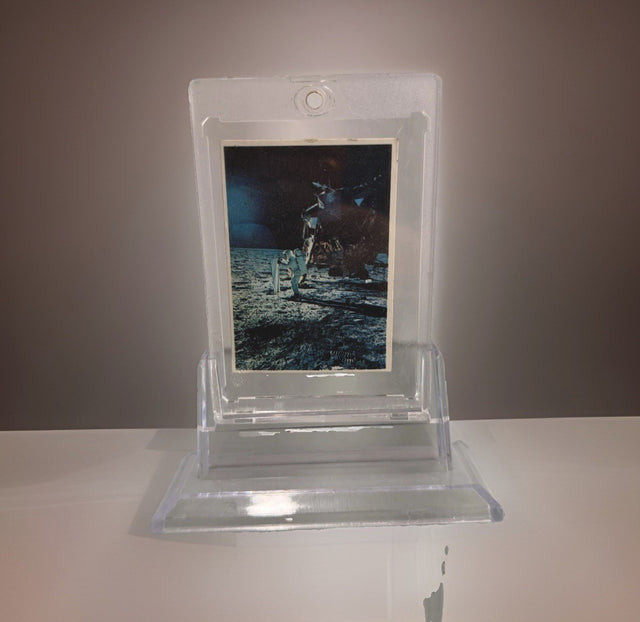
1969 Space Candy Buzz Aldrin Apollo 11 On The Moon Card #19 Taylor-Reed Display
$59.00 USD
-

1980 Polo Player Green Pink Chalk Pastel Bears Andy Warhol Signature AS-IS
$399.00 USD
-

After Andy Warhol Moon Landing Line Drawing 5/50 w/ Astronaut Autographs As-Is
$175.00 USD
-

After John Lennon "I Do" Framed Print, Marked A/P Unverified
$99.00 USD


Browse the collection for current listings.