The single biggest difference between collectors who build equity and collectors who decorate walls is what gets through the filter. Most dealers list inventory because they have it. The economics of running a gallery punish the dealer who waits. Inventory carries cost. Capital sits idle. The pressure to list is constant, and the path of least resistance is to list everything that crossed the desk and let the market sort it out.
Gauntlet Gallery's filter rejects most of what crosses our desk before it ever appears on the site. Not because we are precious about it. Because the alternative — listing everything and letting the buyer absorb the diligence cost — is the failure mode that built the reputation problem the secondary market for art is still trying to dig out of.
Step One: The Market Test — Does This Artist Have a Real Secondary Market?

The first gate is not about the piece. It is about the artist. And the question is not whether the artist is talented. The market test is objective: does this artist's work resell at meaningful volume, at consistent prices, through third parties who have no financial relationship with the artist or the artist's primary dealer?
The signals of a live secondary market are specific. Documented closes at recognized auction houses within the trailing twelve to twenty-four months. Multiple successful resale transactions across different platforms. Dealer-side bid interest. An identifiable collector community. Insurance valuations from third-party appraisers that align with realized prices.
The market test rejects more artists than collectors typically realize. There are talented painters, printmakers, and sculptors working today whose secondary markets are structurally thin. The work might be excellent. The market might develop in five years. But today, an investment-grade thesis cannot be supported by the comp data. We will admire the work. We will not list it.
Step Two: The Curatorial Gate — Does This Specific Piece Belong?
Every piece is tested independently against six gates. A piece failing any one is rejected.
Gate one — Condition. Visual inspection against pristine references for the medium. Prints evaluated for paper integrity, color saturation, edge condition. Condition issues that can be disclosed honestly do not necessarily reject a piece, but they require disclosure. Condition issues that cannot be cleanly described in a listing are rejection criteria.
Gate two — Provenance. Documented chain from the piece's current state back to either the original sale or the authorized release. The chain has to be plausible, internally consistent, and free of gaps that would concern a future buyer.
Gate three — Authentication. Category-appropriate authentication chain present, complete, and internally consistent. The category-specific standards are non-negotiable.
Gate four — Edition tier. Artist Proof, Hors Commerce, Printer's Proof, and main-edition designations verified against the publisher's record. Edition numbers that fall outside the published run are rejection criteria.
Gate five — Narrative weight. Does this piece tell a story or just exist? Not every piece needs to be iconic. Pieces with a specific place in an artist's catalog are stronger candidates than pieces that are technically correct but contextually inert.
Gate six — Comp support. Recent secondary closes support the proposed asking price within a reasonable range. If the comp set does not support the price, either the price comes down or the piece does not list. Use dated completed sales for the same artist, release, format and condition, recording the venue, currency and fees. Asking prices and broad archive totals do not establish a realized sale price or future return.
The Auction-Pedigree Filter

Auction pedigree is a specific kind of provenance: a documented prior sale at a recognized auction house with a public record. A piece with auction pedigree is materially easier to resell than an identical piece without it. The pedigree hierarchy has tiers. At the top: Sotheby's, Christie's, and Phillips for fine art, prints, and contemporary categories. Bonhams for selected categories. For specialty lanes: Heritage Auctions for comics and memorabilia; RR Auction for autographs and space material; Julien's for music memorabilia.
Non-pedigreed pieces can still pass the curatorial gate when the substitute documentation is strong enough. Direct-from-artist studio invoices. Original drop purchase records. Gallery release-record chains.
By Category: How the Method Filters Each Lane
Street Art. Banksy is excluded absent Pest Control authentication. There is no workaround. Fairey is the opposite case: there is no central authentication body, and the standard for Fairey is a verified match against the Obey Giant release record, signature consistency with the artist's documented signing periods, and edition-number alignment with the published run.
Death NYC. Artist-signed COA and gold seal are mandatory. The edition number on the piece is cross-referenced against the published run for that release.
KAWS and BE@RBRICK. Era-appropriate authentication. Recent KAWS releases are verified against Medicom packaging, hologram placement, and documented release records. OriginalFake-era KAWS material requires the original box, the hologram sticker in correct placement, and condition consistent with the figure's documented release state.
Music Memorabilia. A letter of authenticity from BAS (Beckett), JSA (James Spence), or PSA/DNA is required. For high-value pieces we require dual LOA, meaning two of the three major authenticators independently certify the piece.
Space Collectables. Zarelli authentication plus a general third-party authenticator pair is the baseline standard for autographed material. Flown items require cargo documentation, an astronaut letter where the astronaut is still living and willing to provide one, and provenance to the mission of record.
What Gets Rejected (And Why It Matters)
Authentication chain incomplete. The single most common rejection reason. A piece arrives with what the seller represents as authentication, and on inspection the chain is missing a component the category requires.
Provenance gaps. Second most common. The piece is authentic. The piece is in condition. But the documentary chain has a discontinuity that a future buyer will not be willing to absorb.
Market test failed. The artist's secondary market does not support the listing. This rejection often hurts the most because the piece is frequently strong.
Condition issues that are not cleanly disclosable. A piece with damage that can be described in a sentence is listable with disclosure. A piece with damage that requires a paragraph of qualification is not.
Edition tier inconsistencies. Claimed AP without AP notation on the piece. Claimed HC without HC documentation. Edition numbers outside the published run.
The Comparison Table

| Filter Step | What's Tested | Common Rejection Reasons |
|---|---|---|
| Market Test | Artist's secondary market depth | First-sale only data; comp set cannot support listing price |
| Condition Gate | Visual inspection against pristine references | Damage that cannot be cleanly described |
| Provenance Gate | Documented chain to original sale | Multi-year gaps, unreachable prior owners |
| Authentication Gate | Category-appropriate chain present and complete | Missing component, substitute COA from unrecognized source |
| Edition Tier Gate | AP/HC/PP designations verified | Claimed AP without notation, edition number outside the run |
| Narrative Weight | Place in artist's catalog | Technically correct but contextually inert pieces |
| Comp Support | Recent secondary closes within 261,209-record set | Asking price above what trailing comps support |
The Compounding Effect Over Time
Discipline at the listing gate compounds at the customer level. Buyers who acquire from a curated source learn over time what good looks like. They learn that condition matters. They learn that authentication chains are category-specific. The dealer's standard becomes the collector's standard.
Repeat customers know what to expect and build positions across categories. The first purchase teaches the standard. The fifth purchase moves at the speed of trust.
Where the Approach Breaks Down for Volume Sellers
This method has costs, and the costs explain why most dealers do not run it. High-volume marketplaces cannot afford the per-piece rejection rate this method produces. If a dealer needs to list a hundred pieces a month to cover overhead, and the gate rejects most of what crosses the desk, the dealer either misses overhead or relaxes the gate. Almost all of them relax the gate.
Gauntlet Gallery's smaller, slower listing cadence is a feature, not a bug. Fewer pieces, more diligence per piece, a higher percentage of inventory that passes future-buyer scrutiny.
What Collectors Should Look For in Any Dealer (Including Us)

Does the dealer publish their curation criteria in writing? Does the dealer disclose rejections? Does the dealer cite comps openly? Does the dealer's review history reference authentication chains specifically? Is the dealer willing to walk away from a sale to maintain the standard?
Three Worked Examples
A piece accepted. A KAWS Companion figure from a recent release. Original box in strong condition, hologram and markings verified, edition consistent with the published run, documented chain from original drop purchase. All six gates clear. Listing goes up.
A piece rejected for authentication. A Death NYC print, edition number within the published run, condition strong, signature consistent. But the COA arrives without the gold seal. There is no workaround. The Death NYC standard requires the seal. The piece is returned unlisted.
A piece rejected for market test. A contemporary print by an emerging artist with strong technique. The piece is excellent. The artist is genuinely talented. But the secondary market does not yet exist. The market test fails. The piece is not listed.
Closing: The Curation Method as Discipline
Curation is not a marketing word. It is a workflow with explicit criteria, observable outputs, and a rejection rate that exceeds the acceptance rate. The Market Test filters which artists earn evaluation. The Curatorial Gate filters which specific pieces earn a listing. The Authentication Canon defines what documentation a piece must carry. The comp set provides the pricing discipline. The work is in the consistency.
That is what builds collections that hold value over time. Not the marketing posture. The discipline at the gate, applied piece by piece, week after week, with the rejection rate as the evidence that the method is real.
Available at Gauntlet Gallery
Explore current pieces available from the gallery.
-

1963 Farquhar Earth in Space Transparent Celestial Globe 16" Compass VTG
$699.00 USD
-

1967 Beatles Richard Avedon STERN Original Posters Set of 4 Linen Backed Copy
$999.00 USD
-
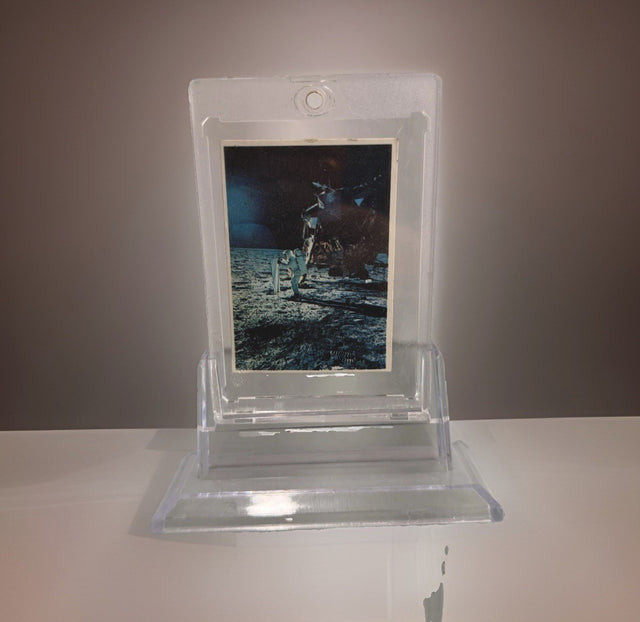
1969 Space Candy Buzz Aldrin Apollo 11 On The Moon Card #19 Taylor-Reed Display
$59.00 USD
-

1980 Polo Player Green Pink Chalk Pastel Bears Andy Warhol Signature AS-IS
$399.00 USD
-

After Andy Warhol Moon Landing Line Drawing 5/50 w/ Astronaut Autographs As-Is
$175.00 USD
-

After John Lennon "I Do" Framed Print, Marked A/P Unverified
$99.00 USD


Browse the collection for current listings.