The Authentication Body Is the First Line Item
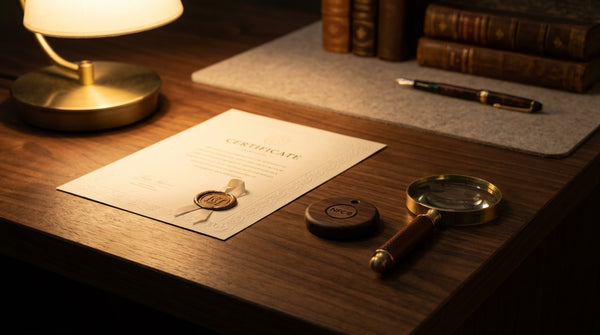
Provenance is not a story. It is a chain of verifiable documents tied to a specific authenticating body, and the body matters more than the certificate it issues. A Banksy without Pest Control is, for resale purposes, not a Banksy. A BE@RBRICK 1000% without its OneCOA hologram and NFC chip is a sculpture of uncertain origin. A Warhol estate piece without TrueCOA documentation collapses at the first serious consignment review. The authenticator is the asset.
The cost of getting this wrong is asymmetric. A misattributed work does not lose 10% of its value — it loses 80-95%, because the secondary market treats unauthenticated work as decorative rather than investment-grade. Major auction houses will not catalog a Banksy without Pest Control. Sotheby's, Christie's, Phillips, and Heritage all use the authenticating body as a gating field, not a nice-to-have. If the field is blank, the lot is either rejected or relegated to a lower-tier sale where reserves collapse.
Collectors who treat all certificates as interchangeable lose money. The three bodies most commonly invoked in the contemporary and street art market — Pest Control, TrueCOA, and OneCOA — verify completely different things, for completely different categories, with completely different evidentiary weight. They are not substitutes. Treating them as such is the most expensive mistake a new collector makes.
What Pest Control Actually Verifies
Pest Control Office is the sole authentication body for Banksy. It was established by the artist's studio specifically to issue certificates of authenticity for original works and authorized prints. Nothing else. It does not authenticate Shepard Fairey, KAWS, Death NYC, Invader, Mr. Brainwash, or any other street artist. The scope is exact and the body is unambiguous about it.
Scope
- Authorized Banksy screen prints (signed and unsigned editions from Pictures on Walls and successor releases)
- Original Banksy works on canvas, board, or paper submitted with sufficient documentation
- Certain Banksy multiples and sculptural editions
Process
The application is intentionally restrictive. Submissions require detailed photographs, provenance documentation, and a fee that varies by case. Turnaround is measured in weeks to months, not days. Pest Control reserves the right to deny authentication without explanation, and denials are final — there is no appeal track, no second opinion, no alternative body that can override the decision.
Common Denial Reasons
- Insufficient provenance chain — gaps in ownership history
- Works not in the studio's records as authorized
- Street pieces that were never intended for the private market
- Submissions with altered or restored surfaces
Galleries cannot substitute Pest Control with their own seal, a third-party COA, or an "expert opinion" letter. The market does not recognize alternatives. A Banksy print listed without a Pest Control COA is treated as a print that might be authentic — which is the same as not authentic for pricing purposes. Gauntlet Gallery does not claim Pest Control authentication on any piece in inventory. When we list Banksy-adjacent works or Banksy-influenced prints, we say exactly what they are and what authentication they carry.
What TrueCOA Actually Verifies
TrueCOA is a documentation framework used for certain Warhol works and select contemporary pieces. It is not an artist-authorized body in the Pest Control sense — there is no surviving Warhol authentication board, which was dissolved in 2012 after litigation pressure. TrueCOA fills part of the gap by issuing structured certificates that record the evidence supporting attribution, rather than asserting attribution by fiat.
What Appears on a TrueCOA
- Title, date, medium, and edition information
- Dimensions and condition notes
- Provenance chain — prior owners, gallery records, exhibition history
- Third-party authentication notes where applicable
- Signer identification and assignor/assignee chain
- Image documentation linked to the certificate ID
- Blockchain anchor for tamper evidence
Scope Limits
TrueCOA documents what is known and verifiable. It does not replace the now-defunct Warhol Authentication Board for works requiring estate-level attribution. For Warhol prints and multiples with strong provenance — gallery invoices, exhibition catalogs, prior ownership records — TrueCOA produces a certificate that consolidates that evidence into a single verifiable record. For works where the evidence is thin, TrueCOA records what is known and is explicit about what is not.
The value of TrueCOA is structural, not declarative. It does not say "this is authentic because we say so." It says "here is the evidence chain, here is the signer, here is the blockchain record, verify it yourself." That distinction matters when the certificate is reviewed by a future buyer, consignment specialist, or insurer.
What OneCOA Actually Verifies
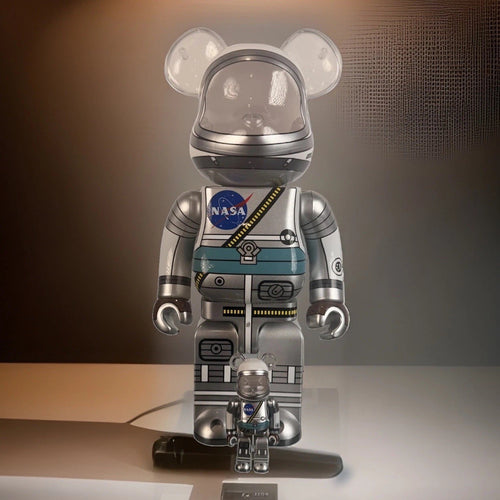
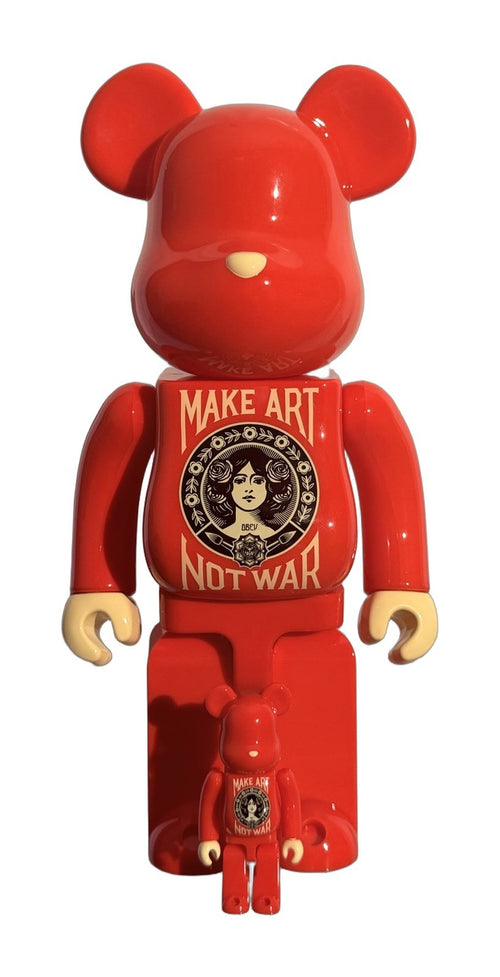
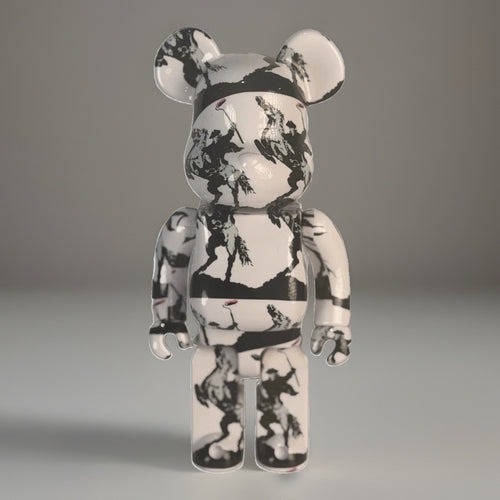
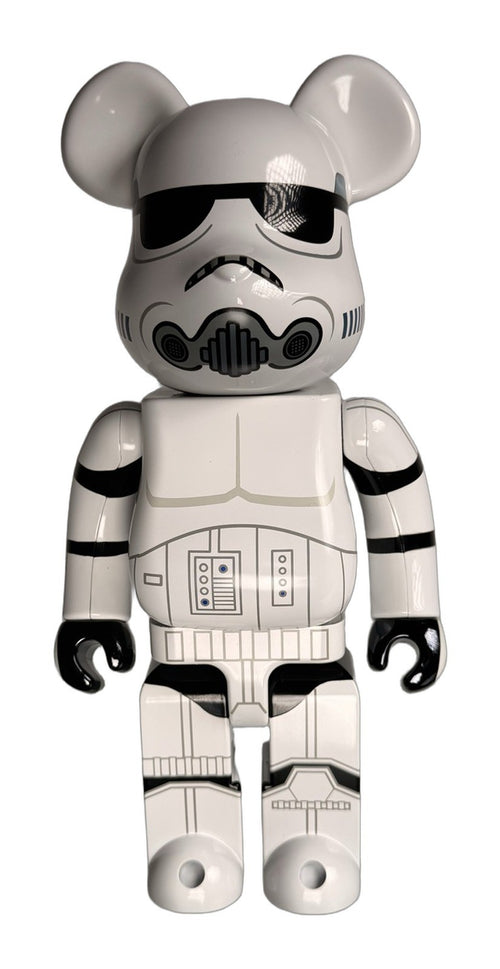
OneCOA is the documentation standard used for designer toys — primarily BE@RBRICK figures from Medicom Toy and certain KAWS Companion-era editions. It pairs a printed certificate with an NFC chip embedded in or accompanying the figure, allowing piece-level verification by tap rather than visual inspection alone.
Form Factor
- Printed COA card with edition number, release date, and figure identifier
- NFC chip readable by any modern smartphone
- Hologram or tamper-evident seal on the original box
- Edition-level metadata stored against the chip ID
BE@RBRICK and KAWS Workflow
For BE@RBRICK 100%, 400%, and 1000% releases, the OneCOA chip ties the specific figure to its production run. Medicom's release calendar and Karimoku wood editions are tracked by chip ID, which means a tap can confirm not just "this is a real BE@RBRICK" but "this is from this specific edition, released on this date, in this size." For KAWS Companion figures from the OneCOA-supported window, the same logic applies — chip confirms edition, edition confirms release, release confirms market comparables.
Edition-Level vs Piece-Level
This is the critical distinction. Many designer toy certificates verify the edition — "this is from a run of 500" — without binding the certificate to a specific figure. OneCOA binds the chip to the figure. A swapped figure with a real chip is detectable. A real figure with a swapped chip is detectable. The pairing is the security model.
Authenticator Comparison
| Authenticator | Scope | Form Factor | Where It's Required |
|---|---|---|---|
| Pest Control | Banksy only — prints, originals, authorized multiples | Printed certificate, torn-half ticket on prints, studio records | Any Banksy work entering the secondary market or major auction |
| TrueCOA | Select Warhol works and certain contemporary pieces | Structured certificate with provenance fields, blockchain anchor, image link | Warhol prints/multiples with strong documentary evidence; contemporary works needing consolidated provenance |
| OneCOA | Designer toys — BE@RBRICK, KAWS Companion-era figures | Printed COA + NFC chip + hologram/seal on box | Medicom releases, Karimoku wood BE@RBRICKs, OneCOA-supported KAWS figures |
Where Each Is Required (And Where It Isn't)
Street Art
Banksy requires Pest Control. No substitute exists. Shepard Fairey and Obey Giant prints do not receive COAs from any central body — authentication runs through signature, edition numbering, the Obey Giant release record, and provenance chain (original purchase from Obey Giant, OBEY Clothing drops, or authorized resellers). A signed and numbered Fairey print with a clear chain is the standard. Anyone offering a "Fairey COA" is offering something Fairey himself does not issue. Death NYC works ship with artist-signed COAs and a gold seal applied by the artist's studio — that is the canonical chain for Death NYC and the only one we recognize.
Designer Toys
OneCOA covers BE@RBRICK and OneCOA-supported KAWS Companion figures. NFC pairing is the security feature. Earlier KAWS releases predating OneCOA carry their own original packaging and release documentation; for those, the box, hologram, and release records do the work.
Music Memorabilia
Beckett (BAS), JSA, and PSA dominate. These are the three names that auction houses and serious music collectors accept. A signed guitar, drumhead, or album without one of those three is a story, not an asset. Roger Epperson is recognized within BAS for music-specific work. Combinations matter — a BAS plus JSA pairing on a high-value piece is stronger than either alone.
Space Memorabilia
Beckett, JSA, and PSA again, frequently paired with Steve Zarelli for astronaut signatures. Zarelli's specialization in space-flown items and astronaut autographs makes his letter the reference standard within that niche. Pieces with Zarelli plus a major TPA are the format consignment specialists expect.
Signed Prints (Non-Banksy)
Provenance chain is the authentication. Original purchase invoice, release record from the issuing platform (Obey Giant, 1xRUN, Avant Arte, Print Them All), signature consistency against known exemplars, edition number consistency with the published run, and continuous ownership history. No central body issues COAs for the broad category of signed contemporary prints. Anyone claiming a universal "signed print COA" is selling a piece of paper, not authentication.
Red Flags: When "Authentication" Means Nothing
The market is flooded with documents that look like authentication and aren't. The pattern is consistent and easy to spot once you know what to look for.
- Generic Letters of Authenticity from the seller. A LOA signed by the person selling the piece is a sales receipt with extra branding. It carries the same weight as the seller's word — which is the weight you are trying to verify in the first place.
- Self-signed COAs from "galleries" with no public record. If the certifying entity has no resale history, no auction record, no press coverage, and no traceable address, the certificate is decorative.
- Dealer-only seals invented for the listing. Holographic stickers, embossed seals, and "verified authentic" stamps applied by the seller mean nothing. The seal must come from an independent body whose denials cost them money.
- eBay-only certification services. Several services exist solely to issue COAs for eBay sellers. Auction houses do not accept them. Consignment specialists do not accept them. They exist to clear the eBay listing filter and nothing else.
- "Certificate from the artist's representative" without identifying the representative. If the document cannot name the representative, the gallery, the studio, or the authenticating body — the document is the authentication of itself.
- COAs that authenticate "the edition" without binding to the specific piece. A certificate that says "this is from an edition of 500" without a serial number, image link, or chip pairing authenticates nothing about the object in front of you.
The test is simple: ask what happens if the certificate is wrong. If the answer is "nothing, because the issuer has no standing," the certificate is not authentication. It is marketing.
How Gauntlet Gallery Maps Authentication to Category
The rules we follow are category-specific and do not cross over. We never mix chains across categories, and we never claim Pest Control on any piece in our inventory.
- Shepard Fairey and Obey: Signature, edition number, and continuous provenance chain. No COA — because Fairey does not issue one. Anyone offering a Fairey COA is offering fiction.
- Death NYC: Artist-signed COA plus gold seal applied by the studio. Both must be present and consistent.
- KAWS and BE@RBRICK: OneCOA where applicable, with NFC chip verification. Original packaging, hologram, and release record for editions outside the OneCOA window.
- Warhol: TrueCOA where the documentary evidence supports it. Provenance chain, gallery invoices, and exhibition records consolidated into the certificate.
- Music memorabilia: Beckett plus JSA plus PSA, in some combination depending on the piece. Roger Epperson within BAS for music-specific work.
- Space memorabilia: Same combination as music, with Steve Zarelli for astronaut signatures and space-flown items.
The authenticator is part of the asset. Buy the certificate as carefully as you buy the work, because at the point of resale, they are the same thing.