Bob Marley – Soul Rebel by Shepard Fairey: Collector Guide, Value & What to Know
The Shepard Fairey Bob Marley – Soul Rebel print is a screen-printed portrait from the OBEY Giant studio depicting the reggae icon in Fairey’s signature propaganda-poster aesthetic. It belongs to a lineage of Fairey music-subject works that have become some of the most sought-after pieces in his catalog, sitting at the intersection of street art collecting and music memorabilia. Is the Bob Marley Soul Rebel print worth buying? Yes—provided you are acquiring a properly documented, hand-signed edition with intact studio provenance. Music-related Fairey works command dual collector interest: the street art market and the deep global community of Marley fans. That combination supports strong secondary market pricing and long-term cultural staying power.
About Bob Marley – Soul Rebel
Bob Marley is the defining figure of reggae music and one of the most recognizable cultural icons of the twentieth century. Born in Jamaica in 1945, Marley and the Wailers built an international following through albums including Catch a Fire, Burnin’, Natty Dread, and Exodus—a body of work that fused Rastafarian spirituality, political resistance, and universal themes of love and liberation. The phrase “Soul Rebel” itself comes from the Wailers’ early era, capturing the restless, nonconformist energy that defined Marley’s entire career. He died in 1981 at 36, but his image and music have only grown in reach, now spanning multiple generations and every continent.
Shepard Fairey’s decision to place Marley within the OBEY visual language is deliberate and resonant. Fairey has long drawn on countercultural figures whose work challenged institutional power—musicians, athletes, and activists who embodied dissent through their craft. Marley fits that framework precisely. The Soul Rebel subject gives the print a title that functions as both biography and manifesto: Marley as perpetual outsider, as someone who refused the terms offered by the dominant culture. For Fairey, who built OBEY around the subversive appropriation of propaganda aesthetics, Marley is a natural subject—a man whose face became its own form of political art long before Fairey rendered it in screen print.
The Print – What You Are Getting
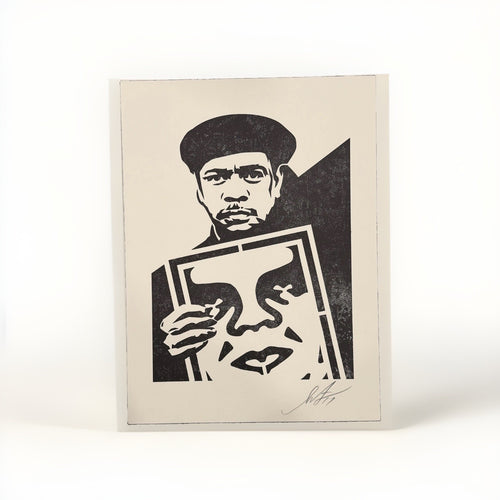
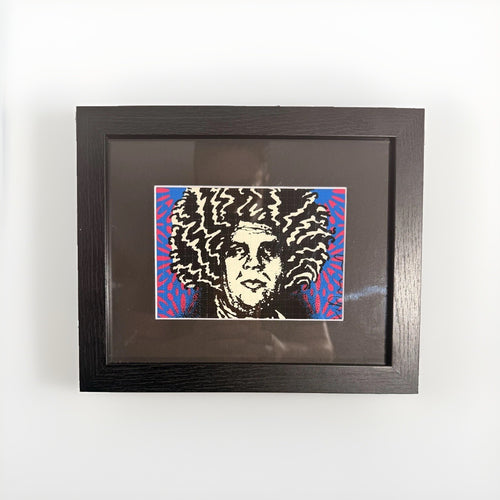
The Bob Marley – Soul Rebel is an OBEY Giant studio screen print, produced in limited edition runs typical of the Fairey catalog. Standard Fairey editions run between 150 and 450 copies, with some museum and gallery releases capped lower. The 18x24 inch format is the standard Fairey dimension, offering a strong visual presence while remaining manageable for framing and display. The visual treatment is consistent with Fairey’s hallmark style: bold, flat color fields derived from constructivist and propaganda poster traditions, a dominant portrait composition, and graphic elements that reinforce the subject’s iconographic status. Colors are typically high-contrast—deep reds, blacks, and complementary tones—printed on heavy stock that holds the ink with sharp definition. Every print is hand-numbered and signed by Fairey in pencil, making each one a unique object within the edition.
Authentication and Provenance
The authentication standard for OBEY Giant screen prints is studio provenance, not third-party certification. A legitimate Fairey print carries three physical markers: a hand-applied pencil signature in the lower right, an edition number written in pencil in the format XX/YYY (e.g., 127/450), and the OBEY blind-deboss seal pressed into the paper. Prints sold through authorized channels—the OBEY store, authorized gallery partners, and verified secondary market dealers—originate from a documented production chain. No third-party COA from authentication services is required or recognized as a standard for Fairey works; the studio documentation is the chain of authenticity. When acquiring on the secondary market, request documentation of the original purchase source, confirm the blind-deboss is present, and verify the signature and numbering are in pencil (not printed). Gauntlet Gallery evaluates every Fairey print against these criteria before offering it.
For a comprehensive breakdown of authentication standards across Fairey’s full catalog, see the Gauntlet Gallery Shepard Fairey Collector Guide.
Value in Context
Within the Fairey pricing spectrum, music-subject works with iconic, globally recognized subjects occupy a premium tier. The reasoning is structural: these prints appeal simultaneously to the street art collecting market and to the dedicated, often obsessive communities built around individual musicians. A Fairey portrait of Bob Marley is not just a Fairey print—it is an artifact that belongs in collections anchored by music history, Jamaican cultural heritage, and reggae fandom. That breadth of demand compresses supply relative to audience size, which supports pricing above comparable non-music subjects. Among music subjects, Marley ranks at the top end: he is not a niche figure whose appeal is concentrated in a single genre or era. His catalog is in active circulation across multiple generations, and his image carries global recognition that few artists—in any medium—can match. For signed, numbered OBEY Giant editions in good condition, contact Gauntlet Gallery directly for current market pricing on this specific print.
FAQ
Ready to add a Shepard Fairey to your collection? Browse Shepard Fairey prints at Gauntlet Gallery — authenticated, provenance-documented, and sourced from a collector with deep expertise in the OBEY catalog.