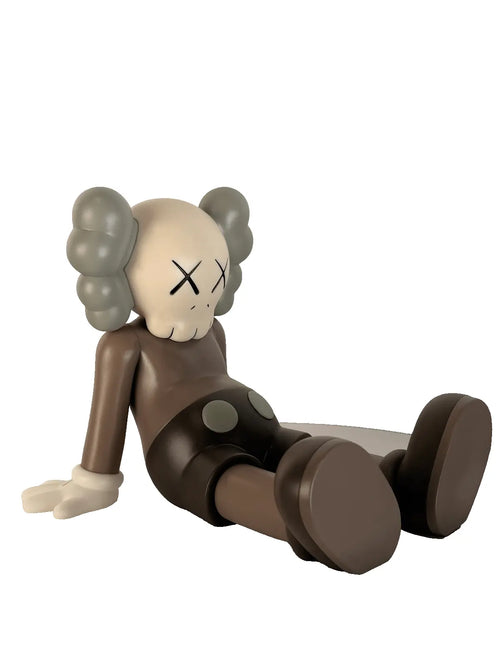
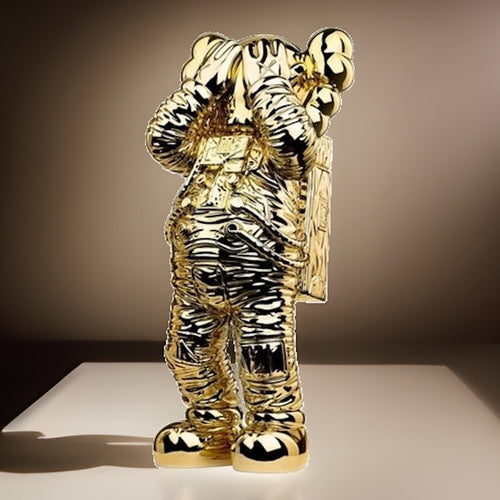
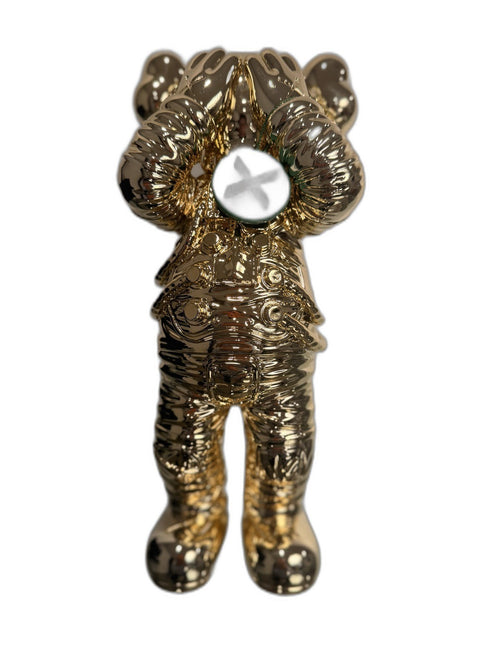
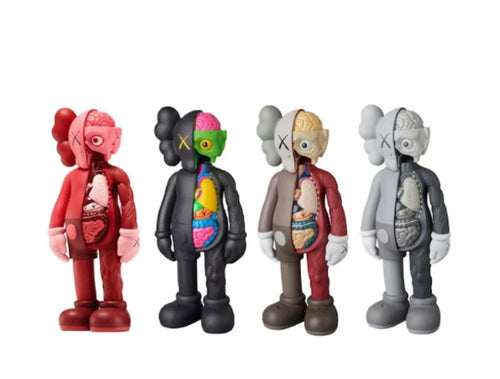
Should I collect KAWS or sneakers? Both sit at the intersection of streetwear, art, and alternative assets — but they behave differently as collectibles. Sneakers offer superior liquidity through StockX, while KAWS figures preserve indefinitely and carry institutional art-market validation. The most resilient collectors hold both, using sneakers for liquidity and KAWS for long-horizon appreciation.
Two Markets, One Cultural Root

KAWS — Brian Donnelly, born 1974 in Jersey City, NJ — and limited sneaker drops emerged from overlapping cultural soil: graffiti, skateboarding, hip-hop, and the late-1990s rise of "hypebeast" consumer behavior. Today, both markets clear hundreds of millions annually in secondary-market volume, share significant demographic overlap, and increasingly compete for the same collector dollars.
Yet they diverge sharply on liquidity, authentication infrastructure, condition sensitivity, and appreciation curves. For collectors building a portfolio in 2026, understanding those differences is the entire decision.
Market Scale and Headline Sales
KAWS occupies a unique position no other designer-toy artist has reached — simultaneous credibility at Phillips, Sotheby's, Christie's, Heritage, and Bonhams alongside mass-market distribution through Uniqlo, the MoMA Design Store, and Dior. The category was estimated at $2 billion or more in 2023, with annual auction and resale volume exceeding $200 million. The headline data point remains The KAWS Album at $14.7 million, sold at Sotheby's Hong Kong in April 2019 — a price that vaulted KAWS into the formal contemporary art canon.
Limited sneakers operate at a different scale and rhythm. StockX alone has processed billions in cumulative GMV since launch, with grail-tier Air Jordans, Yeezys, and Travis Scott collaborations regularly clearing five and occasionally six figures on the resale market. The Gauntlet Gallery 160,000+ comparable sales database tracks both categories — and the data shows clear behavioral signatures unique to each.
Head-to-Head: KAWS vs Limited Sneakers

| Attribute | KAWS Figures & Prints | Limited Sneakers (Jordan, Yeezy, Travis Scott) |
|---|---|---|
| Annual secondary volume | $200M+ (auction + resale) | Multi-billion (StockX, GOAT, eBay) |
| Liquidity | Moderate — auction cycles, gallery placement | High — StockX bid/ask in minutes |
| Authentication standard | NFC chip + OneCOA for verified pieces; Gauntlet Gallery TrueCOA | StockX / GOAT physical verification |
| Counterfeit rate (open market) | Estimated 40–60% on uncurated platforms | Estimated 15–30% on uncurated platforms |
| Condition sensitivity | High — boxed/sealed commands premium | Extreme — deadstock vs worn = multiple-x spread |
| Time horizon behavior | Preserves indefinitely if stored properly | Materials degrade (sole rot, yellowing) over 10–20 years |
| Typical top-tier appreciation | Documented secondary market: limited figures 3–20x original retail over multi-year holds | Documented secondary market: grail releases 3–20x retail; outliers higher |
| Institutional validation | Major auction houses + museum editions | Sotheby's sneaker auctions exist but remain niche |
| Cultural ceiling | Contemporary art canon | Streetwear / pop culture |
Liquidity: The Defining Difference
Sneakers: StockX Built a Stock Exchange
StockX's bid/ask order book is the single most important infrastructure innovation in collectible markets in the past decade. A collector holding a pair of Travis Scott Air Jordan 1s can see a real-time live market, accept a standing bid, and receive payment within days of shipping. That liquidity profile is closer to public equities than to traditional collectibles — and it materially compresses the holding-cost penalty of owning sneakers.
KAWS: Less Liquid, but Catalogued
KAWS pieces clear primarily through auction cycles (Phillips, Sotheby's, Heritage), specialist galleries, and curated resale. There is no order book. Price discovery happens at season-defined intervals. The trade-off: when a piece does clear, it clears with full provenance documentation and at prices that — for top tier — increasingly resemble contemporary art rather than collectible toys.
Authentication: NFC + OneCOA vs StockX Verification

Counterfeits are the single largest risk in both markets. The infrastructure to address that risk diverges meaningfully.
KAWS Authentication Chain
The Gauntlet Gallery authentication canon for KAWS is non-negotiable: every figure we transact carries an NFC chip embedded for tap-to-verify provenance, plus a OneCOA certificate of authenticity tied to the piece's unique identifier. Counterfeits have been observed appearing within 72 hours of new drops, and an estimated 40–60% of pieces on open marketplaces are fake. NFC + OneCOA is what separates a $5,000 verified figure from a $50 forgery.
Sneaker Authentication Chain
StockX and GOAT centralized authentication by inserting a physical verification step between buyer and seller. Every pair is shipped to a verification facility, inspected, tagged, and re-shipped. The system is not perfect — counterfeit techniques have improved — but it has converted sneaker resale from a caveat-emptor market into something approaching institutional trust.
Condition, Wear, and the Use-or-Preserve Question
Here the two markets diverge philosophically.
Sneakers are designed to be worn. A "deadstock" pair (unworn, in original box, with all tags) commands a multiple of the same pair worn even lightly. Sole materials degrade — polyurethane midsoles can crumble after 10–20 years even unworn, and white rubber yellows. Collectors face a real choice: wear and enjoy the cultural object, or store and preserve the asset. Few do both well.
KAWS figures, when stored properly (climate-controlled, original packaging intact), preserve indefinitely. Vinyl is stable. The original box matters intensely — sealed and pristine pieces command significant premiums over opened equivalents — but a 2010-era OriginalFake figure stored correctly looks identical today to the day it was bought. That permanence is itself a form of value.
Collector Demographics: Significant Overlap

The buyer cohorts overlap heavily. KAWS collectors and high-end sneaker collectors skew similar on age (late 20s through 40s), income, urban/coastal geography, and cultural fluency in streetwear, hip-hop, and contemporary art. Many serious KAWS collectors own grail sneakers; many serious sneakerheads own at least one KAWS Companion. The overlap is exactly why both markets have ridden the same cultural wave for fifteen years.
The Case For Each — and the Combined Strategy
The Case for KAWS
- Permanent preservation if stored correctly
- Institutional art-market validation (Sotheby's, Phillips, museum editions)
- Closed-era pieces (OriginalFake era ended 2013) cannot be re-issued
- Top-tier headline prices in eight figures
The Case for Sneakers
- Best-in-class liquidity via StockX order book
- Faster price discovery and lower transaction friction
- Centralized verification (StockX, GOAT) approaches institutional trust
- Cultural utility — they can be worn and enjoyed
The Combined Collector Strategy
The most resilient collectors we see in the Gauntlet Gallery 160,000+ comparable sales database don't choose. They hold both. Sneakers function as the liquid sleeve — capital that can be deployed and recovered within weeks. KAWS figures function as the long-horizon sleeve — patient capital aimed at multi-year appreciation curves and the institutional art market. The two markets share collectors precisely because they are complementary, not substitutable.
For collectors entering KAWS specifically, the Gauntlet Gallery KAWS Collector Guide covers authentication, edition rarity, and storage protocols in depth.
Conclusion: Liquidity vs Permanence
Sneakers give you liquidity, immediacy, and cultural utility. KAWS gives you permanence, art-market validation, and long-horizon appreciation. Both reward authentication discipline. Neither rewards casual sourcing on uncurated marketplaces. The question isn't which market to pick — it's how to size each within a portfolio that respects how differently they behave.
Browse authenticated KAWS figures and signed prints at Gauntlet Gallery →
Gauntlet Gallery, founded in 2012, maintains a 160,000+ comparable sales database spanning KAWS, Shepard Fairey, Banksy, and contemporary street art. Every KAWS piece we transact carries NFC + OneCOA authentication.