
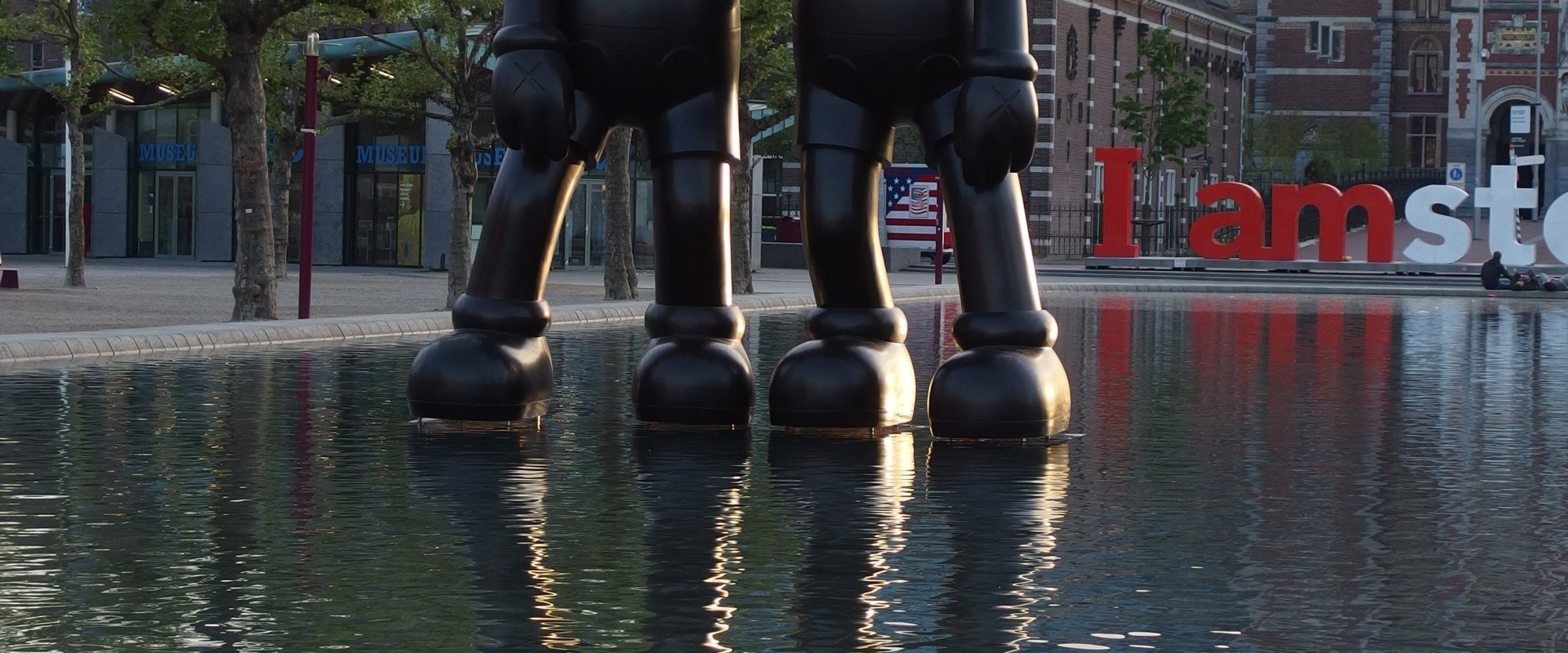
What is the typical KAWS print appreciation? Documented secondary market data shows signed limited-edition KAWS prints have historically delivered roughly 15-40% annualized growth on cultural-anchor subjects like Companion and BFF in primary colorways, with smaller editions (250-500) outpacing larger runs (1,000+) over rolling 5-10 year windows.
KAWS at a Glance: Why the Print Market Matters
KAWS, born Brian Donnelly in 1974 in Jersey City, New Jersey, has become one of the most commercially documented living artists of his generation. His auction profile crystallized in April 2019 when The KAWS Album sold for USD 14.7 million at Sotheby’s Hong Kong, a result that recalibrated expectations across every tier of his market — including the print category that most private collectors actually transact in.
Since Gauntlet Gallery was founded in 2012, we have tracked the contemporary print market through more than 160,000 comparable sales. KAWS prints occupy a specific seat in that dataset: less speculative than the vinyl figure category, more liquid than unique paintings, and unusually consistent on a compounded annual growth rate (CAGR) basis. This article unpacks what the data shows, which editions have led, and why the print market has held a smoother appreciation curve than the figure market.
Historical Appreciation: What the Data Shows
The Anchor Subjects
Two iconography pillars dominate documented KAWS print appreciation: Companion (the X-eyed cartoon-derived character introduced in 1999) and BFF (the furry blue derivative from 2016). Within these characters, primary colorways — original release palettes, holiday editions, and museum-released variants — carry materially higher CAGRs than later artist proofs or open-edition variants.
Edition Size Is the Single Strongest Predictor
Across our comparable database, the inverse correlation between edition size and annualized appreciation is the most reliable pattern in the KAWS print category. Smaller signed editions consistently outperform larger ones over the same hold periods.
| Edition Size | Typical Subject Category | Documented CAGR Range (5-10 yr windows) | Liquidity Profile |
|---|---|---|---|
| 100-250 | Museum / institutional editions, early Companion screenprints | 25-40%+ | Thin float, multi-week sell cycles |
| 250-500 | Holiday Companion sets, BFF primary colorways | 18-30% | Moderate liquidity, monthly comparable sales |
| 500-1,000 | Standard signed releases, collaboration prints | 12-22% | Active secondary market, weekly transactions |
| 1,000+ | Open editions, larger run drops | 6-15% | Highly liquid, daily comparable sales |
Ranges reflect Gauntlet Gallery’s analysis of documented secondary market sales between approximately 2015 and 2025. Past performance does not guarantee future results.
Reading the Pattern
The cleanest historical examples come from signed Companion holiday editions of roughly 500 units, where the documented secondary market has repriced steadily upward across multiple rolling 5-year windows since the late 2010s. BFF primary colorway prints — particularly editions tied to AllRightsReserved Hong Kong releases — have shown a similar compounding profile, with the steepest moves clustering in the 24-36 months following each subsequent global museum exhibition.
Why Prints Have Compounded More Smoothly Than Figures
Less Speculative Volatility
The KAWS vinyl figure market — OriginalFake Companions, BE@RBRICK collaborations, and Holiday Open Editions — is heavily influenced by drop hype cycles, sneaker-adjacent flipping behavior, and rapid price-discovery platforms. Prints are different. They trade through a smaller, more deliberate buyer pool: gallery clients, fine-art collectors, and long-horizon decorative buyers who hold rather than flip.
The result is a smoother volatility profile. Where a figure release can swing 30-50% inside its first 90 days, signed print prices typically move in measured steps tied to gallery exhibitions, auction comparables, and institutional acquisitions.
Authentication Friction Filters the Market
Signed limited editions carry verifiable provenance: edition numbering, blind stamps, signature placement, and dealer documentation. That authentication overhead actively filters out the casual speculator and concentrates ownership among collectors who underwrite long-term value. Open marketplaces show estimated fake rates on KAWS works in the 40-60% band, but rigorously authenticated signed prints remain the cleanest entry point for new collectors.
Institutional Validation Compounds
Each major institutional moment — the Brooklyn Museum retrospective, National Gallery of Victoria exhibition, MoMA Design Store editions — resets the floor on the entire signed print category. Because prints sit in the most accessible price band of the KAWS ecosystem, they capture the broadest demand expansion every time a new collector segment forms.
The Compound Effect for Long-Term Holders
Even at the lower end of the documented CAGR band, the math meaningfully rewards patience. A signed print acquired at a verified price point and held for ten years at a documented 15% annualized growth rate represents roughly a 4x multiple of the original outlay. At the 25% band typical of smaller editions on anchor subjects, the same ten-year hold compounds to roughly 9-10x.
Two practical observations from the Gauntlet Gallery dataset:
- Hold periods matter more than entry timing. Across our comparable sales database, the variance in five-year holder outcomes narrows dramatically once the hold extends past seven to eight years.
- Concentration in anchor subjects outperforms diversification. Collectors who concentrated in primary-colorway Companion and BFF prints from edition runs under 500 outperformed broad-basket KAWS print portfolios over the same windows.
What to Look For in a Print Acquisition Today
For collectors evaluating an entry into the category, the documented historical pattern suggests prioritizing:
- Anchor iconography — Companion and BFF over secondary or one-off characters.
- Edition size under 500 — the historical CAGR premium is meaningful.
- Primary colorway releases — original palettes hold institutional weight that variants do not.
- Clean provenance — signed, numbered, with documented chain of custody.
- Pre-museum-moment timing — acquisitions made before a major institutional exhibition window have historically compounded faster.
For deeper guidance on the full KAWS authentication framework, edition identification, and signature reference, see the Gauntlet Gallery KAWS Collector Guide.
Frequently Asked Questions
What is the typical annualized appreciation for a signed KAWS print?
Documented secondary market data points to roughly 15-40% annualized growth on cultural-anchor subjects like Companion and BFF in primary colorways, with edition size as the strongest single predictor.
Do smaller editions really outperform larger ones?
Yes. Across the Gauntlet Gallery comparable sales database, editions of 250-500 have historically outpaced editions of 1,000+ on the same hold periods, often by a multiple on annualized CAGR.
Why are KAWS prints less volatile than KAWS figures?
The print market trades through a smaller, more deliberate buyer pool of fine-art collectors. The figure market is influenced by drop hype, sneaker-adjacent flipping, and rapid price-discovery platforms, which produce sharper short-term swings.
How long should a collector plan to hold a KAWS print?
The documented compounding pattern strongly favors hold periods of seven to ten years or longer. Outcome variance narrows materially past the seven-year mark in our dataset.
What is the single biggest risk in this category?
Counterfeits. Open marketplaces show estimated fake rates of 40-60% on KAWS works. Buying through authenticated channels with documented provenance is the foundational risk control.
Build Your Position with Authenticated Provenance
Gauntlet Gallery has tracked this market since 2012 and maintains one of the most granular KAWS print datasets in the secondary trade. Browse current signed, numbered, and provenanced inventory in our full collection to identify positions that align with the historical appreciation patterns documented above.