Some collectors still hear the phrase designer toy and think: toy shelf.
That is understandable. It is also incomplete.
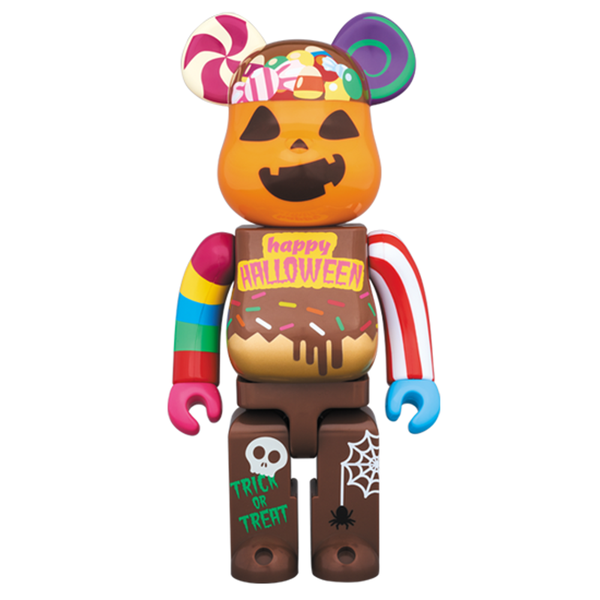
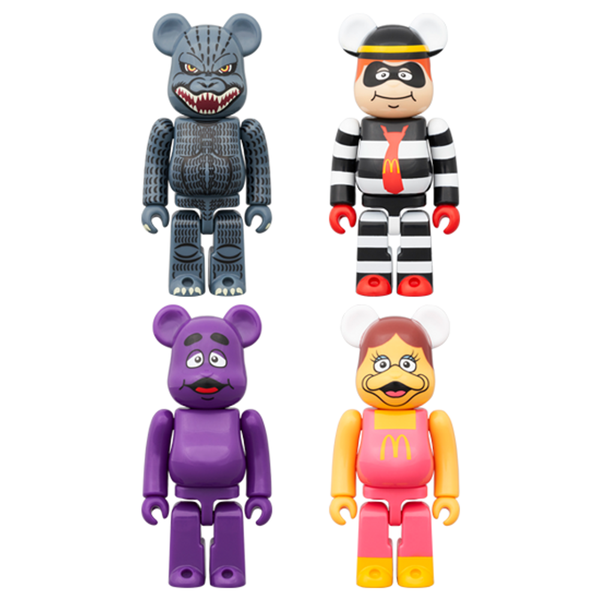
A KAWS Companion can be a vinyl figure, a sculpture, a design object, a pop-culture artifact, a limited-edition collectible, and a serious art-market asset depending on the edition, scale, release history, condition, and provenance. A BE@RBRICK can be a playful bear-shaped figure, or a collaboration involving KAWS, Keith Haring, Basquiat, Chanel, BAPE, Nike, Disney, or another major cultural name. The category lives in the overlap between art, streetwear, design, character culture, and collecting.
That overlap is the whole point.
Designer toys are not traditional toys in the childhood-play sense. They are editioned objects. They are built around visual language, scarcity, collaboration, release culture, condition, and collector demand.
So, are KAWS figures and BE@RBRICKs art? Sometimes. Are they collectibles? Always. Can they be both? That is where the category gets interesting.
The Category Is Confusing Because the Labels Are Bad

"Toy" is a weak word for what this market has become.
It makes the category sound unserious, disposable, or juvenile. But the objects themselves often behave more like editioned prints, sculpture multiples, artist merchandise, design objects, or cultural artifacts.
A KAWS vinyl figure is not the same thing as a mass-market action figure. A BE@RBRICK collaboration with a major artist is not the same thing as a plush souvenir. A 1000% Medicom Toy figure is not the same kind of purchase as a blind-box desk toy.
The better phrase is collectible design object.
That sounds a little stiff, yes. Like a museum label wearing a seatbelt. But it is closer to the truth.
Designer toys occupy a real market because they combine five things collectors care about:
- Artist or brand authorship
- Limited release structure
- Recognizable visual identity
- Display value
- Secondary-market demand
When those five align, the object moves beyond novelty.
KAWS: Artist First, Toy Market Second
KAWS is not important because he made toys.
The toys matter because KAWS built a visual universe strong enough to move between graffiti, painting, sculpture, advertising interventions, product collaborations, public art, museum exhibitions, and collectible figures.
SFMOMA's KAWS: FAMILY exhibition, which ran from November 15, 2025 through May 3, 2026, described KAWS's practice as spanning paintings, drawings, sculptures, advertising interventions, product collaborations, and collectible toys. The exhibition centered on recurring characters such as COMPANION, BFF, and CHUM, and framed them as part of a broader artistic language about culture, memory, closeness, vulnerability, and pop imagery.
The Brooklyn Museum made a similar point in its 2021 exhibition KAWS: WHAT PARTY, describing KAWS as an artist who has bridged art, popular culture, and commerce for twenty-five years. That survey included graffiti drawings, notebooks, paintings, sculptures, smaller collectibles, furniture, monumental COMPANION installations, and altered advertisements.
That institutional context matters.
A KAWS figure is not valuable merely because it is cute, scarce, or hyped. It is valuable when it connects to the artist's larger visual system: X-ed out eyes, skull-like heads, familiar-but-alien characters, emotional poses, pop-cultural appropriation, and the collapse of boundaries between fine art and consumer culture.
The best KAWS figures are not side products. They are portable versions of the same language.
BE@RBRICK: The Blank Canvas That Became a Platform
BE@RBRICK is different from KAWS.
KAWS is an artist. BE@RBRICK is a platform.
Produced by Japanese company Medicom Toy, BE@RBRICK uses a standardized bear-shaped form that can be reinterpreted through collaborations with artists, brands, films, musicians, designers, and cultural institutions. The form is simple enough to disappear behind the artwork. The bear is the canvas. The collaborator supplies the identity.
That is why BE@RBRICK can hold so many worlds at once: Basquiat, Keith Haring, KAWS, Chanel, BAPE, Disney, Nike, Andy Warhol, NASA, horror films, anime, streetwear, museums, luxury fashion, and pop culture.
The collector is not only buying a figure. The collector is buying a collaboration captured in a standardized physical format.
KAWS vs. BE@RBRICK: Do Not Confuse the Two
KAWS and BE@RBRICK overlap, but they are not the same category.
A KAWS figure is usually an artist-driven object based on KAWS's own characters or visual language. A BE@RBRICK is a Medicom Toy figure platform that may feature KAWS, another artist, a brand, a film property, a museum collaboration, or a design motif. A KAWS x BE@RBRICK sits at the intersection: the Medicom platform plus KAWS's authorship.
That overlap can be powerful, but buyers need to be precise.
| Category | What It Is | What Drives Value |
|---|---|---|
| KAWS Figure | Artist figure based on KAWS characters such as COMPANION, BFF, CHUM, ACCOMPLICE, or HOLIDAY-related releases | Artist demand, character importance, edition, condition, release source, packaging |
| BE@RBRICK | Medicom Toy bear-shaped platform used for artist, fashion, film, music, and brand collaborations | Collaborator, size, scarcity, condition, packaging, release context |
| KAWS x BE@RBRICK | Medicom BE@RBRICK using KAWS imagery or collaboration | KAWS demand plus BE@RBRICK platform collectibility |
| General Designer Toy | Artist-led or brand-led collectible figure, usually vinyl, resin, ABS, plush, or mixed material | Artist relevance, edition discipline, character strength, condition, provenance |
That distinction matters because pricing mistakes often come from category confusion.
A seller may use "KAWS" loosely. A buyer may assume every bear-shaped art toy is a BE@RBRICK. A listing may imply a KAWS connection because the design resembles KAWS. None of that is enough.
The serious collector asks: who made it, who authorized it, when was it released, and what exactly is the object?
The Size System: 100%, 400%, and 1000%

BE@RBRICK uses a percentage-based size system.
The 100% figure is the base format. Medicom's product listings commonly show 100% BE@RBRICKs at approximately 70mm tall, 400% figures at approximately 280mm, and 1000% figures at approximately 700mm.
That system is simple once you understand it:
- 100% is the small base size.
- 400% is the standard display-friendly collector size.
- 1000% is the large statement size.
The bigger size is not automatically better.
A 1000% figure has more presence, but it also requires more space, better shipping, stronger packaging, and cleaner condition. A 400% + 100% set may be more practical for most collectors. A rare 100% blind-box or early artist collaboration can still be desirable when the release is important.
Scale affects value, but scale is not value by itself. A weak 1000% is still weak. A strong 400% can be excellent.
Read our BE@RBRICK sizing guide.
Open Edition vs. Limited Edition
Collectors need to understand edition language before buying KAWS or BE@RBRICK figures.
Open edition usually means the object was not released in a fixed numbered edition. It may still sell out, become hard to find, and trade actively on the secondary market, but scarcity is less structurally defined.
Limited edition means the release was produced in a fixed or restricted quantity. Sometimes the edition size is publicly stated. Sometimes scarcity is implied through the release channel, event, lottery, collaboration, or production window.
Numbered edition means the individual object carries an edition number. Artist proof, sample, prototype, or display sample can be meaningful, but only when documented. Event-exclusive or store-exclusive can matter, but the release source must be verifiable.
With designer toys, "sold out" is not the same as "rare."
A release can sell out because demand was high. It can also sell out because production was modest. Those are different things.
The strongest pieces tend to combine real scarcity, important authorship, strong design, clean condition, original packaging, and a credible release story.
Packaging Is Part of the Collectible
For designer toys, the box is not just shipping material. It is part of the object's value.
Auction houses and serious dealers often specify whether a figure includes its original product box. They also separate figure condition from box condition, because both affect resale confidence.
For KAWS and BE@RBRICK figures, collectors should evaluate the figure and packaging separately.
- A figure can be mint while the box is crushed.
- A box can be clean while the figure has scuffs.
- A sealed figure may command a premium, but only if the seal, box, and provenance are credible.
- A displayed figure can still be desirable if it has been handled carefully and retains its original packaging.
When in doubt, keep the box. Actually, do not just keep it. Protect it.
The box is not cardboard. It is future negotiation leverage.
Condition Is Not Cosmetic. It Is Economic.
Small condition issues can change value quickly.
Designer toys are vulnerable to flaws that do not always show in casual photos:
- Surface scratches
- Paint rub
- Gloss inconsistency
- Yellowing
- Sun fading
- Joint looseness
- Box dents
- Cracked blister packaging
- Dust inside seams
- Sticker residue
- Handling marks
- Missing inserts
- Damaged certificates
- Discoloration from display lighting
- Foot scuffs on 1000% figures
- Corner crushing on boxes
- Missing outer shipper
With KAWS figures, look closely at paint boundaries, eyes, hands, ears, nose, feet, and high-contact surfaces. With BE@RBRICK, inspect the face, chest, back logo area, arms, seams, feet, stamp details, finish quality, and box condition.
Condition should be photographed in full light and raking light.
A listing that only shows a figure from the front is not enough. That is not documentation. That is a dating profile.
A serious listing should show front, back, sides, bottom, box, labels, inserts, close-ups, and any defects.
Learn how Gauntlet grades condition.
Counterfeits Are a Real Problem
Designer toys are heavily counterfeited because the best-known figures are visual, desirable, and expensive enough to reward fraud.
KAWS counterfeiting has been litigated publicly. In 2023, KAWS won a legal victory involving counterfeit goods that allegedly reproduced KAWS works and items associated with the COMPANION character. That should sharpen every buyer's instincts.
A low price is not always a deal. Sometimes it is bait.
For KAWS figures and BE@RBRICKs, buyers should be cautious with:
- No original box
- Wrong box
- No receipt or release proof
- Seller using stock photos
- Suspiciously low price
- Poor paint alignment
- Cheap-feeling material
- Loose joints
- Wrong dimensions
- Incorrect logo placement
- Missing hologram or sticker where expected
- Unclear release history
- A seller who cannot explain the figure's source
- A custom or tribute piece described like an official release
- Websites pretending to be official KAWS or Medicom sources
The counterfeit problem is not theoretical. It is part of the market.
Authentication Is Different From Autograph Authentication

A signed guitar can be reviewed by Beckett, JSA, or PSA/DNA. A KAWS figure or BE@RBRICK is different.
Authentication usually depends on a combination of object inspection, packaging review, release-source documentation, provenance, receipts, official product details, market expertise, and comparison against known authentic examples.
For designer toys, the authentication stack may include:
- Original purchase receipt
- Order confirmation
- Authorized retailer invoice
- Museum store receipt
- Gallery invoice
- Auction record
- Original box
- Outer shipper
- Product sticker
- Hologram
- QR or serial verification where applicable
- Correct dimensions
- Correct material
- Correct paint application
- Correct packaging
- Release-date consistency
- Known product archive
- Expert inspection
- Prior collection history
No single feature is enough. A box can be fake. A receipt can be forged. A figure can be swapped. A seller can use photos from another listing. A fake can look good from three feet away.
Authentication is a layered process. That is why provenance matters so much.
Read our COA guide for collectors.
What Actually Drives Value?
Designer toy pricing can look irrational from the outside. It is not random. It is just multi-variable.
Artist or Collaborator
KAWS, Basquiat, Keith Haring, Warhol, BAPE, Chanel, Disney, Nike, NASA, major museums, and important streetwear labels can create stronger demand because the figure connects to an existing collector base.
Release Importance
Was the figure tied to a museum exhibition, anniversary, artist milestone, cultural event, or important collaboration? Release context matters.
Size
1000% pieces have display power. 400% pieces are the standard collector-friendly size. 100% pieces can matter when rare, early, secret, or part of a complete set.
Scarcity
Scarcity is strongest when documented. "Rare" is not documentation. It is an adjective with a price tag.
Condition
Mint-in-box, sealed, complete, and properly stored examples tend to be more desirable than damaged or incomplete examples.
Packaging
Original packaging is especially important for resale. For major figures, missing packaging can materially reduce buyer confidence.
Provenance
A clean chain from KAWSONE, Medicom Toy, MoMA Design Store, a museum shop, authorized retailer, gallery, auction house, or known collection can matter as much as the object itself.
Market Acceptance
Some designer toys have broad demand. Others have narrow demand. The strongest objects are easy for another serious collector to understand quickly.
Art or Collectible? Use This Test
When evaluating a designer toy, ask five questions.
1. Is There Recognized Authorship?
If the object is connected to KAWS, Medicom Toy, a known artist, a known museum, or a major brand collaboration, authorship is clearer.
If the object is vaguely KAWS-inspired, after KAWS, in the style of, or custom, it may still be visually interesting, but it should not be priced like an official object.
2. Is the Release Documented?
A serious collectible should have a known release path. Where was it sold? When was it released? Was it an edition, open edition, lottery, event exclusive, or collaboration? Was it released by the artist, Medicom, a museum, or an authorized retailer?
No release story means more risk.
3. Is the Object Complete?
For designer toys, complete often means figure, original box, inner packaging, outer shipper if relevant, receipt or invoice, tags, stickers, holograms, inserts, or certificates where applicable.
Incomplete does not always mean bad. It does mean the price should reflect the missing pieces.
4. Is the Condition Transparent?
A serious seller should disclose flaws. Not every scuff is fatal. Hidden flaws are the problem.
5. Would the Market Recognize It Later?
This is the resale test.
A collectible does not need to be sold, but it should be explainable. If a future buyer, dealer, auction house, or gallery cannot understand what the object is, where it came from, and why it matters, the piece has weak market clarity.
The "Toy" Objection
Some collectors resist designer toys because they do not look like traditional art. That argument is getting weaker.
KAWS has had museum exhibitions that include collectible toys alongside painting, drawing, sculpture, advertising interventions, and product collaborations. SFMOMA's exhibition text explicitly framed collectible toys as one expression of KAWS's broader creative language.
That does not mean every vinyl figure is fine art. It means the old boundary is no longer clean.
Print collectors already understand this. A screen print can be art even though there are 200 examples. A bronze multiple can be art even though it is editioned. A photograph can be art even though it is printed from a negative or file. A designer toy can operate in the same editioned-object logic.
The question is not whether it looks like a toy. The question is whether the object has authorship, intention, scarcity, documentation, condition, and market recognition.
When a Designer Toy Is Just Decor
Not every designer toy deserves serious collector money.
Some are fun. Some are decorative. Some are hype objects. Some are overproduced. Some are weak collaborations. Some are counterfeit. Some have no long-term demand beyond a short release cycle.
That is fine. Not every object needs to be a grail.
But buyers should not confuse personal enjoyment with market strength.
That is real. Collecting should not be a spreadsheet wearing gloves. Compare the same BE@RBRICK release, size and collaboration using dated completed sales, including packaging, condition and provenance. A format-wide growth rate does not value an individual figure.
But if you are paying serious money, the object needs more than vibes. It needs documentation.
Common Buying Mistakes

Buying the Cheapest Listing
The cheapest listing may have missing packaging, uncertain authenticity, poor condition, weak provenance, or no return path.
Confusing Open Edition With Limited Edition
Open edition does not mean worthless. Limited edition does not mean valuable. The release structure must be understood correctly.
Ignoring the Box
A missing box can reduce resale confidence, especially for higher-value KAWS and BE@RBRICK pieces.
Buying From Fake Official Websites
KAWS and BE@RBRICK popularity has created fake storefronts, copycat domains, and suspicious shops claiming impossible inventory at fantasy prices.
Not Checking Dimensions
Wrong size can expose a fake or incorrect listing.
Assuming KAWS-Inspired Means KAWS
It does not. Inspired by KAWS is not KAWS.
Overpaying for Hype
Some figures spike after release and cool later. Buying at peak hype without understanding the market can hurt.
Treating Display Damage as Minor
Sunlight, dust, scratches, and joint wear matter.
Forgetting Shipping Risk
A 1000% BE@RBRICK is large, awkward, and vulnerable in transit. A bad shipping job can turn a collectible into modern art in the worst possible way.
How to Evaluate a KAWS Figure
Before buying a KAWS figure, confirm:
- Exact title
- Character
- Colorway
- Release year
- Edition type
- Release source
- Dimensions
- Material
- Original box status
- Sealed or displayed condition
- Receipt, invoice, or provenance
- Surface condition
- Paint condition
- Joint condition
- Packaging condition
- Whether the seller has the item in hand
- Return policy
- Comparable sales
Also confirm whether the figure is an official KAWS release, a Medicom collaboration, a museum-related release, or an unrelated object being marketed with KAWS keywords.
A strong listing should make the object easy to understand. A weak listing makes you do detective work. Detective work is fun in a movie. Less fun when you paid $2,500.
How to Evaluate a BE@RBRICK
Before buying a BE@RBRICK, confirm:
- Size: 100%, 400%, 1000%, or another format
- Collaboration or series
- Release year
- Medicom Toy production
- Box condition
- Figure condition
- Whether 100% and 400% sets remain together
- Hologram, sticker, QR, or label details where applicable
- Foot stamps
- Dimensions
- Material and finish
- Surface flaws
- Edition or scarcity information
- Retail source
- Comparable sales
- Shipping method
For high-value BE@RBRICKs, the original box should be treated as part of the object.
If the figure is a 400% + 100% set, separating the pieces can weaken the package. Some collectors will still buy separated pieces, but complete sets are cleaner.
Where Gauntlet Gallery Fits
Gauntlet Gallery's designer-toy lane is built for collectors who want the research done before the object is offered.
Gauntlet's site identifies KAWS and BE@RBRICK as part of its product categories and describes the gallery as focused on authenticated street art, contemporary art, designer vinyl figures, space memorabilia, and music memorabilia.
For designer figures specifically, Gauntlet reviews factors such as construction quality, packaging integrity, foot stamps, release-source consistency, QR or serial verification where available, and the condition of both figure and box. For a KAWS or BE@RBRICK purchase, check the individual listing for release-specific packaging, production marks, condition and provenance. Manufacturer NFC is relevant only on releases that include it; a certificate alone does not establish authenticity.
That is the correct collector mindset.
A designer toy is not just real or fake. It is real or fake, complete or incomplete, clean or flawed, boxed or unboxed, documented or undocumented, fairly priced or inflated, culturally important or merely available.
Gauntlet's role is to make those distinctions visible before the buyer has to ask.
Browse authenticated KAWS and designer toys or explore authenticated street art and pop art.
The Collector's Checklist
Before buying a KAWS figure, BE@RBRICK, or designer toy, ask:
- What exactly is the object?
- Who made it?
- Who authorized it?
- When was it released?
- What size is it?
- Is it open edition, limited edition, numbered, event-exclusive, or collaboration-based?
- Does it come with the original box?
- Is the packaging complete?
- Are there receipts, invoices, certificates, QR codes, holograms, or provenance?
- Are the dimensions correct?
- Is the material correct?
- Are the paint, joints, surface, and stamps consistent with authentic examples?
- Has it been displayed, handled, cleaned, repaired, or restored?
- Is the seller reputable?
- Is the price supported by comparable sales?
- Would another serious collector understand the object later?
- Would you still want it if the price did not move for five years?
That last question is important.
The best collection is not built only from things that might go up. It is built from things worth owning even when the market takes a coffee break.
Bottom Line
KAWS figures, BE@RBRICKs, and designer toys are not easy to classify. That is why they matter.
They sit between art and commerce, sculpture and product, streetwear and gallery culture, childhood memory and adult collecting, mass production and scarcity. The best examples are not just toys. They are editioned cultural objects with authorship, release discipline, display power, and market recognition.
But the category rewards precision.
Know the artist. Know the platform. Know the release. Know the size. Know the box. Know the condition. Know the provenance.
Buy what you love, but do not let hype do the homework.
Because in designer toys, the serious collector is not asking whether the object is art or collectible. The serious collector is asking whether it has earned the right to be both.
FAQ
Are KAWS figures considered art?
Some KAWS figures can be considered editioned art objects or artist collectibles, especially when they are official releases connected to KAWS's broader practice. Museum exhibitions have presented KAWS's collectible toys alongside paintings, drawings, sculptures, advertising interventions, and product collaborations, showing that the figures are part of the artist's larger visual language.
Are BE@RBRICKs art or toys?
BE@RBRICKs are collectible designer toys, but some examples function like art objects because they involve major artists, museums, fashion houses, or cultural collaborations. Their value depends on collaborator, size, scarcity, condition, packaging, and provenance.
What is the difference between KAWS and BE@RBRICK?
KAWS is the artist Brian Donnelly. BE@RBRICK is a collectible figure platform produced by Medicom Toy. A KAWS x BE@RBRICK is a collaboration where KAWS's visual language appears on the Medicom Toy BE@RBRICK format.
What does 100%, 400%, and 1000% mean in BE@RBRICK collecting?
The percentage refers to the BE@RBRICK size system. A 100% figure is approximately 70mm tall, a 400% figure is approximately 280mm tall, and a 1000% figure is approximately 700mm tall, based on Medicom Toy product specifications.
Is original packaging important for KAWS and BE@RBRICK figures?
Yes. Original packaging is often a major part of value and resale confidence. Serious auction listings frequently specify whether figures are accompanied by their original boxes and describe box and figure condition separately.
Are KAWS figures counterfeited?
Yes. Counterfeiting is a real issue in the KAWS market. Public litigation over counterfeit KAWS goods, including items featuring the COMPANION character, shows why buyers should treat authentication as part of the purchase, not an afterthought.
What should I check before buying a KAWS figure?
Check the exact title, character, colorway, release year, edition type, dimensions, material, box condition, figure condition, provenance, receipt or invoice, seller reputation, and comparable sales. Avoid listings that use only stock photos or vague KAWS-inspired language.
What should I check before buying a BE@RBRICK?
Check the size, collaboration, release year, Medicom Toy details, original box, foot stamps, finish quality, packaging labels, QR or hologram details where applicable, provenance, condition, and whether the price matches comparable examples.
Does Gauntlet Gallery authenticate designer toys?
Gauntlet Gallery reviews designer toys using a multi-factor process that may include construction quality, foot stamps, packaging integrity, release-source documentation, provenance, QR or serial verification where available, and condition review.
Shop BE@RBRICK
Explore current pieces available from the gallery.
-
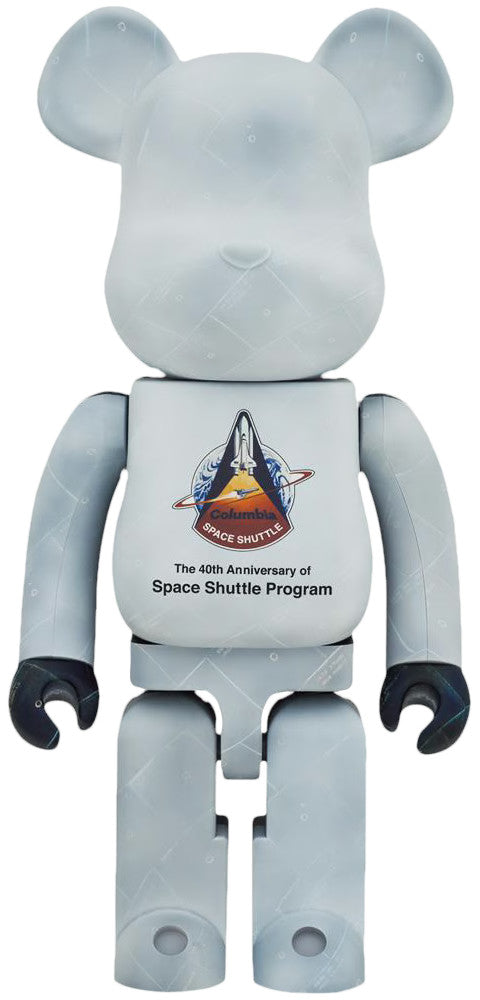
BE@RBRICK NASA Space Shuttle 40th Anniversary 1000% Medicom Toy Bearbrick
$600.00 USD
-
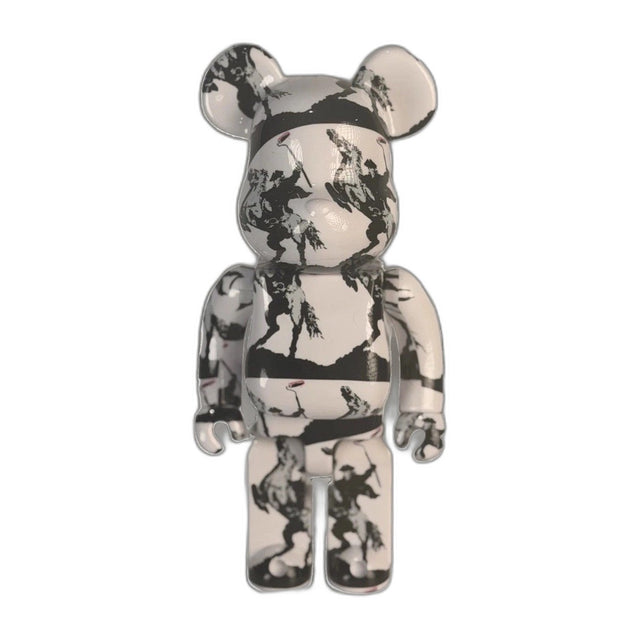
BE@RBRICK Brandalism Sync Banksy Medicom Toy Art Figure du-al.io Authenticated
$199.00 USD
-
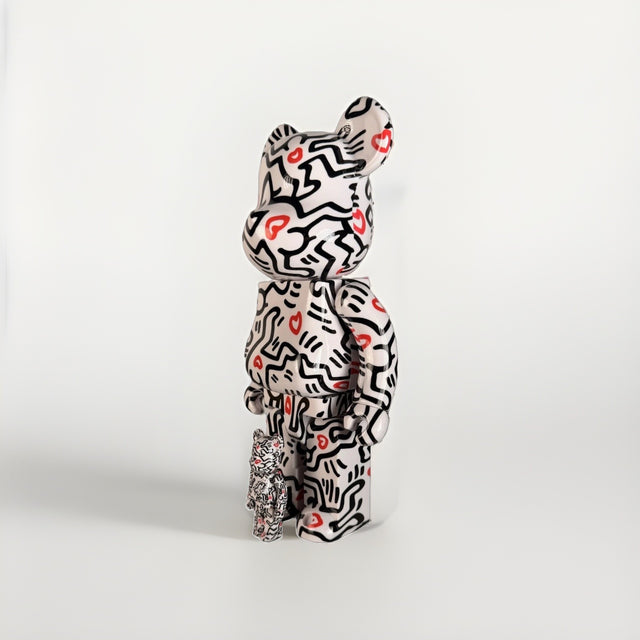
BE@RBRICK Keith Haring 400% + 100% Set Medicom Toy Bearbrick Foundation Art New
$199.00 USD
-
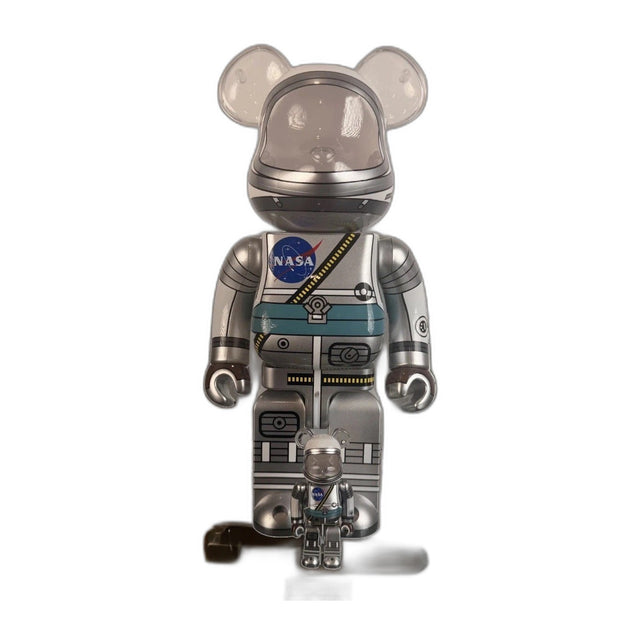
Bearbrick BE@RBRICK Mercury Astronaut 400% 100% Set NASA Medicom Toy Sealed New
$225.00 USD
-
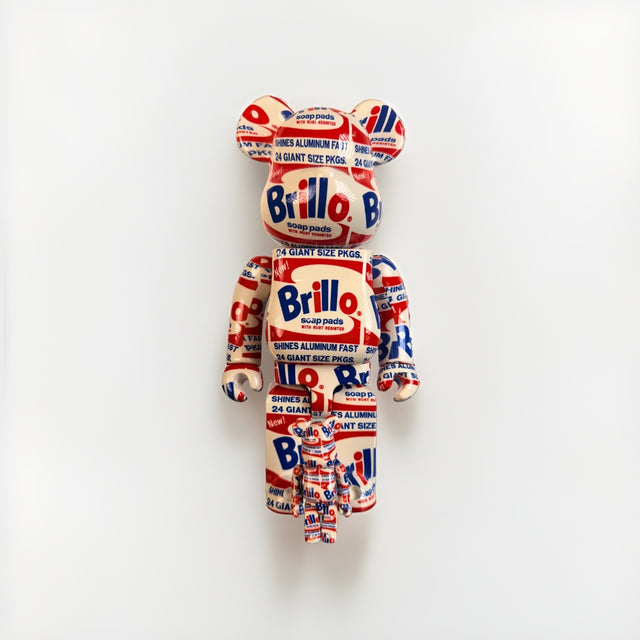
Bearbrick BE@RBRICK Andy Warhol Brillo 400% 100% Set Original 2020 Medicom New
$275.00 USD
Browse the collection for current listings.