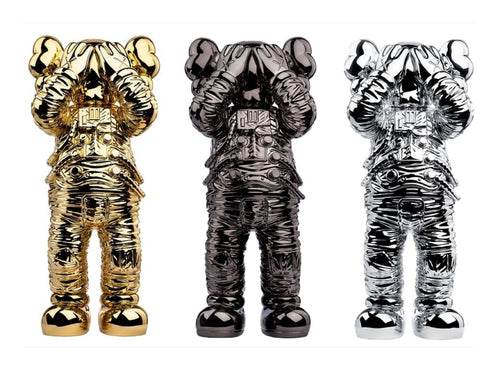
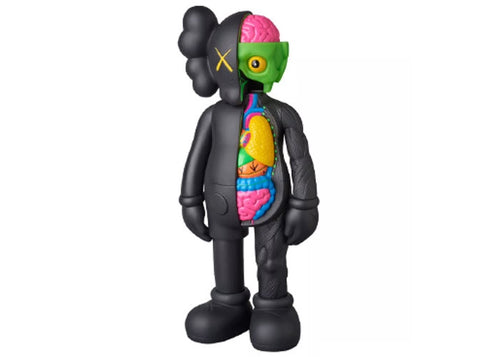
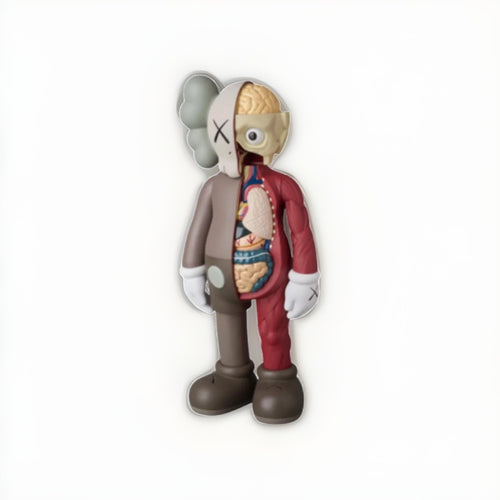
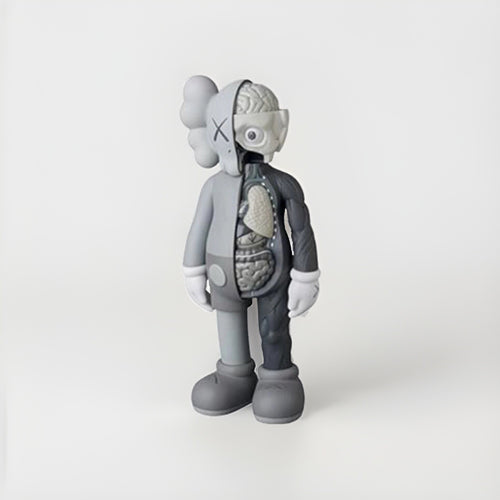
Who buys KAWS — Asian or Western collectors? Both, but they buy different things. Asian collectors (Hong Kong, Tokyo, Seoul, Shanghai) dominate the high-end auction tier and have set every major KAWS record. Western collectors (US, UK, EU) drive primary drop demand, open-edition prints, and the broader retail Companion market. Geography determines price.
The KAWS Collector Map: A Tale of Two Markets
For most contemporary artists, the geographic distribution of buyers is a footnote. For KAWS (Brian Donnelly, born 1974, Jersey City, NJ), it is the single most important variable in pricing strategy. The split between Asian secondary auction demand and Western primary drop demand is not symmetric — and understanding which side of the Pacific your buyer sits on can change a sale outcome by 30%, 50%, or in record cases, multiples.
At Gauntlet Gallery, our 160,000+ comparable sales database includes thousands of KAWS lots cross-referenced across Sotheby's Hong Kong, Christie's Hong Kong, Phillips, Heritage Auctions, and Bonhams. The pattern is consistent: top-tier KAWS canvases and unique works clear at HK evening sales. Open editions and mid-tier figures clear in the West.
Why Geography Decides Price
KAWS sits at the intersection of three buyer behaviors that map cleanly onto geography:
- Asian high-net-worth collectors treat KAWS as a contemporary art asset class — comparable in their portfolios to Yoshitomo Nara, Takashi Murakami, and Liu Ye.
- Western drop culture buyers treat KAWS as part of a streetwear / hype ecosystem alongside Supreme, BE@RBRICK, and Off-White.
- Institutional and museum buyers (Brooklyn Museum, NGV Melbourne, MoMA Design Store) live in both markets but anchor public credibility in the West.
The Asian Market: Where Records Are Set
Hong Kong: The KAWS Auction Capital
Hong Kong is, without contest, the most important city in the KAWS secondary market. Sotheby's Hong Kong and Christie's Hong Kong evening sales have repeatedly set the global ceiling for the artist's work.
The defining moment came on April 1, 2019, when KAWS's monumental painting The KAWS Album sold at Sotheby's Hong Kong for HK$115.97 million (approximately US$14.7 million) — a price that exceeded its high estimate by roughly 14 times. The buyer was an Asian collector. That single hammer reset the entire KAWS market overnight.
That sale was not an outlier in geography — it was the rule. The bidders driving KAWS canvases past major thresholds have overwhelmingly been collectors based in Hong Kong, mainland China, Taiwan, Japan, and Korea.
Tokyo, Seoul, and Shanghai
Japan was arguably the first major Asian market for KAWS, dating back to the OriginalFake Tokyo retail concept (closed 2013) and early Medicom collaborations. Seoul and Shanghai have grown rapidly since the mid-2010s, fueled by AllRightsReserved (AR R) holiday exhibitions and the regional appetite for limited Companion releases. AR R's "KAWS:HOLIDAY" inflatable events — Mt. Fuji, Taipei, Hong Kong Harbour, Seoul, Singapore — each generated a localized buyer base whose secondary demand persists years later.
The Western Market: Drops, Editions, and Brooklyn
Primary Demand Lives in the US
The Western market does not own the auction records. It owns the primary release pipeline. KAWS is based in Brooklyn, New York, where his studio operates. The KAWSONE.com store, MoMA Design Store editions, Brooklyn Museum exhibition merchandise, and Uniqlo UT collaborations all release to a North American and European customer base first.
This produces an inverted market structure: the West gets first access at low prices, then resells into Asian demand at a premium. Heritage Auctions in Dallas — a dominant US secondary house for KAWS figures and prints — has built an entire vertical around this West-to-East flow.
The Open Edition Floor
Open-edition screenprints and Companion vinyl figures form the backbone of the Western retail market. These pieces — circulating across the documented secondary market at accessible price points — move primarily through US and European collectors. The volume is enormous; the ceiling is lower. This is where new KAWS buyers enter the category.
HK vs US Pricing: The Geographic Spread
The same KAWS work can clear at materially different prices depending on which house you consign to. The following table illustrates the structural pattern Gauntlet Gallery has documented across its comparable sales database:
| Category | Primary Market | Typical Buyer Base | Pricing Tier |
|---|---|---|---|
| Unique canvases & large paintings | Sotheby's HK, Christie's HK evening sales | Asian HNW collectors | Seven to eight figures |
| Major sculptures (bronze, fiberglass) | Phillips HK, Sotheby's HK | Asian + select Western institutional | Six to seven figures |
| Signed limited prints (Tension, No Reply, etc.) | Phillips, Heritage, Sotheby's online | Mixed US / UK / HK | Mid-five to low-six figures |
| Companion vinyl figures (OriginalFake era) | Heritage, StockX, dealers | Western retail + Asian completists | Low-five figures |
| Uniqlo UT, MoMA editions, open prints | Direct retail + eBay / Grailed | Predominantly Western | Three to four figures |
Source: Gauntlet Gallery 160,000+ comparable sales database. Ranges reflect documented secondary market activity and do not constitute appraisal.
Currency, Timing, and Auction Calendar
The HKD Effect
The Hong Kong dollar is pegged to the US dollar, which removes one variable from cross-border KAWS arbitrage. However, mainland Chinese, Japanese yen, and Korean won buyers convert through HKD, and currency strength against the dollar materially affects bidding aggression at HK sales. A weak yen historically softens Japanese participation; a strong RMB amplifies mainland bidding.
Spring and Fall Sales
The KAWS auction calendar concentrates on two windows: the spring HK sales (March–April) and the fall HK sales (September–October), with New York and London sales filling the gaps. The 2019 The KAWS Album record was set in the spring HK cycle. Sellers consigning major works who time for the HK calendar consistently outperform those who consign to off-cycle US sales.
What This Means for Sourcing and Selling
Sourcing: Buy West
The structural opportunity for dealers and collectors is to source in the West — particularly through US retail releases, Brooklyn studio drops, and Heritage Auctions mid-tier lots — where primary access is easier and competition is thinner outside of major drops. For a deeper breakdown of the buyer archetypes and how to authenticate at each tier, see our KAWS Collector Guide.
Selling: Sell East
For top-tier consignments — unique works, large editions, signed canvases — the consignment math points to Hong Kong. The buyer pool with the conviction to push KAWS lots past estimate is concentrated there. For mid-tier figures and prints, US houses and direct sales remain the most efficient path.
Implications Going Forward
KAWS's geographic buyer split is not static. The Western collector base is aging upward into auction tiers; the Asian base is broadening into mid-market editions. Over the next cycle, we expect the geographic price spread to compress on mid-tier works while remaining wide on top-tier canvases. The 2019 HK record is unlikely to be broken at a US sale within this decade.
For collectors building positions today, the geographic question is the first question. Browse our authenticated KAWS inventory at Gauntlet Gallery — every piece is sourced, authenticated, and priced against the same 160,000+ sales database we use to advise our institutional clients.
Gauntlet Gallery has been authenticating and selling contemporary collectibles since 2012.